



kaple svatého Antonína Paduánského Chapel
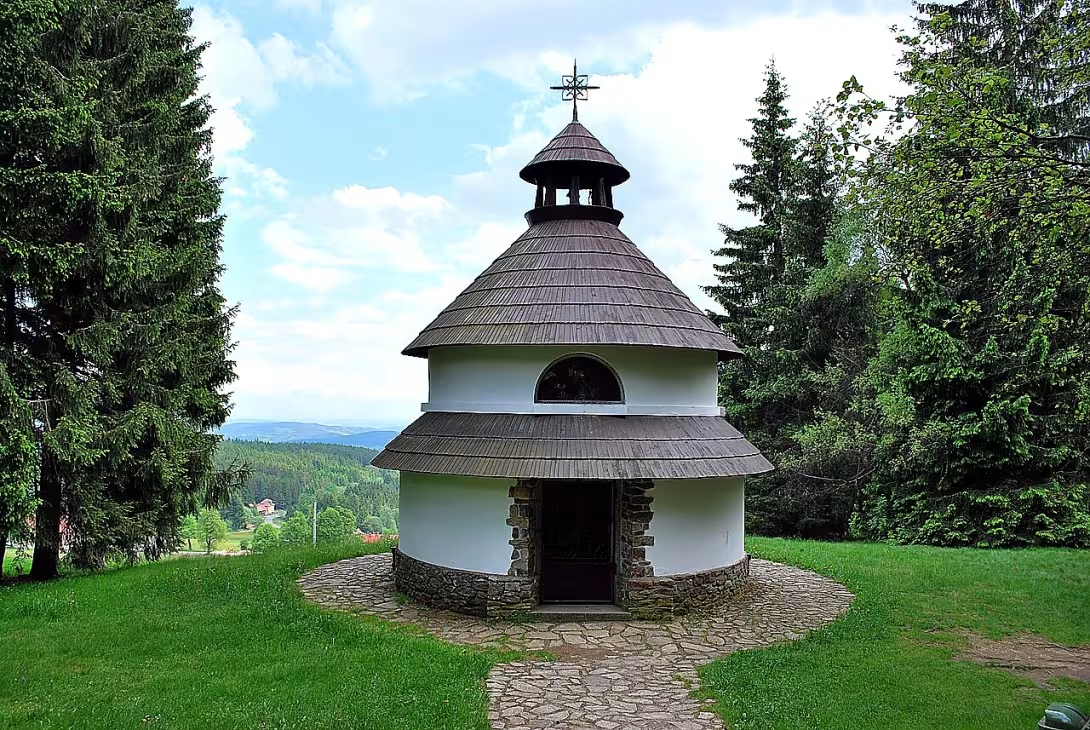
The chapel of St. Anthony of Paduan on Javorník is a Roman Catholic sacral building built in 1939-1940. It is located in part of the village Vacov in the district of Prachatice. Its location on the slope of the Mt. Javorník at an altitude of approximately 1009 metres makes it not only a cultural monument but also a significant landscape dominant. It is important thanks to its historical background linked to the period of the second republic and the occupation of Czech countries, as well as the symbolic reminder of the politics of Antonín Švehl.
The construction is closely linked to the historical context of the Protectorate of Bohemia and Moravia. It started in 1939-1940 on the border between the Protectorate and the occupied Sudets, which gives it a symbolic dimension. The initiative for her position was taken by Czech patriots who, in addition to the place of religious worship of St. Anthony of Paduan, wanted to recall the statehood and spirit of the Czechoslovak Republic at the time of its occupation. So the dedication of the chapel also had a political subtext, symbolizing resistance to the Nazi occupation.
Architecturally, it is a new rotunda inspired by the older Romanesque architecture. Its appearance may give the impression of antiquity, although it is a building from the first half of the 20th century. The project was designed by Prof. Ing. František Fiala and financed by Slavia and Rolnik mutual insurance company in Prague. The decoration includes authentic windows with a picture of Czech earth patrons and Virgin Mary, together with wooden statues of St. Anthony and Virgin Mary by Šumava carver Karl Tittle. After reconstruction, the original stained glass was restored by the artistic glassmaker Monika Zborníková-Vintrová.
Originally, the administration was entrusted to the Stachy Parish Office, but there was a significant change in 2011. The chapel was purchased from private owners and transferred to the property of the Karl Klostermann Foundation Fund. This fund has worked to preserve it and restore it and is now its administrator. The main reconstruction was carried out in 2012 according to the project Ing. Jan Voldřich and included reconstruction of the building condition, surrounding area and decoration.
Today the site is actively used for various pilgrimage, spiritual, cultural and social events. Every year there is a pilgrimage on Sunday after St. Anthony's Day, which comes to June 13th. Karel Klostermann's Foundation Fund also allows reservation of a chapel for private and public events, including civil wedding ceremonies.
The chapel is also associated with a reputation from the 17th century about a teacher's assistant Adam Antonín, who was supposed to consolidate the painting of St. Anthony of Paduan on oak during the witch trials. This legend emphasizes the long tradition of worship of a saint in this place, although the construction itself is modern.
St. Anthony's Paduan Chapel stands in Javorník as an important cultural monument and a spiritual place. Its history, architecture and current use make it an interesting destination for tourists and locals. It is not only a monument to the past, but also a living place of the present, whose preservation shows the importance of monuments for cultural identity and community life. When visiting, enjoy views from the surrounding terraces and explore its architectural beauty and spiritual atmosphere.
Then and now
Drag the slider to compare how the landmark may have looked when it was built with the view today.
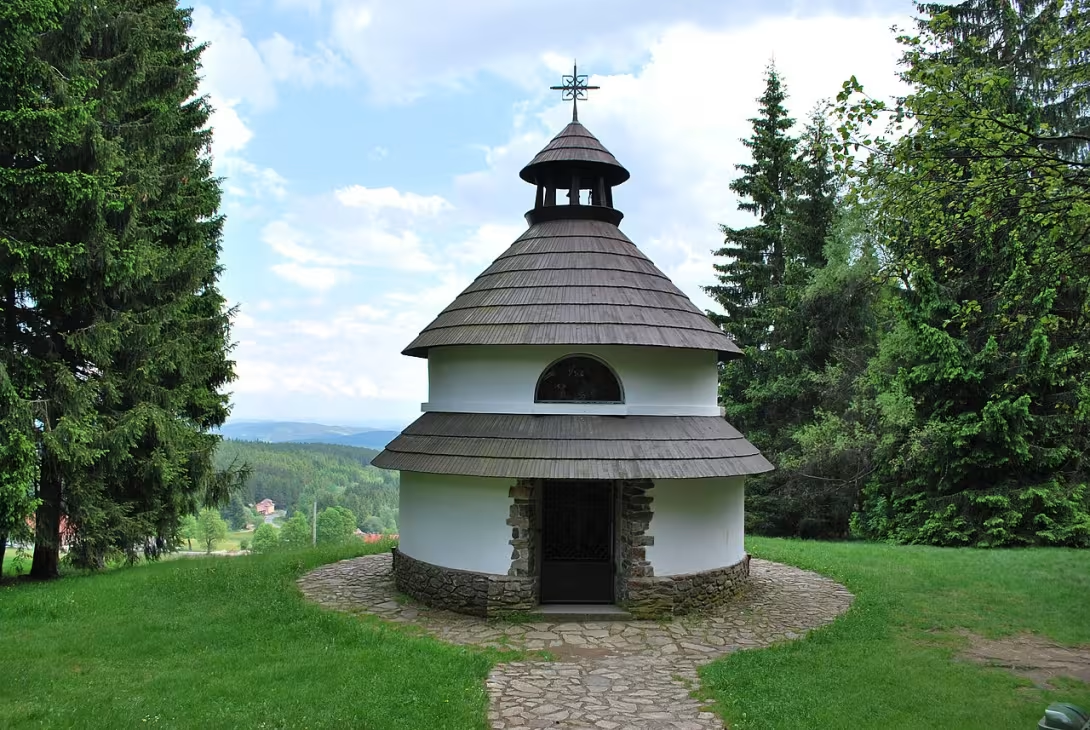
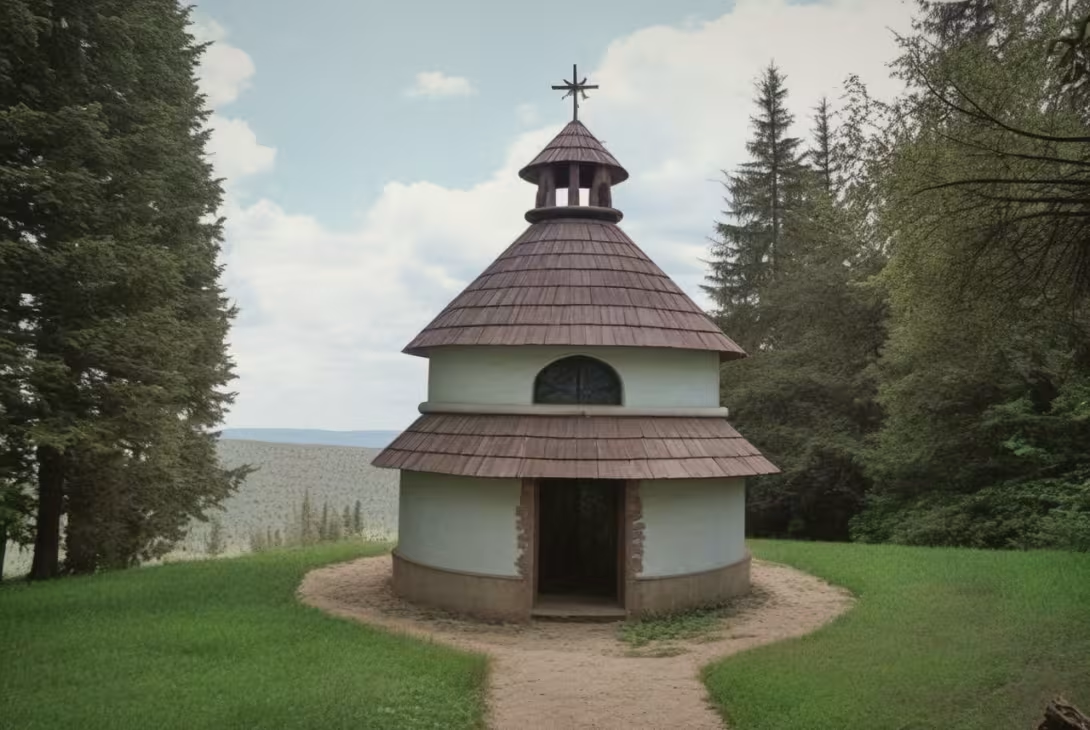
The historical appearance on the left is an AI-generated visualisation and serves as inspiration only.
Historical milestones
- 1939
- start construction of chapel
- 1940
- festive consecration of the chapel on august 4th
- 2011
- recruitment and reconstruction of the Karel Klostermann Foundation Fund
Architectural development
The chapel was built as a modern rotunda inspired by Romanesque architecture. The interior is supplemented by the windows, the depiction of St. Anthony and the wooden statues of Karl Tittle. The original windows were reconstructed by the art glass factory Monika Zborníková-Vintrová.
Historical events
1939-1940: construction of the chapel; August 4, 1940: ceremonial consecration of the chapel; 2011: Rescue and reconstruction of the Karel Klostermann Foundation Fund.
Owners
The administration was originally entrusted to the parish office in Stachy and since 2011 the Foundation Fund of Karel Klostermann has been associated with the chapel.
Points of interest
- The construction was built in 1939-1940 on the border between the Protectorate and the occupied Sudets. - Architecturally, it is a new rotunda inspired by the older Romanesque architecture. - The decoration includes authentic windows with Czech patrons and wooden sculptures by Karl Tittle. - The site is used for various events, including civil wedding ceremonies. - The chapel is associated with a reputation from the seventeenth century of the teaching assistant Adam Antonín.
Guide
Show guide text
This text was created by artificial intelligence and has not been editorially reviewed. It may contain inaccuracies.
Welcome to the beautiful landscape of maple tree. You're standing in one of those places where time stops and history touches the sky. Look around you and perceive the infinite depth of space. This kaple svatého Antonína Paduánského, which you have right in front of you, is not just an ordinary sacral object. He is the guardian of this hill, which rises at an altitude of approximately a thousand nine meters. Feel the power with which this building dominates the entire area. It is a clear point in a landscape that can be seen from a great distance, and yet it is a place that carries incredible peace and grandeur. Let yourself pass through the air and imagine what feelings people must have had coming here decades ago.
Let us now return together deep into the past. To understand why this building is standing right here and why it has such a special weight, we need to look at the time when it was created. Imagine the 1930s and 1940s. These were times very dark and not occupied for our Czech countries. It was during this difficult period between 1939 and 1940 that this chapel began to be born here. But it wasn't just a religious object. Its creation was deeply linked to the spirit of patriotism. At a time when our country was under foreign rule, a group of Czech patriots decided on an act that was a manifestation of their unbreakable belief in national identity. The construction was not just stone and mortar, it was a symbolic expression of courage. In 1940, exactly the fourth of August, the chapel was ceremoniously consecrated. Imagine the atmosphere, the quiet, but strong hope that was floating in people.
Now pay attention to the very form of the building that stands right before your eyes. Look at her shape. You see the harmony and simplicity? It's a new rotunda. The architect František Fiala, who was behind this proposal, has decided on a form that combines them with old and new. The whole building is deeply inspired by the older Romanesque architecture. It is known for its uncompromising strength, mass and purity of lines. Even though this chapel is much younger, you can feel the old, solid well-being and stability that old Romanesque buildings have. Feel the geometry, the circular shape that symbolizes unity and infinity.
If you look closer, you can see the details that make this place really special. Notice the windows. These are otistical windows that are not just a simple source of light, but they carry deep meaning. Our Czech patrons are captured in them, which again reminds us of the national quite that the builders wanted to express. And if your eyes move on to the art elements, you can see the wooden statues. These fine creatures were created by Karel Tittl. These statues give the place a human dimension, as if there were still people living in it who once prayed or sought comfort.
However, this chapel is also a place where the names of great personalities and great forces are met. She's connected to people like Antonín Švehla or František Jan Kroiher. These people were part of the world that was trying to keep the Czech spirit alive even in the hardest times. And we must not forget that this monument may not look as you see it today. It is also the result of modern efforts to preserve it. In 2011, it was taken over and reconstructed thanks to Karel Klostermann's Nadání Fund. Thanks to this effort, this chapel can once again become a cultural monument, which you can now admire so closely.
Perhaps now you can think of one very interesting thing that gives this place a strange, mysterious touch. Do you know exactly where this chapel stands? It's on a very sensitive line. At the time of its creation, this area was right on the border. It was the border between the Protectorate and the areas that were occupied by the Sudets. Imagine the tension, the invisible line that went through this very place. So the chapel was not just on the hill, but stood as a symbolic point at the interface of two worlds. This fact gives special weight to every stone in this rotunda. It's a place that separates, but at the same time it's a place that has the power to connect.
Now I leave you with your thoughts and the wonderful view this place offers you. The chapel serves for various events and it is a place where people gather to experience something special, whether it be spiritual moments or cultural gatherings. Look at her again, feel her silence and her strength. Let yourself be carried away by the atmosphere of this place, which has survived hard times and which is shining again today in all its glory. Thank you for visiting us, and we wish you a wonderful continuation in discovering the beauty of this country. Goodbye.
Tips for visitors
The best time to visit kaple svatého Antonína Paduánského is in the spring or autumn season, when nature in Javorník is particularly charming and light for photography ideal. These months offer quiet moments without a large number of tourists.
We recommend to verify current information about routes before visiting.
When planning a trip, remember suitable shoes and clothing, especially if you visit the chapel during colder months. Also remember to close the camera or smartphone with good quality to capture the beauty of the surrounding region.
Photography of the chapel offers a wonderful view from the slope of Mt. Javorník, especially at noon when the light is brightest. Also remember to record the panoramic view from Karl Klostermann's observation tower.
In the vicinity of the chapel is Svehl's cottage, which is an ideal place to relax and eat. For families with children, the ski resort offers entertainment in winter months.
Frequently asked questions
Can the monument be visited?
Religious buildings are usually open mainly during services; at other times a visit is normally arranged with the parish or the operator. We have not verified specific times.
Where is the monument?
Location: Vacov. The map on this page shows the exact spot.
Why is the monument protected?
It is listed in the Central List of Cultural Monuments of the Czech Republic as a cultural monument (register no. 1000136405).
Businesses nearby
Do you run a restaurant, accommodation, shop, museum, rental, wellness or other visitor service near this monument? Show yourself directly to the people heading to it — this is how they will see you in the app and on the web:
Events nearby
Zdroj akcí: otevřená data měst a obcí ČR (Národní katalog otevřených dat) a kalendář akcí Národního památkového ústavu.
Nearby
Kaple se nachází na svahu hory Javorník v blízkosti rozhledny Karla Klostermanna, Švehlovy chaty a lyžařského areálu.
Accommodation nearby
Themed route
Thematic cruise route from the village Vacov
1. St. Anthony's Chapel - Type: Religious monument - Why it is worth a visit: This chapel is located on the picturesque slope of Mt. Javorník and offers views that mix with calm and spiritual reflection. It is the perfect place for those who want to experience a peaceful moment in nature.
2. Karl Klostermann View - Type: View - Why is it worth a visit: This lookout tower offers a unique view of the surrounding landscape, including Mt. Javorník and other mountains. It is an ideal place for photographers and those who want to enjoy panoramic footage.
3. The Swiss cottage - Type: Cottage - Why is it worth visiting: Svěhl cottage is a place where you can enjoy a break in a quiet environment. It's perfect for those who want to relax and maybe even enjoy something or drink.
4. Ski resort - Type: Sports equipment - Why is it worth visiting: This ski resort offers opportunities for people who love winter sports. It is a place where you can enjoy skiing or snowboarding in the natural environment.
This route offers a combination of spiritual peace, beautiful views and activities for the whole family.
Seasonal recommendations
Spring: In the spring period kaple svatého Antonína Paduánského is gaining special beauty when flowers and trees start to bloom. This time of year is ideal for visiting thanks to comfortable temperature and sunlight, which naturally illuminates the interior and surroundings of the chapel. Nature is transformed into a lively palette of colors, providing a comfortable environment for relaxation and reflection. We recommend visiting this monument at the beginning of spring when there are fewer people, and wearing comfortable clothes suitable for a mild temperature.
Summer: In summer, kaple svatého Antonína Paduánského becomes an attractive place thanks to long days and warm sun, which illuminates both the interior and the surrounding green landscape. The atmosphere is full of light and life, which can be ideal for visiting at noon when the temperature becomes the highest. In addition, you can enjoy quiet moments without too many crowds. We recommend to wear light and light clothes as well as drinking water.
Autumn: In autumn the kaple svatého Antonína Paduánského becomes melancholic beauty when tree leaves start to change colour and fall. This time of year is suitable for visiting thanks to mild temperature and quiet atmosphere. The sun appears for a shorter time, which creates a fascinating game of light and shadow both inside the chapel and outside. We recommend visiting this monument at the beginning of autumn when there are fewer people, and wearing clothes suitable for colder weather.
Winter: In winter, kaple svatého Antonína Paduánského has a unique atmosphere where the surrounding area is covered with snow and the trees are without foliage. This time of year can be ideal for visiting thanks to quiet winter days and comfortable temperatures inside the sacral building. The sunlight enters through the windows, which provides fine lighting of the interior. We recommend visiting this monument at the beginning of winter when there are fewer people, and wearing warm clothes suitable for cold weather.
Visualizations and artistic views


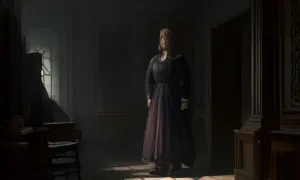
The visualisations are generated by artificial intelligence and serve as inspiration.
Photos from the area
Real photos taken near the monument


Zdroj a licence jsou uvedeny u každého snímku.
Tips from visitors
No tips yet. Be the first!
Log in and add your tip.
Sources and literature
Photos: Chmee2 / CC BY 3.0 — Wikimedia Commons. The author and licence also appear when you hover over the image.
Faktickým podkladem tohoto textu byl článek na Wikipedii, jehož autory jsou přispěvatelé Wikipedie. Článek je dostupný pod licencí CC BY-SA 4.0.
Location on the map


Příběhy a pověsti
Legendy, pověsti a příběhy spjaté s touto památkou
Fotografie návštěvníků
Zatím žádné fotografie. Buďte první, kdo přidá fotografii z návštěvy!
Log in a přidejte svou fotografii nebo hodnoťte.
Za ověřenou návštěvu v aplikaci získáte víc bodů — poznáme podle GPS, že jste na místě.
Reviews and comments