



Švehlova chata Mountain cottage
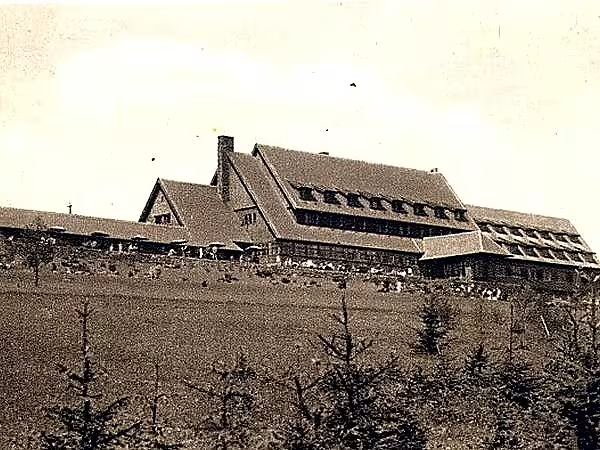
Švehlova chata is a five-storey cabin of the Alpine type from the late 1930s. Located in the village of Javorník in the village Vacov, in the district of Prachatice in South Bohemia. The building is an important proof of the architecture of the first republic and has been registered as a monument since 2010. This construction represents a unique architectural concept that has been sensitively integrated into the Šumava landscape.
At the end of the 1930s, the Republican Party of the Agricultural and Small-Roller People, known as the Agrarian Party, had the building built. At the initiative of her then President Rudolf Beran, the cottage was to serve as a representative recreational facility for party members, government and parliament. She received her name in honor of Antonín Švehl, former Chairman of the Agrarian Party and Prime Minister of the Czech Republic. The construction was built at a time when central government authorities sought to transform Javorník into a representative Šumava resort and tourist centre. In this development, Bata's cottage and chapel of St. Anthony of Paduan were built in the location.
The building is oriented west-east and lies on a slope where the surrounding terrain has been modified by terraces. The main five-storey section is supplemented by a four-storey wing in the north and an elongated ground annex on the south side. In the interior there are preserved elements of the high standard of the first republic, such as wooden tiles, window and door fillings, plank floors, built-in cabinets, benches and toast tiles. The collection of oil paintings on copper from 1895, created by the academic painter Josef Effmert according to the drawings of Mikoláš Ales, has significant historical value.
After the opening in March 1939, the cottage was briefly used for its original purpose, but this interrupted the beginning of World War II. During the war period there was established a base for Hitler Youth. After the liberation, the American army used the object briefly. In the 1990s, the cabin served as a children's recovery facility, primarily for children from industrial conurbations.
Švehlova chata is currently preserved and is not commonly used. Exceptionally, it was made available to visitors in October 2025 within the festival Den Architecture.
The monument represents a valuable document of the social life of the interwar period and a unique example of wood construction of its type. Her visit allows an insight into the first Republic's architectural ambitions in the Šumava region.
Historical milestones
- 1939
- Opening the cabin
- 2010
- Entry into the Monument Protection
- 2025
- Accessibility during the Festival Den Architecture
Architectural development
It is a five-storey Alpine-type cabin with a four-storey north wing and a port in the south. The construction is located in a slope with landscaped terrain using terraces. The interior contains preserved elements such as toast tiles and wooden tiles.
Historical events
March 1939: Opening the cabin. World War II period: Use as a Hitler Youth base. After liberation: Short-term use by the US military. 1990s: Function of a children's recovery facility.
Owners
Republican Party of the agricultural and small-peasant people (late 1930s).
Points of interest
- Švehlova chata is a five-storey cabin of the Alpine type from the late 1930s. - It is located in the village of Javorník in the village Vacov, in the district of Prachatice in the South Bohemia region and has been registered as a monument since 2010. - It was built by the Republican Party of the agricultural and small-peasant people in honour of Antonín Švehl, the former President of this party and the Government of the Czech Republic. - The building has in the interior elements of the high standard of the first republic, such as wooden tiles and collection of oil paintings on copper from Josef Effmert according to the drawings of Mikolas Ales. - It represents a valuable document of the social life of the interwar period and a unique example of wood construction of its type.
Guide
Show guide text
This text was created by artificial intelligence and has not been editorially reviewed. It may contain inaccuracies.
Welcome to the beautiful Šumava landscape, in the village Vacov, and specifically here, in the part of Javorník. Stop for a moment, take a breath with fresh mountain air and look straight ahead. You are facing a real architectural rarity, which is Švehlova chata. The first impression of this building is usually similar for all visitors. It's a sense of wonder about her size and her material. In front of you there is a massive, five-storey wooden cabin, which, with its height, touches the surrounding landscape and acts almost like a small wooden castle. Feel the strange atmosphere of a place where the folk tradition combines with the ambitions of state power from the beginning of our own state.
Now let's look together at how this building came into being and what its original meaning was. Švehlova chata is not just an ordinary mountain sanctuary. It originated in the late 1930s, at a time when the first republic was in its maturity, but at the same time it felt the first shocks of the coming storms of modern history. The building was built by the Republican Party of the agricultural and small-peasant people. This party had a great influence at the time and wanted to create a place to serve as representative recreational facilities. So imagine that there were not ordinary tourists with backpacks, but important members of the Agrarian Party and state officials. It was a place for rest, but also for informal meetings, where important issues of state leadership could be addressed in the silence of Šumava forests.
Now pay attention to the architecture itself. Look up and feel the unusual height. As I mentioned before, this is a five-storey cabin, which is absolutely unique in our circumstances. The entire object is built in the so-called Alpine type. This means that architecture draws on the traditions of the high mountain areas of Central Europe, where buildings are designed to withstand heavy snow and harsh conditions. Notice the massive wooden beams and the way they fit together. It is this structure that gives the hut its characteristic appearance and stability. Look at the facade and see how the wood has changed over time, how it has acquired its patina. This building is one of the most important documents of the architecture of the first republic in the whole Šumava region. It is a combination of functionality, representativeness and respect for natural materials.
If we look at the personalities associated with this place, we have to start with the name that the cabin bears. Antonín Švehla was one of the most important figures in the political history of the first republic, an experienced diplomat and leader of the Agrarian Party. In his honor, this building was built. Although he himself could spend time in these premises only limited, his legacy remained here in the very name and spirit of the building. Other names, such as Rudolf Beran or Josef Effmert, were also associated with the site, representing the political and social elite at the time. The connection with Mikolas Ales, a famous painter whose name appears in connection with this location, is also interesting. Although Ales did not design the building, his spirit and love of the Czech landscape are in line with what this cottage represents. It is a celebration of the Czech country and its ability to create beautiful and lasting things.
Now I want to impress you with one interesting thing that may not be visible at first sight, but gives the whole place a deeper dimension. Švehlova chata has undergone dramatic development in recent decades. After 1939, when it was officially opened, there was a period of political change that often threatened similar buildings. However, this building has endured all time injuries. The breaking point was the year two thousand ten, when the cottage was officially registered as a protected monument object. This meant that the state recognized its uniqueness and decided to save it for future generations. Currently the object is preserved. It means it's protected from further disintegration, but it's not fully populated. And here comes the greatest mystery and expectation. If you're here at a different time, you might have heard something big was going to happen. In the year two thousand twenty-five there will be exceptional access to the cottage during the glorious day of architecture. The idea that the doors of this five-storey cabin will reopen and allow us to look into its inner spaces is absolutely fascinating for lovers of history and beauty.
Now, if you look at this building again, try to imagine what it looked like in the year one thousand nine hundred thirty-nine. Imagine the sound of the transport of those cars, the voices of politicians in discussions about the future of the country and the smell of fresh wood, which had to fill the whole area. Švehlova chata is like a silent witness to history that tells us about ambition, about power, but also about love for nature and architecture. It's a bridge between the past and the present, which reminds us that even in the simplest material like wood, something monumental can be built.
Let us now slowly finish our short journey to this monument. I suggest you stay in front of the building for a while and observe from different angles how its five floors are looming against the sky. Walk around it, perceive the texture of the wood and think about how many stories there are in these walls. Švehlova chata is proof that even in the backwater part of the Šumava landscape a world-class work can be created, which fascinates us for almost a century since its creation.
Thank you for accompanying me in this brief introduction to this unique construction. I hope you are interested in Švehlova chata and that you will take a sense of respect for our architectural heritage. Now you can continue to explore the surroundings of Vacova and Javorník, which offers many other beautiful places. I wish you a pleasant continuation of the journey and a beautiful day spent in the embrace of Šumava nature. Goodbye.
Tips for visitors
The best time to visit Svehl's cottage is in the summer months, especially in summer when the weather and surroundings are the most beautiful. This time offers ideal conditions for exploring natural beauty and relaxation in the outdoor environment.
You can check the current connection using an online search engine or at the local information centre.
When visiting, wear a suitable suit because the conditions in the countryside can be variable. Also remember the protective sunglasses and plenty of drinking water, especially if you are planning a long walk.
For photography is the best place in front of the cottage where you can enjoy a beautiful view of the surrounding countryside. The best light offers early morning and late afternoon when the light is soft and sweet.
There is a chapel of St. Anthony of Padua and Bata's cottage in the vicinity of the monument. These places are ideal for further exploring and offer various fun activities, especially for families with children.
Frequently asked questions
Can the monument be visited?
We have not verified whether this monument is accessible. Please ask the owner or operator, or the local municipal office.
Where is the monument?
Location: Vacov, Jihočeský kraj. The map on this page shows the exact spot.
Why is the monument protected?
It is listed in the Central List of Cultural Monuments of the Czech Republic as a cultural monument (register no. 1777669860).
Businesses nearby
Do you run a restaurant, accommodation, shop, museum, rental, wellness or other visitor service near this monument? Show yourself directly to the people heading to it — this is how they will see you in the app and on the web:
Events nearby
Zdroj akcí: otevřená data měst a obcí ČR (Národní katalog otevřených dat) a kalendář akcí Národního památkového ústavu.
Nearby
V blízkosti se nachází kaplička svatého Antonína Paduánského a Baťova chata.
Accommodation nearby
Themed route
Švehlova chata Type: Memorial, historical building Why is it worth a visit: This place resembles the life and work of Thomas Garrigua Masaryk, who spent the summer months here. Visitors can view the interior, where the atmosphere of its working and relaxing environment has been preserved.
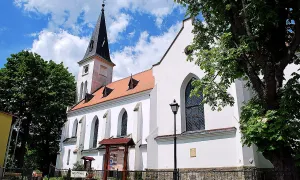
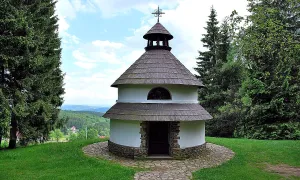
St. Anthony's Chapel Type: Sacral monument Why is it worth a visit: This picturesque building enriches the cultural character of the village Vacov and offers a quiet place for reflection. Its architecture and location in the landscape create a contrast to the historical significance of the main destination of the route.
Bata's cabin Type: Historical building, memorial Why is it worth a visit: This building is related to the personality of Thomas Bati and the development of the region. Together with Svehl's cottage, they form a unique set of historical sites that document key personalities of Czech history in this territory.
The route is designed so that the visitor gradually discovers key historical points of the village Vacov. It starts at the main destination where you can spend the most time studying history and exposures. The following stop at the chapel allows a short break and admiration of local sacral architecture. The final stop at Bata's cottage completes an image of the historical importance of this location. The whole circuit is short and suitable for a walking trip that combines history with a quiet atmosphere of the rural village. All places are in the immediate vicinity, which allows a comfortable connection of individual points without the need for long movements.
Seasonal recommendations
Spring: In the spring period Švehlova chata in Vacov offers visitors a pleasant view of flowering shrubs and trees that come to life after winter sleep. Sun rays penetrate the deciduous tribes, creating attractive lighting for photography. It is advisable to visit a monument on Wednesday week to avoid initial doses of tourists who often plan a visit in the first months of this period. It is recommended to wear clothes suitable for mild weather and possible transitionality such as warm shirts with hood.
Summer: During the summer season Švehlova chata is a popular place for afternoon walks. The presence of tourists is increasing, especially in the main summer season, so it is advisable to come to memory early in the morning or later in the evening to avoid large crowds. The sunny days offer ideal conditions for exploring surrounding green meadows and waterfalls, but it is important to wear protective sunglasses and plenty of drinking. Hot clothes are recommended only for morning or evening.
Autumn: In the autumn period, Švehlova chata offers visitors a beautiful view of coloured leaves that create a colour palette. The atmosphere is calm and quiet, which contributes to feeling relieved by the weather. It is an ideal time to visit because crowds are usually smaller than in the summer months. It is advisable to wear clothes that correspond to mild weather and possible rains such as a combination of warm shirts and couches.
Winter: In the winter months, Švehlova chata offers unique experiences overlooking the snow-covered mountain. The atmosphere is calm and quiet, which contributes to feeling relieved by the weather. The monument can often be closed due to adverse weather conditions or limited lighting, so it is important to check the current information before visiting. This season it is advisable to wear warm clothes with wind and frost protection such as hats, hats and long gloves.
Visualizations and artistic views


The visualisations are generated by artificial intelligence and serve as inspiration.
Photos from the area
Real photos taken near the monument


Zdroj a licence jsou uvedeny u každého snímku.
Tips from visitors
No tips yet. Be the first!
Log in and add your tip.
Sources and literature
Photos: Bubule84 / CC BY-SA 4.0 — Wikimedia Commons. The author and licence also appear when you hover over the image.
Faktickým podkladem tohoto textu byl článek na Wikipedii, jehož autory jsou přispěvatelé Wikipedie. Článek je dostupný pod licencí CC BY-SA 4.0.
Location on the map


Příběhy a pověsti
Legendy, pověsti a příběhy spjaté s touto památkou
Fotografie návštěvníků
Zatím žádné fotografie. Buďte první, kdo přidá fotografii z návštěvy!
Log in a přidejte svou fotografii nebo hodnoťte.
Za ověřenou návštěvu v aplikaci získáte víc bodů — poznáme podle GPS, že jste na místě.
Reviews and comments