



kaple Zvěstování Panny Marie Sedmibolestné u zámku Karlova Koruna Chapel
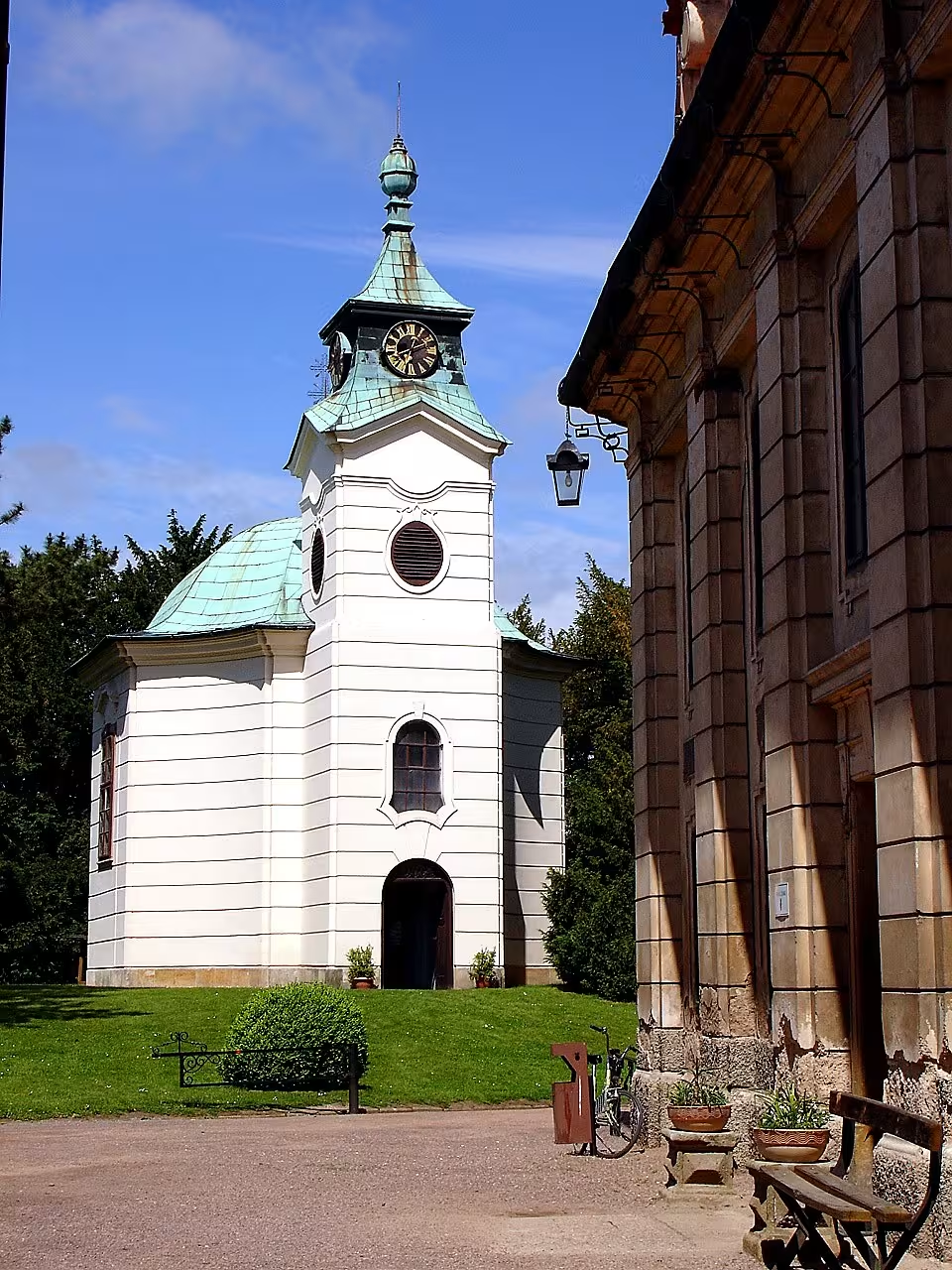
The Chapel of the Annunciation of the Sorrowful Virgin Mary at Karlova Koruna Castle is a notable Baroque structure in Chlumec nad Cidlinou. Constructed between 1741 and 1765, it reflects the Kinský family's influence during Habsburg rule over Bohemia. The chapel features a radial plan with a central dome-like space and an attached tower, showcasing elements typical of Jan Blažej Santini-Aichel’s style.
Initiated in 1741 by Leopold hrabě Kinský and completed by his son František Ferdinand hrabě Kinský, the chapel's construction was licensed in 1746. Historical records from 1770 describe it as built with cut stone and brick vaulting, featuring a stone floor. Initially not consecrated, it was later dedicated to St. John the Baptist in 1999.
Architecturally, the chapel exhibits a distinctive radial plan with a central dome-like space and an attached tower, suggesting Santini-Aichel's influence. The design includes features like a mansard roof and elliptical windows, though some details differ from his usual style. Significant reconstruction occurred in the 1960s and again in 1999, leading to the removal of original elements such as small wings of the sacristy.
The chapel served as a family mausoleum for the Kinský family, reflecting their status during the mid-18th century. This era saw significant Baroque architectural development under Habsburg rule, with noble families playing key roles in regional politics and culture.
Today, the Chapel of the Annunciation is part of a larger cultural heritage site that includes the castle grounds. It is accessible to visitors interested in its historical significance and architectural beauty. The chapel's unique design and connection to the Kinský family make it a worthwhile destination for those keen on understanding Bohemia’s Baroque period and the legacy of its influential noble families.
Then and now
Drag the slider to compare how the landmark may have looked when it was built with the view today.
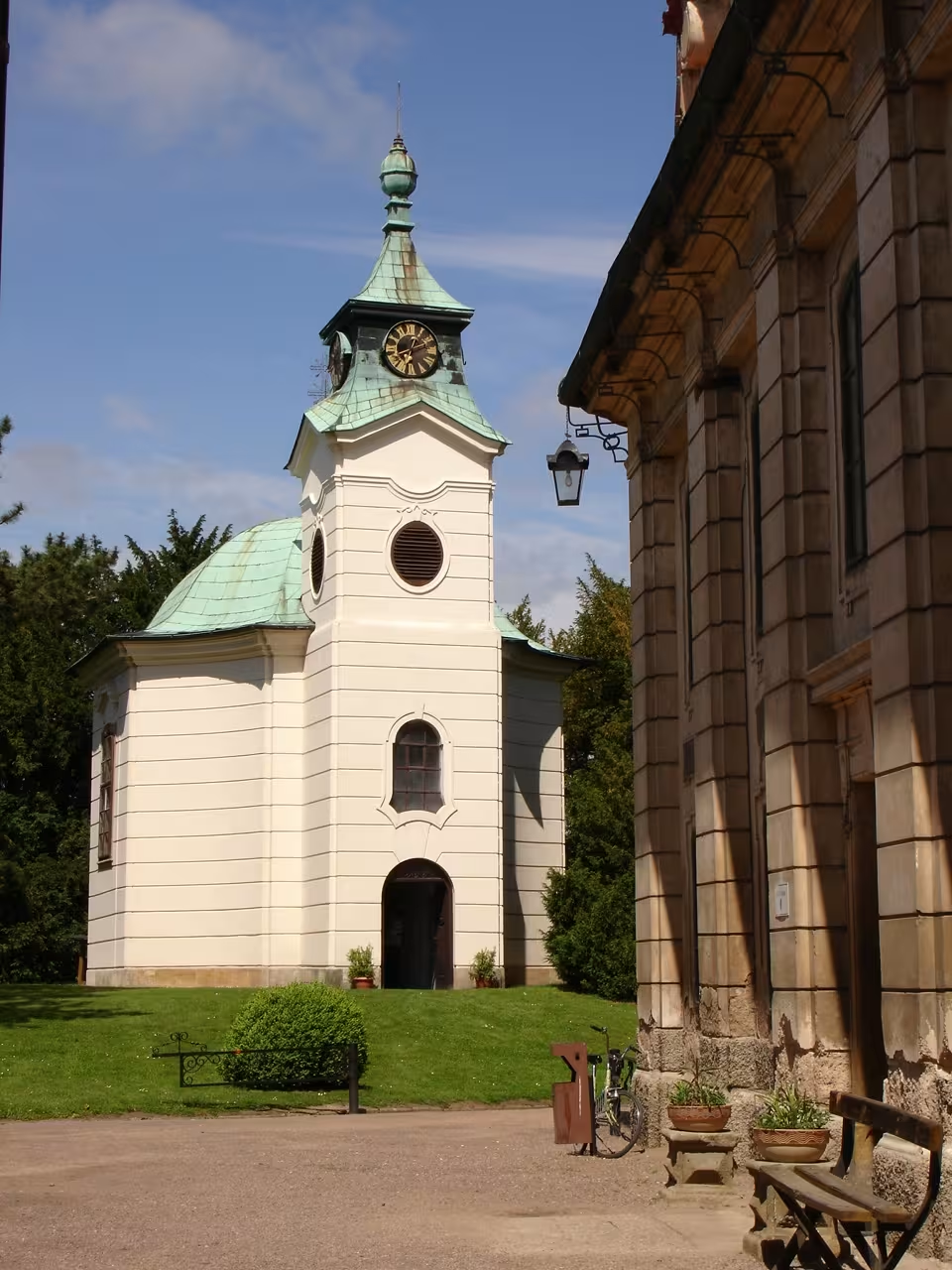

The historical appearance on the left is an AI-generated visualisation and serves as inspiration only.
Historical milestones
- 1741
- Zahájení stavby kaple.
- 1746
- Stavba kaple byla licencována.
- 1765
- Dokončení stavby kaple.
- 1770
- Popis stavby v historických záznamech.
- 1960
- Významná rekonstrukce kaple.
- 1999
- Kaple byla vysvěcena a znovu rekonstruována.
Architectural development
Constructed between 1741 and 1765, the chapel features a radial plan with a central dome-like space and an attached tower. Built from cut stone and brick vaulting, its design includes elements typical of Jan Blažej Santini-Aichel. The chapel underwent significant reconstruction in the 1960s and again in 1999.
Historical events
- 1741-1765
- Construction of the chapel initiated by Leopold hrabě Kinský and completed by his son František Ferdinand hrabě Kinský.
- 1999
- The chapel was consecrated, dedicating it to St. John the Baptist.
Points of interest
- The Chapel of the Annunciation was originally intended as a family mausoleum for the Kinský family, reflecting their prominent status and influence during the Baroque era in Bohemia.
- Although designed with elements typical of Jan Blažej Santini-Aichel’s style, some architectural details of the chapel differ from his usual designs, such as its elliptical windows and mansard roof, suggesting a unique interpretation by another architect influenced by him.
- The chapel was not consecrated until 1999 when it was dedicated to St. John the Baptist, despite being constructed in the mid-18th century, highlighting a significant delay between its completion and religious dedication.
- Significant reconstruction efforts took place in the 1960s and again in 1999, during which original elements like small wings of the sacristy were removed, altering parts of the chapel’s initial architectural integrity.
- The Kinský family's influence extended beyond architecture to regional politics and culture during Habsburg rule over Bohemia, with their patronage contributing to the Baroque development in the area.
Guide
This guide is narrated by a synthetic voice generated by artificial intelligence.
Show guide text
This text was created by artificial intelligence and has not been editorially reviewed. It may contain inaccuracies.
North of Karlova Koruna Castle in Chlumci nad Cidlinou stands a small chapel in the castle garden. It is located by the main avenue that approaches the castle from the north, on the edge of a slope at the margin of the flat space in front of the main castle building. The entire castle complex is protected as a cultural monument.
The chapel was built after 1730 according to an older design. Its nave was apparently constructed between 1741 and 1745, and in 1746 a license was issued for the chapel. According to a record from the Hradec Králové bishop's consistory from 1770, construction was begun by Leopold Count Kinský and completed by his son František Ferdinand Count Kinský, the highest chancellor of the Czech Kingdom. In 1765 the chapel received a tower and ground-floor extensions of the sacristy and oratory. It is built of quarried stone and ashlar, vaulted with a brick vault, and paved with stone inside.
Initially it was not consecrated. Later it was referred to as the Chapel of the Virgin Mary of the Seven Sorrows or the Annunciation of the Virgin Mary. It was consecrated only in August 1999 and today bears the name of Saint John the Baptist according to the altarpiece painting.
The interior space has a circular floor plan, but from the outside it is surrounded by a quadrangular shell with distinctly cut corners. This solution points to Jan Blažej Santini Aichel. Typical for him is the delicate rustication of the facades, the mansard roof of the tower, and the elliptical windows. However, some details suggest that his design was modified and modernized during construction. If Santini was indeed the author, he must have created the design by 1723 at the latest, when he died. The construction was apparently carried out by František Kermer, who is documented in 1759 working on the castle's water supply facility.
The chapel is entered through the ground floor of the tower on the east side. From the entrance hall a staircase led to the oratory and from there to a small room on the tower's second floor. The second floor of the tower houses space for bells. The interplay of the tower and nave with the dome resembles a miniature church rather than a chapel. It is strikingly similar to the pilgrimage church in Křtiny in its mass, floor plan, and arrangement of windows, where an elliptical window lies above a rectangular window with a semicircular arch.
During reconstructions in the 1960s and in 1999, the side wings of the sacristy and storage room as well as the supporting pillars were incorrectly removed. This was based on the assumption that they were not original and were created only between 1880 and 1890.
Tips for visitors
The best time to visit the Chapel of the Annunciation of the Sorrowful Virgin Mary is during late spring or early autumn. During these seasons, the weather is typically mild, making it pleasant for walking around the castle grounds and enjoying the natural beauty surrounding the chapel. Additionally, visiting outside of peak tourist season can offer a more serene experience with fewer crowds.
It's advisable to check current transportation schedules online before your visit.
When visiting the chapel and its surroundings, consider bringing comfortable walking shoes as there are gentle slopes leading up to the castle from the chapel area. A camera or smartphone for photography is recommended, as well as a light jacket in case of changing weather conditions. If you plan to spend several hours exploring, a water bottle and some snacks can also be useful.
For photography enthusiasts, early morning or late afternoon offers the best natural lighting around the chapel and castle grounds. The soft light during these times enhances the baroque architecture's details and casts beautiful shadows across the landscape. Try capturing the chapel from different angles within the garden to fully appreciate its design and setting.
In addition to the chapel, visitors can explore Karlova Koruna Castle itself, which is located nearby. The castle offers a glimpse into historical architecture and provides various exhibits that detail the history of the area. A short walk or drive will take you to this cultural heritage site, making it an ideal complement to your visit to the chapel.
Frequently asked questions
Can the monument be visited?
Religious buildings are usually open mainly during services; at other times a visit is normally arranged with the parish or the operator. We have not verified specific times.
Where is the monument?
Location: Chlumec nad Cidlinou IV, Královéhradecký kraj. The map on this page shows the exact spot.
Why is the monument protected?
It is listed in the Central List of Cultural Monuments of the Czech Republic as a cultural monument. It is protected as part of a larger listed ensemble.
Businesses nearby
Do you run a restaurant, accommodation, shop, museum, rental, wellness or other visitor service near this monument? Show yourself directly to the people heading to it — this is how they will see you in the app and on the web:
Nearby
Located near Karlova Koruna Castle, the chapel is part of a larger cultural heritage site that includes the castle grounds. The surrounding landscape features gentle slopes leading to the main castle building.
Accommodation nearby
Trips and activities nearby
Guided tours, tickets and activities nearby from GetYourGuide
Affiliate link: if you buy from the partner, we may receive a commission. The price for you does not change.
Search tours and activities →Themed route
Thematic Walking Tour: Kaple Zvěstování Panny Marie Sedmibolestné u zámku Karlova Koruna
1. Kaple Zvěstování Panny Marie Sedmibolestné - Type: Chapel - Why Visit: This chapel is a serene and spiritual site, offering visitors a glimpse into the religious heritage of the area. Its architectural beauty and tranquil atmosphere make it an ideal starting point for exploring the cultural significance of Karlova Koruna.
2. Karlova Koruna Castle Grounds - Type: Historical Site - Why Visit: The castle grounds provide a picturesque setting with gentle slopes leading to the main building, offering panoramic views and a sense of history. Walking through these grounds allows visitors to appreciate the natural landscape intertwined with historical architecture.
3. Main Castle Building - Type: Castle - Why Visit: As the centerpiece of the site, the castle offers insights into its storied past and architectural evolution. Visitors can explore its interiors and learn about the historical events that unfolded within these walls.
4. Castle Park Area - Type: Park - Why Visit: The park area surrounding the castle is perfect for a leisurely stroll or picnic, providing lush greenery and peaceful surroundings. It's an excellent opportunity to relax and reflect on the cultural journey through Karlova Koruna.
This tour offers a cohesive exploration of the chapel and its immediate historical and natural environment, ensuring a rich experience steeped in local heritage.
Seasonal recommendations
Spring: The arrival of spring brings a refreshing atmosphere to the Chapel of the Annunciation of the Sorrowful Virgin Mary near Karlova Koruna Castle, with blooming flowers and vibrant greenery enhancing the chapel's serene beauty. Natural light floods the interior, casting soft shadows that highlight the intricate details of its architecture. Visitors can enjoy longer daylight hours, making it an ideal time for leisurely exploration without the crowds typical of peak tourist seasons. It is advisable to wear comfortable walking shoes and layers, as temperatures can vary throughout the day.
Summer: During summer, the chapel basks in abundant sunlight, creating a warm and inviting atmosphere perfect for exploring its historical charm. The lush surroundings are at their most picturesque, offering a tranquil escape from the bustling heat of nearby towns. This is the high season for tourism, so it's best to arrive early to avoid larger groups and make the most of your visit. Light clothing and sun protection are recommended, along with staying hydrated as you explore.
Autumn: Autumn transforms the chapel’s surroundings into a stunning tapestry of reds, oranges, and yellows, providing a picturesque backdrop that enhances its historical allure. The cooler temperatures create a cozy atmosphere, ideal for enjoying the changing leaves without the summer crowds. This season offers a quieter experience with fewer visitors, allowing for more intimate exploration. Layered clothing is suggested to accommodate fluctuating weather conditions.
Winter: Winter brings a serene and mystical quality to the chapel, as snow blankets the landscape, creating a peaceful setting that contrasts beautifully with its historical architecture. It's important to dress warmly in layers and wear waterproof boots for comfort during snowy or icy conditions. This season offers a unique opportunity to experience the chapel in quiet reflection, away from the busier months.
Visualizations and artistic views


The visualisations are generated by artificial intelligence and serve as inspiration.
Photos from the area
Real photos taken near the monument


Zdroj a licence jsou uvedeny u každého snímku.
Tips from visitors
No tips yet. Be the first!
Log in and add your tip.
Sources and literature
Photos: de:User:Wietek (selbst fotografiert) / Public domain — Wikimedia Commons. The author and licence also appear when you hover over the image.
Faktickým podkladem tohoto textu byl článek na Wikipedii, jehož autory jsou přispěvatelé Wikipedie. Článek je dostupný pod licencí CC BY-SA 4.0.
Location on the map

Příběhy a pověsti
Legendy, pověsti a příběhy spjaté s touto památkou
Fotografie návštěvníků
Zatím žádné fotografie. Buďte první, kdo přidá fotografii z návštěvy!
Log in a přidejte svou fotografii nebo hodnoťte.
Za ověřenou návštěvu v aplikaci získáte víc bodů — poznáme podle GPS, že jste na místě.
Reviews and comments