






Klášter augustiniánů kanovníků na Karlově Monastery
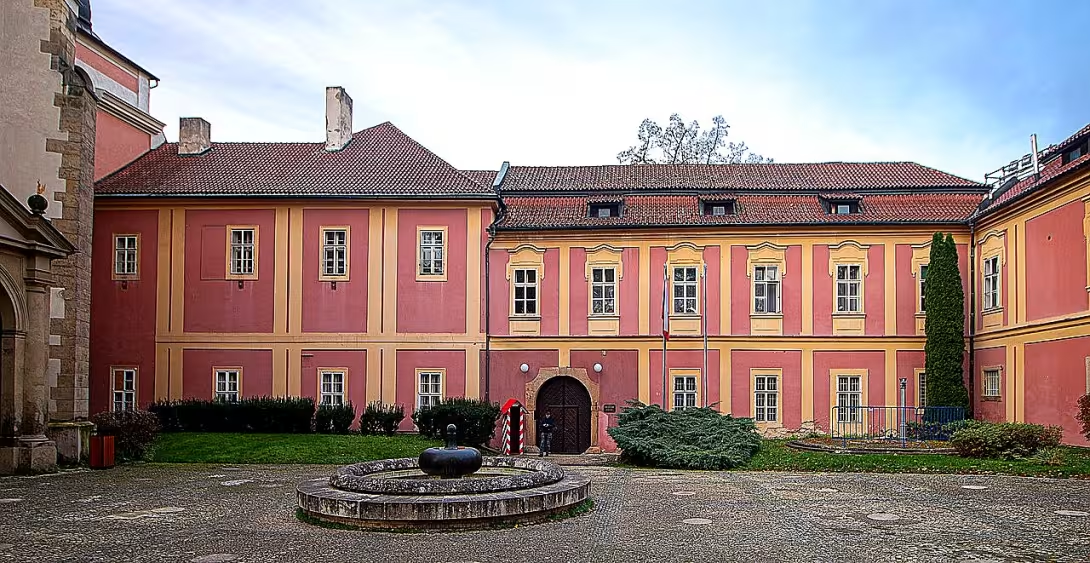
Klášter augustiniánů kanovníků na Karlově is one of the major buildings of the New Town of Prague. It was founded in 1350 by Emperor Karel IV. himself, who thus continued to systematically equip the new town of района. The charter was issued on 18 September 1350, the papal confirmation came a year and a half later (22 February 1352). The construction began immediately in 1351 and the church was consecrated as part of an important ceremony in 1377; Karel IV. and his son Václav IV were present at the ordination, and the Archbishop Jan Očko z Vlašimi led the ceremony. The construction of the monastery complex itself probably took years. Its considerable importance is also demonstrated by the architectural solution: the monastery church has a completely unusual octave floor plan, by which it refers to the coronation church in Aachen and its co-ordinator is Saint Charles the Great as a renewable empire.
After the Hussite wars, the monastery faded. But he was lucky: the city rented it to a private owner (1434), but already in 1437 the brothers returned. The destroyed buildings were restored in 1498, when the church was reconsecrated. The late Middle Ages and the early New Ages were many wounds to the monastery. In 1572, Abbot Mikuláš Venc complained that the buildings were fading; The subsequent repairs from 1575 saved the church the vaults ceiling which was preserved to this day. In 1603 the building was struck by lightning, eight years later (1611) when he returned from Germany he was plundered by the Pasov troops - in the ambush the abbot and several canons died. But the monastery has come true. After returning the goods (1629) and after the Thirty Years' War when he served as a military armory, a major reconstruction, which was probably designed by Carlo Lurago, took place under the leadership of Abbot Isidor de Croce in 1653-1658. A new expansion was brought about by the 18th century: in 1716 new prelatures were built until 1719. These buildings were already Baroque and the monastery gradually changes its face.
The monastery is an interesting layer of Gothic and Baroque. From the Gothic period, three wings were preserved around the Garden Court, best preserved in the southern wing by the masonry fragment. The buildings were originally double storey with a cross corridor only on the ground floor. Remarkable are the small windows in the first floors and the large pointy window of the former chapel of St. Charles the Great, which had a rectangular plan and passed through two floors. The layout was based on the Cashew pattern. In today's form, the complex has strong traces of baroque reconstructions: the park-treated courtyard is surrounded by a Baroque building on the north side of the new prelature, an old prelature in the west and a church in the south with a Gothic octave boat, a polygonal presbytery and a tower.
In 1755 the monastery was hit by a fire that required renovation of roofs (1756). The end came at the end of the century: in 1785, Josef II. cancelled it during the great church reforms and turned it into a hospital for terminally ill. It worked here until the 20th century with occasional modernization (1808, 1865-1866). Since 1948 it has been gradually occupied by museums - first as a depository, later as the Border Guard Museum, later as the SNB Museum, and since 1990 the Police of the Czech Republic Museum has been located here, which remains in the buildings to this day.
Then and now
Drag the slider to compare how the landmark may have looked when it was built with the view today.
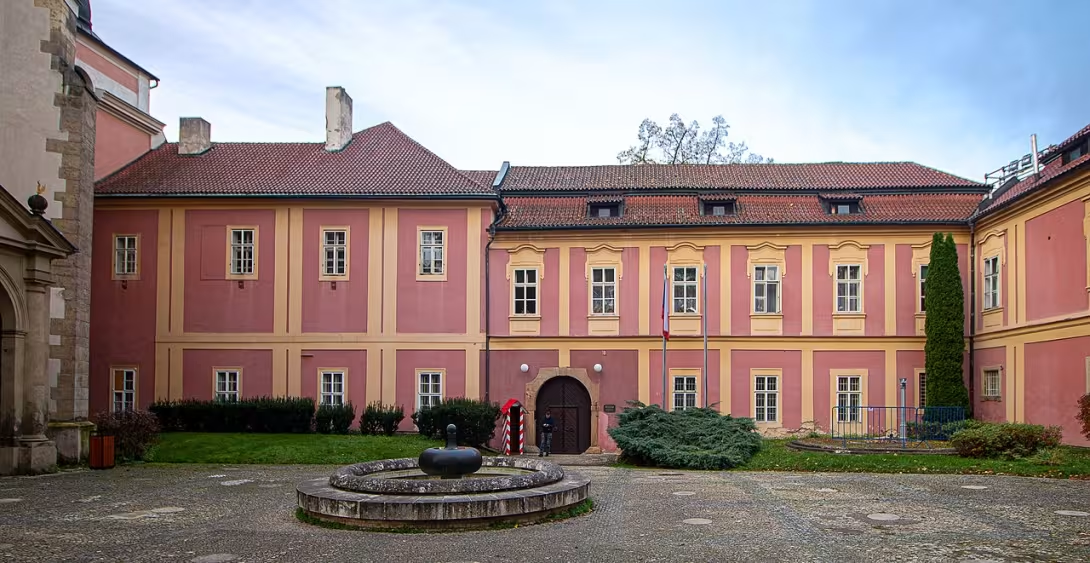
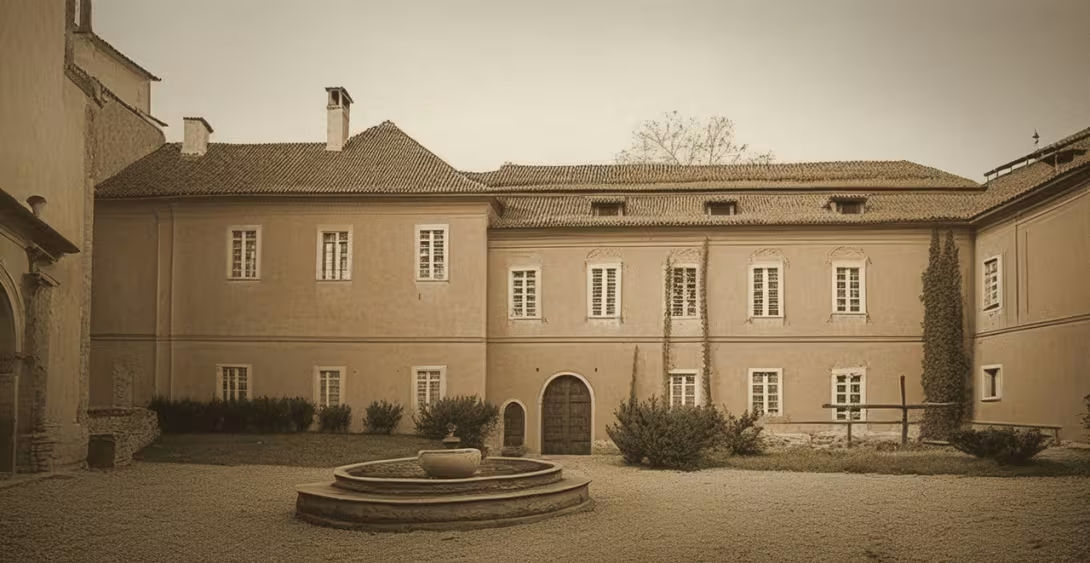
The historical appearance on the left is an AI-generated visualisation and serves as inspiration only.
Historical milestones
- 1350
- Issue of the charter of the monastery by Charles IV.
- 1377
- An explanation of the church by Archbishop John Eye of Vlasmi.
- 1785
- The abrogation of the monastery by Emperor Joseph II.
- 1990
- Change of use of the building to the Police Museum.
Architectural development
Originally a Gothic complex with a characteristic eight-sided church was later rebuilt baroque. A significant reconstruction was carried out by Carlo Lurago and a new prelatura was built by František Maximilián Kaňka. The current form is strongly influenced by baroque intervention.
Historical events
1350 foundation of monastery, 1377 explanation of church, 1785 cancellation of monastery, 1990 foundation of Police Museum.
Owners
1350-1785 Augustinian canaries, 1785-1865 city administration, since 1990 Museum of Police of the Czech Republic.
Points of interest
- The monastery was founded in 1350 by Emperor Karel IV. - The monastery church has an unusual eight-sided plan. - The vault ceiling was preserved in the buildings until today, saved by repairs from 1575. - During the Thirty Years' War, the monastery served as a military armory. - In 1785 Josef II. cancelled it and turned it into a hospital for terminally ill.
Guide
This guide is narrated by a synthetic voice generated by artificial intelligence.
Show guide text
This text was created by artificial intelligence and has not been editorially reviewed. It may contain inaccuracies.
Welcome to the heart of old Prague. You are standing right in front of a place that has been a silent witness for centuries, although around you it may seem that life in New Town never stops. Before your eyes, there is a former monastery of Augustinian canons, a place where spiritual peace and political power are mingled and architecture was changed along with the fate of our city. Feel this atmosphere, feel the weight of history that is felt in every stone of these walls.
Let us go back together deep into the past, until Praha was transformed into a metropolis of European importance. Imagine 1350. This is the moment when Emperor Karel IV., the great builder and visionary, published the founding charter of this monastery. It wasn't just a random act of piety. Building this monastery complex was a solid part of its extensive and ambitious construction of New Town. Karel IV. wanted to create a structure that was not only functional, but also spiritually strong. It is thanks to him that this place has become one of the key points of Prague's landscape.
Now pay attention to the architecture surrounding you right now. If you look at the Church of the Assumption of the Virgin Mary and St. Charles the Great, you will notice something quite unusual. Its floor plan is not a classic but unique octave. This geometry gives you a special dynamic and inner space that can immediately impress you with its unusual. When you look at the monastery buildings, you realize you don't see just one style, but the layering of the whole epoch. What you see is the result of gradual development. It began with medieval Gothic constructions that form the basis, but over time, these spaces were transformed into a rich Baroque.
This fascinating process of rebuilding was led by the hands of the greatest masters of his time. The architecture of this place reflects the work of such names as František Maximilián Kaňka or Carlo Lurago. It is because of their vision and their ability to work with space that the monastery has transformed from a simple medieval abbey into a complex entity that combines Gothic fortitude with baroque elegance.
In order to fully understand the importance of this place, we need to connect with the people who left their mark. The emperor Karel IV. was the key figure, but another important figure was Archbishop Jan Očko z Vlašimi. It was in 1377 that he consecrated the church, thereby consolidating its spiritual importance in the then society. The monastery was not just a building, it was a living organism that influenced the lives of monks and citizens of the city.
But the history of this place wasn't always about prayer and silence. The monastery had to face the storms that hit Europe. Notice how the function of these spaces changed depending on the political situation. During a devastating 30-year war, the monastery had to turn into something completely different than a place of peace. He served as a military armory. Imagine the sounds, the movement and the tension that existed here at the time when the prayers were filled with weapons and soldiers.
And then there was another major change that came with enlightenment. In 1785 Emperor Josef II. decided to cancel the monastery. This decision meant the end of one era, but the beginning of another. The buildings were not abandoned, but they gained a completely new, practical direction. The building was transferred to the hospital. The place where a connection to God was previously sought was now sought for a connection to human life and the treatment of disease. This transformation from the spiritual center to the place of care of the sick is one of the most striking stories this campus tells.
If you're looking for something that really surprises you, focus on the details that have survived for centuries. There is one real rarity that may fascinate you. The vault ceiling is still preserved in the buildings, which is a repair from 1575. It is an absolutely incredible piece of history that, thanks to the repairs at the time, has been preserved until today. It's like a little time capsule that takes you straight to the sixteenth century and shows you how the craftsmen at the time managed to cope with the complexity of construction work.
If you look at this whole structure, you'll see how time is constantly overflowing. From the founding charter in 1350, to the consecration of the church in 1377, to the abolition in 1785 to the modern era, when in 1990 the building became the seat of the Police Museum of the Czech Republic. Each era has left its marks, its colour and its atmosphere.
I now urge you to move on. Explore these spaces, perceive their dimensions, and try to connect in spirit all the characters and events we've just talked about. Let yourself be carried away by what architecture and history tells you, without any more words. I wish you a beautiful and inspiring tour of this special place. Goodbye.
Tips for visitors
The best time to visit the monastery of Augustinian canons in Karlov is in spring and autumn months when the weather is pleasant and are not so large a bunch of tourists. This time of year also offers the most beautiful light for the photography of the Gothic architectural details of the Church of the Assumption of the Virgin Mary and of St. Charles the Great.
It is advisable to use public transport for access to the monument as it is located in the centre of Prague. Parking may be limited, so we recommend checking the current parking options online or on site.
When planning your visit, pick up the map and information brochures available at the entrance. These materials will help to better focus on the site and find out the attractions you might miss.
The best place for photography is inside the church with its rich Gothic interior. Don't forget to take a high-quality camera, and if you are planning to photograph some details, a long lens may also be useful.
In the vicinity of the monastery there is historic Vyšehrad, which offers beautiful views of Prague and is an ideal place for a moment of relaxation. For families with children there is an interesting visit to the garden park in Nusla, where children can enjoy playing space.
Frequently asked questions
Is Klášter augustiniánů kanovníků na Karlově open to the public?
Yes, the monastery is open to the public. The tour is possible daily from 9: 00 to 5: 00.
How do I get to the place by car / public transport?
The monastery is available by bus No. 3 or 24, stop Nusle against Vysehrad. Parking is possible in the vicinity of the monastery or in the nearby parking lot.
How much is the entrance fee and is it paid on the spot?
Payment is only possible in cash.
Is the tour suitable for children and seniors?
Yes, a tour of the monastery is also suitable for families with children. There are several exhibitions that are interesting even for older visitors.
How long does the tour take?
The tour of the monastery takes approximately 1 hour and 30 minutes.
What are the opening times and booking is required?
The monastery is open daily from 9: 00 a.m. to 5: 00 p.m. Reservation is not necessary, but prior contact with the monastery administration is recommended when visiting larger groups.
What's interesting in the immediate vicinity?
In the immediate vicinity of the monastery is Nusle Park against Vysehrad, which offers beautiful views of Prague. There is also a view tower Petrín nearby.
For kids
Imagine going back 676 years and standing in Charles Square in Prague. Instead of what we know today as a beautiful square with fountains and department stores, there was a big field. And in the middle of this field stood a fascinating monastery of the Augustinian canons.
Who lived here? Those who wanted to leave the world and find peace in God. Monks from the monastery tried to be good people and help others. They were people with prayer and love in their hearts.
Businesses nearby
Events nearby

Zdroj akcí: otevřená data měst a obcí ČR (Národní katalog otevřených dat) a kalendář akcí Národního památkového ústavu.
Nearby
Vyšehrad, Nusle, Nové Město.
Accommodation nearby
Trips and activities nearby
Guided tours, tickets and activities nearby from GetYourGuide
Affiliate link: if you buy from the partner, we may receive a commission. The price for you does not change.
Search tours and activities →Themed route
1.Klášter augustiniánů kanovníků na Karlově (Monuments) This historic area offers visitors peace and unique sacral architecture. It's the perfect place to know the spiritual heritage.
2. Nové Město (City) This area will guide you through history through a diverse urban development. It's a great place to watch a vibrant life.
3. Nusle (City) This neighborhood represents an interesting combination of living space and a specific atmosphere. It offers the opportunity to explore the characteristic parts of the area.
4. Vyšehrad (Historical site) This important area is an ideal conclusion of the trip due to its deep history. It offers a tour of historical sites and views.
Seasonal recommendations
Spring: Klášter augustiniánů kanovníků na Karlově offers visitors views of flowering gardens and trees that come to life after winter sleep. The sunny days bring warm light, which joins the architectural details of the monastery in the best colours. The atmosphere is full of new beginnings and life, making the visit peaceful and attractive. When visiting, it recommends suitable clothes according to temperature because spring weather can be variable. The best time to visit is in the early afternoon when only small groups of people are added.
Summer: During the summer period, the monastery in Charles offers visitors a comfortable atmosphere for walking under the shadow of old trees. Long days and warm sunshine bring a quiet clock where it is possible to enjoy a historic environment without freezing air. However, in the main summer season the monastery becomes a popular destination for tourists and visitors, so it is advisable to visit from morning to avoid overcrowding. Clothes should be light and comfortable, with sun protection.
Autumn: The monastery in autumn offers visitors beautiful coloured tree leaves and a calmer visit without a summer crowd. Medium temperatures allow a comfortable walk in historical places, while sunny days illuminate architecture in pastel colours. The atmosphere is calm and mild, which makes autumn an ideal time to visit. It is recommended that clothes suitable for mild weather and visit the monastery in the early afternoon.
Winter: In winter, the monastery offers views of historical architecture illuminated by the light of the glacial lamps on Charles visitors. The atmosphere is slightly magical and calm because many people prefer warmer activities. The monastery is usually less visited in winter, which makes it an ideal place for a peaceful walk. It is important to dress warm and realize shorter opening times when planning a visit, because some parts can be closed due to winter weather. It is best to visit the monastery in the early afternoon and enjoy warm lights before setting the sun.
Visualizations and artistic views


The visualisations are generated by artificial intelligence and serve as inspiration.
Photos from the area
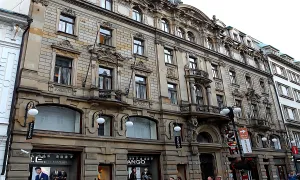
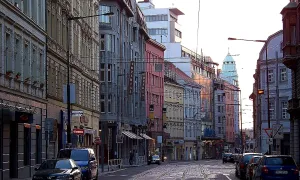
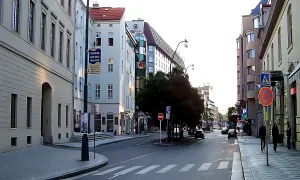
Real photos taken near the monument


Zdroj a licence jsou uvedeny u každého snímku.
Tips from visitors
No tips yet. Be the first!
Log in and add your tip.
Sources and literature
Fotografie: VitVit / CC BY-SA 4.0 — Wikimedia Commons. The author and licence also appear when you hover over the image.
Faktickým podkladem tohoto textu byl článek na Wikipedii, jehož autory jsou přispěvatelé Wikipedie. Článek je dostupný pod licencí CC BY-SA 4.0.
Location on the map
More monuments – Nové Město
Show all in the municipality


Příběhy a pověsti
Legendy, pověsti a příběhy spjaté s touto památkou

Fotografie návštěvníků
Zatím žádné fotografie. Buďte první, kdo přidá fotografii z návštěvy!
Přihlaste se a přidejte svou fotografii nebo hodnoťte.
Za ověřenou návštěvu v aplikaci získáte víc bodů — poznáme podle GPS, že jste na místě.
Reviews and comments