






Klášter Doksany Monastery
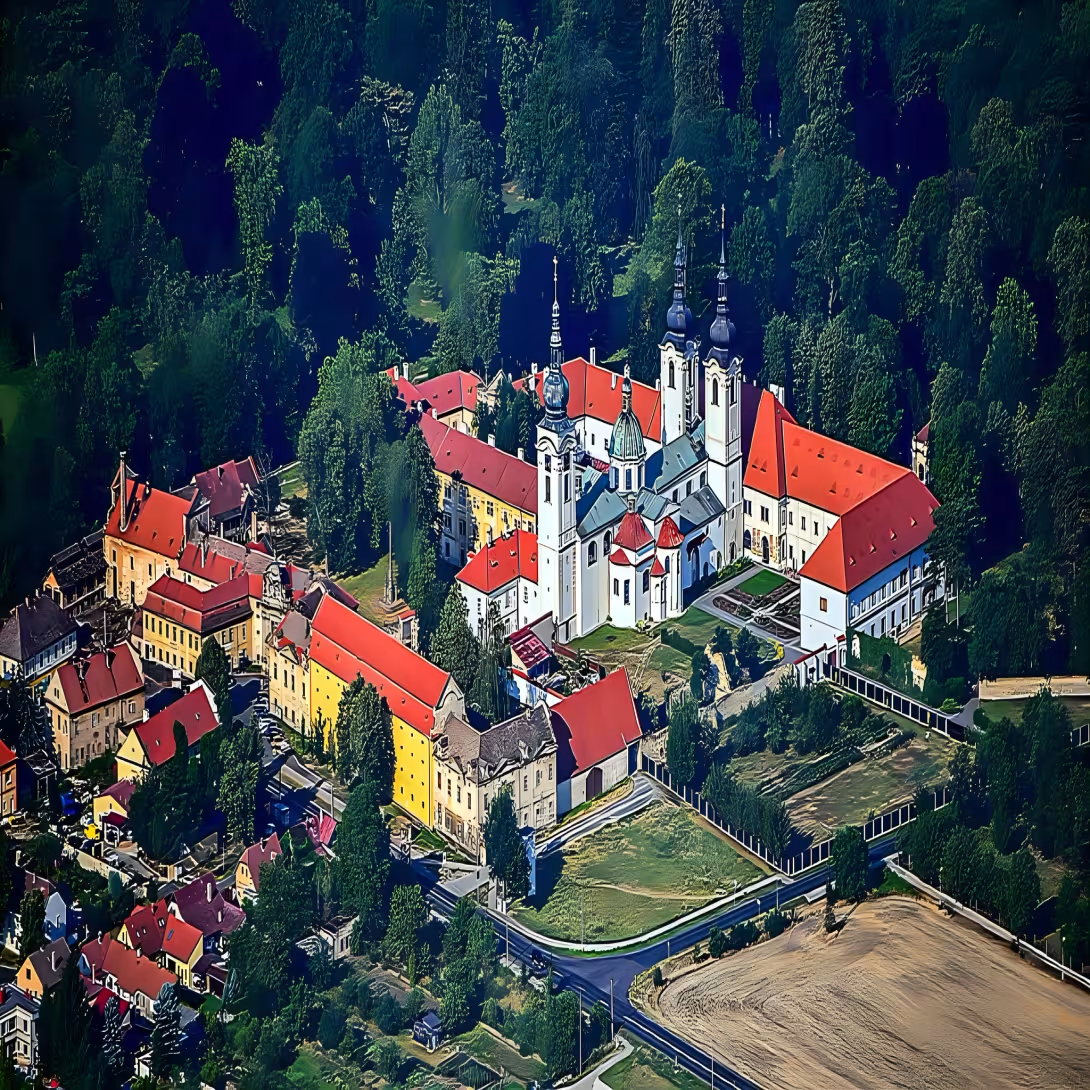
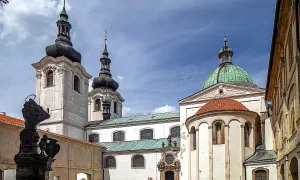
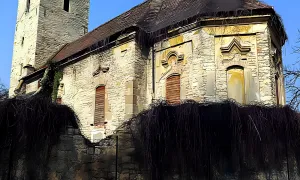
Klášter Doksany in the Litoměřice district is an extensive complex with the Church of the Birth of the Virgin Mary. The name of the monastery is allegedly derived from the Greek word doxa - fame. He was given special importance by the fact that he became the oldest monastery of the order of praemonstrats for women in the countries of the Czech Crown.
The monastery was founded around 1144 by the Czech Princess Gertruda Babenberská, daughter of Austrian Margrave Leopold III and later wife of the second Czech prince Vladislav II. The construction grew in places of strategically important - on the shore of the Ohře, on the site of an ancient serious ford across the river, in the landscape originally swamp.
Medieval and early modern history of the monastery knew dark pages. It burned down in 1200, but soon it was restored. In the 13th century he was struck by the burnt out again. Further damage was caused by Hussite storms and a 30-year war. Since the end of the seventeenth century, however, the monastery has seen development. New buildings were created, the original Romanesque church went through the baroque process. This period of prosperity lasted until the second half of the eighteenth century.
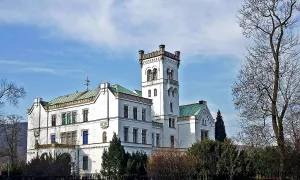
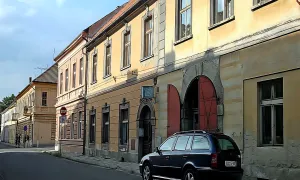
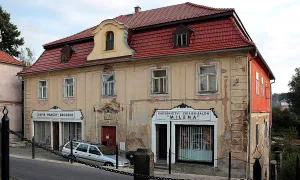
In 1782 the Josephine reforms abolished the monastery. The complex eventually turned into a chateau with an economic court. Over time a new building was built around it - the village was built east of its main gate, spread out along the Prague road and around the chateau garden. The complex also includes a cemetery with the church of St. Peter and Paul, located north of the monastery behind the sugar factory.
Since 1964, the entire ensemble has been protected as a cultural monument. Part of the monastery is owned by the Royal Cannon of Premonstrats in Strahov, part belonged to the Czech state, and the chateau part is managed by the National Heritage Institute.
Then and now
Drag the slider to compare how the landmark may have looked when it was built with the view today.
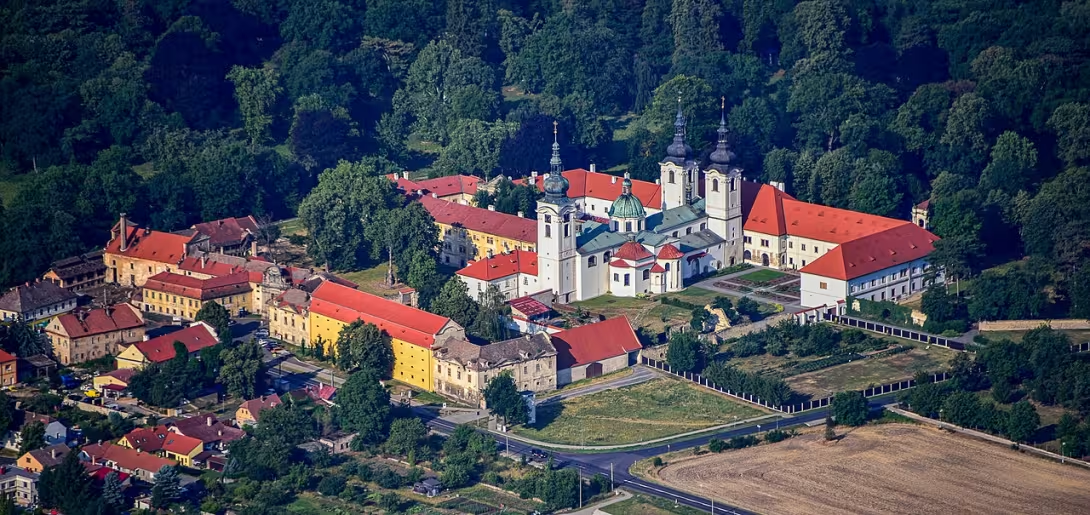

The historical appearance on the left is an AI-generated visualisation and serves as inspiration only.
Historical milestones
- 1144
- Establishment of the monastery Gertrude Babenberg, wife of Vladislav II.
- 1200
- First burned out, then restored
- 1782
- Cancellation of the monastery and conversion to the chateau
- 1964
- Listed in the list of cultural monuments
Architectural development
The original Romanesque church was rebuilt baroque in the 17th and 18th centuries. The monastery included an extensive complex with an economic court and gardens. After cancellation he served as a chateau with adjacent economic buildings. Only fragments survived from the original Romanesque form.
Historical events
- 1144
- The establishment of the monastery Gertrude Babenberg, daughter of Austrian Margrave Leopold III.
- 1200
- First burned out, then restored
- 1782
- Cancellation of the monastery in the context of the Yosefin reforms and conversion to the chateau
Owners
{'1144-1782': 'Přemyslovský principality / Czech State, then order of premonstrats', '1782-present': 'Czech State': 'Part of the monastery owned by the Royal Canon of Premonstrats in Strahov'}
Points of interest
- Klášter Doksany is the oldest monastery of the order of praemonstrats for women in the countries of the Czech Crown.
- It was founded by Czech Princess Gertruda Babenberská, daughter of Austrian Margrave Leopold III., and wife of later Czech Prince Vladislav II.
- The complex stands in a strategic place - on the bank of the Ohře, where there was a former serious ford, in the originally swamp landscape.
- The monastery was damaged several times - burned down in 1200 and again in the 13th century, followed by damage during the Hussite storms and the Thirty Years' War.
Guide
This guide is narrated by a synthetic voice generated by artificial intelligence.
Show guide text
This text was created by artificial intelligence and has not been editorially reviewed. It may contain inaccuracies.
Welcome to the monastery Doksany, one of the most important and oldest spiritual centers in our territory. You are standing here in a place where more than eight hundred years ago faith, power and strategy met. Before you is a complex that has seen many lives, prayers and historical changes in the past. Feel his silent presence - a monastery that has become the heart of the region and at the same time his key to the next times.
Let's see what's spreading out in front of you. Klášter Doksany was founded in 1144, on the bank of the Ohře, right here, where long ago before it stood an ancient ford. His founder was Gertruda Babenberská, daughter of Austrian Margrave and wife of Czech Prince Vladislav II. - a woman who by her decision gave birth to the first female monastery of the order of the praemonstrates in the countries of the Czech Crown. This was an important step because the monastery became a centre not only of prayer, but also of education and culture for women of that time.
When you look at this complex, realize that the original construction was simple but very significant. The monastery consisted of the Church of the Birth of the Virgin Mary and the monastic buildings which served the beacons. Unfortunately, already in 1200, the monastery found itself in a fire - burned out for the first time, but was subsequently restored. This shows his lasting importance and that people here wanted to maintain his spiritual and cultural function.
Now pay attention to what you see before you. In the 17th century, the monastery underwent an extensive Baroque reconstruction that gave it a new look. The Baroque elements that appear here are proof of how the monastery became part of wider cultural development. Although it was abolished and converted into a chateau in 1782, its original nature remained. Today the site is protected as a cultural monument and is managed by the National Heritage Institute, which means you can view its history as a living story.
Look at the facade of the monastery - perceive its architecture, which combines elements of the original Romanesque building with later Baroque modifications. Notice how different epochs intersect here, as if they follow each other. The monastery stands in a strategic place - on the shore of the Ohre, where paths and people met. This gave him not only spiritual but also political importance.
Let's now look at some of the key stories that relate to this place. Gertruda Babenberská, its founder, was a woman who decided to devote her life and property to the monastery. Her decision was not only a personal but also a political act - the monastery became a place where women could live in peace and devote themselves to prayer and education. That was very brave and important at the time.
Another important event is the abolition of the monastery in 1782. Josef II decided to cancel it and turn it into a chateau, which affected the whole area. Although the monastery no longer performed its original function, its buildings remained preserved and became part of the cultural heritage. Today the monastery Doksany is one of the most important monuments in the Ústí Region and attracts visitors from around the world.
Now let's look at one interesting thing that has to do with this place. Klášter Doksany was not only a spiritual centre, but also a place where the tradition of education was maintained. Ribs were studying, writing and copying manuscripts here, which was very rare at the time. This means that important cultural and spiritual texts have been created here, which have been preserved to this day.
Another interesting thing is that the monastery is located in a strategic place - on the shore of the Ohře, where there was an ancient ford long before it. This means that the monastery was not only a spiritual centre, but also a place where roads and people met. This gave him not only political but also economic importance.
Before you, there is now a place that has witnessed many lives and events. Klášter Doksany is not only a monument to the past, but also a place that can inspire you to reflect. Notice how different epochs intersect here and how the monastery survived various historical changes.
Let's take a look at what's next for you. Klášter Doksany is open to visitors who want to explore its history and atmosphere. You can walk through the area, see its interiors and perceive its spiritual energy. The monastery is also a place where various cultural events, concerts and exhibitions take place that allow you to know its history from a different perspective.
Before we say goodbye, I want to tell you that the Doksany monastery is a place worth visiting. It's a place where history, culture and spirituality meet. Notice how different epochs intersect here and how the monastery survived various historical changes. It's a place that can inspire you to reflect on what our place is in the world and what our values are.
Thank you for stopping by this important place. Klášter Doksany is not only a monument to the past, but also a place that can enrich you and bring you new knowledge. We wish you a pleasant exploration and observation of this wonderful place. May you enjoy it here and may the monastery Doksany inspire you.
Tips for visitors
{'paragraph': 'Best time to visit the monastery Doksany is in spring or autumn. At these times nature is around the monastery in full beauty - the surroundings bloom, or autumn shades of leaves appear. The temperatures are pleasant, which allows comfortable tours of the premises and surroundings. In the summer it can be quite hot near the Ohře River, while in the winter the monastery is closed to the public, so plan your visit appropriately.'}
{'paragraph': 'Parking is available around the monastery, but it is recommended to arrive by car or use public transport. The monastery is located in the heart of the village Doksany, where it is possible to find a parking lot nearby. You can find current information about availability and prices on the official site of the sights. If you arrive by bus, stops are nearby, but it is recommended to check the connection in the traffic search engine before the journey.'}
{'paragraph': 'When visiting the monastery, wear comfortable shoes because the area is partially uneven and includes outdoor corridors. It is also appropriate to take an umbrella, because there are wetlands and wet areas around. If you plan to take pictures, don't forget the batteries and memory cards because the monastery offers many beautiful places to take photos.'}
{'paragraph': 'The best places for photography are the inner spaces of the monastery, especially the Gothic church with its rich decoration, and also the surrounding area of the Ohře River, where historical buildings are reflected. It is recommended to take pictures in good light, in the morning or in the afternoon, to avoid strong sun and shadows. The monastery is beautiful even at sunset when its stone walls turn into golden shades.'
{'paragraph': The church of St. Peter and Paul, located north of the monastery, is worth visiting around the monastery. This cemetery church is also a historical monument and offers additional possibilities to explore the architecture and history of the region. Another interesting feature is the historical sugar factory, located near the monastery and represents an important industrial object with a rich past. Both of these places are only minutes away from the monastery and can be visited during one trip. '}
{'paragraph': 'For families with children a visit to the monastery Doksany is very interesting. Children can see the medieval spaces that carry them to another time. In the vicinity of the monastery there is also an opportunity to explore nature, especially the swamps and shores of the Ohře River, where children can observe plants and animals. It is also recommended to visit the church of St. Peter and Paul, where children can see ancient graves and statues, which is interesting and educational for them.'}
Frequently asked questions
Is Klášter Doksany open to the public?
Yes, he's open to the public. Opening hours: Tuesday to Sunday from 9: 00 a.m. to 5: 00 p.m.
How do I get to the place by car / public transport?
You can get by bus 650 from Liberec or by bus 630 from Ústí nad Labem. The bus stop is right at the monastery.
How much is the entrance fee and is it paid on the spot?
Payment is made on site.
Is the tour suitable for children and seniors?
Yes, it's suitable for all ages. For families with children we recommend a tour of the monastery with a guide.
How long does the tour take?
The tour takes approximately 1-2 hours, depending on your pace and interest.
What are the opening times and booking is required?
Klášter Doksany is open to the public from Tuesday to Sunday from 9: 00 to 5: 00. Reservation is not necessary, but it is recommended for groups over 10 people.
What's interesting in the immediate vicinity?
In the vicinity you will find a nature reservation and other sights such as a chateau in a nearby village. We recommend to visit the nearby river, which offers beautiful views.
For kids
Imagine coming back 882 years. You go back to a time when everything was completely different. It was a different country, different people, different places. And right now, you're on your way to the oldest monastery in our country - Klášter Doksany.
It was like entering a fairy tale when I first approached the monastery. He stood there like a rock that grew out of the earth thousands of years before even the oldest person you've ever seen was born. It was a Romanesque building built by the tanker brothers in 1144.
Businesses nearby
Do you run a restaurant, accommodation, shop, museum, rental, wellness or other visitor service near this monument? Show yourself directly to the people heading to it — this is how they will see you in the app and on the web:
Events nearby




Zdroj akcí: otevřená data měst a obcí ČR (Národní katalog otevřených dat) a kalendář akcí Národního památkového ústavu.
Nearby
{'Natural Elements': {'Overflow': 'River flowing through the monastery area', 'Swamp': 'Original Wet Landscape'}, 'Monuments': {'Church of St. Peter and Paul': 'Cemetery Church north of the monastery', 'Confectioner': 'Historical Industrial Object'}}}
Accommodation nearby
Trips and activities nearby
Guided tours, tickets and activities nearby from GetYourGuide
Affiliate link: if you buy from the partner, we may receive a commission. The price for you does not change.
Search tours and activities →Themed route
Thematic cruise route: Klášter Doksany and its surroundings
1.Klášter Doksany * Type: * Gothic monastery with rich history. It's a unique monument with a picturesque garden and the chapel of St. Anne. It is worth visiting for its architecture and quiet atmosphere.
2. Church of St. Peter and Paul * Type: * cemetery church north of the monastery. It is a small but historically valuable building that complements the monastery area. Suitable for a short turn while walking.
3. Natural walk along the river Ohře * Type: * Natural circuit (about 3 km). The Ohře River flows through the monastery area and offers a quiet surroundings with the possibility of nature observation. Ideal for relaxation.
4. Swamps at Doksan * Type: * Wet landscape with rich plant and animal world. It is worth visiting for unique natural diversity and the opportunity to know the original environment.
* Recommended order: * Start at the monastery Doksany, continue to the church of St. Peter and Paul, then walk along the Ohře and end with visiting swamps. The entire route is approximately 5- 6 km, with the possibility to adjust the length.
Seasonal recommendations
Spring In Doksany, spring manifests itself as a period of calm and awakening nature, when the monastery surrounded by flowering orchards and meadows becomes an ideal place for walking. Specific is soft light, which in the morning emphasizes the Gothic details of the facade and green shadows of trees in the monastery park. The air is fresh, but still cold, and the atmosphere is calm, almost meditative, because the tourist crowds are not as numerous as in summer. It is practically advisable to visit the monastery early in the morning or in the morning when the light is the most beautiful and the traffic is lower. It is recommended to dress in layers - warm jackets for morning cold, but lighter sweater for sunny places. In April and May there is also an ideal time for bird watching in the surroundings, as nature is in full bloom.
Summer Summer brings a lively atmosphere to Doksan, where the monastery looks like a fairy tale - the shadows of trees play on stone walls, and visitors roll into the monastery yard in warm days. Specific is long daylight that allows you to explore even smaller details such as gothic windows or frescoes in the interior. In the main summer season (July-August), however, expect larger crowds, especially in the afternoon when there are most tourists. It is recommended to arrive early morning or late afternoon to avoid the busiest moments. Suitable is light but covering clothing - the monastery has no air conditioning, and the interior can be stuffy. Walking around the area is pleasant, but don't forget the sunscreen and hat, as the sun in the Ústí Region can be strong.
Autumn Autumn in Doksany offers a unique combination of colors and calm - green trees gradually turn colour into golden and red shades that are reflected in the monastery windows. The changing light is also specific, which in September and October creates warm, golden tones, while in November there is already a colder, bluer touch. The atmosphere is quiet and nostalgic, for most tourists have already left, and the monastery acts almost as a private treasure. Practically the best time to visit from September to mid-October is when the weather is still pleasant, but the crowds are minimal. Clothes should be warm, but not too rough - morning and evening cold quickly turn into a sunny afternoon. In November it is appropriate to count on rain and wind, so waterproof shoes and waterproof layers are necessary.
Winter Winter Doksany is a magical place where a monastery surrounded by snow and ice acts like a fairy tale. Specific is the short daylight that emphasizes dark stone walls and silver shine of snow, while in the interior of the monastery there is a warm, almost intimate atmosphere. In Advent Time (December) the monastery appears to be a cosy sanctuary, although opening hours are shortened. Practically, it is best to visit him in the morning when light is the most beautiful and cold less demanding. It is recommended that warm but comfortable clothes - layers that can be easily added or removed, and warm shoes on the snow cover. In January and February the monastery can be closed due to adversity of weather, so it is advisable to check the opening hours in advance. Winter visit is ideal for those who seek peace and magic of the winter landscape.
Visualizations and artistic views


The visualisations are generated by artificial intelligence and serve as inspiration.
Photos from the area
Real photos taken near the monument


Zdroj a licence jsou uvedeny u každého snímku.
Tips from visitors
No tips yet. Be the first!
Log in and add your tip.
Sources and literature
Fotografie: Wolkenkratzer / CC BY-SA 4.0, rozlišení zvýšeno umělou inteligencí — Wikimedia Commons. The author and licence also appear when you hover over the image.
Faktickým podkladem tohoto textu byl článek na Wikipedii, jehož autory jsou přispěvatelé Wikipedie. Článek je dostupný pod licencí CC BY-SA 4.0.
Location on the map
Příběhy a pověsti
Legendy, pověsti a příběhy spjaté s touto památkou
Fotografie návštěvníků
Zatím žádné fotografie. Buďte první, kdo přidá fotografii z návštěvy!
Přihlaste se a přidejte svou fotografii nebo hodnoťte.
Za ověřenou návštěvu v aplikaci získáte víc bodů — poznáme podle GPS, že jste na místě.
Reviews and comments