






Kostel Narození Panny Marie v Doksanech Church
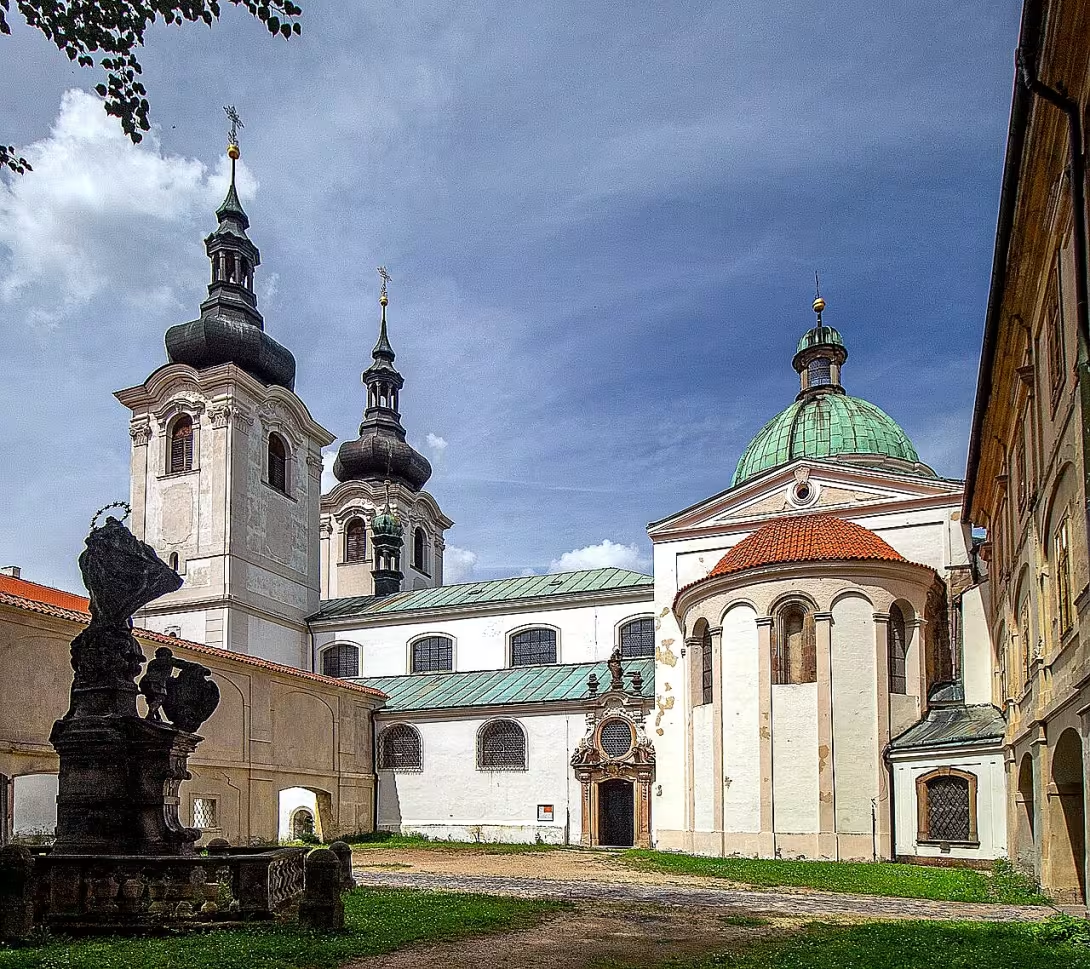
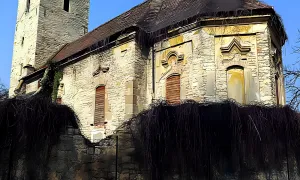
The Church of the Nativity of the Virgin Mary in Doksany is a former Premonstratensian monastery church located in Doksany, near Litoměřice in Ústecký kraj, Czech Republic. Constructed around 1200 as a Romanesque basilica, it features a unique crypt where Czech princess Gertruda Babenberská was buried. The church underwent significant Baroque transformations between 1710 and 1720 under architect Thomas Haffenecker, earning its status as a cultural monument of the Czech Republic since 1964.
The foundation dates back to 1143 when it was established by Gertruda Babenberská, wife of Vladislav II. This period marked significant religious and cultural development in Bohemia under the Přemyslid dynasty, reflecting broader ecclesiastical trends across Europe with the establishment of monastic communities.
Architecturally, the church began as a Romanesque basilica around 1200. It underwent substantial Baroque transformations between 1710 and 1720 led by Thomas Haffenecker. These changes included adding a dome in 1718, a tower in the eastern apse, and stucco decorations by Rochus Bayer in 1720. Frescoes depicting Old Testament themes were added by Jan Hiebel from 1720 to 1732, enhancing its artistic form.
Throughout its history, Kostel Narození Panny Marie v Doksanech has been associated with notable figures such as Gertruda Babenberská and sv. Anežka Česká, who was educated there. The church's crypt contains Romanesque columns with various capitals, adding to its historical intrigue.
In recent years, the church has benefited from preservation efforts under the Program záchrany architektonického dědictví, receiving 6,700,000 Kč for restoration between 1995 and 2014. Today, it remains a significant cultural site, offering visitors insight into its rich history and architectural evolution.
Visiting the Church of the Nativity of the Virgin Mary in Doksany provides an opportunity to explore the blend of Romanesque and Baroque styles within its walls. The church's unique crypt and artistic decorations make it a compelling destination for those interested in historical architecture and ecclesiastical heritage. Its preservation ensures that this monument continues to be appreciated by future generations, inviting visitors to delve into its storied past.
Then and now
Drag the slider to compare how the landmark may have looked when it was built with the view today.
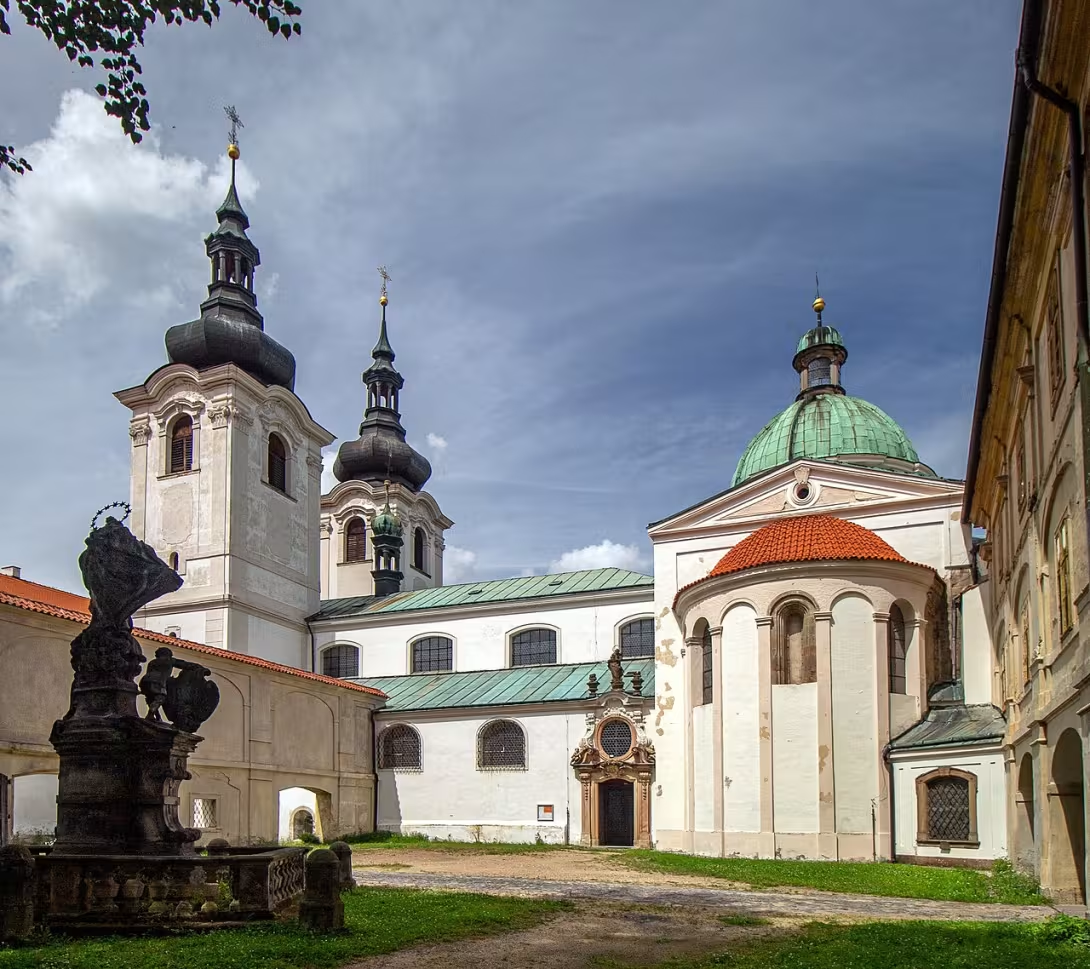
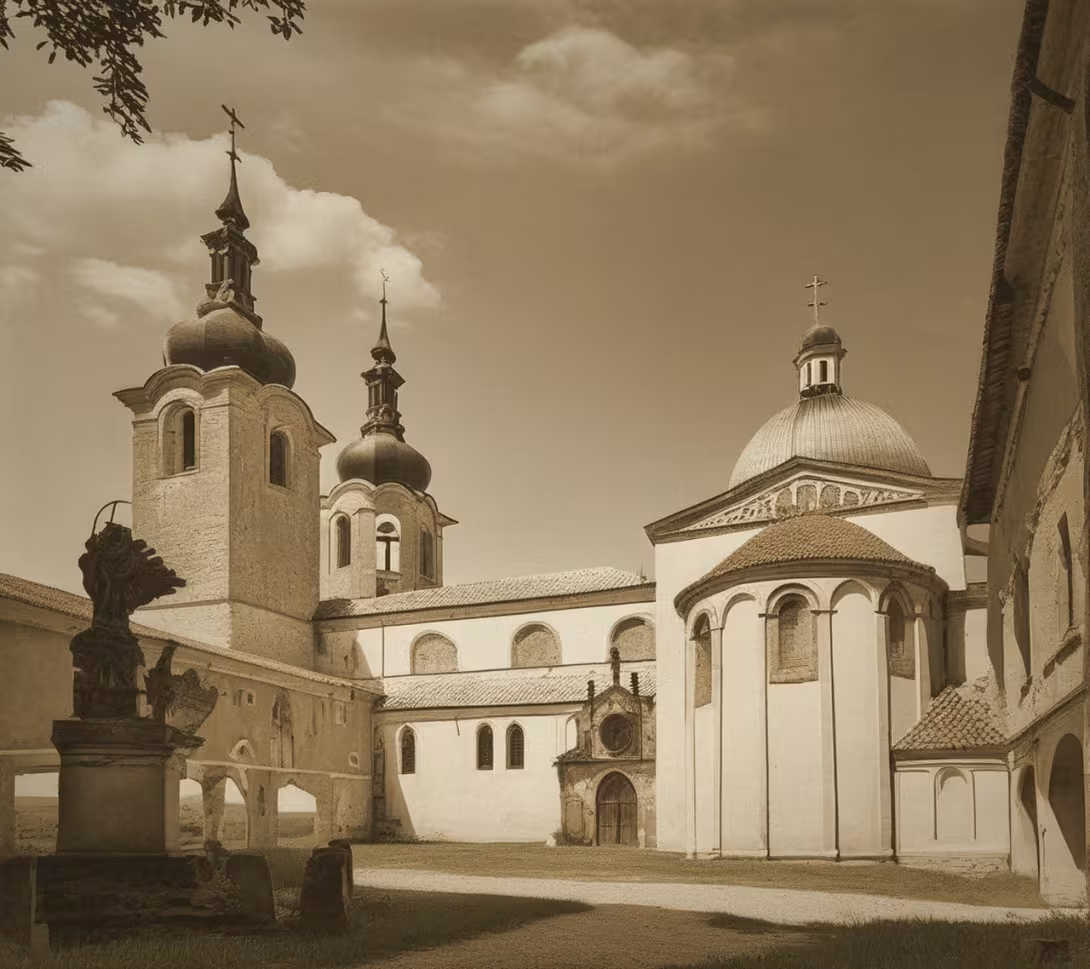
The historical appearance on the left is an AI-generated visualisation and serves as inspiration only.
Historical milestones
- 1143
- Foundation of the Premonstratensian monastery.
- c. 1200
- Construction of the Romanesque basilica.
- 1710-1720
- Baroque renovations led by architect Thomas Haffenecker.
- 1964
- Designated as a cultural monument of the Czech Republic.
- 1995-2014
- Restoration under the Program for Saving Architectural Heritage.
Architectural development
The church began as a Romanesque basilica around 1200 and was later transformed into its current Baroque style between 1710 and 1720. Architectural changes included the addition of a dome, a tower in 1718, and stucco decorations by Rochus Bayer in 1720. Frescoes depicting Old Testament themes were added by Jan Hiebel from 1720 to 1732.
Historical events
1143: Foundation of the church by Gertruda Babenberská, wife of Vladislav II.
1710-1720: Baroque transformation led by Thomas Haffenecker.
Points of interest
- The Church of the Nativity of the Virgin Mary in Doksany is one of the few places where visitors can explore a crypt with Romanesque columns featuring an array of capitals, each uniquely carved and offering insights into medieval craftsmanship.
- Despite its Baroque transformation, the church retains elements of its original Romanesque structure. This juxtaposition provides a rare architectural narrative that showcases the evolution from the 12th to the early 18th century within a single building.
Guide
This guide is narrated by a synthetic voice generated by artificial intelligence.
Show guide text
This text was created by artificial intelligence and has not been editorially reviewed. It may contain inaccuracies.
Welcome to the Church of the Nativity of the Virgin Mary in Doksany, a remarkable testament to centuries of history and architectural evolution nestled here in Ústecký kraj. As you stand before this majestic structure, take a moment to absorb its grandeur—a harmonious blend of Romanesque roots and Baroque elegance that has withstood the test of time.
The story of this church begins in 1143 when it was founded as a Premonstratensian monastery by the Czech princess Gertruda Babenberská. Originally constructed around 1200, the building started its life as a Romanesque basilica—a style characterized by its robust and sturdy design. Imagine stepping back into that era, where each stone laid contributed to what would become one of the most significant religious sites in this region.
As you look upon the church today, notice how it has gracefully transitioned through time. Between 1710 and 1720, architect Thomas Haffenecker led a series of Baroque transformations that infused the structure with ornate details and grandeur. The interplay between the original Romanesque elements and these later additions creates an architectural dialogue that is both intriguing and visually captivating.
Pay special attention to the crypt below you. It's one of the few places where visitors can explore such a feature, complete with uniquely carved Romanesque columns. Each capital tells its own story through intricate designs, offering insights into medieval craftsmanship and artistry. As you wander through this space, let your imagination take flight—consider the countless feet that have trodden these stones over centuries.
This church is not just an architectural marvel; it's a tapestry woven with stories of historical figures. Gertruda Babenberská herself rests here, her legacy intertwined with this sacred place. Legends also speak of other notable personalities like Vladislav II and the revered světice Anežka Česká, whose lives have left an indelible mark on Doksany's spiritual heritage.
Now, let your curiosity guide you further. This church is not only a site of worship but also a cultural beacon, recognized as a national cultural monument since 1964 and undergoing extensive restoration from 1995 to 2014 under the Program for the Rescue of Architectural Heritage. Each stone here tells a story of resilience and renewal.
As your journey through this historical gem comes to an end, I invite you to linger in its presence, soaking up the atmosphere that has been shaped by centuries of devotion and artistry. Thank you for joining me on this exploration; may it inspire you to delve deeper into the rich tapestry of history that surrounds us.
Tips for visitors
The best time to visit Kostel Narození Panny Marie v Doksanech is during the late spring or early autumn months. During these times, the Bohemian countryside surrounding the church offers a picturesque setting with lush greenery and vibrant colors, enhancing your experience of this historical site. Additionally, visiting outside of peak tourist seasons can result in fewer crowds, allowing for a more intimate exploration of the church's unique Romanesque crypt and serene surroundings.
Parking and transportation options are convenient for visitors to Doksany. The area is accessible by both car and public transport. If you're driving, there are parking facilities nearby where you can leave your vehicle. For those preferring public transport, various routes connect the region with major cities like Litoměřice. It's advisable to check current transportation options in advance using a travel planner or local resources to ensure smooth access to the church.
When visiting Kostel Narození Panny Marie v Doksanech, it is recommended to bring comfortable walking shoes as you may want to explore not only the church but also its surrounding historical complex. Additionally, consider carrying a small backpack with water and snacks, especially if you plan on spending several hours at the site or exploring nearby attractions. A camera or smartphone for capturing photos of the stunning architecture and landscape is also advisable.
For photography enthusiasts, some of the best spots to capture Kostel Narození Panny Marie v Doksanech include the church's exterior during golden hour when the light accentuates its architectural details. Inside, the unique Romanesque crypt offers intriguing angles and shadows that can create compelling images. Be mindful of lighting conditions as natural light varies throughout the day, impacting how different features are illuminated.
Nearby attractions within a 30-minute drive include other historical structures in Doksany's larger complex. These offer additional insights into the region’s rich history and cultural heritage. Exploring these sites can provide a broader context to your visit at Kostel Narození Panny Marie v Doksanech, making for a more enriching experience.
For families with children visiting Kostel Narození Panny Marie v Doksanech, the site offers an educational and engaging experience. The church's history and architecture can captivate young minds, especially when exploring the crypt where Czech princess Gertruda Babenberská was buried. Additionally, the surrounding Bohemian countryside provides ample space for children to explore and enjoy outdoor activities.
Businesses nearby
Do you run a restaurant, accommodation, shop, museum, rental, wellness or other visitor service near this monument? Show yourself directly to the people heading to it — this is how they will see you in the app and on the web:
Events nearby



Zdroj akcí: otevřená data měst a obcí ČR (Národní katalog otevřených dat) a kalendář akcí Národního památkového ústavu.
Nearby
Located in Doksany, near Litoměřice in Ústecký kraj, the church is part of a larger complex of buildings that includes other historical structures. The surrounding landscape features typical Bohemian countryside.
Accommodation nearby
Trips and activities nearby
Guided tours, tickets and activities nearby from GetYourGuide
Affiliate link: if you buy from the partner, we may receive a commission. The price for you does not change.
Search tours and activities →Themed route
Tematická výletní trasa: Kostel Narození Panny Marie v Doksanech
1. Kostel Narození Panny Marie - *Typ:* Historický kostel a klášter - *Proč stojí za návštěvu:* Tento barokní kostel, postavený v 18. století, je hlavním přitažením obce Doksany. Je známý svou bohatou architekturou a historickým významem jako součást klášterního komplexu. Navštěvující mohou ocenit jeho impozantní interiér, který zahrnuje krásné fresky a sochy.
2. Klášter Doksanských benediktinů - *Typ:* Klášterní komplex - *Proč stojí za návštěvu:* Tento klášterní komplex je součástí historického areálu kolem kostela. Je zajímavý pro svou architekturu a důležitost v historii obce. Navíc zde lze objevit knihovnu s bohatou sbírkou starých rukopisů, které představují kulturní dědictví regionu.
3. Kaplička Panny Marie - *Typ:* Kaple - *Proč stojí za návštěvu:* Tato malá kaplička je umístěna v blízkosti klášterního komplexu a slouží jako místo modlitby a útočiště. Je známá svým klidným prostředím, které nabízí návštěvníkům příležitost k odpojení a reflexi ve všechenkrát proslulém Bohemickém krajině.
4. Nádvoří kláštera - *Typ:* Historické nádvoří - *Proč stojí za návštěvu:* Nádvoří je centrem klášterního komplexu a nabízí pohled na jeho architektonickou krásu. Je to ideální místo pro relaxaci, fotografii nebo prozkoumání okolních budov s jejich historickými detaily.
Tato trasa vám umožňuje prozkoumat bohaté kulturní a duchovní dědictví obce Doksany, zatímco si užijete klidnou a přitažlivou Bohemickou krajinu.
Seasonal recommendations
Jaro: In the spring, the Church of the Nativity of the Virgin Mary in Dolní Kounice is illuminated by warm light that highlights its architectural beauty. Flowers begin to bloom around the church, adding colorful splendor to the area and creating an idyllic atmosphere. Visitors can expect mild temperatures and low crowd levels, making it an ideal time for a peaceful tour. It's recommended to wear comfortable shoes due to potential wet conditions and bring a camera to capture the radiant spring landscape.
Léto: Summer in Dolní Kounice offers long days filled with sunshine that lights up the church and attracts many visitors. The atmosphere is lively and warm, with trees in full leaf around the monument. During peak summer season, large crowds often gather, so it's advisable to visit early in the morning or later in the evening for a more tranquil tour. Wearing light clothing and bringing sunscreen are important due to the hot conditions.
Podzim: In the autumn months, the Church of the Nativity of the Virgin Mary in Dolní Kounice transforms into a colorful spectacle as tree leaves turn vibrant shades of gold and red. This seasonal change adds a romantic atmosphere ideal for photography or leisurely strolls. Visitors can expect mild temperatures and smaller crowds compared to winter, making autumn an ideal time to visit. It's recommended to wear layered clothing to accommodate quick weather changes.
Zima: Winter in Dolní Kounice means cold temperatures and beautiful snow cover around the Church of the Nativity of the Virgin Mary. This period brings a calm and quiet environment perfect for those seeking respite from summer life. Opening hours may be limited due to winter conditions, so it's important to check before visiting. Wearing warm clothing and appropriate shoes is key for a comfortable experience in cold weather. Despite potential limitations, winter offers a unique opportunity to admire the church's confident architecture illuminated by lightning and light.
Visualizations and artistic views


The visualisations are generated by artificial intelligence and serve as inspiration.
Photos from the area
Real photos taken near the monument


Zdroj a licence jsou uvedeny u každého snímku.
Tips from visitors
No tips yet. Be the first!
Log in and add your tip.
Sources and literature
Fotografie: VitVit / CC BY-SA 4.0 — Wikimedia Commons. The author and licence also appear when you hover over the image.
Faktickým podkladem tohoto textu byl článek na Wikipedii, jehož autory jsou přispěvatelé Wikipedie. Článek je dostupný pod licencí CC BY-SA 4.0.
Location on the map

Příběhy a pověsti
Legendy, pověsti a příběhy spjaté s touto památkou
Příběh: Kostel Narození Panny Marie v Doksanech
Bylo to v pondělí ráno, kdy Martin zjistil, že jeho život je na rozcestí. Jak se probudil po dlouhém, plném nočních můr spánku, cítit jejich neodvratné stíno…
Číst příběh
Pověst: Kostel Narození Panny Marie v Doksanech
Podle místní pověsti, která se v Doksanech šeptá od nepaměti, nespal klášter nikdy tak klidně jako v noci, kdy ho střežila sama zakladatelka. Gertruda Baben…
Číst příběhFotografie návštěvníků
Zatím žádné fotografie. Buďte první, kdo přidá fotografii z návštěvy!
Přihlaste se a přidejte svou fotografii nebo hodnoťte.
Za ověřenou návštěvu v aplikaci získáte víc bodů — poznáme podle GPS, že jste na místě.
Reviews and comments