






klášter milosrdných bratří (Štýřice) Monastery
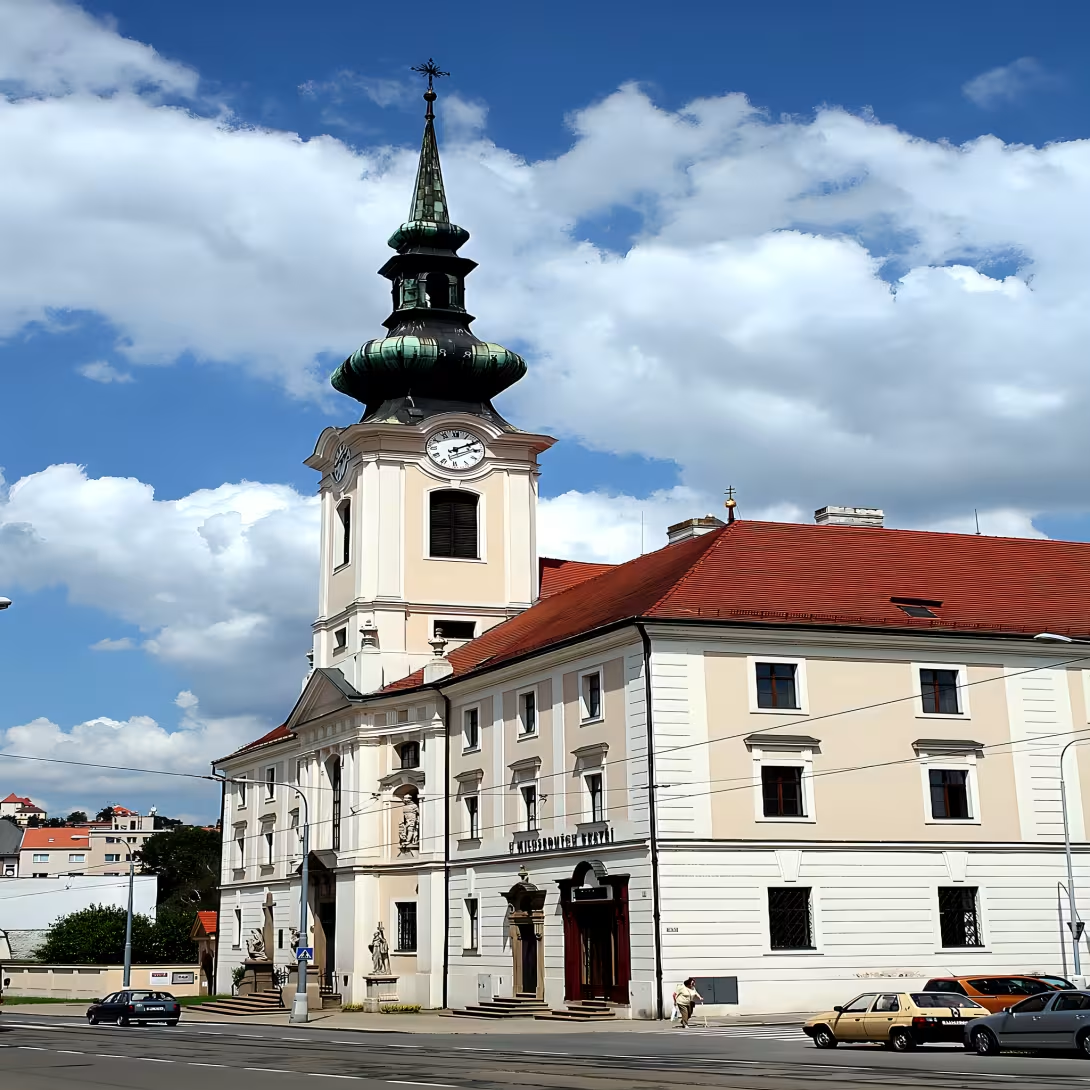
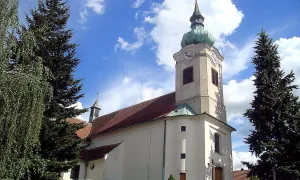
The monastery with the church of St. Leopold forms an integral part of the monastery area of the Hospital Order of St. John of God, whose mission is healing and social work. In close proximity to the Convention, the Hospital of the Merciful Brothers is located, which since its inception is inseparably part of the work of the Order. The monastery building and the church have since 1995 been protected as a cultural monument of the Czech Republic.
The Order came to Brno in 1747 when the monastery with the hospital was founded on the initiative of Jan Leopold of Ditrichstein, who contributed financially to its creation. The first buildings were smaller hospitals and other objects of the convention that allowed brothers to carry out their charitable mission. The construction of St. Leopold's church itself followed later, when the community had already established itself. Since then, the hospital has gradually expanded and developed to accommodate an increasing number of patients. In the 1930s, a more modern hospital building was built, which was in line with the demands of medicine.
The period of the Communist regime meant a major interruption for the order. The government seized the buildings of the monastery and the hospital, interrupting more than two centuries of tradition. Turnover came after 1989. The state authorities have returned the monastery buildings and the hospital to the order of merciful brothers. The Order subsequently rented the hospital to the city of Brno at a symbolic price, which allowed the maintenance of health services for the public to continue.
The class of cultural and physical condition of the objects requested a thorough restaurant. Between 1997 and 2004, the convention and the church of St. Leopold were completely repaired, thus restoring their architectural and functional qualities. Members of the Order have long held spiritual administration in the church within the parish of Brno- Staré Brno Brno Diocese, and until 2014 they served as spiritual administrators.
The visitor of memory awaits a place connecting the course of eight centuries of Christian charity and care for the sick. The architecture and environment of the monastery tell about the loyalty of the brothers and their integrity to the local society, which they served in the long term even in the most complex historical moments.
Then and now
Drag the slider to compare how the landmark may have looked when it was built with the view today.
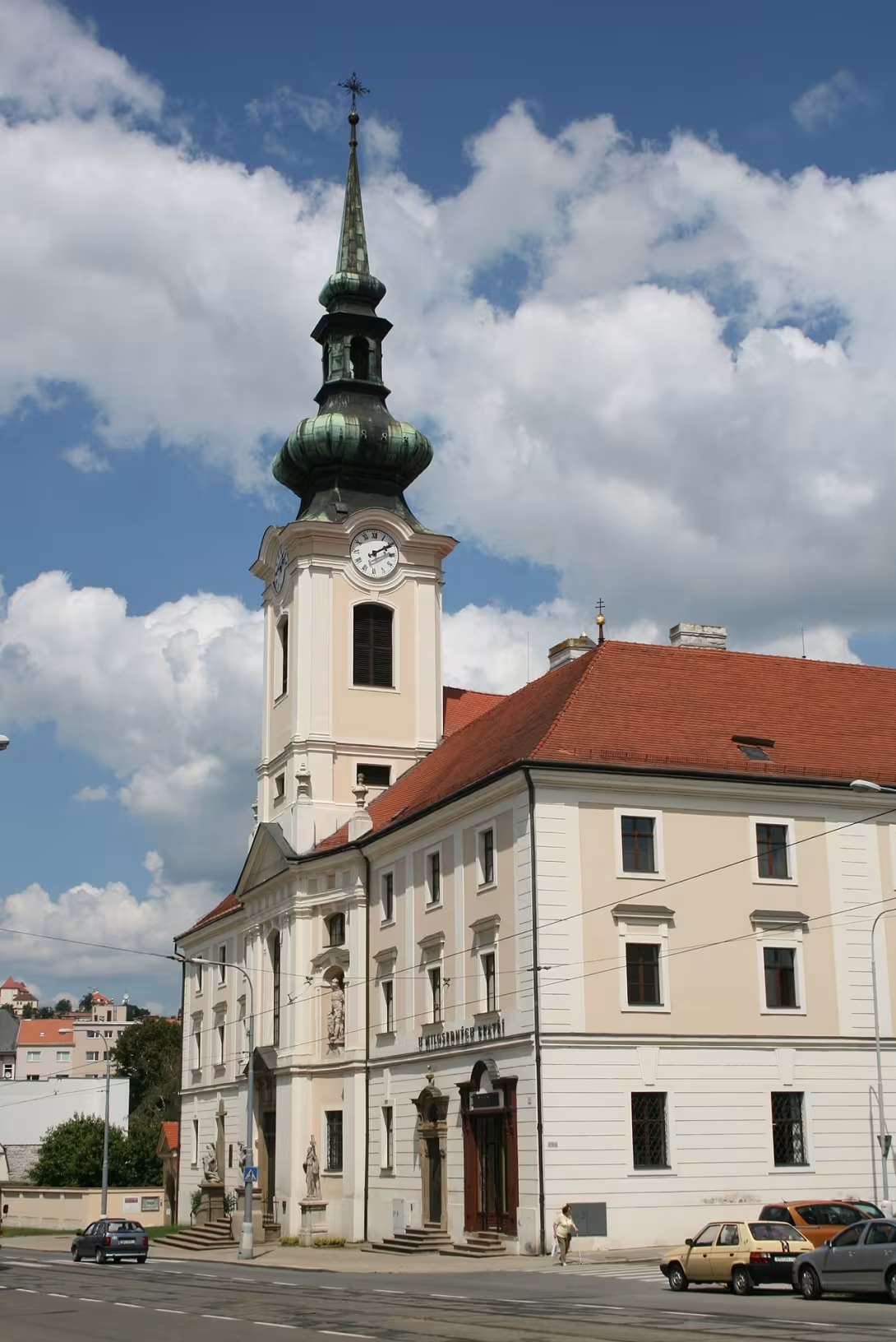

The historical appearance on the left is an AI-generated visualisation and serves as inspiration only.
Historical milestones
- 1747
- The establishment of a monastery and hospital based on the financial support of Jan Leopold of Ditrichstein.
- 1930s
- New hospital building built.
- 1989
- State seizure of monastery and hospital buildings.
- 1997
- Return the monastery and hospital of the order of merciful brothers.
Architectural development
The original monastery and smaller hospitals were built in the 18th century in Baroque style. The church of St. Leopold was realized later, probably during the 18th century. The hospital was extended to a new building in the 1930s. In the years 1997- 2004, a complete reconstruction of the monastery and church was carried out, which preserved the original architectural character.
Historical events
- 1747
- The establishment of a monastery and hospital based on the initiative of Jan Leopold of Ditrichstein.
- 1930s
- New hospital building built.
- 1997-2004
- A complex repair of the monastery and church.
- 2014
- The end of spiritual rule at St. Leopold's Church.
Owners
- 1747-1989
- 1989- 1997
- since 1997
Points of interest
- The monastery with the church of St. Leopold was founded in 1747 on the initiative of John Leopold of Ditrichstein, who contributed financially to its establishment.
- The monastery and hospital buildings were seized by the state during the communist regime, which interrupted the tradition of over two centuries.
- After 1989, the monastery buildings and hospitals were returned to the order of merciful brothers, which subsequently rented the hospital to the city of Brno at a symbolic price.
Guide
This guide is narrated by a synthetic voice generated by artificial intelligence.
Show guide text
This text was created by artificial intelligence and has not been editorially reviewed. It may contain inaccuracies.
Welcome to the monastery complex in Styřice. Right now, when you're standing here listening, you're in a place that's much more than just a set of walls and roofs. Before your eyes, there is a space that is living witness to centuries of human compassion, deep faith and dramatic political upheaval. Feel the atmosphere of peace and dignity that exists here, and look at these buildings as a whole, designed to serve human suffering and offer hope. This complex, made up of a monastery, the church of St. Leopold and the adjoining hospital, creates a harmonious environment that will now invite you to travel through time.
To understand why this place looks the way you see it, we have to go back deep into the past, namely, 1747. At that time, care for the poor and the sick was not commonplace, but required great will and unwavering generosity. It was at that time that this monastery and hospital was founded thanks to the initiative and significant financial support of Jan Leopold of Ditrichstein. He was a man who, at a time when social care was based, understood that society needed a place to combine spiritual support with practical medical assistance. Thus the Hospital Order of St. John came from God, who became his seat. His mission was mercy, which is a word you should keep in mind when you look at these walls. This whole project was not just about building walls, but about creating a safe haven for those who had no one else.
Now pay attention to the architecture that now surrounds you. This whole complex is an excellent example of the baroque style that dominates this place. Baroque architecture isn't just about decorating, it's about feeling monumental, about certain rhythm, and trying to create a space that looks noble. Feel how individual buildings complement each other and communicate. The church of St. Leopold, which is an integral part of the complex, represents its spiritual centre, while the monastery and hospital buildings form a practical background for the life of order and for patients. Although individual parts may seem massive, their forming and rhythm of facades create a sense of stability and security. Focus on how these different functions - prayer, life of monks and care for the sick - connect to one architectural unit that acts as one organism. The Baroque style here creates a framework that gives everything around clear order and meaning.
But as time revolves, people's needs are constantly changing. Although the foundation was laid in the mid-eighteenth century, the site had to gradually respond to new challenges and growing demands for quality care. Let us now look at another important epoch in the history of this place. In the 1930s, there was a significant modernization when a new hospital building was built. This change was necessary so that patient care could be in line with the growing demands of the time and that it could fulfil its role more effectively. This step shows that this monastery has never been just a static monument to the past, but a dynamic place that has constantly sought to improve its services to humanity.
But history also has its shady and painful aspects that you should not overlook. Imagine the moment when this long-standing order and its traditions suddenly stopped. In 1989, at a time of great political change and the advent of the Communist regime, an event took place that shook the very essence of this place. The state confiscated the monastery and hospital buildings. This event was not just about taking over property, it was a deep blow to a tradition that lasted at this place for more than two centuries. The continuity of care was interrupted, the continuity of prayer was interrupted and the continuity of life that has been going on here continuously since 1747. A place to be a symbol of mercy became part of the state apparatus and its original spirit was suppressed.
Although it seemed at that time that the era of the merciful brothers in this place ended forever, history resulted in an unexpected and joyous twist. After the fall of the regime and subsequent political transformations, the effort to rectify and restore justice was lost. And so something fundamental happened in 1997 - the monastery and the hospital were successfully returned to the order of merciful brothers. This moment was like a return to the soul of this place. A tradition that was violently interrupted could redevelop and continue what was started hundreds of years ago. Today we see the result of this effort: the monastery is once again actively used by the order for its original mission, while the hospital part, even though it is now rented, is still in charge of people.
You're standing in front of a place that could outlast a storm of time, political upheaval, and uncertainty, and return to its roots. It's a place where history meets the presence of every stone block and every space you're going through. It is a symbol of endurance and humanity that will not be broken. But now we invite you to continue your search. Explore the surroundings, perceive the peace and quiet that exists here, and try to imagine the hundreds of years of life that have taken place here, from the first stones laid by Jan Leopard of Ditrichstein to this day. Thank you for spending this moment with us and for choosing to recognize this historic space. We wish you a pleasant journey.
Tips for visitors
{'paragraph': 'The best time to visit the Monastery of the Merciful Brothers is in the summer months, especially in June and September. At these times, the weather is pleasant and you can see the monastery in the sunshine, which highlights its Baroque architecture. In summer there are also often cultural events or tours that can enrich the visit. In winter the monastery is calmer, ideal for quieter tours and meditation.'}
{'paragraph': 'Parking around the monastery is possible in nearby parking lots. It is recommended to arrive by car as public transport to Styřice is not very common. Current information about parking possibilities and connections can be found on the official site of the sights or in local information. The monastery is situated close to the hospital, so it is worth arriving at a place with enough time to park.'}
{'paragraph': 'When visiting the monastery, wear comfortable clothes and shoes, as the tour includes indoor spaces with stone floors. It is also appropriate to take a map or brochure with information about the monastery, which they often provide at the entrance. If you are planning to photograph, do not forget the camera or mobile phone with sufficient storage space. The interior is often restricted by the use of lightning.'}
{'paragraph': 'The best places for photography are primarily the exterior of the monastery, especially its baroque facades, and the interior of St. Leopold's church. It is recommended to take pictures in good light, in the morning or in the afternoon, when the light is not too strong and creates pleasant shadows. In the interior of the church it is advisable to photograph at the lighting, which emphasizes its architecture and decoration.'}
{'paragraph': There are several interesting places in the vicinity of the monastery within 30 minutes' distance. You can visit the adjacent Hospital of the Merciful Brothers, which is part of the complex and serves as a medical facility. The next place is St. Leopold Church, which is directly connected to the monastery and offers rich Baroque decoration. For families with children it is also advisable to visit surrounding natural areas such as parks or forests around Styřice. '}
{'paragraph': 'For families with children, the monastery is interesting mainly because of its historical importance and calm environment. Children may be intrigued by the decoration of St. Leopold's Church or by the stories of the Hospital Order. In the vicinity of the monastery you can find even small walking routes that are suitable for family trips. It is also recommended to visit an adjacent hospital where children can see how the medical facility works and get practical information.'}
Frequently asked questions
Is klášter milosrdných bratří (Štýřice) open to the public?
Yes, the monastery is open to the public. The best time to visit is from April to October, when tours are possible every day except Monday and Tuesday.
How do I get to the place by car / public transport?
The monastery is available by bus No. 76 from public transport station UAN Brno or by own car, which can be parked in the vicinity of the monastery.
How much is the entrance fee and is it paid on the spot?
Payment is made directly at the monastery cash register.
Is the tour suitable for children and seniors?
Yes, a visit to the monastery is also suitable for families with children as well as for seniors. The monastery has wheelchair access.
How long does the tour take?
The tour takes approximately 1 hour.
What are the opening times and booking is required?
The monastery is open from 9: 00 to 5: 00. Reservation is not necessary, but for groups of over 10 persons it is recommended to contact in advance.
What's interesting in the immediate vicinity?
In the immediate vicinity of the monastery there is a park Štýřice where you can make a pleasant walk. The church of St. James and other historical monuments are located nearby.
For kids
Imagine going back 279 years, until the monastery of the merciful brothers in Brno was still young and full of life. It's like he's looking at old pictures today, trying to imagine what it was like.
At that time, there were many people who cared for the sick and the poor. The monastery was like a big family that focused on helping others. St. Leopold's church was the center of all activity. There were many priests who prayed and sang anthem. Many people came here for advice or treatment.
Businesses nearby
Do you run a restaurant, accommodation, shop, museum, rental, wellness or other visitor service near this monument? Show yourself directly to the people heading to it — this is how they will see you in the app and on the web:
Events nearby


Zdroj akcí: otevřená data měst a obcí ČR (Národní katalog otevřených dat) a kalendář akcí Národního památkového ústavu.
Nearby
- Part of the monastery complex, serving as a medical facility.
- Baroque church directly connected to the monastery.
- Near the lying part of Brno with historical core and other cultural monuments.
Accommodation nearby
Trips and activities nearby
Guided tours, tickets and activities nearby from GetYourGuide
Affiliate link: if you buy from the partner, we may receive a commission. The price for you does not change.
Search tours and activities →Themed route
Thematic cruise route: Monastery of the Merciful Brothers in Střířice
1. The Monastery of the Merciful Brothers * Type: * Historical complex with rich spiritual and medical tradition. * Why visit? * It is the oldest monastery of the order of the Merciful Brothers in the Czech Republic, founded in the 17th century. Its architecture and importance for the development of health in the region are exceptional.
2. Hospital of the Merciful Brothers * Type: * Part of the monastery area, originally Baroque hospital. * Why visit? * This building is an example of an old medical facility connected to the monastery. Today it serves as part of the current health care, but it retains the historic atmosphere.
3. Church of St. Leopold * Type: * Baroque sacral structure inside the monastery. * Why visit? * The church is architecturally valuable and closely connected with monastery life. Its interior and artistic elements reflect the baroque tradition of the region.
4. Brno- Old Brno - historical center * Type: * Urbanistic monument reservation. * Why visit? * It lies just three kilometres from Styřice and offers picturesque streets, historic houses and cultural monuments, which will complement the overall experience of the trip. Ideal for walking through medieval and Baroque architecture.
Seasonal recommendations
Spring The Monastery of the Merciful Brothers in Střířice in spring awakens to life in a delicate but distinct atmosphere. The blooming orchards and gardens surrounding the monastery area offer breathtaking contrasts between ancient walls and young shoots. The light of the sun, which intersects between branches of trees, creates a game of shadows on the stone facades, which gives the place mysterious poetry. The air is fresh and smells light on wet ground and flowering bushes. It is an ideal time for peaceful walks along the monastery corridors, where summer crowds have not yet arrived. It is recommended to visit early in the morning when the monastery is lit by a fine morning sun and the surrounding area is almost desolate. Clothes should be comfortable, but considering the variable weather - light layers that can be easily undressed are the best choice. At this time it is also possible to meet local gardeners who take care of monastery gardens, which adds an authentic touch to the visit.
Summer In the summer months, the Monastery of the Merciful Brothers will be transformed into a living center where history and summer energy are mixed. The sun shines more intensely here, so it is necessary to protect the eyes from its reflection from the bright stone surfaces. The gardens and surroundings of the monastery are in full bloom, with the scent of honey and flowers that attract bees and butterflies. The atmosphere is alive but still - ideal for relaxing on benches in the monastery park. The best time to visit is early morning or late afternoon when the heat is lighter and the crowds are shrinking. It is recommended to wear light, breathable clothes, hat and sunglasses to minimise overheating. In the main summer season it is also advisable to prepare plenty of water, as heat is maintained longer in the stone areas of the monastery. If you choose to visit in the afternoon, avoid too long a stay in the shade where it may be wet.
Autumn Autumn brings rich colors and a quiet, almost meditative atmosphere to Styřice. The monastery is surrounded by golden and red shades of leaves that are reflected in calm water surfaces and on old stone walls. Cooler air and reduced sunlight create an intimate, almost mysterious environment that is ideal for photography or tour of monastery interiors. At this time the monastery is often abandoned, which allows a more focused tour without disturbing crowds. It is recommended to visit in the morning when the light is still bright enough for photography, but the air is fresh and pleasant. Clothes should be warmer than in summer - light sweaters, jackets and foot shoes are suitable. In advent time, the monastery may seem even more magical, as candles and Christmas decorations are beginning to light up, although they are not yet in full power.
Winter Winter Štýřice offers the Monastery of the Merciful Brothers in a brand new light - covered with a thin layer of snow, which turns its stone shapes into fine, white statues. The freezing air and calm atmosphere give the place a sense of escape from the daily rush. The sun shines down here, creating long shadows and giving the monastery a dramatic look. The winter season is the quietest because the attendance is falling and the monastery becomes an ideal place for quiet contemplation. It is recommended to visit in the afternoon when the sun begins to bow down and create beautiful reflections on the snow. Clothes should be warm, laminated and suitable for cold weather - gloves, caps and waterproof shoes are essential. The opening hours of the monastery are shortened in winter, so it is advisable to inform yourself in advance. If you choose to visit in advent time, the monastery can be decorated with candlesticks and Christmas decorations, which adds another layer of fairy tale to the winter environment.
Visualizations and artistic views


The visualisations are generated by artificial intelligence and serve as inspiration.
Photos from the area
Real photos taken near the monument

Zdroj a licence jsou uvedeny u každého snímku.
Atmosphere of the place
This atmospheric visualisation of the place and period was generated by artificial intelligence. It is not real footage of the location.
Tips from visitors
No tips yet. Be the first!
Log in and add your tip.
Sources and literature
Fotografie: Martin Strachoň / CC BY-SA 3.0, rozlišení zvýšeno umělou inteligencí — Wikimedia Commons. The author and licence also appear when you hover over the image.
Faktickým podkladem tohoto textu byl článek na Wikipedii, jehož autory jsou přispěvatelé Wikipedie. Článek je dostupný pod licencí CC BY-SA 4.0.
Location on the map



Příběhy a pověsti
Legendy, pověsti a příběhy spjaté s touto památkou
Fotografie návštěvníků
Zatím žádné fotografie. Buďte první, kdo přidá fotografii z návštěvy!
Přihlaste se a přidejte svou fotografii nebo hodnoťte.
Za ověřenou návštěvu v aplikaci získáte víc bodů — poznáme podle GPS, že jste na místě.
Reviews and comments