



kostel Nanebevzetí Panny Marie (Staré Hobzí) Church
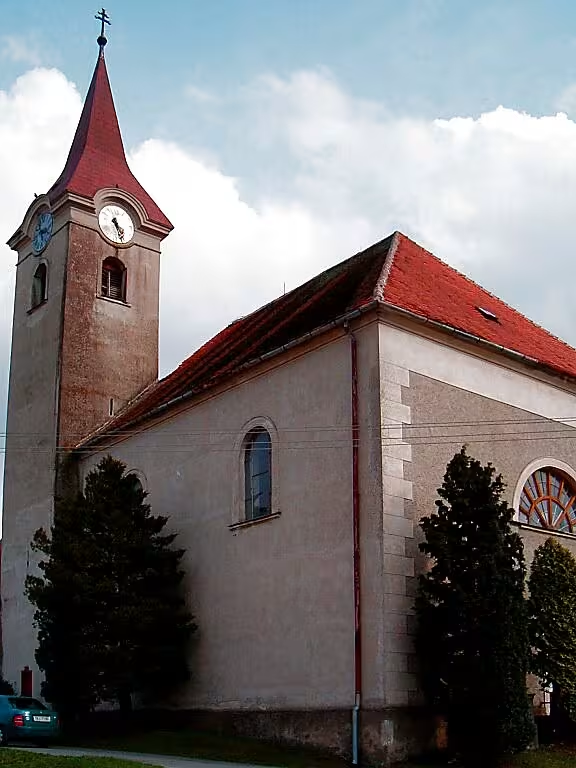
The Church of the Assumption of the Virgin Mary and St. Andrew in Staré Hobzí stands as a testament to centuries of architectural evolution and historical significance. Located at the heart of this quaint village within the Jihočeský kraj region, it serves as a Roman Catholic parish church with origins tracing back to 1190. Notable for its Gothic core, the church is also recognized as a protected cultural monument in the Czech Republic, underscoring its importance to local heritage.
The earliest documented mention of this church dates back to 1190 when it was part of properties belonging to the Louka Monastery. By 1250, significant architectural development had taken place with the construction of a Gothic presbytery within the church. The evolution continued in 1411 with the addition of a Gothic nave, marking an important phase in its structural history. These developments reflect both the religious and cultural priorities of the time.
The architecture of the Church of the Assumption of the Virgin Mary and St. Andrew is characterized by its original Gothic core, which has been extensively modified over the centuries. The church underwent various renovations from the 16th to the 19th centuries, including the construction of an Empiric nave in 1832. These modifications highlight a blend of architectural styles that have contributed to the church's unique character.
Throughout its history, the church experienced significant administrative changes, particularly during periods of financial difficulty faced by the Louka Monastery due to the Hussite Wars. From 1564 onwards, secular priests managed the church until it was once again placed under the patronage of the Louka Monastery in 1641. These shifts underscore the broader religious and political dynamics influencing the region.
Several key events have shaped the history of this church. Notably, a devastating fire in 1790 led to significant reconstruction efforts, including the rebuilding of its tower. The early 20th century saw further restoration work after another fire damaged the tower in 1913, with reconstruction completed by 1923. These events highlight the resilience and enduring significance of the church within the community.
Today, the Church of the Assumption of the Virgin Mary and St. Andrew remains a vital part of Staré Hobzí's cultural landscape. Its rich history and architectural evolution make it an intriguing site for visitors interested in exploring the layers of Bohemian heritage. The church is accessible to those wishing to delve into its storied past, offering insights into centuries of religious and community life.
In reflecting on its value, this monument stands as a symbol of continuity amidst change, capturing the essence of historical progression within Staré Hobzí. Its preservation as a cultural monument ensures that future generations can appreciate its architectural beauty and historical depth. Visitors are invited to explore this remarkable site, where history is etched into every stone and corner.
Then and now
Drag the slider to compare how the landmark may have looked when it was built with the view today.
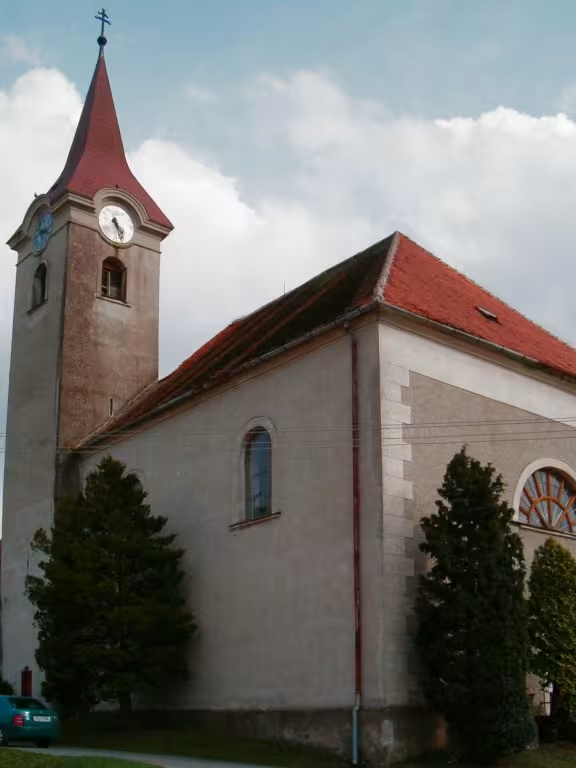

The historical appearance on the left is an AI-generated visualisation and serves as inspiration only.
Historical milestones
- 1190
- First mentioned as part of Louka Monastery properties.
- 1250
- Construction of the Gothic presbytery.
- 1411
- Building of the Gothic nave.
- 1790
- The church was destroyed by fire and underwent reconstruction.
Architectural development
Originally featuring a Gothic core, the Church of the Assumption of the Virgin Mary and St. Andrew has been extensively modified over time. Key developments include the construction of a Gothic nave in 1411, various renovations throughout the 16th to 19th centuries, and significant restorations in the early 20th century. The church's architectural style evolved with additions such as an Empiric nave in 1832.
Historical events
First mentioned in 1190 as part of properties belonging to the Louka Monastery.
In 1250, a Gothic presbytery was constructed within the church.
The church suffered a fire in 1790, leading to significant reconstruction efforts.
Points of interest
- Despite its Gothic origins, the church's architecture is a tapestry of styles due to extensive modifications over centuries, including an Empiric nave added in 1832, illustrating how it has adapted to changing architectural tastes and needs.
- During the Hussite Wars, financial strains on the Louka Monastery led to secular priests managing the church from 1564 until its return under monastic control in 1641, reflecting the turbulent religious landscape of the time.
- The church's resilience is underscored by two major fires: one in 1790 that necessitated a complete tower reconstruction and another in 1913, after which restoration was completed by 1923, showcasing the community’s dedication to preserving this historical landmark.
- In its early history, the church was part of properties belonging to the Louka Monastery as far back as 1190, indicating its longstanding religious significance and connection to monastic life in the region.
- The church's designation as a protected cultural monument highlights its importance not only as a place of worship but also as a symbol of local heritage and historical continuity within Staré Hobzí.
Guide
This guide is narrated by a synthetic voice generated by artificial intelligence.
Show guide text
This text was created by artificial intelligence and has not been editorially reviewed. It may contain inaccuracies.
The Church of the Assumption of the Virgin Mary and Saint Andrew stands in the center of Starý Hobzí and serves as the parish church of the local Roman Catholic parish. It has a Gothic core, but it has been extensively rebuilt many times over the centuries. It is protected as a cultural monument of the Czech Republic. An older structure may have previously stood on this site.
The first mention of the church dates back to 1190, when it was part of the property of villages donated to the monastery in Louci. Originally it was dedicated solely to Saint Andrew. The dedication to the Assumption of the Virgin Mary was added after 1620. Due to the Hussite Wars, the Louci monastery fell into financial difficulties, and so from 1564 the church was managed by secular priests. The church returned under the monastery's patronage in 1641.
In 1250 a Gothic presbytery was built, and in 1411 a Gothic nave. In 1575 the side chapel was rebuilt, the sacristy was repaired, and a vestibule and tower were newly constructed. Around 1700 an altar of Mary Magdalene was added, and in 1709 the side altar was renovated.
The tower had a turbulent history. In 1790 the church caught fire, the tower was demolished and rebuilt. It was repaired in the years 1837, 1854, and 1896. In 1913 it burned again and a new tower was erected in 1923. Two years later it was plastered and at the same time both naves of the church were repaired.
The second, Empire-style nave was built in 1832. Before that, in 1807, the church acquired an organ. In the nineteenth century a series of repairs followed: of the entire church in 1854, of the interior in 1861 and 1865, and further work in 1875 and 1894. In 1908 the altars were moved and in 1912 the floors were repaired.
A major reconstruction came in 1970. The church was then freshly painted, received new windows and repaired roofs. It was painted again in 1983.
Tips for visitors
The best time to visit the Church of the Assumption of the Virgin Mary and St. Andrew in Staré Hobzí is during late spring or early autumn. During these seasons, the weather is typically mild, making it pleasant for walking around the village and exploring the church's Gothic architecture without the summer crowds or winter chill. Additionally, the natural light during these times enhances the beauty of the church’s interior details.
Always verify current transport options and schedules through a reliable travel platform before your visit.
When visiting the church, consider bringing comfortable walking shoes as you may want to explore the surrounding area of Staré Hobzí. A camera is recommended to capture the unique architectural features of the Gothic structure, especially during golden hour when the light beautifully illuminates the stone façade and interior. Don’t forget a hat or sunscreen for protection against the sun.
For photography enthusiasts, some of the best spots include the church’s entrance where the blend of natural light with the intricate stonework creates stunning visuals. Inside, capturing images near stained glass windows can provide vibrant color contrasts.
Nearby attractions within a 30-minute drive include other historical sites in the Jihočeský kraj region, offering a glimpse into local history and culture. These could be ideal for extending your visit and experiencing more of what this picturesque area has to offer.
Families with children will find the church an interesting place to explore due to its rich history and architectural beauty. Consider bringing along some historical or architectural trivia about Gothic churches to engage young visitors. The village itself offers a peaceful setting, perfect for a leisurely stroll after visiting the church.
Frequently asked questions
Can the monument be visited?
Religious buildings are usually open mainly during services; at other times a visit is normally arranged with the parish or the operator. We have not verified specific times.
Where is the monument?
Location: Staré Hobzí, Jihočeský kraj. The map on this page shows the exact spot.
Why is the monument protected?
It is listed in the Central List of Cultural Monuments of the Czech Republic as a cultural monument (register no. 40128/3-2202).
Businesses nearby
Do you run a restaurant, accommodation, shop, museum, rental, wellness or other visitor service near this monument? Show yourself directly to the people heading to it — this is how they will see you in the app and on the web:
Accommodation nearby
Trips and activities nearby
Guided tours, tickets and activities nearby from GetYourGuide
Affiliate link: if you buy from the partner, we may receive a commission. The price for you does not change.
Search tours and activities →Themed route
Tematická výletní trasa: Staré Hobzí
1. Kostel Nanebevzetí Panny Marie (Staré Hobzí) - Kostel Začněte svou cestu v srdci obce, kde se nachází kostel Nanebevzetí Panny Marie. Tento historický kostel je architektonickým důkazem bohaté minulosti Starého Hobzí a nabízí okouzlující interiér s výraznými freskami a sochami. Je to ideální místo pro ty, kteří mají zájem o historii české sakrální architektury.
2. Starohobzský rybník - Rybník Krátce po návštěvě kostela se vydávejte na procházku k Starohobzskému rybníku, který je mírně od kostela. Tento klidný rybník nabízí příležitost ke klidné chvilce a úniku do přírody. Je to ideální místo pro relaxaci nebo krátké plavání v letních měsících.
3. Kaplička na Starohobzském náměstí - Kaple Následujte cestu k malé kapličce nacházející se uprostřed Starohobzského náměstí, které je snadno dostupné z kostela. Tato kaplička představuje místo klidné modlitby a úvahy, s krásným pohledem na okolní krajinu. Je to ideální místo pro ty, kteří hledají moment odpojení.
4. Památník válečných obětí - Památník Pokračujte v cestě směrem k památníku válečných obětí, který se nachází nedaleko náměstí. Tento památník je důležitým historickým místem, které připomíná oběti minulých válek a slouží jako místo vzpomínky a uctívání pro obyvatele i návštěvníky.
5. Kostelové nádvoří - Park Zavřete svůj výlet krátkou procházkou po kostelovém nádvoří, které nabízí klidné a zelené prostředí. Toto místo je perfektní pro relaxaci, přemýšlení nebo jednoduše pro užití krásy venkovního prostoru kolem kostela Nanebevzetí Panny Marie.
Tato trasa nabízí kombinaci historických a klidných zážitků, které vám umožní hluboce poznat Staré Hobzí.
Seasonal recommendations
Spring: Visiting the Church of the Assumption of the Virgin Mary during spring offers a unique experience as nature begins to bloom around Staré Hobzí. The church, set against a backdrop of awakening flora, creates an enchanting atmosphere with its historic architecture complemented by vibrant greens and floral hues. This season is ideal for photography enthusiasts eager to capture the contrast between the timeless structure and the lively spring landscape. Visitors should be prepared for occasional rain showers, so bringing a light waterproof jacket or umbrella is advisable. The weather can still be cool in early spring, so layering your clothing will ensure comfort. As the days grow longer, arriving later in the day allows you to enjoy more daylight hours without the morning crowds.
Summer: The summer months bring a lively atmosphere to the Church of the Assumption of the Virgin Mary, with warm weather inviting both locals and tourists to explore its historic charm. The church is beautifully illuminated by natural light during this season, enhancing the intricate details of its architecture. Summer evenings might be particularly magical, as the setting sun casts golden hues over the structure. This period often sees an increase in visitors due to Staré Hobzí's popularity as a summer destination, so it’s wise to plan your visit early in the morning or later in the afternoon to avoid larger crowds. Comfortable walking shoes and light clothing are recommended, along with sunscreen for protection against the sun.
Autumn: Autumn is a splendid time to visit the Church of the Assumption of the Virgin Mary as the landscape transforms into a tapestry of warm colors. The falling leaves create a picturesque setting that enhances the church's historic ambiance, making it an ideal backdrop for photography and leisurely walks. The cooler temperatures are perfect for exploring without the summer heat, allowing visitors to appreciate the area’s natural beauty fully. As daylight hours shorten, arriving early in the day can help maximize your visit before dusk. Layered clothing is recommended to adapt to the changing weather, which can range from crisp mornings to mild afternoons.
Winter: Visiting the Church of the Assumption of the Virgin Mary during winter offers a serene and contemplative atmosphere as the surrounding landscape is blanketed in snow. The church's architecture takes on an ethereal quality under the soft glow of winter light, providing a unique perspective compared to other seasons. This time of year typically sees fewer visitors, allowing for a more intimate experience with the historic site. However, it’s important to dress warmly, as temperatures can be quite cold, and check ahead for any seasonal closures or reduced hours. Bringing a camera is advisable, as the snowy scenery provides excellent opportunities for capturing stunning winter landscapes.
Visualizations and artistic views


The visualisations are generated by artificial intelligence and serve as inspiration.
Photos from the area
Real photos taken near the monument


Zdroj a licence jsou uvedeny u každého snímku.
Tips from visitors
No tips yet. Be the first!
Log in and add your tip.
Sources and literature
Photos: Fojsinek / Public domain — Wikimedia Commons. The author and licence also appear when you hover over the image.
Faktickým podkladem tohoto textu byl článek na Wikipedii, jehož autory jsou přispěvatelé Wikipedie. Článek je dostupný pod licencí CC BY-SA 4.0.
Location on the map





Příběhy a pověsti
Legendy, pověsti a příběhy spjaté s touto památkou
Fotografie návštěvníků
Zatím žádné fotografie. Buďte první, kdo přidá fotografii z návštěvy!
Log in a přidejte svou fotografii nebo hodnoťte.
Za ověřenou návštěvu v aplikaci získáte víc bodů — poznáme podle GPS, že jste na místě.
Reviews and comments