






Kostel Narození Panny Marie (Jablonné v Podještědí) Church
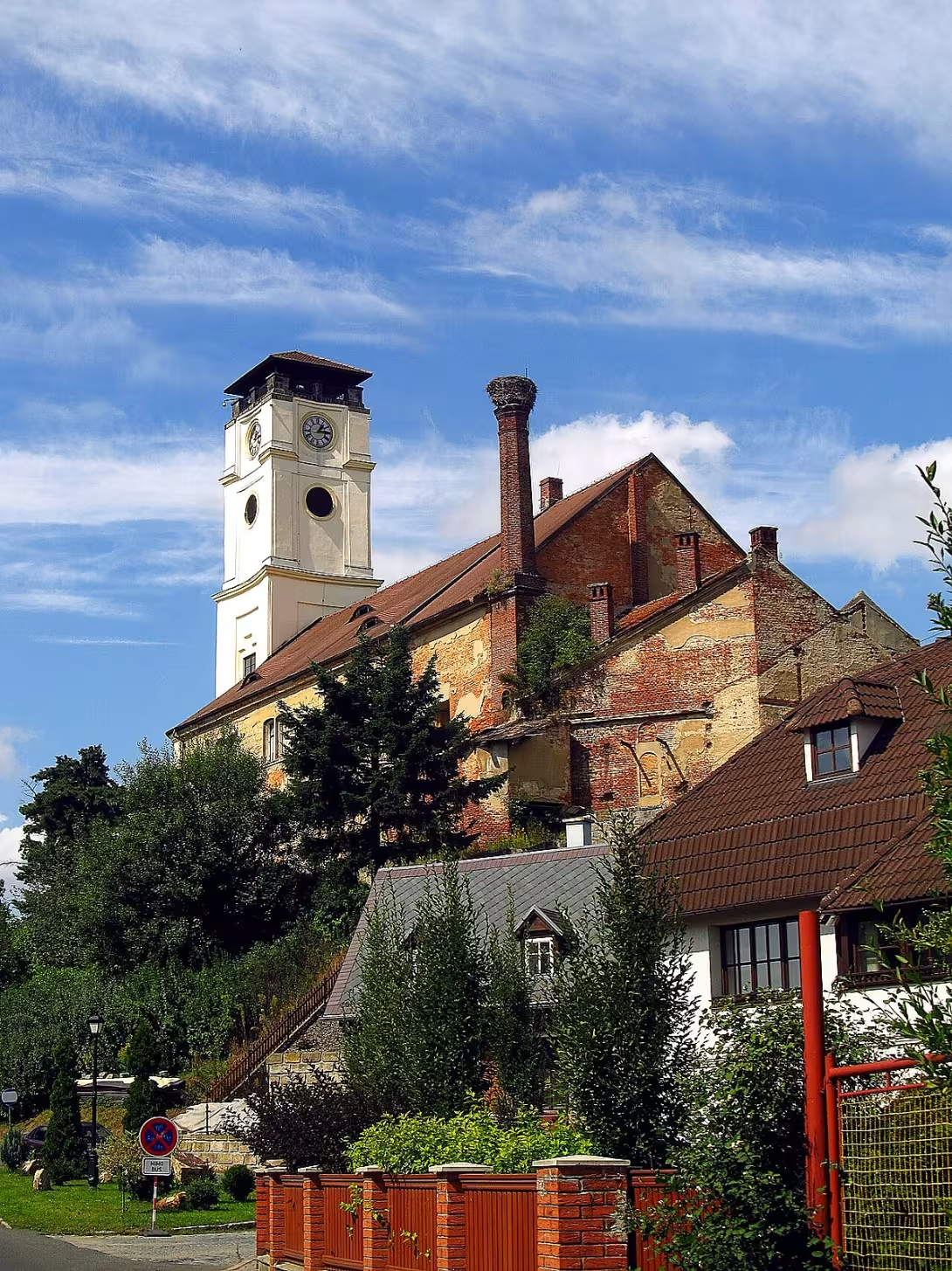
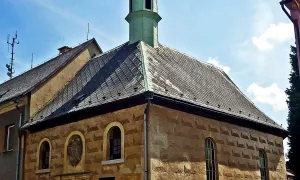
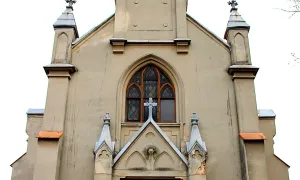
The Church of the Birth of the Virgin Mary in Jablonné in Podjektu is a historic monument. It evolved from a sacred Gothic church to an observation tower. This structure is located on the School Street near the Square of Peace, depicting elements of Gothic and Baroque architecture. It stands as proof of its rich history and architectural transformation over centuries. As a cultural monument listed on the Central List of Cultural Monuments of the Czech Republic, it has remarkable value for its preserved architectural features.
The origin of the church dates back to the mid-13th century, when Havel z Lemberka founded a Dominican monastery and parish church in Jablonné, Transnistria. The first documented mention of the church appears in texts from 1279-1290 Bishop Tobiasz z Bechyně, which emphasizes its early importance within the region. In 1352 it was recorded as a dean's church in the papal treasury. At the end of the 13th century, Zdislav z Lemberka transferred the patronage rights to the Cistercian Abbey in Hradiště nad Jizerou, which maintained them until 1378.
In architecture, the church was originally built on a south-east city wall with a rectangular boat of 25.4 metres. The original structure contained rubble stone walls connected with lime mortar and on both sides of the facade contained window openings. Over time, it has undergone significant transformations, including Gothic renovations, which are difficult to date accurately, but suggest the impact of the transition between Romanesque and Gothic styles. In the middle of the 15th century, after damage during Hussite wars, the church was reconstructed in 1457 and rededicated to the Birth of the Virgin Mary.
The ownership and administration of the church recorded several changes over time. After the Cistercians, came under the control of Franz Joseph Pacht of Rajov in 1786, who announced repairs and construction of the new tower. The Baroque reconstruction between 1781 and 1783, led by architect Filip Heger, introduced significant changes including the new Western facade and the seven-story tower, which today remains an important feature.
Key events in the history of the church include its damage during the Hussite wars between 1425 and 1426. Despite these challenges, it has been restored and continues to serve as a place of worship until the end of the 18th century when it underwent further transformations. In 1788, the devastating fire led to his decline, and by 1863, he was transferred to the observation tower after briefly serving as a brewery.
The Church of the Birth of the Virgin Mary today presents an interesting blend of architectural styles and historical narratives. Visitors can appreciate its preserved Gothic elements alongside baroque modifications, making it a valuable destination for people interested in cultural heritage and architecture. Its transformation over time reflects the dynamic history of Jablonné v Podještědí and invites to explore layers of stories embedded in its walls.
Then and now
Drag the slider to compare how the landmark may have looked when it was built with the view today.
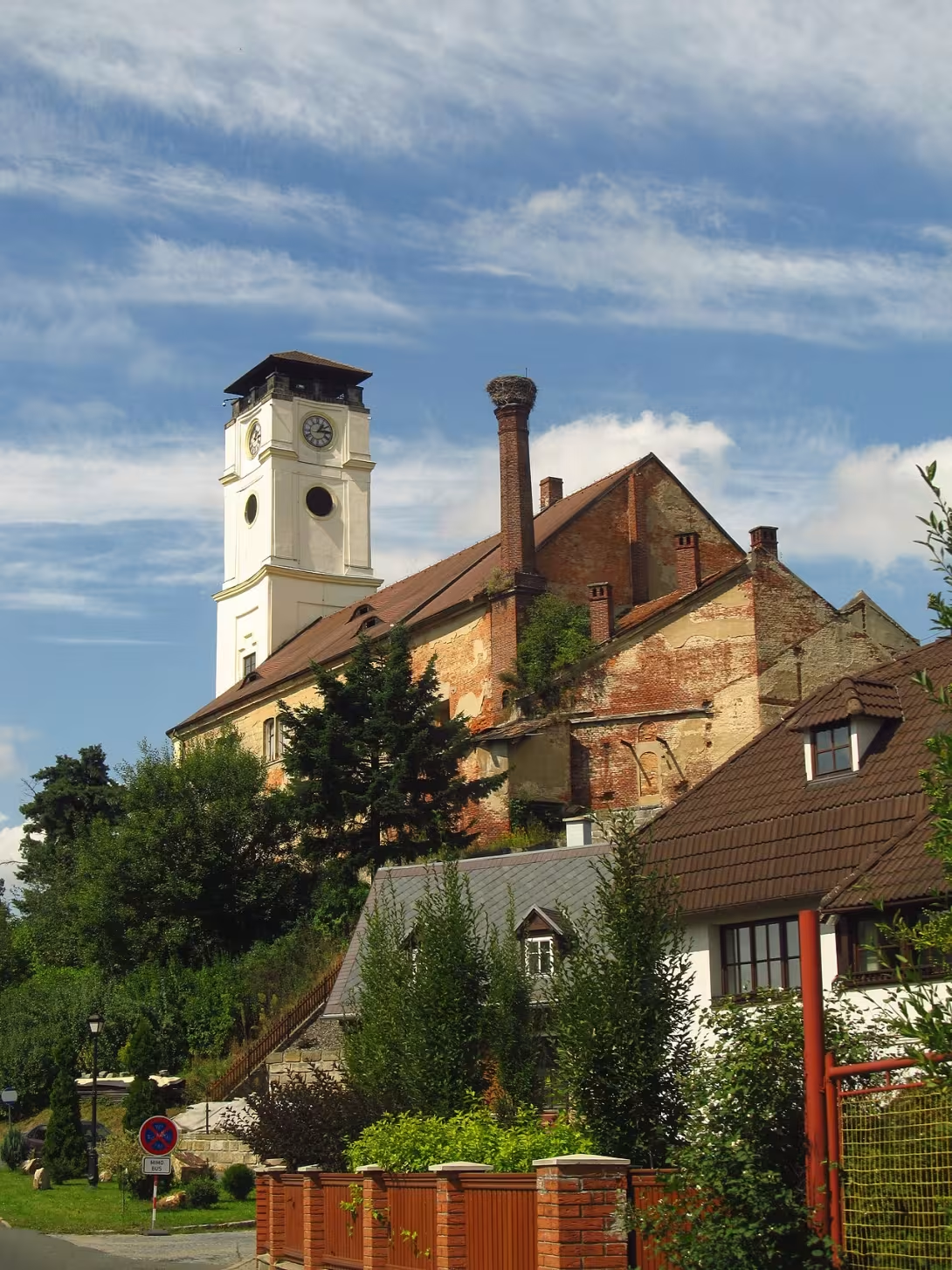
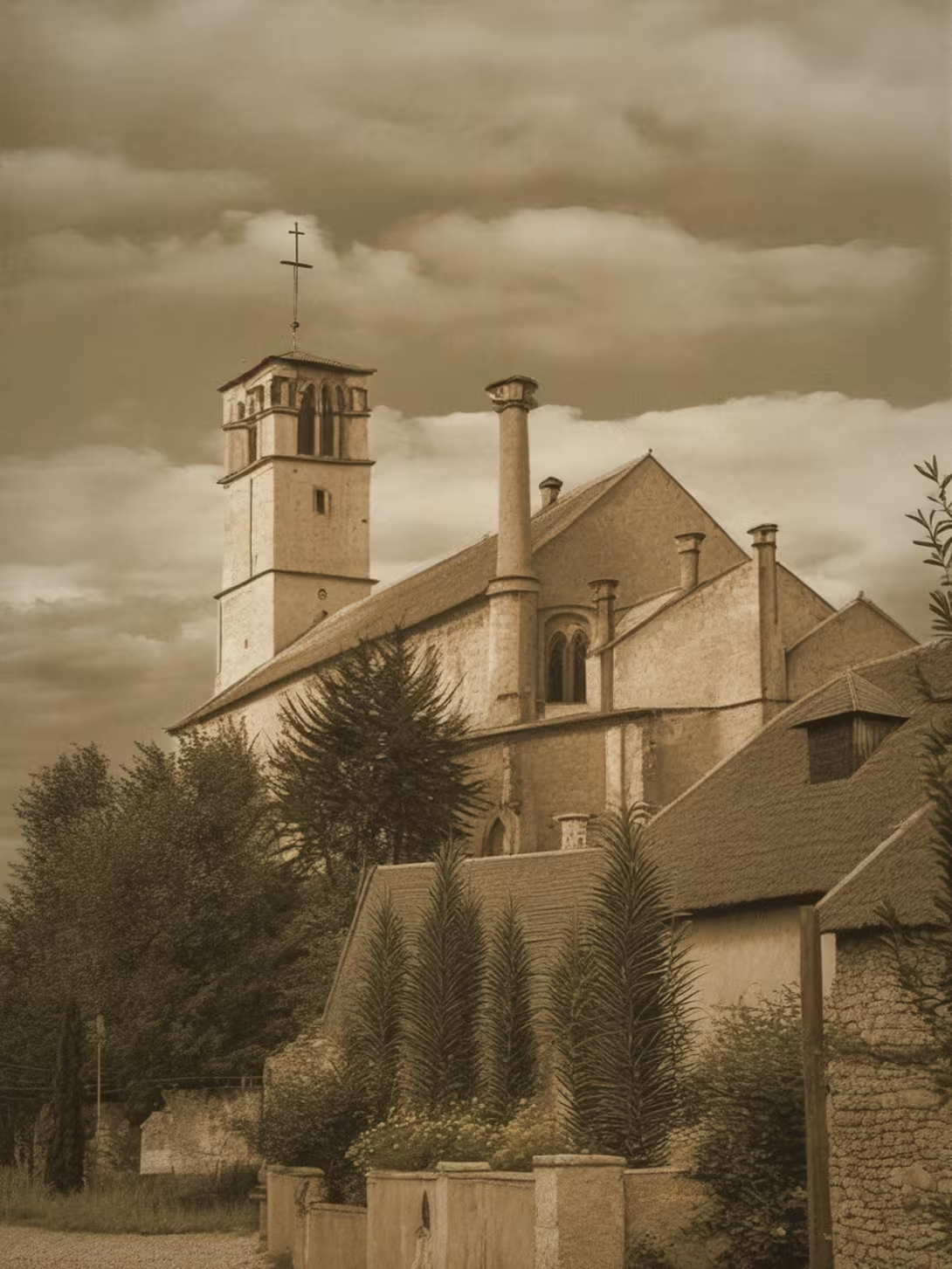
The historical appearance on the left is an AI-generated visualisation and serves as inspiration only.
Historical milestones
- 1279- 1290
- The first documented mention of Bishop Tobiasz z Bechyně.
- 1352
- It's listed in the papal tithes as the dean's church.
- 1457
- Reconstruction and reopening of the Virgin Mary.
- 1786
- Franz Joseph Pacht from Paradise announced repairs and construction of a new tower.
Architectural development
the church was originally built near the southeast city wall with a rectangular boat. Over time, it has undergone significant changes, including Gothic and Baroque renovations. The original construction contained rubble stone walls with lime mortar, while later modifications included new windows and facades. A significant feature is the seven-story tower added during the Baroque period.
Historical events
the church was damaged during hussite wars between 1425 and 1426.
Reconstruction in 1457 when the birth of the Virgin Mary was rededicated.
Baroque reconstruction from 1781 to 1783 under architect Filip Heger.
Owners
Dominican Order (mid-13th century)
Cistercian Abbey in Hradišt nad Jizerou (from 13th century to 1378)
Franz Joseph Pacht from Rajov (1786)
Points of interest
- The Church of the Birth of the Virgin Mary in Jablonny in Podještě is unique because it has moved from a sacred Gothic church to an observation tower that reflects its adaptation to changing community needs for centuries.
- In 1781, during a Baroque reconstruction led by architect Filip Heger, the church saw the addition of a seven-story tower. This tower not only strengthened the importance of the construction, but also later became a key feature as it turned into an observation point for visitors.
Guide
This guide is narrated by a synthetic voice generated by artificial intelligence.
Show guide text
This text was created by artificial intelligence and has not been editorially reviewed. It may contain inaccuracies.
Welcome to the Church of the Birth of the Virgin Mary in Jablonny, Transnistria. As you stand here, take a moment to appreciate this unique structure that has gracefully moved from its sacred origin as a gothic church to an observation tower that offers panoramic views and a view of history.
The story of this remarkable building begins between 1279 and 1290 when it was first mentioned by Bishop Tobiasz z Bechyně. Over the centuries, she served various roles in the community, evolving with time. Until 1352, he became recognized as a dean's church in the Papal tithes. A significant transformation took place in 1457 in reconstruction and reopening of the Virgin Mary.
When you look at the western facade, notice how beautifully it shows elements from different architectural periods. The mixture of Gothic and Baroque styles is obvious, reflecting the long history of the church and its changes. In 1786 Franz Joseph Pacht of Rajov documented repairs and construction of a new tower and added it to his layered past.
During its existence, several key numbers were linked to this site. Havel z Lemberka and Zdislav z Lemberka were among those who contributed to its early history. In later years Jan Jáchym Pachta z Rájova played an important role in its transformation. The Baroque reconstruction was conducted in 1781 by architect Filip Heger, whose influence is still visible to this day.
One fascinating aspect of this site is how it reflects the adaptability and resilience of historical structures. From service as a sacred space to becoming an observable tower, it continues to satisfy the needs of the community while preserving its rich heritage.
As you continue your research, take the atmosphere and imagine the countless stories that have appeared here for centuries. We invite you to dig deeper into the history of this site and find out more about its importance. Thank you for joining us on this journey through time.
Tips for visitors
The best time to visit the Church of the Birth of the Virgin Mary in Jablonné in Podjekt is at the end of spring or early autumn. During these seasons the weather is generally pleasant and you can enjoy the surrounding landscape of the Jizera Mountains without the crowds that the peak summer months bring. Moreover, natural light during this time increases the architectural details of the church, making it an ideal period for both sightseeing and photography.
Parking and transport are suitable for visitors to Jablonné in Podstědí. There is parking close to the city center where you can leave your car. Public transport is accessible, with several bus lines serving the area. It is recommended to check current online plans or local information centres to ensure a smooth path.
When visiting the Church of the Virgin Mary, it is advisable to bring comfortable walking shoes because there may be some uneven paths leading to and around the church. In addition, consider bringing a good zoom camera to capture architectural details from different angles. A light jacket is also recommended, especially if you plan to explore the surrounding areas after your visit.
For photographic enthusiasts, the best places are usually at the entrance to the church where Gothic architecture meets the baroque elements, and around the perimeter where natural lighting highlights these functions during sunrise or sunset. Early in the morning they often provide soft light that beautifully emphasizes the complex details of the structure.
Near attractions within a 30-minute drive include other cultural monuments and natural landscapes typical of the Jizera Mountains. Exploration of these areas can supplement your visit church, offering a wider understanding of local heritage and picturesque beauty.
Businesses nearby
Do you run a restaurant, accommodation, shop, museum, rental, wellness or other visitor service near this monument? Show yourself directly to the people heading to it — this is how they will see you in the app and on the web:
Nearby
Jablonné in Podječí is surrounded by picturesque landscape typical of Jizera Mountains. The area is characterized by natural beauty and other cultural monuments within a radius of five kilometres.
Accommodation nearby
Trips and activities nearby
Guided tours, tickets and activities nearby from GetYourGuide
Affiliate link: if you buy from the partner, we may receive a commission. The price for you does not change.
Search tours and activities →Themed route
Thematic tour of Itinerary: Jablonné v Podjekt
1.Kostel Narození Panny Marie (Jablonné v Podještědí) - * Type: * Church - * Why Visit: * Start your journey in the heart of Jablonné in Podještě with this amazing Baroque church, a masterpiece designed by Kilian Ignaz Dientzenhofer. Its complex architecture and calm atmosphere make it a crucial stop for interested in religious art and history.
2. - * Type: * Natural area - * Why Visit: * Just a short walk from the church, explore the lush green Jablonné. This area offers a peaceful retreat into nature with well-maintained walking paths that provide panoramic views of the surrounding Jizera Mountains. It's perfect for a peaceful walk or a moment of thought.
3. Jablonné v Podjekt Historical Centre - * Type: * Cultural pages - * Why Visit: * Walk through the charming streets of Jablonné v Podještědí historic centre, where traditional architecture and picturesque shops create an attractive atmosphere. This area reflects the city's rich cultural heritage and offers a view of its past.
4. Local Crafts - * Type: * Cultural pages - * Why Visit: * Discover unique local crafts and souvenirs in craft shops scattered around Jablonné in Transnistria. These shops highlight the artistic talent of the region and provide an opportunity to support local craftsmen while taking home part of the cultural identity of the region.
This itinerary offers a blend of architectural beauty, natural landscapes and cultural research, which provides an unforgettable experience in Jablonné in Podzedědí.
Seasonal recommendations
Spring: In the spring, the Church of the Born of the Virgin Mary in Jablonné offers a unilateral enterprise in Podjekt, which is treated with vegetation around the enchanted distribution and the trees enchanted flower. The sun illuminates the church with fine light, which makes the surviving integrity for its own resources. This is an ideal idea for the consideration of the forests and roads in question, as set out in this article. No quantity is supplied for small quantities, it may combine CHP plants and units which are intended for use only if possible. The best petals on the ground are in the early afternoon, when the crowd is not concerned.
Summer: Summer recalculates all day and sunny bright, which are architectural details of the Church of the Birth of the Virgin Mary. In the event that the conditions laid down in Article 3 (1) are met, however, this period shall also be extended to transfer data to a demanding crowd, in particular in the warehouse of the day. It is excellent to build a church early in the morning or later in the afternoon to avoid the summit. Wearing a lying siege and excess of the forbidden sun center is resting to ensure that goals are achieved.
Autumn: In autumn, forests grow around colour diversity, when the leaves grow in material colours. Sun value is the measured intensity and significant value added by the melancholic method for resting profiles. This season is a general measure per crowd from another ideal destination. Wearing your own decisions and warm shoes is delivered because it deals with many cancellations and cold command is common. The best time based on monuments is in the early afternoon when the temperature is pleasant.
Winter: The winter value of the Church of the Birth of the Virgin Mary sees clear conditions with the possibility of visibility the church covered with snow, resulting in magical magic. The sun value is lower and higher than the declared value as shown in Table 2. However, it may be invalid, among other things, with cold temperatures and possibilities of recovery or ice cream. It is important to wear warm round, beekeeping blankets, and suitable shoes for dry stimuli. The opening hours may be shorter than the time referred to in paragraph 1, so it is permissible to plan the time for which they are soon on the day or when they were carried out.
Visualizations and artistic views


The visualisations are generated by artificial intelligence and serve as inspiration.
Photos from the area
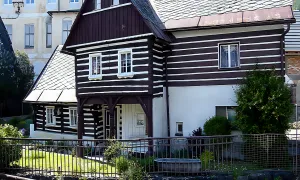
Real photos taken near the monument

Zdroj a licence jsou uvedeny u každého snímku.
Tips from visitors
No tips yet. Be the first!
Log in and add your tip.
Sources and literature
Fotografie: Hana Kubíková / CC BY-SA 3.0 — Wikimedia Commons. The author and licence also appear when you hover over the image.
Faktickým podkladem tohoto textu byl článek na Wikipedii, jehož autory jsou přispěvatelé Wikipedie. Článek je dostupný pod licencí CC BY-SA 4.0.
Location on the map
Příběhy a pověsti
Legendy, pověsti a příběhy spjaté s touto památkou
Fotografie návštěvníků
Zatím žádné fotografie. Buďte první, kdo přidá fotografii z návštěvy!
Přihlaste se a přidejte svou fotografii nebo hodnoťte.
Za ověřenou návštěvu v aplikaci získáte víc bodů — poznáme podle GPS, že jste na místě.
Reviews and comments