



Zámeček Pachtů z Rájova Hunting lodge
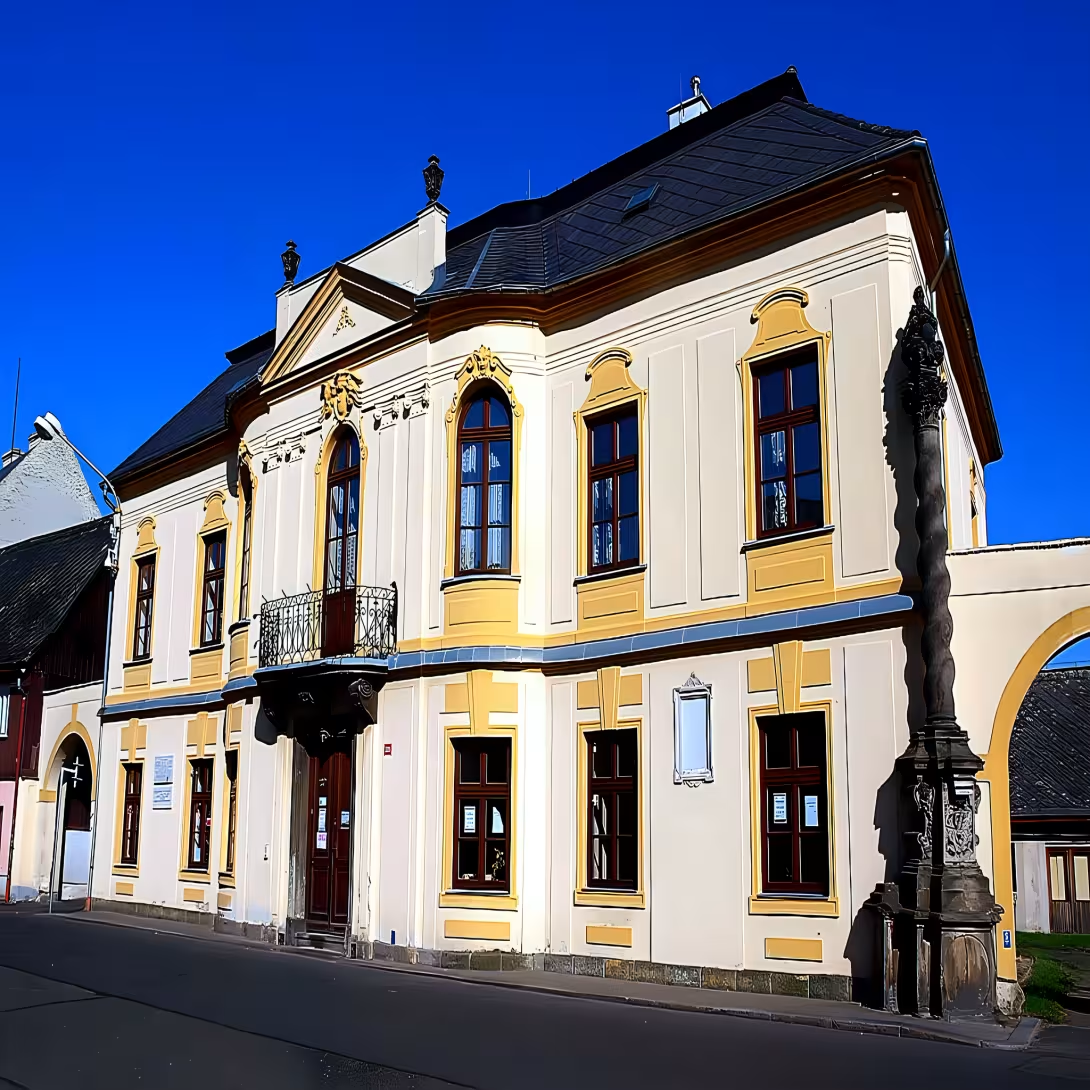
Zámeček Pachtů z Rájova is a rococo building from the second half of the 18th century. It stands in the street of Zdislava from Lemberk in Jablonny in Podjedí in the Liberec Region. The building is a protected cultural monument. In the past, he served as a hunting grounds and bus station, now fulfilling the cultural needs of the city.
The building was built by Count Jan Jáchym Pachta z Rájova in the second quarter of the 18th century. The castle was established as the seat of the Count of the Overforest and was intended primarily for hunting purposes. According to the National Heritage Office, the construction was completed around 1770 for the former owners of the Falkenburg estate.
From the point of view of architecture, it's a rococo object. The design probably comes from the circuit of builder Jan Josef Wirch. The building was established during the period of the high Baroque and rococo style, when the nobility established a representative residence for its leisure time.
Thanks to the strategic location, the object was selected on 17 July 1737 as one of the station of the mobile mail between Jablonný and Žitava. The first postmaster was Jan Christoph Koch. In 1751 Jablonné is listed as a post office station on the route connecting Prague to Zitava and Zřelec. The Feuereisen family held office in the building at different times. Jan Ferdinand Feuereisen sold the castle and the hereditary right to office in 1852 to Josef Schmied. Subsequently, František Hanzel owned the building and after 1896 his daughter, the wife of Adolf Klein's Supreme Court. The post office function in the building ended in 1897 with its transfer to the new building.
In later times, there was a Regional Economic Reserve and a gendarmerie station. After 1948 there was a kindergarten in the building and since 1973 there have been extracurricular activities for children. Later on there was a branch of the Czech savings bank, contact point and Ekoporadna Orsei.
The castle has been a place of visitors to prominent personalities throughout history. During his inspection trip, the Emperor Josef II. Building was here to serve as head of the Pandur Commander František Baron Trenck and hosted Napoleon's Marshal Josef Antonín kníže Poniatowský. In August 1813 Napoleon Bonaparte stopped here on the way to the Battle of Leipzig. There is also a former St. Wolfgang hospital chapel near the castle.
The property is currently owned by the city Jablonné v Podještědí. After reconstruction, the building serves for the organisation of occasional exhibitions, concerts and meetings of city associations. There's a candy store on the ground floor.
This monument represents a unique combination of noble hunting architecture and the history of state mail in the region. Her visit offers insight into the administrative and social events of Podjedědí.
Then and now
Drag the slider to compare how the landmark may have looked when it was built with the view today.
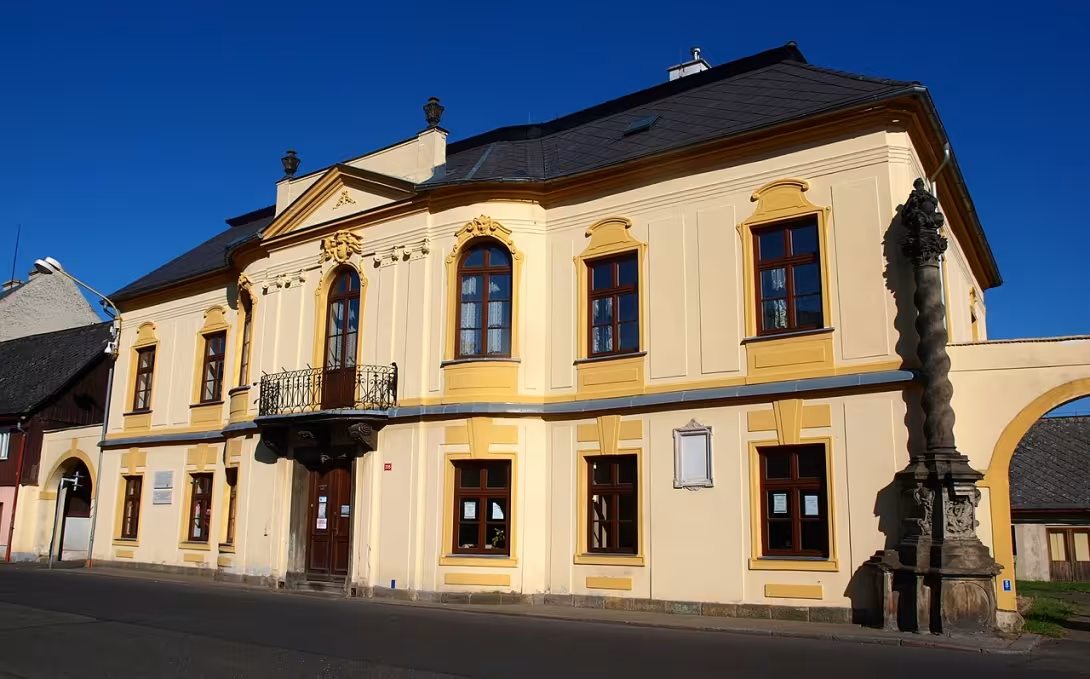
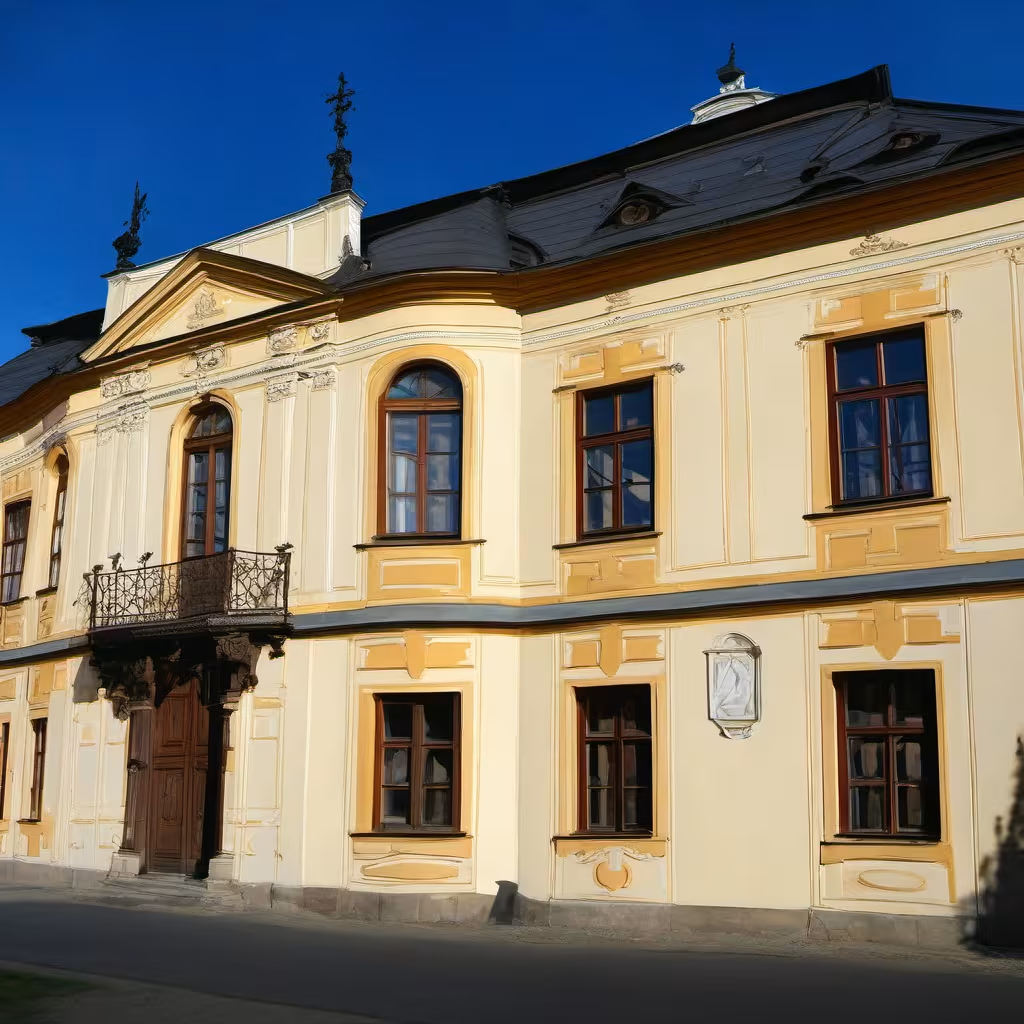
The historical appearance on the left is an AI-generated visualisation and serves as inspiration only.
Historical milestones
- 1737
- The castle was chosen as one of the station of the mobile mail between Jablonný and Žitava.
- 1770
- The time of construction of the building to the owner of the Pacht family from Rajov.
- 1813
- Napoleon Bonaparte stopped here in August.
- 1897
- No more post office in the castle building.
Architectural development
It is a rococo building from the second half of the 18th century. The design probably comes from the circuit of builder Jan Josef Wirch. Currently, the object is reconstructed.
Historical events
1737 selected as a mobile post station, 1813 stopping Napoleon Bonaparte on the way to the Battle of Leipzig, 1897 moving the Post Office to a new building.
Owners
Pachtová z Rajov, Josef Schmied (since 1852), daughter of František Hanzel (after 1896), town Jablonné v Podještědí
Points of interest
- The construction from the second half of the 18th century served in the past as a hunting grounds and station of the road mail. - The building was selected as one of the station travel between Jablonny and Zittava on 17 July 1737. - In the building in various times there was a gendarmerie station, kindergarten and a branch of České spořitelna. - The castle was visited by important personalities such as Emperor Josef II. or Napoleon Bonaparte in August 1813. - The building is currently used for organizing exhibitions and concerts, there is a confectioner on the ground floor.
Guide
This guide is narrated by a synthetic voice generated by artificial intelligence.
Show guide text
This text was created by artificial intelligence and has not been editorially reviewed. It may contain inaccuracies.
Welcome to Jablonné in Podjedí. You're standing in front of a building that carries an amazing story of change and time. The Zámeček Pachtů z Rájova stands before you. If you look at it now, you may not see in it a huge palace like we know from the great cities, but it is in this human scale that its attraction lies. Feel the atmosphere of this place, which in its form resembles a quiet residence, but at the same time hides the energy of old paths and travel adventures.
Let us now stop at how this building was created. Let's move into the eighteenth century in our minds. It was at this time, namely around seven hundred seventy, that the Count Jan Jáchym Pachta z Rájova built the building. The Count, however, did not seek a representative residence for large balls, but rather a practical and cozy place. The castle was intended to serve as a mansion for the overforest and, above all, as a hunting lodge. So imagine how hunting parties used to pass through here, how they prepared for trips to nearby forests and how they rested here after a long day in nature.
Now pay attention to the very form of the construction. The castle is built in Rococo style, which was very popular and elegant at the time. Look at the facade and perceive the lightness this style brings. While time was changing the building, we still feel the original intention of creating a place that is harmonious and pleasant to the eye. Jan Josef Wirch was responsible for the overall circuit and form of construction. When you look at the building, you realize its location wasn't random. The strategic location was crucial because the castle became an important point on the map of the then transport.
This brings us to one of the most interesting features of this place. Notice where the building is. It is because of its location that it has long served as a bus station between Jablonný and Žitava. It is fascinating to realize that this function was determined already in the year of tysages seven hundred thirty-seven. Imagine the constant movement, the sound of the hoof of horses hitting the road, the call of messengers and the stops of passengers who needed to rest or replace the horses before the next trip. The castle was not only a silent home of overland but a vibrant heart of communication in the region.
Speaking of passengers, we can't ignore the personalities who passed through here or were somehow related to this place. History here is very dense. People who wrote the history of Europe moved in or near this place at different times. Among them were Marie Terezie or Josef the second. Notice how small a building can be associated with such large names. But the most fascinating is probably August day in the year of a thousand eight hundred thirteen. That's when Napoleon Bonaparte stopped by. Try to imagine the famous emperor getting out of the carriage right here, in front of you, in Jablonny, Podjedědí. It is incredible that such a figure of world history saw this very corner of Podjedědí. Other important men of their time, such as František baron Trenck or Josef Antonín kníže Poniatowský, also stopped here.
Now let's think about how the building evolved in the next decades. Time passes and people's needs change. The post office's function, which was so crucial, ended in a thousand and eight hundred and ninety-seven. But the building didn't stay empty. That's the fascinating side of the House of Pachts. While other buildings had disappeared after losing their original purpose, this building was constantly adapting. It's strange, given the diversity of institutions here. At different times, there was a gendarmerie station where local officers guarded the order. Later there was a kindergarten, so the silence of the hunting lodge replaced the laughter and noise of children. In a more modern time, even bank branches, namely the Czech savings bank branch, worked here.
Try to recognize this contrast. On the one hand, we have the Rococo elegance and hunting expeditions of Count Pachta, on the other hand, the Napoleon Bonaparte training, and then there is a bank official sitting in one room or teacher teaching young children. It's a mirror to the social development of the entire region. From hunting refuge through diplomatic and military stops to ordinary services for citizens.
Today Zámeček Pachtů z Rájova is a protected cultural monument. It means that its value is no longer in whether the post office or the bank works in it, but in that it is a living witness to history. If you look at it again now, you don't just see the walls and the roof, but the layers of time. You see the ambition of the Pachta family, you see strategic planning of postal routes and you feel traces of famous personalities.
It is a place that teaches us that even smaller structures can be of enormous importance if they are properly placed in the context of their time and place. The castle in Jablonny in Podzedědí remains a silent storytelling of the people who passed through here and the people who lived and worked here.
Now I leave you to look at the surroundings in peace and perceive the silence that today reigns where Napoleon's orders and children's laughter once sounded. Walk slowly through the space around the building, perceive its proportions and imagine how it has changed over the last three centuries. I hope this short trip to the past has helped you see more than just ordinary construction in this house.
Thank you for your attention and I wish you a pleasant continuation in discovering the beauty of Jablonný in Podzedědí and the entire Liberec region. Goodbye.
Tips for visitors
For the best visual experience we recommend a visit in the period when nature is the most colorful around the castle, for example in spring or autumn. At these times, the light is most suitable for observing the rococo details of the building.
The site is accessible both by its own means of transport and by public transport; Please check the current connection in the Internet search engine.
If you plan to take pictures, the best results will be achieved in the morning or just before sunset, when the sun's rays gently illuminate the rococo facade. We recommend to bring comfortable shoes for possible walks around.
For families with children is an interesting opportunity to visit the nearby area, where the former St. Wolfgang's Hospital Chapel is located, which may be an interesting historical trail for younger visitors.
Frequently asked questions
Can the monument be visited?
Some buildings of this kind are open for guided tours, others serve another purpose or are privately owned. We have not verified whether and when this monument is open – please ask the operator.
What are the opening hours and admission?
We have not verified the opening hours or admission. Current information is published by the operator.
Where is the monument?
Location: Zdislavy z Lemberka 335, Jablonné v Podještědí, Liberecký kraj. The map on this page shows the exact spot.
Why is the monument protected?
It is listed in the Central List of Cultural Monuments of the Czech Republic as a cultural monument (register no. 47223/5-3011).
For kids
Imagine going back 247 years to our ancestors. Instead of our modern town, Rajčka was a small town with a unique castle. It belonged to the Pachta family.
The castle stood on the hill above the river, offering a beautiful view of the whole area. Imagine you're a little knight heading towards the castle to meet Count Pacht. He's telling you about how the castle lived. It was a big family residence where the parties were held and the harp was played.
Businesses nearby
Do you run a restaurant, accommodation, shop, museum, rental, wellness or other visitor service near this monument? Show yourself directly to the people heading to it — this is how they will see you in the app and on the web:
Events nearby

Zdroj akcí: otevřená data měst a obcí ČR (Národní katalog otevřených dat) a kalendář akcí Národního památkového ústavu.
Nearby
V blízkosti zámečku se nachází bývalá špitální kaple svatého Wolfganga.
Accommodation nearby
Trips and activities nearby
Guided tours, tickets and activities nearby from GetYourGuide
Affiliate link: if you buy from the partner, we may receive a commission. The price for you does not change.
Search tours and activities →Themed route
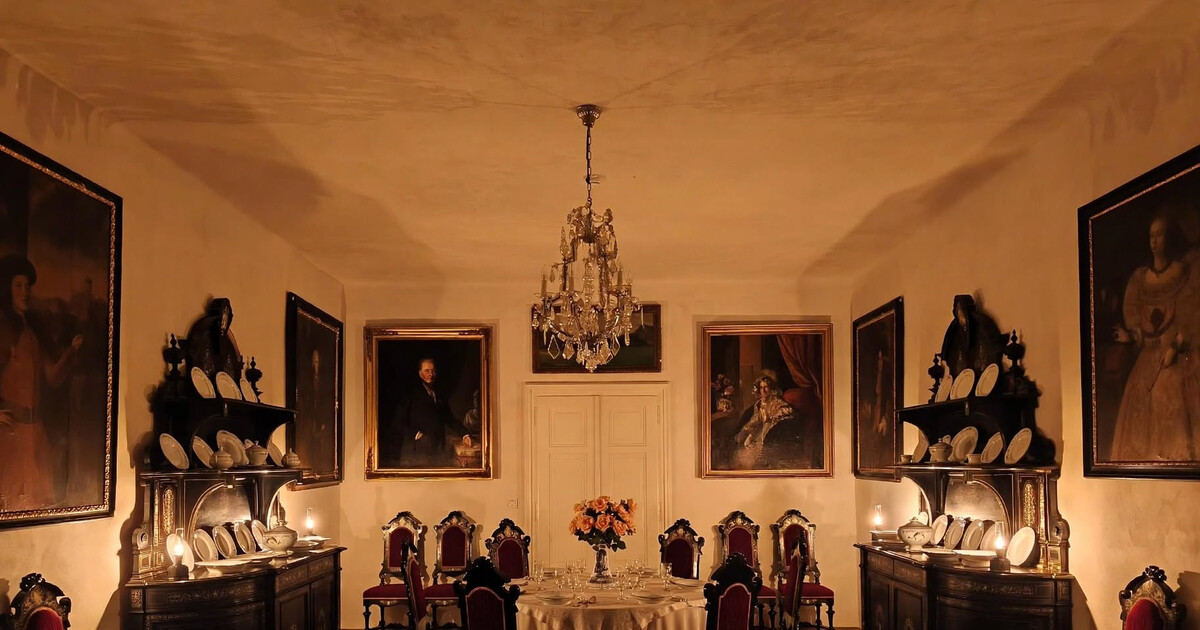
1. The former hospital chapel of St. Wolfgang, a religious object, offers visitors a view of historical architecture near the castle. 2. Zámeček Pachtů z Rájova, courtyard, represents the entrance part of the area for the tour of the external environment. 3. Zámeček Pachtů z Rájova, indoor spaces and exposition, allow detailed knowledge of the history and interior of the monument.
Seasonal recommendations
In the spring, the surroundings wake to life and the young greenery gently encapsulates the facade of the building. The light is soft and pleasant in this period, which stands out from SLC. We recommend shoes suitable for wet grass and visit in the morning when the air is the cleanest.
Summer brings full flowering gardens and rich colors of the landscape. The sun illuminates the details of the building from a high angle and the atmosphere is warm. It is advisable to choose light wind clothes and set off either early in the morning or at sunset to avoid the biggest hot spots.
The autumn colors the surrounding trees into gold and red, creating a nostalgic background for the historical object. The light is rich and deep, ideal for viewing architecture. It's practical to bring a warm sweater and waterproof shoes for leaves and morning fog.
Zimą is in the area of calm and freezing cleanliness. If snow covers the landscape, the building will get a fabulous look and silence in the surrounding area strengthens the sense of isolation from the modern world. Necessary are thick winter layers of clothing, warm gloves and firm soles to avoid slipping.
Visualizations and artistic views


The visualisations are generated by artificial intelligence and serve as inspiration.
Photos from the area
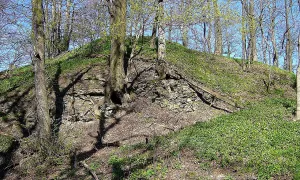
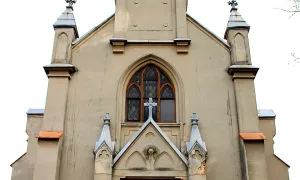
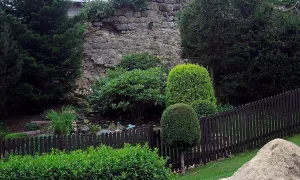
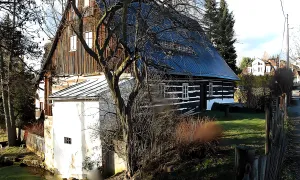
Real photos taken near the monument


Zdroj a licence jsou uvedeny u každého snímku.
Atmosphere of the place
This atmospheric visualisation of the place and period was generated by artificial intelligence. It is not real footage of the location.
Tips from visitors
No tips yet. Be the first!
Log in and add your tip.
Sources and literature
Photos: VitVit / CC BY-SA 4.0, rozlišení zvýšeno umělou inteligencí — Wikimedia Commons. The author and licence also appear when you hover over the image.
Faktickým podkladem tohoto textu byl článek na Wikipedii, jehož autory jsou přispěvatelé Wikipedie. Článek je dostupný pod licencí CC BY-SA 4.0.
Location on the map
Příběhy a pověsti
Legendy, pověsti a příběhy spjaté s touto památkou
Fotografie návštěvníků
Zatím žádné fotografie. Buďte první, kdo přidá fotografii z návštěvy!
Log in a přidejte svou fotografii nebo hodnoťte.
Za ověřenou návštěvu v aplikaci získáte víc bodů — poznáme podle GPS, že jste na místě.
Reviews and comments