






Kostel Panny Marie pod řetězem Church
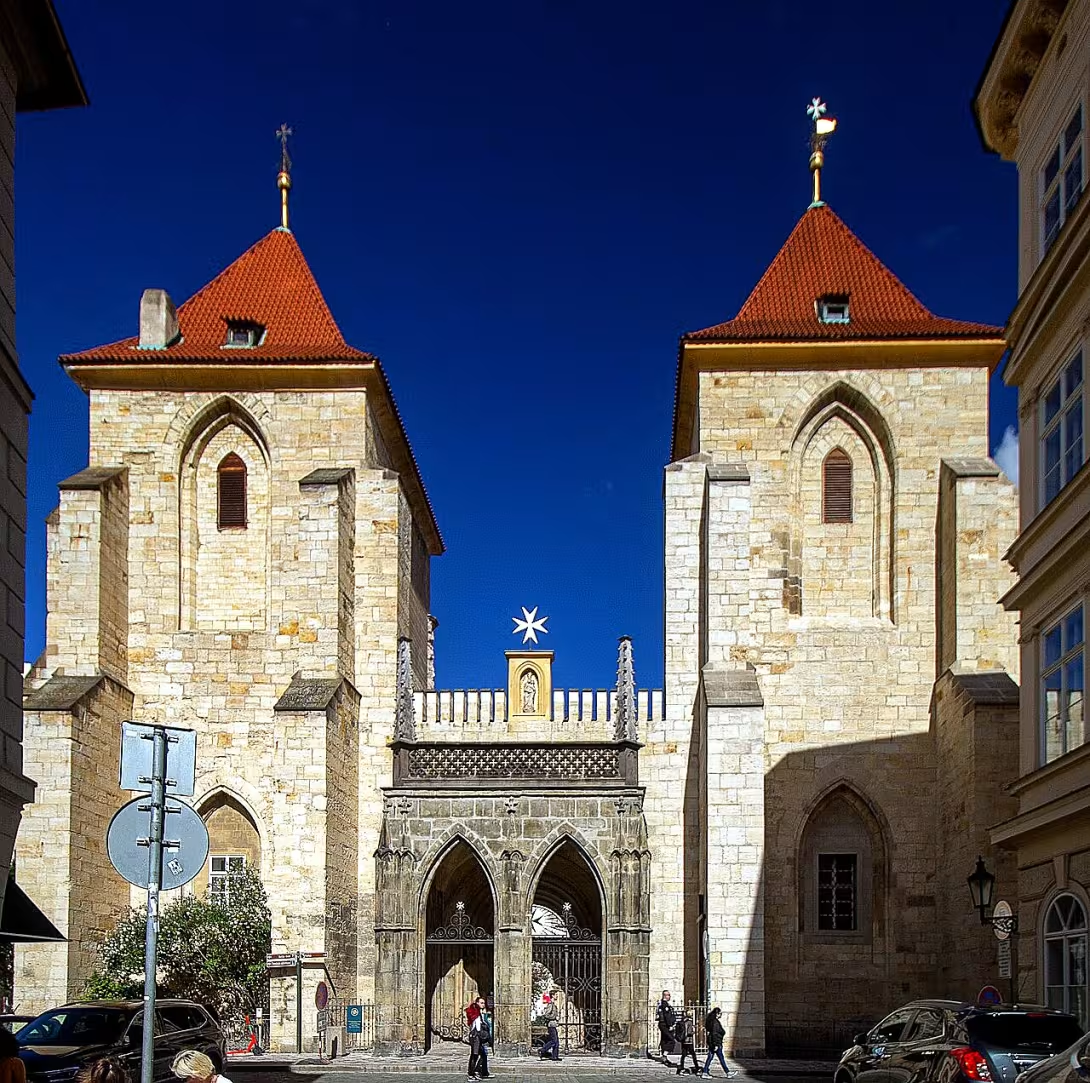
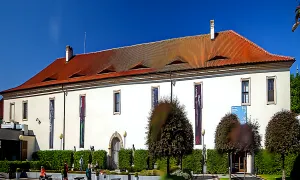
Kostel Panny Marie pod Řetězem is a Romanesque Catholic church in Prague's Malá Strana district. It serves as the choir for an unfinished medieval Maltese church originally planned to be larger. This historical monument stands at Lázeňská Street near Maltézské Square and close to Prague Castle, making it significant due to its association with the Knights Hospitaller (Johanites) and its strategic location near the Judith Bridge.
Founded between 1158 and 1169 by King Vladislav I for the Johanite Order, which later became part of the Maltese Order, this period marked Bohemia's growth in religious institutions under Přemyslid rule during the High Middle Ages. The original Romanesque basilica of St. Mary was constructed in the late 12th century with a three-aisled design and transept. By the mid-13th century, the commandery had fortified walls and towers controlling access to the bridge from both sides.
Architecturally, the church underwent significant transformations over centuries. Gothic modifications began in the early 14th century, including tower construction and a parapet portico. The Hussite Wars brought destruction in 1420 when the church was burned by Hussites but later repaired after a fire in 1503. In the 17th century, Carlo Lurago initiated Baroque renovations, adding chapels and redesigning the presbytery with stucco decorations.
Throughout its history, Kostel Panny Marie pod Řetězem has been linked to notable figures and events. By 1378, the choir was standing, serving as a site where Charles IV's body was displayed. The church also houses significant burials, including a sandstone tombstone of Maltese lawyer G. E. Wiederhaller (died 1690) featuring a Resurrection relief. A wrought iron gate adorned with motifs of the Maltese Knights, created in the mid-20th century by painter Jiří Binko, leads to the church.
Today, Kostel Panny Marie pod Řetězem remains an important cultural and historical site. Visitors can explore its Baroque interior, featuring a main altar with Karl Škréta's notable painting depicting Malta's defense in 1565. The church also hosts a nativity scene during Christmas, crafted in the late 19th century by Josef Krejčík's workshop. Its rich history and architectural evolution make it a worthwhile destination for those interested in Prague's medieval past.
Kostel Panny Marie pod Řetězem offers a unique glimpse into the religious and cultural heritage of Prague, inviting visitors to explore its storied walls and appreciate its historical significance.
Then and now
Drag the slider to compare how the landmark may have looked when it was built with the view today.
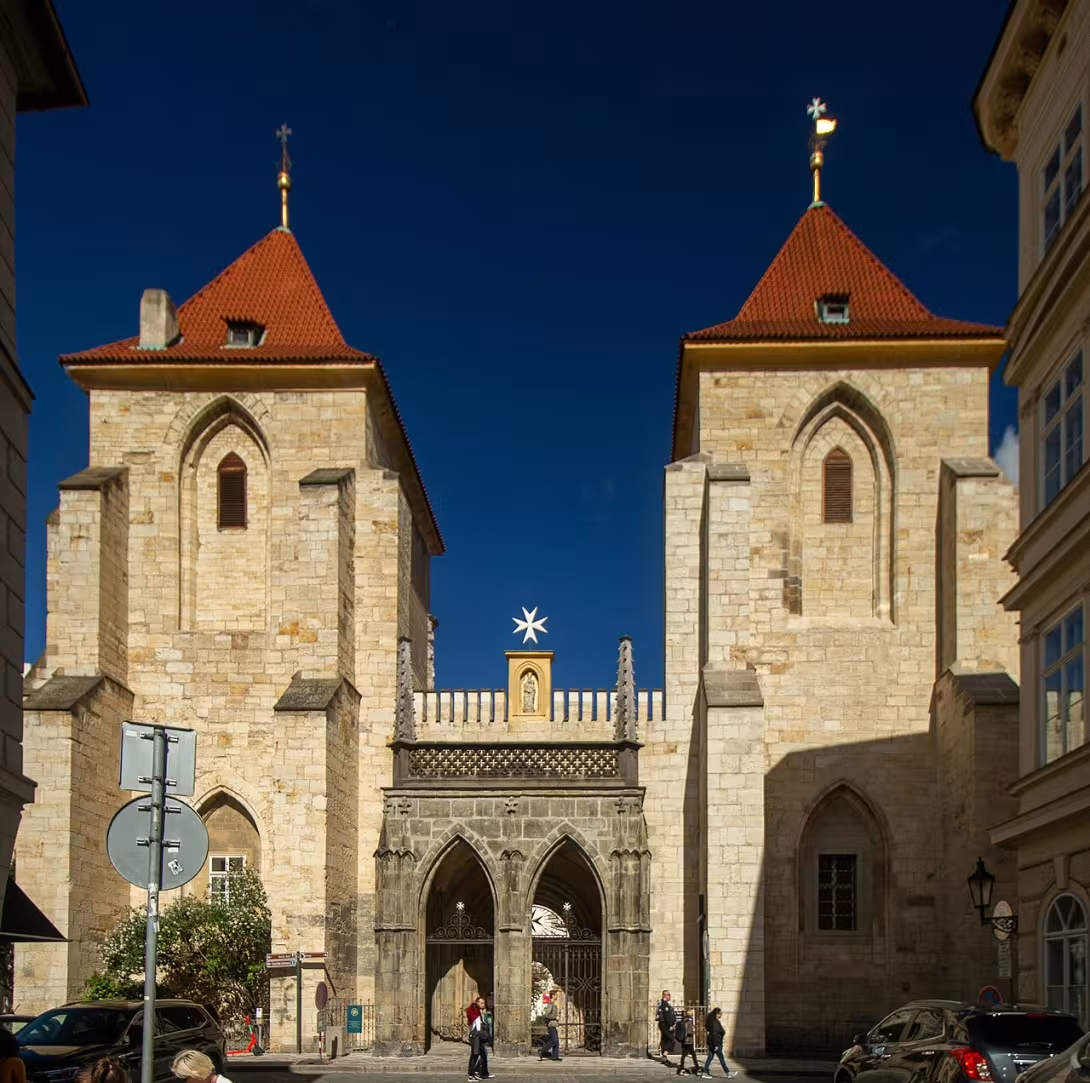
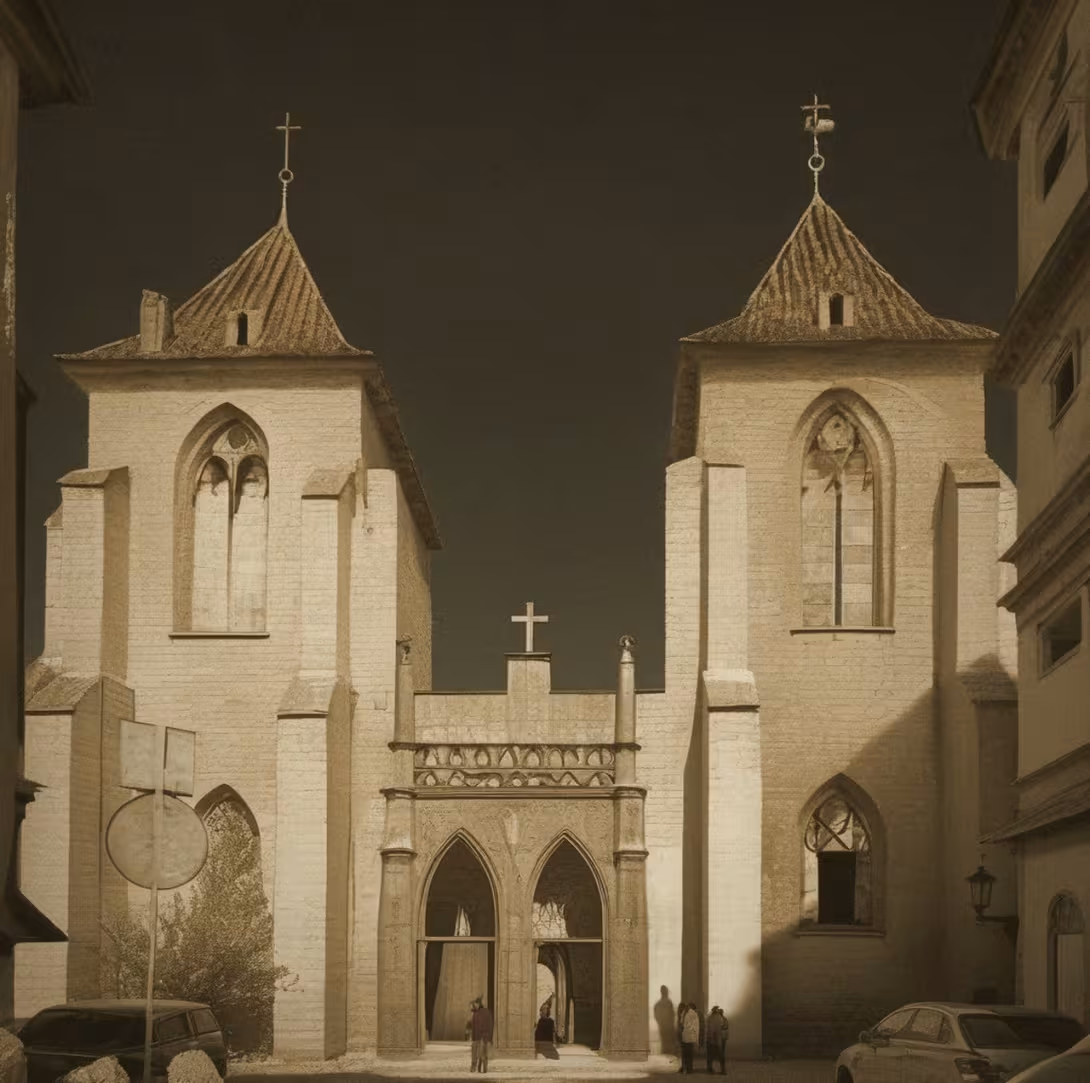
The historical appearance on the left is an AI-generated visualisation and serves as inspiration only.
Historical milestones
- 1169
- Foundation of the Church of Our Lady under the Chain.
- c. 1200
- Construction of the original Romanesque basilica of Saint Margaret.
- mid-13th century
- Fortification of the commandery with walls and towers.
- 1420
- Destruction of the church by the Hussites.
- 1503
- Restoration after a fire.
- 17th century
- Baroque renovations under the direction of Carlo Lurago.
Architectural development
The original Romanesque basilica of St. Mary was constructed in the late 12th century. Gothic modifications began in the early 14th century, including the construction of towers and a parapet portico. The church underwent significant Baroque renovations in the 17th century by Carlo Lurago, who added chapels and redesigned the presbytery.
Historical events
Between 1158 and 1169, King Vladislav I founded the Johanite (Maltese) commandery on Malá Strana.
In 1420, during the Hussite Wars, the church was burned by Hussites.
Owners
The church was initially established by King Vladislav I between 1158 and 1169 for the Johanite Order, later becoming part of the Maltese Order. Ownership has remained with religious orders since its foundation.
Points of interest
- The church's choir was completed by 1378 and served as the site where Charles IV’s body was displayed, highlighting its significance during royal ceremonies in medieval Prague.
- A sandstone tombstone within the church belongs to G. E. Wiederhaller, a Maltese lawyer who died in 1690, featuring an intricate Resurrection relief that reflects the artistic styles of the period.
- An ornate wrought iron gate created by painter Jiří Binko in the mid-20th century adorns the entrance, showcasing motifs of the Maltese Knights and adding a modern touch to the historical site.
- The church's main altar is adorned with Karl Škréta’s painting depicting Malta's defense in 1565, offering visitors an artistic representation of a pivotal moment in Maltese history within its walls.
- During Christmas, the church hosts a nativity scene crafted by Josef Krejčík’s workshop in the late 19th century, adding to its cultural and spiritual offerings throughout the year.
Guide
This guide is narrated by a synthetic voice generated by artificial intelligence.
Show guide text
This text was created by artificial intelligence and has not been editorially reviewed. It may contain inaccuracies.
Welcome to the enchanting site of Kostel Panny Marie pod Řetězem, a remarkable Romanesque Catholic church nestled in Prague's historic Malá Strana district. As you stand before this architectural gem, take a moment to absorb its serene presence—a testament to centuries of history and devotion.
The story of this church begins in 1169 when it was founded as part of an ambitious plan by King Vladislav I for a larger medieval Maltese church. Although the grand vision remained unfinished, what stands today is a choir that serves as both a spiritual haven and a historical landmark. As you gaze upon its structure, imagine the skilled craftsmen of around 1200 who meticulously built the original Romanesque basilica dedicated to Saint Markéta.
As we delve deeper into its past, note how in the mid-13th century, the church was fortified with walls and towers, enhancing its strategic importance. However, it faced adversity when it was destroyed by the Hussites in 1420, only to rise again through restoration after a fire in 1503. The 17th-century Baroque renovations, led by Carlo Lurago, added layers of artistic flair that you can still appreciate today.
Now, let's turn our attention to its architecture. While specific details might not be immediately visible from your vantage point, the church's Romanesque style is evident in its robust and harmonious lines. As you explore, notice how it seamlessly blends with its surroundings, standing as a sentinel of history amidst the vibrant Malá Strana.
Kostel Panny Marie pod Řetězem holds stories that echo through time. It was here, within this sacred space, where Charles IV’s body was displayed—a poignant reminder of its significance during royal ceremonies in medieval Prague. This church not only served religious purposes but also played a pivotal role in the historical tapestry of the city.
A fascinating detail lies within: a sandstone tombstone belonging to G. E. Wiederhaller, a Maltese lawyer who passed away in 1690. His resting place adds an intriguing layer to the church's narrative, inviting curiosity about those who once walked these hallowed grounds.
As you continue your journey through this remarkable site, let yourself be drawn into its rich tapestry of history and architecture. Each corner holds a story waiting to be discovered. We invite you to explore further and immerse yourself in the legacy of Kostel Panny Marie pod Řetězem. Thank you for joining us on this journey through time, and may your exploration be as enlightening as it is inspiring.
Tips for visitors
The best time to visit Kostel Panny Marie pod řetězem is during the late morning or early afternoon, ideally from October to April when the crowds are smaller and the lighting inside the church is softer for photography. The cooler months also offer a more intimate experience of Prague's historic charm without the summer tourist rush.
Public transportation is highly recommended, with several tram lines and buses serving the vicinity. Walking from the city center or using Prague’s extensive public transport network provides a scenic route to the church.
When visiting Kostel Panny Marie pod řetězem, consider bringing comfortable walking shoes as you'll likely explore more of Malá Strana on foot. A camera is essential for capturing the intricate details and unique lighting inside the church. Additionally, carrying a small umbrella or raincoat can be wise, given Prague's unpredictable weather.
For photography enthusiasts, the best spots are within the church itself where natural light filters through stained glass windows, creating vibrant patterns on the interior surfaces. Early morning visits might offer softer light for capturing the architectural details. Outside, the church’s façade is beautifully framed by Lázeňská Street's historic buildings.
Nearby attractions worth exploring include Prague Castle, a short walk away and rich in history and architecture. The Maltézské Square offers stunning views of the city and houses several historical sites. For families with children, the area around Kostel Panny Marie pod řetězem is perfect for leisurely strolls along cobblestone streets, exploring quaint shops, and enjoying a coffee in one of the many charming cafes.
Frequently asked questions
Can the monument be visited?
Religious buildings are usually open mainly during services; at other times a visit is normally arranged with the parish or the operator. We have not verified specific times.
Where is the monument?
Location: Malá Strana, Hlavní město Praha. The map on this page shows the exact spot.
Why is the monument protected?
It is listed in the Central List of Cultural Monuments of the Czech Republic as a cultural monument. It is protected as part of a larger listed ensemble.
Businesses nearby
Do you run a restaurant, accommodation, shop, museum, rental, wellness or other visitor service near this monument? Show yourself directly to the people heading to it — this is how they will see you in the app and on the web:
Events nearby

Zdroj akcí: otevřená data měst a obcí ČR (Národní katalog otevřených dat) a kalendář akcí Národního památkového ústavu.
Nearby
The church is situated in Lázeňská Street, near the Maltézské Square and close to Prague Castle. The surrounding area includes historical buildings from Malá Strana.
Accommodation nearby
Trips and activities nearby
Guided tours, tickets and activities nearby from GetYourGuide
Affiliate link: if you buy from the partner, we may receive a commission. The price for you does not change.
Search tours and activities →Themed route
Thematic Walking Tour: Malá Strana and the Church of Our Lady under the Chain
1. Kostel Panny Marie pod řetězem (Church) - Type: Religious Site - Why Visit: This iconic Baroque church, designed by Christoph Dientzenhofer, is renowned for its stunning architecture and historical significance. It stands as a testament to the rich cultural heritage of Prague's Malá Strana district.
2. Maltézské náměstí (Maltese Square) - Type: Historic Square - Why Visit: Located just steps away from the Church, this charming square is named after the Knights Hospitaller and offers a picturesque setting with its well-preserved historical buildings. It provides an excellent opportunity to appreciate the architectural beauty of Malá Strana.
3. Kostel svatého Mikuláše (Church of St. Nicholas) - Type: Religious Site - Why Visit: Situated near Maltézské Square, this church is notable for its Gothic-Renaissance architecture and the unique feature of a bell tower that leans slightly to one side. It offers insight into the religious history and architectural evolution of the area.
4. Kostel svaté Anny (Church of St. Anne) - Type: Religious Site - Why Visit: Close by, this church is famous for its Baroque interior and the legend associated with it—its tower leans to one side due to a curse from an angry woman. It provides a fascinating glimpse into local folklore intertwined with religious history.
5. Lázeňská Street - Type: Historic Street - Why Visit: As you walk along Lázeňská Street, you'll be immersed in the historical ambiance of Malá Strana, lined with elegant buildings and leading towards Prague Castle. This street offers a scenic route connecting key sites and encapsulating the essence of the neighborhood.
This tour allows visitors to explore the rich history and architectural beauty of Malá Strana, focusing on its significant religious landmarks and charming squares.
Seasonal recommendations
Spring: Visiting the Church of Our Lady under the Chain during spring offers a unique experience as the surrounding gardens and streets burst into life with vibrant colors from blooming flowers, creating an enchanting atmosphere. The soft, diffused light enhances the architectural details of the church, making it ideal for photography or simply appreciating its beauty. Springtime is generally less crowded than summer, providing a more serene visit. It's advisable to wear layers as temperatures can vary, and bring comfortable shoes if you plan on exploring nearby areas.
Summer: Summer at the Church of Our Lady under the Chain is marked by long daylight hours that illuminate the church in warm hues, creating a picturesque setting for visitors. This season attracts larger crowds due to its favorable weather and popularity among tourists, so arriving early can help avoid queues and ensure a more relaxed experience. Light clothing is recommended due to higher temperatures, and carrying water or sun protection is wise if you plan on spending extended time outdoors.
Autumn: Autumn provides a magical backdrop for visiting the Church of Our Lady under the Chain, as the changing leaves offer a stunning contrast against the historic architecture. The cooler weather creates a cozy atmosphere, perfect for leisurely strolls around the area. While it's less crowded than summer, some events may draw visitors, so checking local schedules can be beneficial. Layered clothing is recommended to adapt to fluctuating temperatures throughout the day.
Winter: Winter transforms the Church of Our Lady under the Chain into a serene and almost ethereal site, with snow often adding a layer of quiet beauty to its surroundings. The shorter daylight hours mean visiting earlier in the day is advisable to fully appreciate the church's details before it closes. With fewer tourists during this season, you can enjoy a more intimate experience. Dress warmly in layers and be prepared for potential closures or reduced opening times due to weather conditions.
Visualizations and artistic views


The visualisations are generated by artificial intelligence and serve as inspiration.
Photos from the area
Real photos taken near the monument

Zdroj a licence jsou uvedeny u každého snímku.
Tips from visitors
No tips yet. Be the first!
Log in and add your tip.
Sources and literature
Photos: VitVit / CC BY-SA 4.0 — Wikimedia Commons. The author and licence also appear when you hover over the image.
Faktickým podkladem tohoto textu byl článek na Wikipedii, jehož autory jsou přispěvatelé Wikipedie. Článek je dostupný pod licencí CC BY-SA 4.0.
Location on the map

Příběhy a pověsti
Legendy, pověsti a příběhy spjaté s touto památkou
Fotografie návštěvníků
Zatím žádné fotografie. Buďte první, kdo přidá fotografii z návštěvy!
Log in a přidejte svou fotografii nebo hodnoťte.
Za ověřenou návštěvu v aplikaci získáte víc bodů — poznáme podle GPS, že jste na místě.
Reviews and comments