






Kostel Panny Marie Vítězné a svatého Antonína Paduánského Church
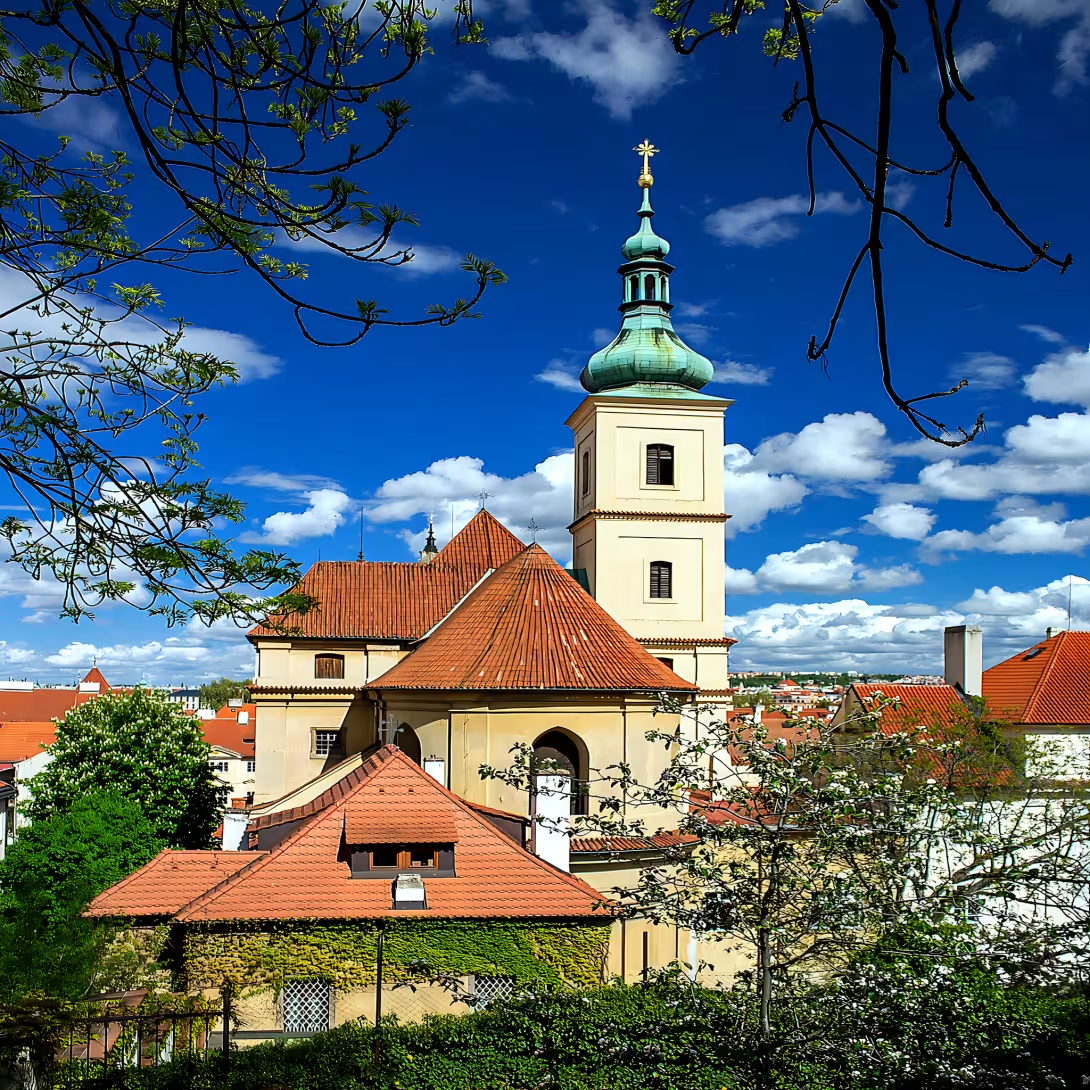
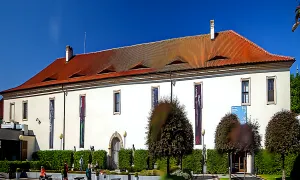
Kostel Panny Marie Vítězné a svatého Antonína Paduánského stands on the Malá Strana in Prague 1, in Carmelite Street under Petřín. The monastery of the order of barefoot carmelitans is adjacent to the temple. The construction is known primarily as the home of the statue of Prague Jesulina, which has a nickname and attracts pilgrims from Spanish-speaking countries and from other parts of the world.
The origin of the church dates back to the early 17th century. In 1611-1613, the late Renaissance Lutheran Church of the Holy Trinity was built according to the project by Giovanni Mario Filippi. The construction was oriented by the main altar to the east with the entrance from the western, Petrin side. The situation has fundamentally changed after the Battle of White Mountain. The church was closed, but the order of non-footwear carmelitans won it in the intercession of Dominika à Jesu Maria. On 7 September 1624, the first carmelite communities were introduced into the temple by the vicar general Kaspar Arsenius of Radbuza. The day later, the Apostolic Visitor of the Minorites Jan Savonanti dedicated him to the Virgin Mary of the Victory and Saint Anthony of Padua. The choice of patrocinia was deeply symbolic - it linked Marian's respect to the Catholic victory in the Belarusian battle. At the end of October 1624, the first monks from Vienna came to the monastery with the intention of establishing a novice, which was already transferred to Munich in 1630 because of the lack of funding.
Between 1625 and 1644 the church underwent a major reconstruction. His orientation was changed - the temple ship was turned west. A half-circle presbytery with a monk's choir was created. The facade was adapted according to the patterns of Italian Carmelite churches Santa Maria della Scala, Santa Maria della Vittoria and St. Susan's Church. A statue of the Virgin Mary was placed above the entrance portal. The facade is decorated with the emblem of the Carmelite Order and the plastic coat of arms of the founder of Don Baltasar de Marradas with the Maltese cross and heraldic elements referring to its Valencian origin. The memory plate from 1659 on the side of the temple captures the foundation of the hermit of Prague Jesulina, which was donated by the widowed Countess of Oppersdorf Elizabeth Constantine. The tower was built in 1669.
Since 1641 a statue of Prague Jesulina has been permanently in the church. Gradually, believers attributed her miraculous powers. In 1655 she was crowned by the Bishop of Prague. Respect for it has spread gradually around the world. After the imperial decree of Josef II from 1784 the monastery was abolished, but the church remained like a parish temple. Carmelitans managed to return to their monastery and church only on 2nd July 1993 after more than 200 years. In recent years, between 2006 and 2023, an extensive reconstruction of the main altar was carried out under the direction of the restorer Mgr. Daniel Talavery.
Today's church represents one of the most important buildings of an early Baroque in Prague with a rich interior, mostly from the 17th century. It combines architectural and historical value with the lively function of the pilgrimage site, which preserved its original spiritual and artistic character.
Then and now
Drag the slider to compare how the landmark may have looked when it was built with the view today.
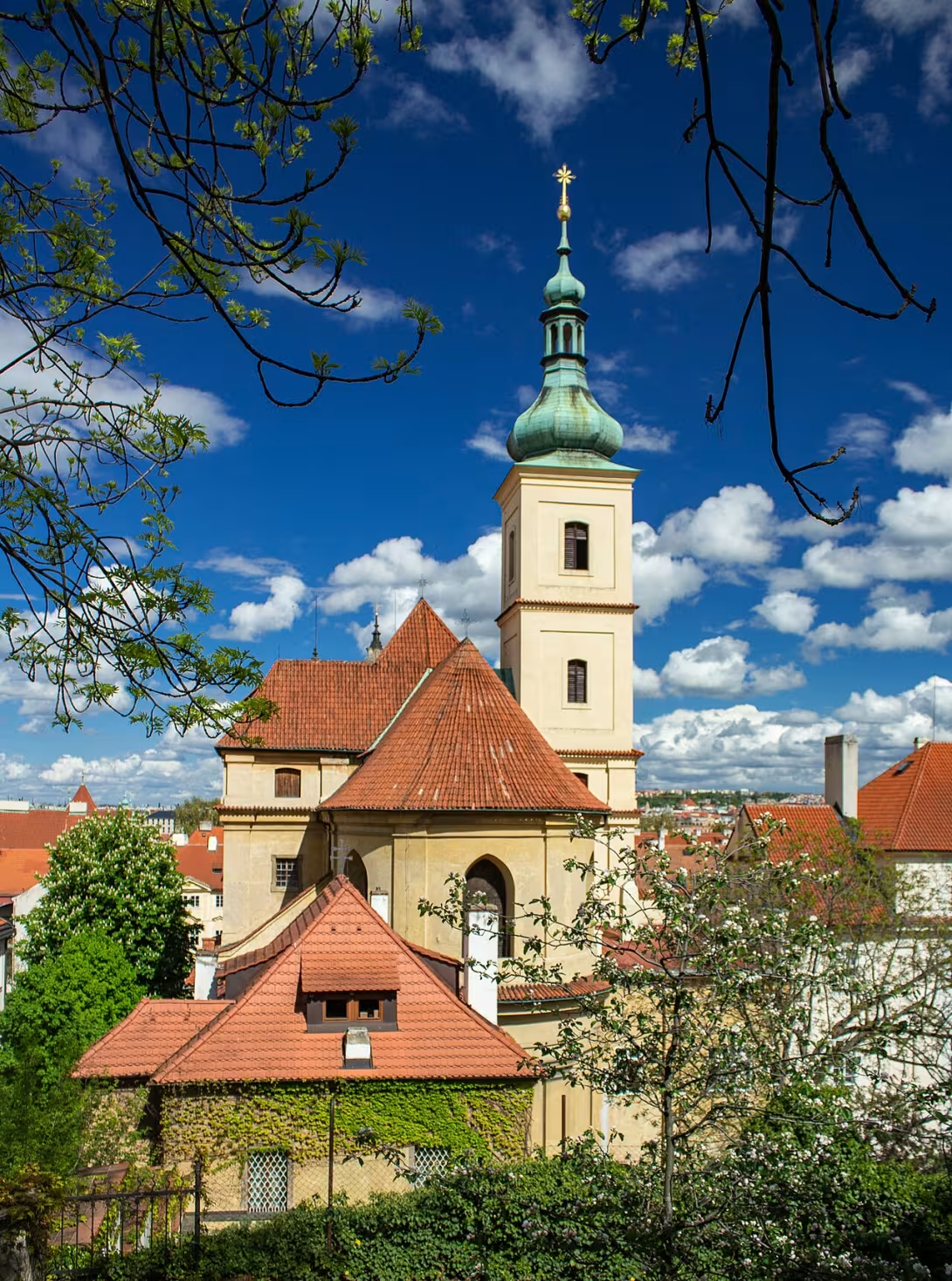

The historical appearance on the left is an AI-generated visualisation and serves as inspiration only.
Historical milestones
- 1611
- Establishment of the Lutheran Church of the Holy Trinity according to the project by Giovanni Mario Filippi
- 1624
- The church was won by Carmelitans, dedicated to Our Lady of Victory and St.
Architectural development
The basic Renaissance Church of the Holy Trinity (1611-1613) was rebuilt by carmelitans to Western orientation (1625-1644) with a semi-circular presbytery and a monk choir. The facade was modified in 1636-1642 according to Roman designs, the tower was completed in 1669. The interior maintains a 17th-century mobility, including the main altar from the Carmelite administration. In the 21st century there was a reconstruction, e.g. the main altar (2006- 2023).
Historical events
- 1624
- The church was won by Carmelitans on White Mountain, dedicated to Our Lady of Victory and St. Anthony of Paduan
- 1641
- Permanent location of the statue of Prague Jesulina in church
- 1784
- The monastery cancelled by Josef II., the church moved to the secular administration
- 1993
- Church returned to Carmelitans after 209 years
Points of interest
- The church was originally built in 1611-1613 as the Lutheran Temple of the Holy Trinity, until after the White Mountain was transformed into Catholic.
- In 1624, the Carmelites acquired it and dedicated it to the Virgin Mary of the Victory and Saint Anthony of Paduan as a symbol of the Catholic victory.
- The statue of Prague Jesulina has been here since 1641 and was crowned by the Bishop of Prague in 1655.
- The church underwent reconstruction in 1625-1644, in which the orientation was changed and a semi-circular presbytery was created.
Guide
This guide is narrated by a synthetic voice generated by artificial intelligence.
Show guide text
This text was created by artificial intelligence and has not been editorially reviewed. It may contain inaccuracies.
Audio Guide - Kostel Panny Marie Vítězné a svatého Antonína Paduánského
---
Welcome! You're standing in front of a beautiful church, which will show you today how history and art all wash together. There is a building in front of you that tells you a story from when Praha was still divided by religious boundaries. Look up - on his clean, triangular shields with small windows that make you feel like you're just going back to the past.
Let's move on to 1611. This is where the Lutheran Temple of the Holy Trinity was founded according to the Renaissance project of Italian architect Giovanni Mario Filippi. It was a place where different ideas and beliefs met. But history has changed. In 1624, after the tragedy of White Mountain, the church became part of a new religious life. The Carmelitans who settled here renamed him and gave him the Virgin Mary of the Victory and Saint Anthony of Padua. That was their symbol of victory, but also proof of how Praha returned to Catholic faith.
Now pay attention to the facade. His face is inspired by the Roman churches of the order of Carmelitans, and it is this adaptation from the 17th century that brings his characteristic expression to the church. But the inner world is even more interesting. Notice how the mobiliary from the time the church served as a Lutheran temple was preserved here. In the centre of the interior stands the statue of Prague Jesulina - a gift from 1641, which has become a pilgrimage for many people. Anyone who sees her feels closer to God.
But the story of this church is not just about faith. In 1659 Elizabeth Constantine of Oppersdorf founded the hermit of Prague Jesulina, which became an important place for prayer and spiritual support. And how do you know that sometimes there were not only prayers, but also benefactors? Baltasar de Marradas, who helped with the reconstruction of the facade, helped with his support to preserve the memory for many years.
The interesting thing is that originally this temple was built as Lutheran. After the White Mountain was transformed into Catholic and since then it has been alternately transformed. In 1784 the monastery was abolished, but after 209 years in 1993 the church returned to Carmelitans. This is an example of how monuments can change, but they remain an important part of our history.
Today, you are standing in front of a place that tells you about the powers that have been met here, the faith that has grown here and the love that people have shared here. Take another look at the facade, feel the atmosphere, and you may find that you have been preceded here. Let your visit become an opportunity for you to rest here and think about what this monument tells you.
We thank you for your attention and wish to make your walk around the Lesser Side an unforgettable experience. Whether you can always find peace and inspiration here in the church or around here.
Tips for visitors
{'text': 'Best time to visit the church is in the morning when it is quiet and you can see the interior without crowds. Another suitable period is after lunch, when most tourists visit other attractions in Mala Strana. In summer it is advisable to avoid the noon hours when the church is often hot and busy. Baroque architecture and light falling through windows in the morning creates a unique atmosphere.'}
{'text': 'The church is accessible by car and public transport. If you arrive by car, it is recommended to find a parking lot near Malostranska Street or Peace Square. Public transport can be reached by tram or bus to stop nearby, for example in Malostranska Square. The current connection and parking options can be found in the map search engine.'}
{'text': 'When visiting take on comfortable clothes and shoes as the church and its surroundings offer lots of stairs and stone surfaces. In winter it is advisable to dress warmer because the interior can be cold. For convenience, you will also bring a small towel or cloth for any dirt on the floor. If you are planning to take pictures, remember to take a flashlight or mobile charger.'}
{'text': 'Photography is allowed in the church, but it is necessary to take care to respect other visitors. The best places for photos are the main altar with the picture of Our Lady of Victory and the statue of St. Anthony of Paduan. It is suitable to photograph in natural light, for example in the morning or in the afternoon when light creates softer shadows. It is advisable to avoid lightning in the interior to avoid damage to the paintings.'}
{'text': 'In the vicinity of the church is worth visiting Petřín lookout tower, which is approximately 500 metres away. It's an iconic monument overlooking the whole city. Another interesting thing is the Church of the Virgin Mary under the chain, located about 800 metres from the church. This church is connected with the history of Maltese knights and offers beautiful architecture. It is advisable for families with children to visit a nearby playground or walk down Malostranska street, where there are many picturesque houses and cafés.'}
{'text': For families with children it is advisable to visit the church at a time when the children are calm and will not disturb other visitors. Children can see the statues of the holy and colorful decoration of the church. You can also visit Petrín orchards where children can run and play. For the sake of interest, children can also be interested in visiting the Church of Our Lady under a chain, where there is a small museum with historical objects. '}
Frequently asked questions
Is Kostel Panny Marie Vítězné a svatého Antonína Paduánského open to the public?
Yes, the church is open to the public from 9: 00 to 15: 00, outside the holiday days.
How do I get to the place by car / public transport?
By car you can park on nearby streets or in nearby parking lots. Transportation public transport is available by line 4, 6 or 15.
How much is the entrance fee and is it paid on the spot?
It's paid right by the church.
Is the tour suitable for children and seniors?
Yes, a church tour is suitable for all age groups, including children and seniors.
How long does the tour take?
The church tour takes approximately 30 minutes.
What are the opening times and booking is required?
The church is open to the public from 9 am to 15 pm, outside the holiday days. Reservation is not necessary.
What's interesting in the immediate vicinity?
In the immediate vicinity there is a historical centre of Prague with many other monuments such as Museum of Decorative Arts or Prague City Gallery.
For kids
Imagine coming back 415 years and finding yourself in Prague, where stands the beautiful church of Our Lady of Victory and Saint Anthony of Paduan. It was built in 1611 when Praha was still a young town.
Whenever you walked down the aisle, you would see a church with its amazing wreath and a tall statue of the Virgin Mary on top. The church was built at the time when Praha became the capital of Czech countries. People lived at the time when the church was very powerful and the churches were the centers of the village.
Businesses nearby
Events nearby

Zdroj akcí: otevřená data měst a obcí ČR (Národní katalog otevřených dat) a kalendář akcí Národního památkového ústavu.
Nearby
- Iconica of Prague skyline, built on the site of former Petřín Chateau
- Another important church on the Malá Strana, originally connected with Maltese knights
- Green complex with vineyards, gardens and historical buildings
- Gothic church in Malotranska Square, known as
Accommodation nearby
Trips and activities nearby
Guided tours, tickets and activities nearby from GetYourGuide
Affiliate link: if you buy from the partner, we may receive a commission. The price for you does not change.
Search tours and activities →Themed route
Thematic cruise route to the Little Party with the Church of Our Lady of Victory and Saint Anthony of Padua
1.Kostel Panny Marie Vítězné a svatého Antonína Paduánského Baroque church from the 18th century with richly decorated interior and sculpture decoration. Its dominant is the altar of St. Anthony, which attracts not only believers but also art lovers.
2. Petrin Sets Around 300 metres from the church is a green oasis with vineyards and historical gazebo. Ideal place to relax and walk with a view of the Petřín View and Old Town.
3. Petrin View The symbol of Prague, built on the site of the former chateau. The output by 600 stairs or lift rewards panoramic views of the entire metropolis.
4. Church of the Virgin Mary under the Chain Another significant Baroque building, originally connected with Maltese knights, is about 800 metres from the church. His name is based on the legend of saving the city from the plague.
The route is designed to combine spiritual and historical monuments with the natural and architectural wealth of the Little Party.
Seasonal recommendations
Spring
In the church of Our Lady of Victory and Saint Anthony of Paduan in Malá Strana, the magical atmosphere is manifested in the spring days, when the green walls of the church and surroundings begin to awaken from the winter calm. The sun rays illuminate the interior with bright shadows, while the first spring flowers appear on the outside facade - often on guttering sheets or in windows. The interior of the church is particularly charming thanks to the bloom of flowers in spectacular stained windows that bring to the space fine shades of blue and green. The outer hall of the church is often surrounded by spring flowers, which decorate terraces and gardens in the middle of Prague.
It is practically the best visit at this time in the early morning hours when the church is still calm and visitors are minimal. Suitable clothes should be light, but ready for more sudden changes in the weather - spring rainy days take turns with sunny ones in Prague. Protecting against sunlight is also important, because the spring sun is stronger than it seems. Since visitors are beginning to return from summer holidays, it is advisable to come before the main tourist season to avoid crowds. The inside of the church is often open in the spring months in the morning, so it is good to check the actual opening hours before visiting.
Visualizations and artistic views


The visualisations are generated by artificial intelligence and serve as inspiration.
Photos from the area
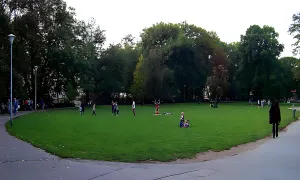
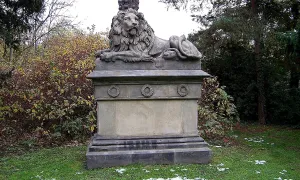
Real photos taken near the monument


Zdroj a licence jsou uvedeny u každého snímku.
Atmosphere of the place
This atmospheric visualisation of the place and period was generated by artificial intelligence. It is not real footage of the location.
Tips from visitors
No tips yet. Be the first!
Log in and add your tip.
Sources and literature
Fotografie: VitVit / CC BY-SA 4.0, rozlišení zvýšeno umělou inteligencí — Wikimedia Commons. The author and licence also appear when you hover over the image.
Faktickým podkladem tohoto textu byl článek na Wikipedii, jehož autory jsou přispěvatelé Wikipedie. Článek je dostupný pod licencí CC BY-SA 4.0.
Location on the map

Příběhy a pověsti
Legendy, pověsti a příběhy spjaté s touto památkou
Fotografie návštěvníků
Zatím žádné fotografie. Buďte první, kdo přidá fotografii z návštěvy!
Přihlaste se a přidejte svou fotografii nebo hodnoťte.
Za ověřenou návštěvu v aplikaci získáte víc bodů — poznáme podle GPS, že jste na místě.
Reviews and comments