



Kostel svaté Kunhuty (Královské Poříčí) Church
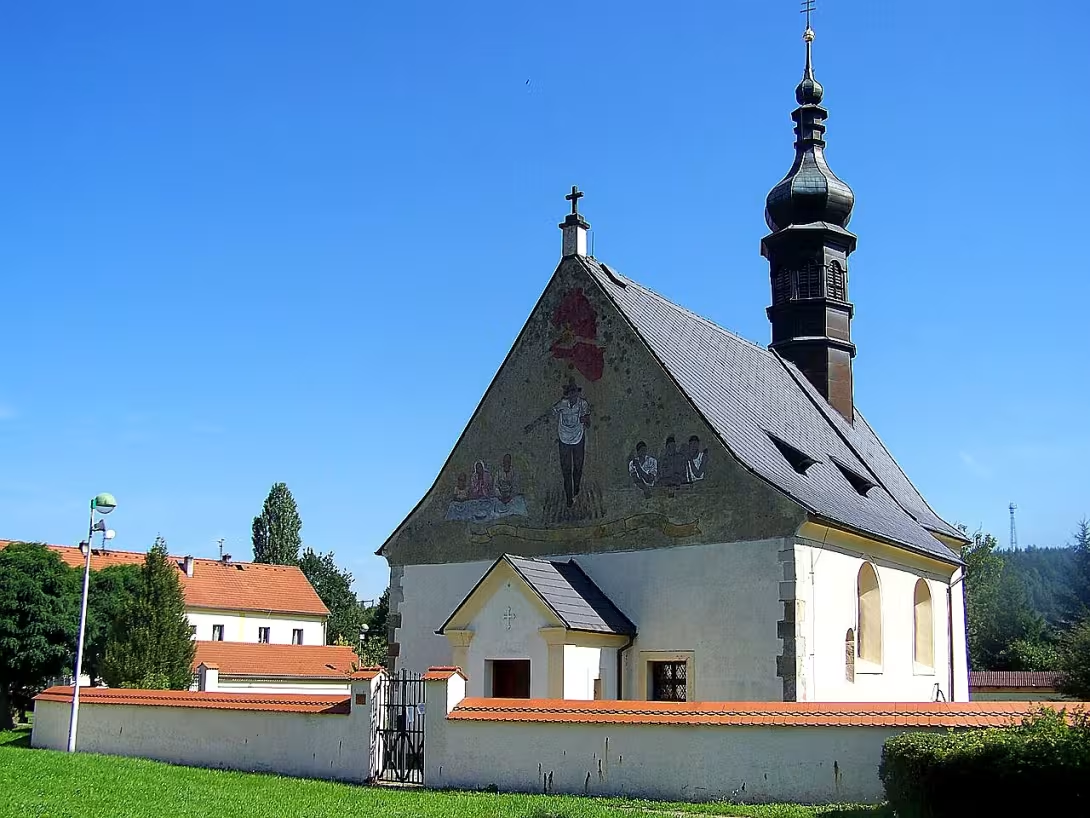
The church of St. Kunhuta in the small village Královské Poříčí in the district of Sokolov is one of the cultural monuments protected since 1963. It is a one-ship building that tells the story of more than 800 years of building changes in its architecture.
The dedication of the temple of St. Kunhuta is quite rare in the Czech Republic and points to a special history of the foundation of the village. It is believed that Královské Poříčí was founded by German colonizers, probably from the Bamberk area, where Saint Kunhuta was particularly revered. These immigrants seem to have dedicated their patrons here.
The first written mention of the church dates back to 1240, when the Czech king Václav I. awarded the order of cruisers with red star patronage to the temple. It can be assumed that the church was built shortly before this date. In extensive reconstruction in the 1990s, valuable Romanesque elements were discovered - especially a small window in the south wall and stone lining of the portal - which clearly confirm the origin of the construction from the beginning of the thirteenth century.
At the turn of the seventeenth and eighteenth centuries, the church underwent a major reconstruction. It was joined by a baroque hall on the west side and an eight-metre-long presbytery with polygonal closure. Above the presbytery, a 13-metre high sanctus tower ends with onion fighting. The church acquired a new saddle roof and was probably reconsecrated in 1701. Although its middle age was transformed into a simple baroque style, rare Romanes- Gothic elements were preserved in the construction.
The facade of the temple is decorated with fresco created in 1933 by Sokolovsky painter and graphic artist Tony Schönecker. Its central motive is the character of the man sower, supplemented by the motifs of daily prayer and working activities typical of this mountainous area.
The church presents itself richly in its interior. On the wooden baroque circle in the main ship there are rococo organ from the end of the eighteenth century created by the organist Anton Müller of Kraslic, the founder of the influential organist family in Cheb. The presbytery is covered with a cross vault with lunnets. The main altar from the first half of the eighteenth century carries figural reliefs from the life of St. Kunhuta. The altar painting from the first half of the nineteenth century, which depicts St. Kunhutu itself, is the work of the elk artist Hermann Kugler.
The interior was kept by older gems - the targeting bell with the date of 1302 visел in the tower until World War II. The interesting question remains its origin: the inscription on the bell is "Saint Wenceslas, stand by us" and thus turns to the Czech patron rather than to the patron saint of the church, which suggests that the bell probably was not originally created for this construction.
Outside the church is a statue of St. John Nepomuk and three peace crosses. One of them - a stone monolithic cross with a wedge head and an engraving of the cross - is in itself protected as a cultural monument. The church thus represents not only the architectural but also the piety centre of this village.
Then and now
Drag the slider to compare how the landmark may have looked when it was built with the view today.
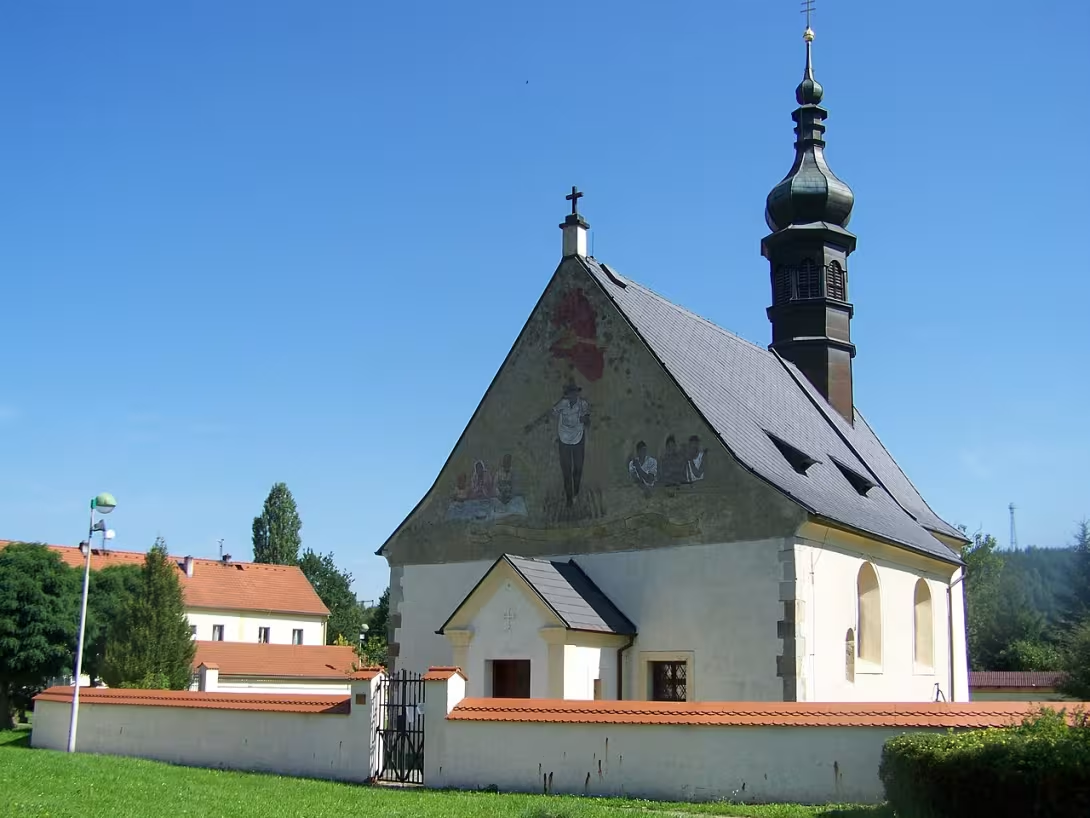
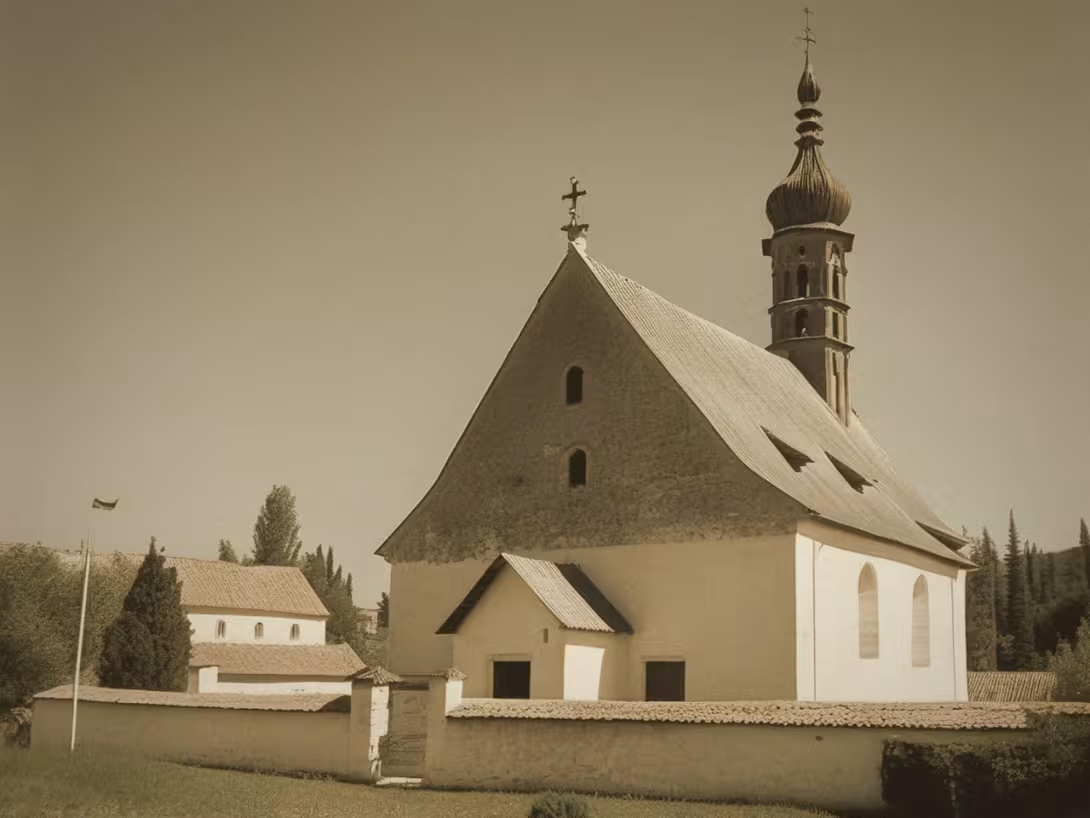
The historical appearance on the left is an AI-generated visualisation and serves as inspiration only.
Historical milestones
- 1240
- First written mention of the church in the letter of King Wenceslas I.
- 1701
- Expected reconsecration of the church after Baroque reconstruction.
- 1933
- Creating a fresco of the spreader on the church shield by the painter Tonim Schönecker.
- 1963
- The church is declared a cultural monument of the Czech Republic.
Architectural development
At the turn of the 17th and 18th centuries, the original single-boat Romanesque building was expanded with a baroque hall and a polygonal presbytery. Romanesque elements have been preserved in the interior, such as a small window in the south wall and the lining of a portal in the north wall. The roof is saddle-shaped, supplemented by a sanctus tower with onion-shaped beating.
Historical events
1240: First written mention of the church in the letter of King Wenceslas I. 1701: Expected reconsecration of the church after Baroque reconstruction. 1963: Church declared a cultural monument of the Czech Republic.
Owners
Patronage law belonged to the order of cruisers with a red star.
Points of interest
- The dedication of the church of St. Kunhuta is quite rare in the Czech Republic and probably related to German colonists from the region of Bamberk. - During reconstruction in the 1990s, Romanesque windows and stone lining of the portal were discovered in the south wall, which confirmed the origin of the construction from the beginning of the thirteenth century. - The facade is decorated with a 1933 fresco by Tony Schönecker, which depicts sockets and motifs typical of the mining area at the time. - A bell from 1302 was placed in the tower until World War II, which bears the name of St. Wenceslas, indicating that it was not originally intended for this church. - In front of the church there are three peace crosses, one of which is protected separately as a cultural monument.
Guide
This guide is narrated by a synthetic voice generated by artificial intelligence.
Show guide text
This text was created by artificial intelligence and has not been editorially reviewed. It may contain inaccuracies.
The Church of Saint Kunhuta in Královské Poříčí in the Sokolovsko region has been a cultural monument since 1963. Already its dedication is unusual. Saint Kunhuta is a rather rare patroness in Bohemia, venerated mainly in the area around the German city of Bamberg. This is why it is believed that the village may have been founded by colonists from precisely this region and the church was dedicated to a saint whom they knew from their homeland.
The first written mention comes from the year 1240. At that time, the Czech ruler Václav the First granted the Order of the Knights of the Red Star the right of patronage over the church. Although the document was lost, it was referenced by the Knights' priest August Leopold Stöhr in his book about Carlsbad monuments from 1810. The church therefore most likely originated shortly before 1240. This was confirmed by reconstruction work at the beginning of the nineteen-nineties, during which Romanesque elements from the early thirteenth century were discovered. These include a small Romanesque window in the southern wall and stone masonry of an early Gothic portal with a pointed arch in the northern wall.
The single-nave church was initially the only stone building in the village. At the turn of the seventeenth and eighteenth centuries, it acquired a simple Baroque form. A simple Baroque vestibule and an eight-meter-long chancel with a polygonal apse were added to the old nave. Above it rises a thirteen-meter-high sanctus tower with an onion-shaped cupola. It was probably reconsecrated in 1701. The gable of the church is adorned with a fresco from 1933 by Toni Schönecker, a painter and graphic artist from Sokolov. In the center is a sower, to his right daily prayer, and to his left professions typical of the region.
In the nave stands a wooden Baroque gallery and on it Rococo organ from the end of the eighteenth century. It was built by organ builder Anton Müller, a native of Kraslic and founder of an organ-building dynasty in Cheb. The main altar from the first half of the eighteenth century has decorative wings with painted reliefs from the life of Saint Kunhuta. The altar painting of the saint was painted in the first half of the nineteenth century by Hermann Kugler, an artist from Loket. According to old photographs, the furnishings of the church were once much more lavish.
In the tower hung until it was confiscated during the Second World War a bell from the year 1302 with the inscription "Saint Václav, stand by us". Because it was addressed to the Czech patron, and not to Saint Kunhuta, it is possible that it was originally made for another church.
In front of the church stands a statue of Saint John of Nepomuk and three penitential crosses. One of them, a stone cross carved from a single piece with an incised cross, is also a cultural monument.
Tips for visitors
The best time to visit is in the morning or late afternoon, when the sun pleasantly lights up the facade of the church and allows to excel at architectural details of baroque reconstruction. In these times, the place is quieter and suitable for contemplation.
You can easily reach Royal Poříčí by car and public transport. We recommend that the current connection be checked by public transport in the respective connection search engine.
It is ideal for photographers to use the morning light that highlights the statue of St. John Nepomuk and the historical peace crosses in the immediate vicinity of the church. We recommend to bring a wide-angle lens to capture the entire object in the context of the surrounding installation.
In the immediate vicinity of the church, you can see the statue of St. John Nepomuk and three historical peace crosses, one of which is protected by the monument. These places offer an interesting insight into the history of the region directly at the sacral building.
For families with children the visit is suitable as a stop when walking the village. The surrounding area of the church is safe and offers a space for a short rest, with historical elements such as peace crosses can serve as an interesting educational element for older children.
Frequently asked questions
Can the monument be visited?
Religious buildings are usually open mainly during services; at other times a visit is normally arranged with the parish or the operator. We have not verified specific times.
Where is the monument?
Location: Královské Poříčí, Karlovarský kraj. The map on this page shows the exact spot.
Why is the monument protected?
It is listed in the Central List of Cultural Monuments of the Czech Republic as a cultural monument (register no. 35999/4-626).
For kids
Imagine an ancient church, as if we had gotten into a book full of stories and secrets. He's been standing there for over a century, and everything around him is talking about a past that's so interesting you'd like to know more.
Businesses nearby
Do you run a restaurant, accommodation, shop, museum, rental, wellness or other visitor service near this monument? Show yourself directly to the people heading to it — this is how they will see you in the app and on the web:
Nearby
In the immediate vicinity of the church there is a statue of St. John Nepomuk and three peace crosses, one of which is protected by the monument.
Accommodation nearby
Trips and activities nearby
Guided tours, tickets and activities nearby from GetYourGuide
Affiliate link: if you buy from the partner, we may receive a commission. The price for you does not change.
Search tours and activities →Themed route
1. Kostel svaté Kunhuty (Královské Poříčí), Church, The main destination of the trip, which represents an important historical object in the village. 2. Statue of St. John Nepomuk, statue, Located in close proximity to the church and complements its immediate surroundings. 3. Three peace crosses, historical monuments, one of these crosses is monument protected and testifies to the history of the place.
Seasonal recommendations
Spring: In the spring period, the Church of St. Kunhuta in Royal Poříčí is revived by floral floods, which make the surrounding fields and sets an unforgettable background. The sunny days provide ideal lighting for the photograph, where the roofs and noughts of the church are especially beautifully reflected. Visitors should come early in the morning or late in the evening to enjoy a mild crowd. It is advisable to wear light clothes with a warm shirt because the weather can change quickly during the day.
Summer: In the summer period, the Church of Saint Kunhuta is an exceptional destination for visitors looking for shelter before a warm summer atmosphere. The sky is often covered with clouds, which can affect the lighting of the church and create a romantic effect. Summer is the most visited season, so we recommend coming early in the morning or choosing a weekend afternoon when crowds can escape. Don't forget the protective sunglasses and short shirt, but also enough drinking.
Autumn: In autumn the Church of St. Kunhuta is surrounded by colorful leaves of trees, which adds magic and peace to the region. Sunlight in early afternoons shines on the church and its surroundings, thus adorning it with exceptional beauty. It is advisable to visit the memory before setting the cold weather, when the crowds are still mild. A good idea is to wear top clothes that are easily put away, and a short shirt for a more pleasant moment.
Winter: In winter months, the Church of St. Kunhuta offers quiet visits, where the surrounding area is covered with snow and creates a quiet atmosphere. Sunlighting is a special experience that highlights the roof of the church and its architecture. It is necessary to wear warm clothes with protective gloves and hat and remember that the church can be colder due to ventilation.
Visualizations and artistic views


The visualisations are generated by artificial intelligence and serve as inspiration.
Photos from the area
Real photos taken near the monument


Zdroj a licence jsou uvedeny u každého snímku.
Tips from visitors
No tips yet. Be the first!
Log in and add your tip.
Sources and literature
Photos: Zipacna1 / CC BY 3.0 — Wikimedia Commons. The author and licence also appear when you hover over the image.
Faktickým podkladem tohoto textu byl článek na Wikipedii, jehož autory jsou přispěvatelé Wikipedie. Článek je dostupný pod licencí CC BY-SA 4.0.
Location on the map
More monuments – Královské Poříčí
Show all in the municipality
Příběhy a pověsti
Legendy, pověsti a příběhy spjaté s touto památkou
Fotografie návštěvníků
Zatím žádné fotografie. Buďte první, kdo přidá fotografii z návštěvy!
Log in a přidejte svou fotografii nebo hodnoťte.
Za ověřenou návštěvu v aplikaci získáte víc bodů — poznáme podle GPS, že jste na místě.
Reviews and comments