



kostel svatého Apolináře (Sadská) Church
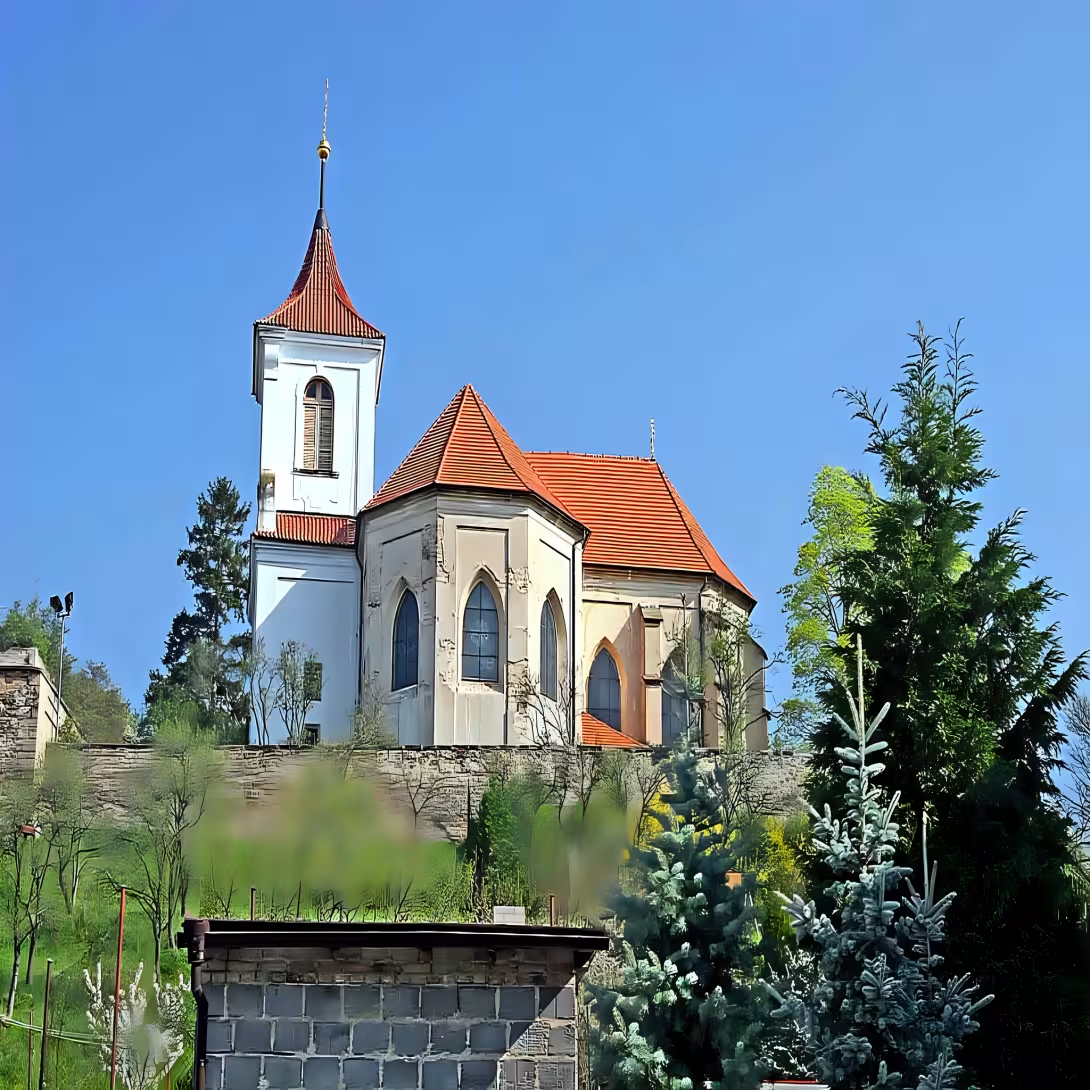
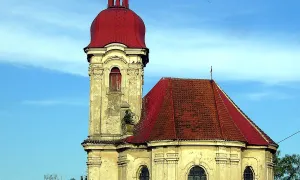
The Church of Saint Apollinaris in Sadská is a notable historical monument located in Central Bohemia's heart, within the town of Sadská. Constructed between 1118 and 1120 by Duke Bořivoj II., this church exemplifies architectural evolution from Romanesque beginnings through Gothic expansions to its current Baroque-Gothic form established between 1737 and 1739. Its significance lies in both its rich history and survival of the tumultuous Hussite invasions, making it a symbol of cultural resilience.
The origins date back to when Bohemia was under the Přemyslid dynasty's consolidation efforts. Legend suggests that around 864, St. Cyril intended to establish a chapel dedicated to St. Clement on this site. However, Duke Bořivoj II. commissioned the original Romanesque church in 1118, alongside an adjacent fortified castle. This church served as both a spiritual and educational center, with its associated chapter being one of the highest ecclesiastical schools at that time.
Architecturally, the Church has undergone several transformations. Initially built in the Romanesque style, it later incorporated Gothic elements under Charles IV's initiative after 1362, including a net-vaulted presbytery. Its resilience was notably demonstrated during the Hussite invasions of 1420 when it survived while much of the surrounding area was destroyed. The current Baroque-Gothic appearance is attributed to Kilián Ignác Dienzenhofer’s designs from 1737 to 1739, which included a cross-shaped layout achieved by adding a transverse nave and tower.
Throughout its history, the church has seen various administrators and owners. Initially part of a chapter led by figures such as Ota, who later became the Archbishop of Prague, it transitioned through different ecclesiastical hands. The Augustinian canons took over after the Hussite invasions, further contributing to its architectural evolution.
The Church is significant not only for its historical and architectural value but also for its picturesque location on a hill offering views of the Sněžka mountain. Nearby, a statue of St. Wenceslas enhances the site's historical ambiance, adding to its allure as a cultural landmark.
Today, the Church remains accessible to visitors, inviting them to explore its rich history and architectural beauty. Its survival through centuries of change makes it a compelling destination for those interested in Bohemian heritage. The church stands not only as a monument to religious devotion but also as a testament to the enduring spirit of the region's cultural legacy. Visitors are encouraged to experience this remarkable site, where history and architecture converge amidst stunning natural scenery.
Then and now
Drag the slider to compare how the landmark may have looked when it was built with the view today.
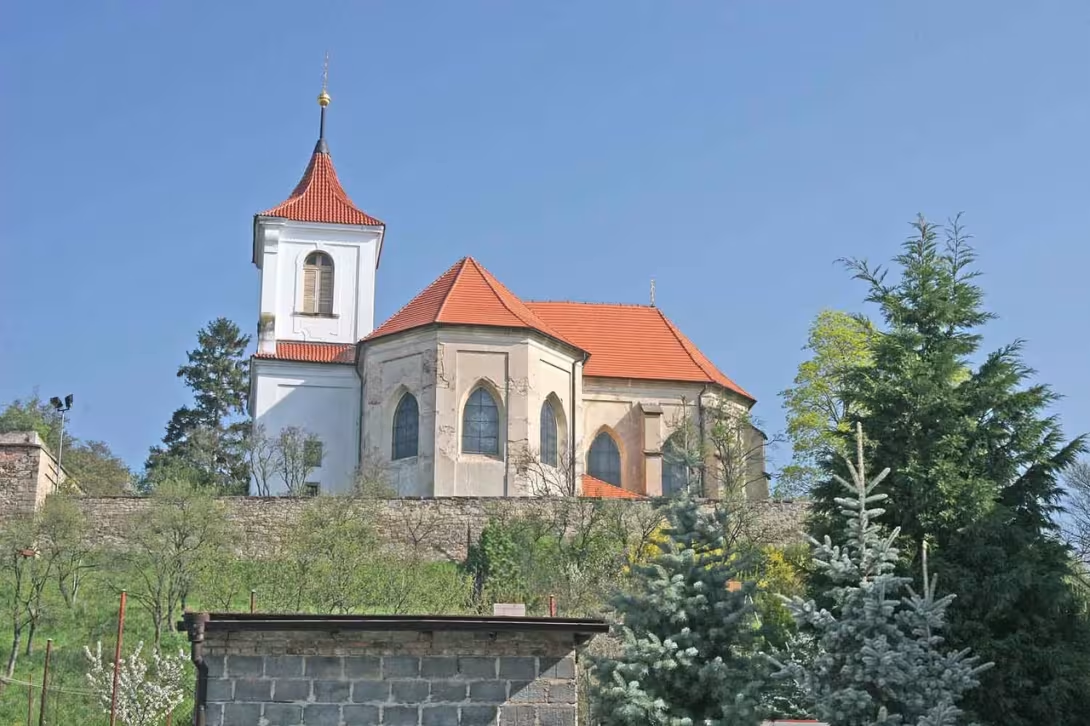
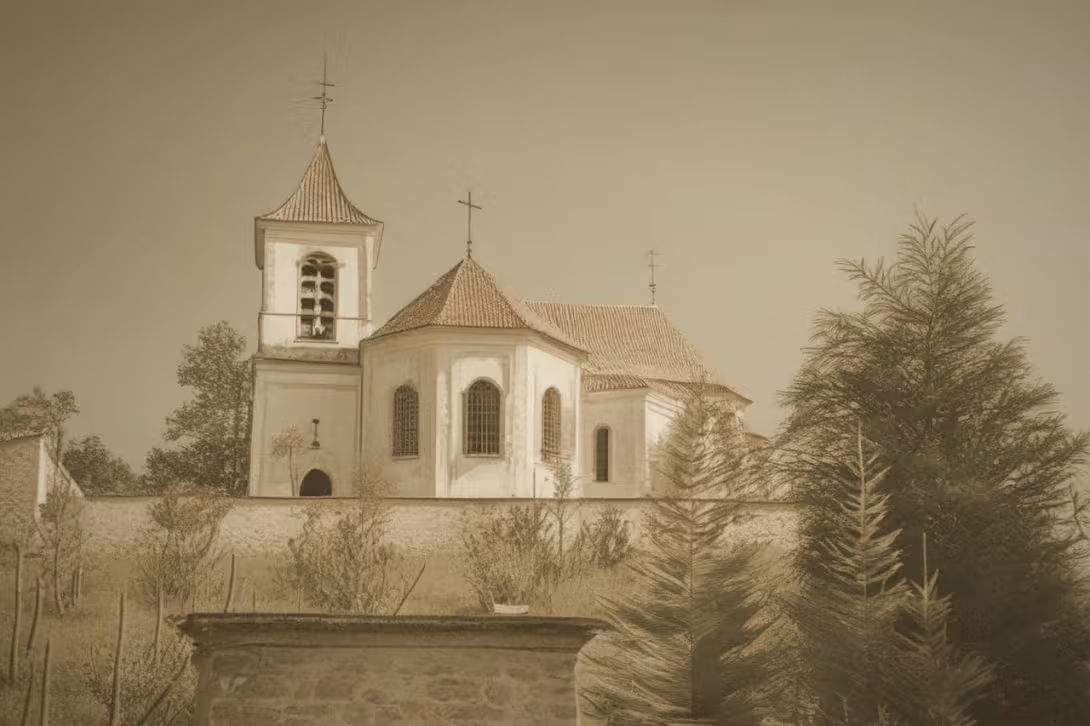
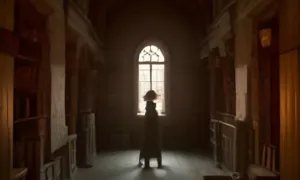
The historical appearance on the left is an AI-generated visualisation and serves as inspiration only.
Historical milestones
- 1118
- Construction of the original Romanesque church began.
- 1120
- Completion of the original Romanesque church.
- 1362
- Gothic expansion initiated by Charles IV.
- 1420
- Church survived Hussite invasions.
- 1737-1739
- Baroque transformation under Kilián Ignác Dienzenhofer.
Architectural development
The Church of Saint Apollinaris underwent several architectural phases, beginning as a Romanesque structure in the early 12th century. It was later expanded with Gothic elements in the late 14th century and finally transformed into its current baroque-gothic style between 1737 and 1739 by Kilián Ignác Dienzenhofer.
Historical events
1118-1120: Construction of the original Romanesque church by Duke Bořivoj II.
1362: Gothic expansion initiated by Charles IV.
1420: Survived destruction during the Hussite invasions.
1737-1739: Baroque transformation under Kilián Ignác Dienzenhofer.
Points of interest
- Legend has it that St. Cyril intended to establish a chapel dedicated to St. Clement on the site around 864, although this was never realized due to Duke Bořivoj II.'s later construction of the Romanesque church in 1118.
- The Church's chapter was once one of the highest ecclesiastical schools in Bohemia, serving as both a spiritual and educational center during its early history.
- Despite being targeted during the Hussite invasions of 1420, the Church remarkably survived while much of Sadská was destroyed, symbolizing resilience against turbulent times.
- The architectural transformation from Romanesque to Baroque-Gothic style involved significant changes by Kilián Ignác Dienzenhofer between 1737 and 1739, including a cross-shaped layout achieved with a new transverse nave and tower.
- Ota, who later became the Archbishop of Prague, was one of the notable figures associated with the Church's chapter before its transition to Augustinian canons after the Hussite period.
Guide
This guide is narrated by a synthetic voice generated by artificial intelligence.
Show guide text
This text was created by artificial intelligence and has not been editorially reviewed. It may contain inaccuracies.
The Church of Saint Apollinarius stands on an elevated spot, on a hill in Sadská, a town of the same name in the Nymbursk region. Originally a Romanesque building, it was later modified in the Baroque style. Today it is a subsidiary church of the Nymburg parish. On clear days, you can see all the way to Sněžka from the hill. From the path leading from the church to the cemetery, there is a view over the northeastern part of the town. In front of the church stands a cross with a crucifix, and on the grassed area by the church there is a statue of Saint Václav.
According to legend, Saint Cyril founded a chapel of Saint Clement here around the year 864. The documented history begins in 1118. At that time, Prince Bořivoj the Second had a fortified castle and a church dedicated to Saint Apollinarius built in place of the chapel. The church was completed in 1120. A chapter was established there, that is, a college of clergy, which at the same time represented the highest level of ecclesiastical education. Before 1140, its provost was the later Prague bishop Ota. One of the last deans of the chapter here was Ernest of Pardubice, who became the first Prague archbishop in 1344.
At the initiative of Charles the Fourth, the chapter was moved to Prague, to the Church of Saint Apollinarius in the New Town. Augustinian canons then came to Sadská. After 1362, they rebuilt the church in the Gothic style, and a net-vaulted presbytery was added, that is, the space around the main altar. In 1420, the Hussites burned down the monastery, as they did with most of the houses in the village. The canons left for the mother monastery in Roudnice nad Labem and later to several monasteries in Poland. The church alone survived at that time.
It acquired its present appearance in the years 1737 to 1739. A extensive Baroque Gothic reconstruction took place according to the plans of Kilian Ignaz Dientzenhofer. A nave and tower were attached across to the Gothic presbytery, so the building took on the ground plan of a cross.
The main altar dates from 1722 and was created by the Kutná Hora wood carver Katterbauer. On it is a rare Flemish painting of the Nursing Madonna from the middle of the seventeenth century. The altarpiece was painted in 1848 by Josef Vojtěch Hellich.
Tips for visitors
The best time to visit the Church of Saint Apollinaris is during late spring or early autumn when the weather is pleasant, allowing you to fully enjoy the panoramic views from the hilltop location. These seasons offer comfortable temperatures and vibrant natural scenery, enhancing your experience as you explore both the church's architecture and its surroundings.
When visiting, consider bringing comfortable walking shoes as you may wish to explore the surrounding area and enjoy the views from various vantage points around the church. Additionally, carrying a camera is recommended to capture the stunning landscapes and architectural details of the baroque structure, especially during golden hours when the light enhances the beauty of the site.
For photography enthusiasts, the best spots include the hilltop where the church stands, offering sweeping views of the landscape with Sněžka mountain in the distance. The soft morning or late afternoon light provides ideal conditions for capturing both the natural and architectural elements in harmony.
Nearby attractions within a 30-minute drive include other historical sites and natural landscapes that complement your visit to Sadská. Exploring these areas can provide additional context and enjoyment, making it a well-rounded trip. For families with children, consider planning activities that engage younger visitors, such as exploring local parks or participating in any available interactive tours at the church.
Frequently asked questions
Can the monument be visited?
Religious buildings are usually open mainly during services; at other times a visit is normally arranged with the parish or the operator. We have not verified specific times.
Where is the monument?
Location: Sadská, Středočeský kraj. The map on this page shows the exact spot.
Why is the monument protected?
It is listed in the Central List of Cultural Monuments of the Czech Republic as a cultural monument (register no. 23662/2-1951).
Businesses nearby
Do you run a restaurant, accommodation, shop, museum, rental, wellness or other visitor service near this monument? Show yourself directly to the people heading to it — this is how they will see you in the app and on the web:
Nearby
Situated on a hill in Sadská, the church offers panoramic views of the surrounding landscape, including the distant Sněžka mountain. The area is characterized by its natural beauty and historical significance.
Accommodation nearby
Trips and activities nearby
Guided tours, tickets and activities nearby from GetYourGuide
Affiliate link: if you buy from the partner, we may receive a commission. The price for you does not change.
Search tours and activities →Themed route
Tematická výletní trasa: Kostel svatého Apolináře (Sadská)
1. Kostel svatého Apolináře (Sadská) - Kostel Začněte svou cestu na vrcholu kopce, kde se nachází kostel svatého Apolináře. Tento historický chrám je nejen duchovním centrem obce Sadská, ale také nabízí nádherné panoramatické výhledy na okolní krajinu až k vzdálenému Sněžce. Jeho architektura a historická hodnota činí z něj nezbytnou atrakci pro každého, kdo navštíví Sadská.
2. Panoramatický výhled ze kopce - Přírodní atraktivum Po prozkoumání kostela se podívejte na okolní krajinu z vrcholu kopce, kde se kostel nachází. Toto místo nabízí jedinečný pohled na rozlehlé lesy a poloprášné horizonty Středočeského kraje. Je to ideální místnost pro relaxaci a užívání si klidu, zatímco se díváte na vzdálenou Sněžku.
3. Okolní lesy Sadská - Přírodní atraktivum Krátce po návštěvě kostela a pohledu ze kopce prozkoumejte okolní lesy, které obklopují obec. Tato přírodní krása nabízí možnost pro chvilku procházky nebo pikniku v klidné atmosféře. Lesy jsou domovem různých druhů fauny a flóry, což je ideální pro milovníky přírody.
4. Nádvoří kostela svatého Apolináře - Historický areál Po procházce v lesích se vrátíte k nádvorímu kostela svatého Apolináře, kde můžete dále prozkoumat jeho historii a architektonické detaily. Nádvoří slouží jako místo setkávání pro obyvatele i návštěvníky a nabízí klidné okamžiky k odpočinku po výletu.
Tato trasa kombinuje historické, kulturní a přírodní prvky Sadská, což ji činí ideální pro celodenní návštěvu.
Seasonal recommendations
Spring: Visiting the Church of Saint Apollinaris in Sadská during spring offers a unique experience as nature begins to awaken around this historic site. The soft, dappled sunlight filters through budding trees, casting gentle light on the church's architecture and enhancing its serene atmosphere. This period is marked by fewer visitors compared to summer, allowing for a more intimate exploration of the church grounds. Practical advice includes wearing layers, as temperatures can be mild but unpredictable with occasional rain showers. Early morning visits are ideal when the air is crisp and dew-kissed flowers add a touch of freshness.
Summer: The summer months bring vibrant life to the Church of Saint Apollinaris in Sadská, with lush greenery surrounding the historic structure. This time offers warm, golden-hour lighting that beautifully illuminates the church's details, creating an inviting atmosphere for visitors. However, it is also peak tourist season, so arriving early in the day can help avoid crowds and ensure a more peaceful experience. Comfortable walking shoes and light clothing are recommended due to the warmer weather, and carrying water is advisable as you explore.
Autumn: Autumn transforms the Church of Saint Apollinaris into a picturesque setting with its rich tapestry of reds, oranges, and yellows. The changing leaves provide a stunning backdrop that enhances the church's historical charm. This season sees moderate visitor numbers, allowing for a relaxed visit while enjoying the crisp air and vibrant colors. Layered clothing is practical to accommodate cooler temperatures, especially in the evenings. Visiting during weekdays can offer an even quieter experience.
Winter: The Church of Saint Apollinaris takes on a magical quality in winter, with snow often blanketing the surrounding landscape, creating a serene and almost ethereal atmosphere. The church's architecture stands out starkly against the white backdrop, offering unique photo opportunities. However, this is also when visitor numbers are at their lowest, providing an opportunity for a tranquil visit. Bringing gloves and a hat will ensure comfort during your exploration.
Visualizations and artistic views


The visualisations are generated by artificial intelligence and serve as inspiration.
Photos from the area
Real photos taken near the monument


Zdroj a licence jsou uvedeny u každého snímku.
Tips from visitors
No tips yet. Be the first!
Log in and add your tip.
Sources and literature
Photos: Zp at Czech Wikipedia / CC BY-SA 3.0, rozlišení zvýšeno umělou inteligencí — Wikimedia Commons. The author and licence also appear when you hover over the image.
Faktickým podkladem tohoto textu byl článek na Wikipedii, jehož autory jsou přispěvatelé Wikipedie. Článek je dostupný pod licencí CC BY-SA 4.0.
Location on the map




Příběhy a pověsti
Legendy, pověsti a příběhy spjaté s touto památkou
Fotografie návštěvníků
Zatím žádné fotografie. Buďte první, kdo přidá fotografii z návštěvy!
Log in a přidejte svou fotografii nebo hodnoťte.
Za ověřenou návštěvu v aplikaci získáte víc bodů — poznáme podle GPS, že jste na místě.
Reviews and comments