



Kostel svatého Bartoloměje (Chodovice) Church
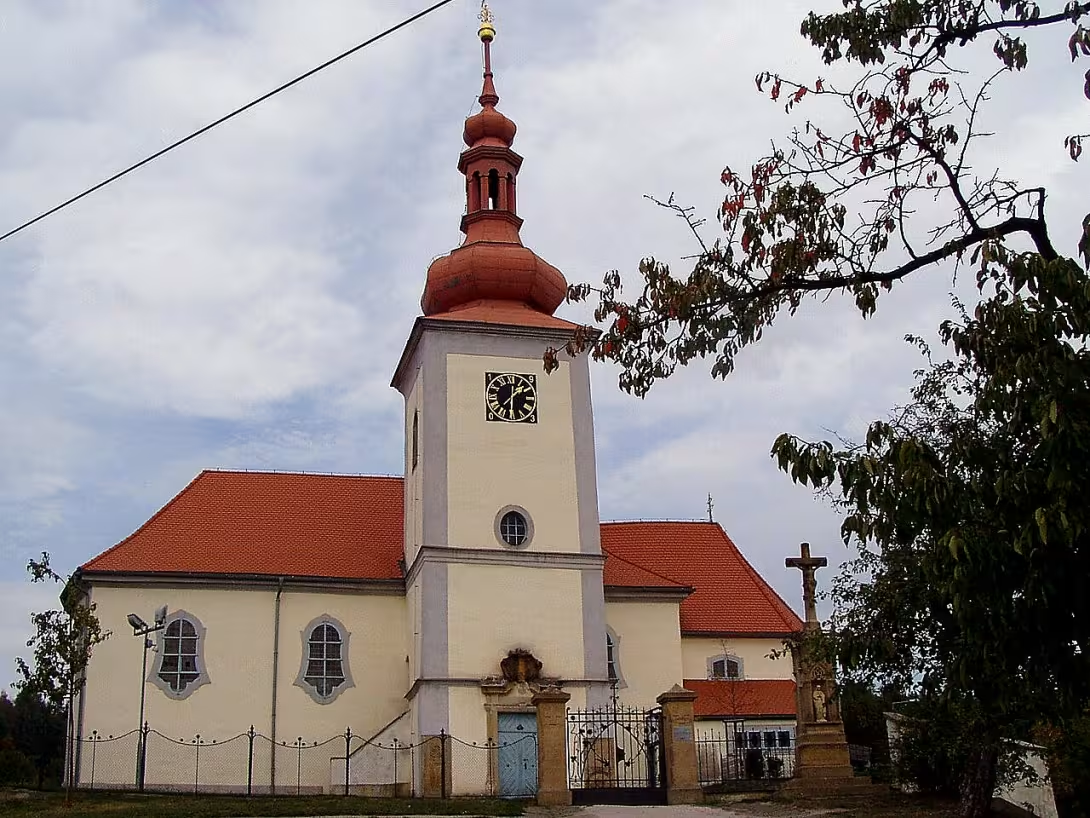
The church of St. Bartholomew stands in Chodovice, part of the village of Holovousa in Podkrkonoší, and belongs to the parish of Hořice. As a cultural monument of the Czech Republic, it has been the centre of the spiritual life of this small community for generations.
The origin of the church is expected in the 11th or 12th century, although the first written mention dates back to 1384, when it already served as a parish temple. Over the centuries, however, its importance fluctuated - the church was later abandoned. The revival came only at the end of the 18th century, in 1787, when the locale was established. The final restoration of his position took place in 1860, when he became a parish temple again. He's been playing the role of a filial church ever since.
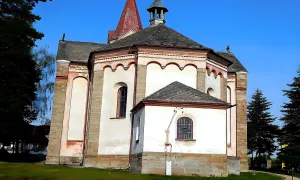
The construction represents a typical Gothic композici. It's an oriented, single-boat church with four fields with a one-story tower adjacent to the ship on the south side. In the east, a presbytery with sacristy and orator join the ship. The main entrance is opened in the west facade, side entrance находится under the tower. The windows are Casual, encircled by a segment arch. The ship reaches a length of 19 meters, a width of 8.10 meters and a height of 7 meters. On the west side of the circle lies two stone pillars. The presbytery is to cover the monastery vault with lunettes, which creates a picturesque spatial effect.
Interesting historical detail: Two tombstones of the Karlík family from Nežetky are walled up on the tower, who owned the local estate in the 16th century and chose the church as their patronage temple. The main altar is decorated with a picture of the torture of St. Bartholomew, to whom he is dedicated.
The most significant change was made by the interior in 2006, when it was revitalized by the architectural design studio Qubus. The creators Jakub Berdych Karpelis and Maxim Velčečský have chosen an approach: part of the historical layers remained deliberately visible, original plaster and surfaces have a "unfinished" raw character. They avoided traditional benches - installed 48 white Panton Chairs from Vitra. Each one is adjusted by the milling motif of the cross in the armrest, thereby becoming symbolic elements. The interior is complemented by Persian carpets and crystal empress chandeliers by Laspit designed by Karpelis. The project is quoted in international design media and included in Project Vitra.
Today, church services are held only occasionally - pilgrimage mass holy on Sunday around 24 August at 10 o'clock and Christmas midnight mass. Visiting the church is worthwhile both because of the architectural connection between the Middle Ages and the present, and because of its lonely beauty in the region of Podkrkonoší.
Then and now
Drag the slider to compare how the landmark may have looked when it was built with the view today.
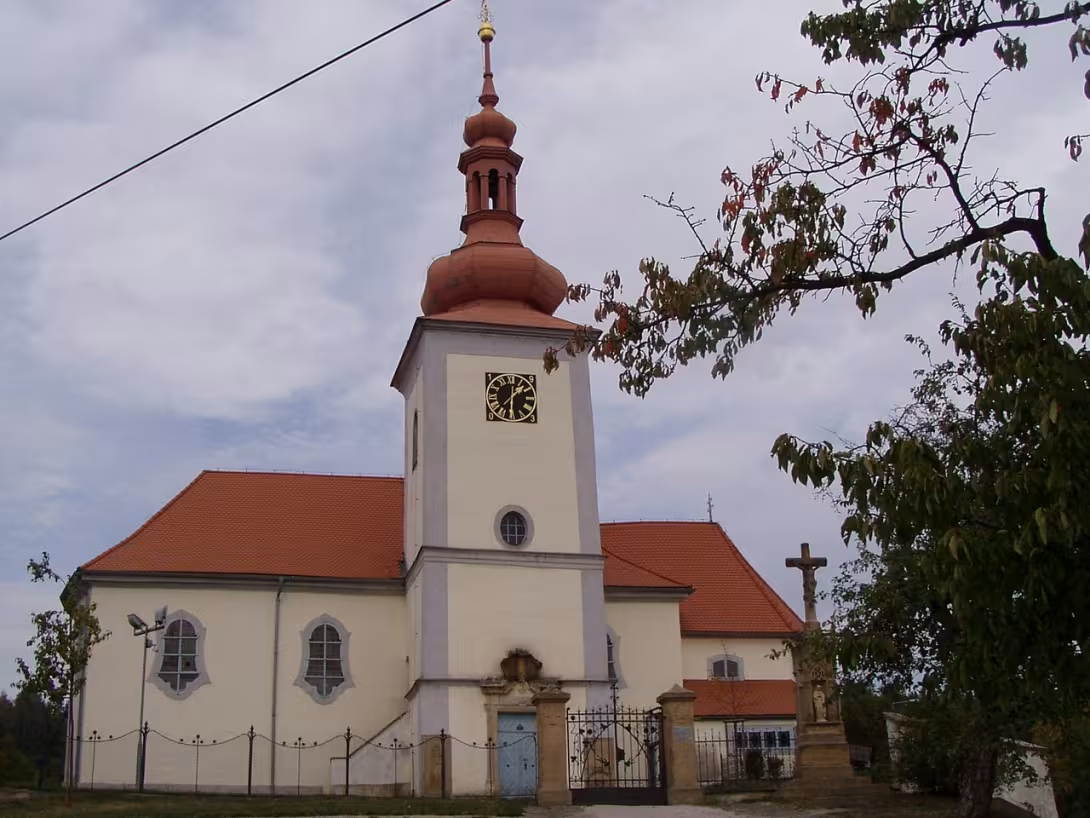
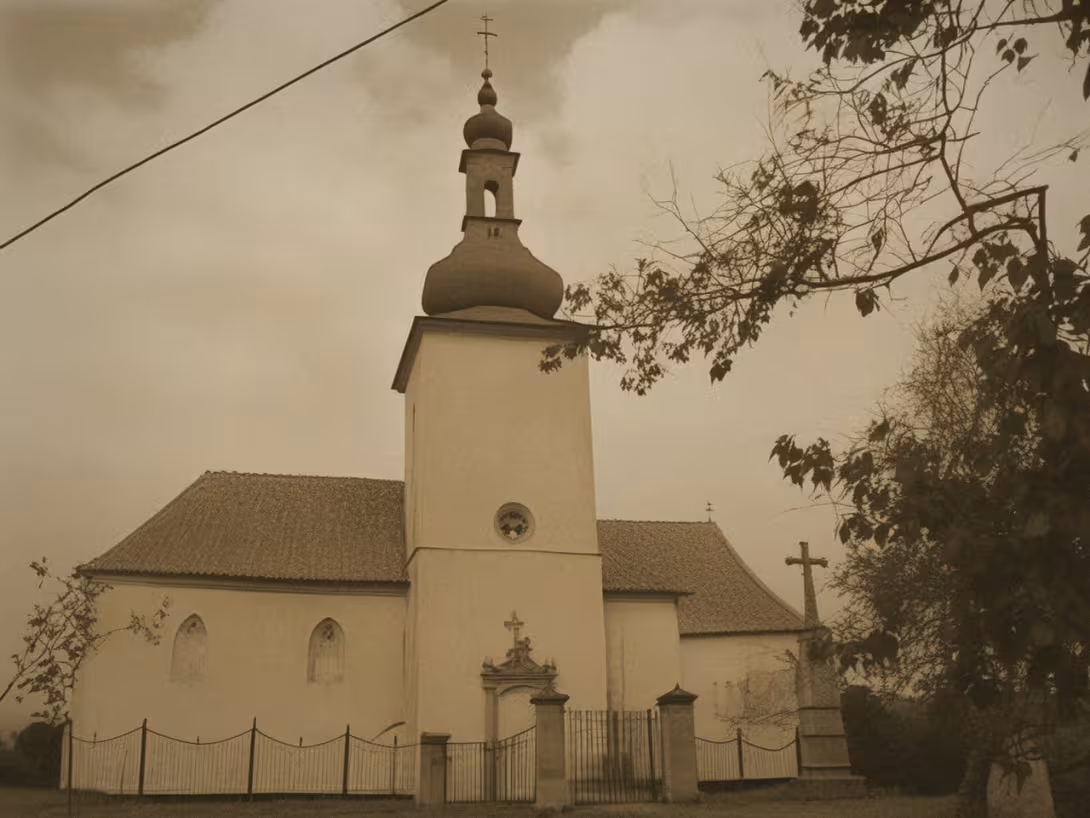
The historical appearance on the left is an AI-generated visualisation and serves as inspiration only.
Historical milestones
- 1384
- First written mention of the church as a parish
- 16th Century
- The church became a patronage church of the family Karlík of Nežetice, their tombstones were walled on the tower
- 1787
- Established local, church stopped being parochial
- 1860
- Church became parish again
- 2006
- Revitalization of interior by architect Jakub Berdych Karpelis, installation of modern mobility and lighting
Architectural development
The original Gothic church from the second half of the 14th century was a single boat with a presbytery. In the 16th century a single-storey tower was built on the south side of the ship and the church was adapted for the family of Karlík from Nežetice. In the 18th century, it underwent a Baroque reconstruction that affected the inner and outer form. The ship has a length of 19 metres and is surrounded by a monastery vault with lunnets. In the interior are preserved original plaster and surfaces, which were left in raw condition when revitalized in 2006.
Historical events
- 1384
- The church became parochial
- 1787
- Established locale (subparish administration)
- 1860
- Church became parish again
Points of interest
- The church of St. Bartholomew was originally built probably in the 11th or 12th century, but the first written mention of it dates back to 1384.
- Two tombstones of the Karlík family from Nežetky are walled up on the church tower, which in the 16th century owned the local estate and chose the church as their patron temple.
- In 1787 a locale was established which led to the revival of the church, and finally became a parish temple in 1860.
- The interior of the church underwent a radical revitalisation in 2006, in which the original plaster and surfaces in the raw state were preserved and 48 white chairs with milling crosses were installed.
- The church is famous for its Persian carpets and crystal chandeliers designed by Carpelis, which complement modern interior design.
Guide
This guide is narrated by a synthetic voice generated by artificial intelligence.
Show guide text
This text was created by artificial intelligence and has not been editorially reviewed. It may contain inaccuracies.
The Church of Saint Bartholomew stands in Chodovice, which is today part of the municipality of Holovousy in the Hořice region. It is a Roman Catholic subsidiary church of the Hořice in Podkrkonoší parish, though it was formerly a parish church itself. It is protected as a cultural monument.
It is documented as a parish church as early as thirteen eighty-four, but its origins can be traced to the eleventh or twelfth century. Later it was abandoned. In seventeen eighty-seven a curate position was established here, and in eighteen sixty the church became a parish church again. In the sixteenth century, the Karlíks of Nežetic, who were the owners of the estate at that time, chose it as their patronage church. Two of their gravestones, built into the tower, commemorate them.
The building is oriented and single-naved. The nave with four bays is nineteen meters long, eight point one meters wide, and seven meters high. On the southern side, a single-story tower adjoins it, with a presbytery on the east side, flanked by a sacristy and an oratory. The main entrance leads through the western façade, with a side entrance beneath the tower. The windows have a chalice shape and are topped with segmental arches. The gallery on the western side rests on two stone pillars. The chancel is vaulted with a cloister vault featuring lunettes. The main altar features a painting of the martyrdom of Saint Bartholomew.
The interior underwent a striking transformation in two thousand and six according to a design by the Qubus studio, that is, Jakub Berdych Karpelis and Maxim Velčovský. The designers left part of the historical layers visible. The original plaster and surfaces remained in an unfinished state, giving the space a raw appearance. In place of traditional pews, they installed forty-eight white Panton chairs by Vitra. Each chair has a cross routed into its backrest, so the chairs serve both for seating and carry a symbol. They stand on Persian carpets. The whole is complemented by Empress crystal chandeliers, which Jakub Berdych Karpelis designed for the Lasvit brand. They connect restrained contemporary forms with a reference to historic crystal chandeliers and emphasize the contrast between contemporary design and the old sacred building.
The interior is often cited as an example of bold work with a heritage-protected church space. It has been written about by foreign design media and appears in the publication Project Vitra, which maps exceptional projects associated with this furniture brand.
Regular services are not held here. The church comes to life during a pilgrimage mass on Sunday around the feast of Saint Bartholomew on August twenty-fourth and at the Christmas midnight mass.
Tips for visitors
The best time to visit St. Bartholomew's church is in the morning or in the afternoon after 3 p.m. In these times it is quiet in the church and you can see detailed Gothic and Baroque elements without disturbing the crowds. Sunlight falling from the south side of the tower in the afternoon creates pleasant lighting for interior photography.
Parking is possible near the church, specifically in the parking lot near the church or around the village. Transport is also provided by bus lines which stop in the centre of Chodovic. Check the current connection and departure times in the transport search engine. The church is located just minutes from the stop so there is no need for long walk.
When visiting, wear comfortable clothes and shoes as the church and its surroundings are often visited even in colder months. It may be cold in the interior, so bring a light sweater or coat. Prepare a high-quality camera or smartphone with good optics for photography, as detailed elements of the church require sharp display.
The best places for photography are the entrance portal with Gothic vaults, Baroque altar and church tower from the outside. For best results, use the natural light that falls from the south side of the tower in the morning or afternoon hours. In the interior avoid flashing of lightning to avoid damaging historical paintings.
You can see some interesting places around Chodovic. It is especially worth visiting the Baroque deanery in Hořice, which influenced the style of the church in Chodovice. It is about five kilometers away and offers rich history and architecture. Another interesting thing is the Renaissance castle Holovousa, which is located about 30 minutes drive from Chodovic and is famous for its historic interiors.
For families with children, a visit to St. Bartholomew's Church is interesting due to its historic atmosphere and the possibility to explore Gothic and Baroque elements. Children can look at small detailed elements such as statues or arches, and learn about the history of the site. In the vicinity of the church it is also possible to play on a small playground or see the surrounding nature. It is recommended to bring with you some small toys or books so that children have something to do during the visit.
Frequently asked questions
Is Kostel svatého Bartoloměje (Chodovice) open to the public?
The church is generally accessible to visitors. We recommend checking up-to-date information on access to the official website or local office.
How do I get to the place by car / public transport?
The location is available both by car and public transport. For accurate connection and parking, you can check the current options in the online search engine.
How much is the entrance fee and is it paid on the spot?
Information about the entrance fee can be found on the official site of the sights. Admission fees are usually paid on the spot.
Is the tour suitable for children and seniors?
The tour is also suitable for families with children and seniors. The church offers a quiet environment that allows you to understand its history and architecture.
How long does the tour take?
A tour of the church can take from a few minutes to an hour, depending on how thoroughly you want to view the site.
What are the opening times and booking is required?
Opening hours may vary depending on the period. We recommend checking the current information before visiting and checking whether booking is required.
What's interesting in the immediate vicinity?
In the area there is the village of Holovousy and the National Park Giant Mountains, which offers opportunities to explore nature and learn local culture. Visit nearby villages to try traditional Czech dishes.
For kids
Imagine a time when the shadows of the long church towers fell on the ground like long, mysterious hands, inviting everyone to look deeper. In a small place Chodovice was built the church of St. Bartholomew, and this is a story that seems like an adventurous journey from the past.
Businesses nearby
Do you run a restaurant, accommodation, shop, museum, rental, wellness or other visitor service near this monument? Show yourself directly to the people heading to it — this is how they will see you in the app and on the web:
Accommodation nearby
Themed route
Thematic cruise route around St. Bartholomew Church (Chodovice)
1.Kostel svatého Bartoloměje (Chodovice) - * Type: * Church - This Baroque church is the main destination of our route and represents an architectural pearl of the 18th century in the area of Chodovic. Its history and artistic value make a visit necessary for anyone interested in spiritual architecture.
2. Decoration in Horice - * Type: * Church - This Baroque church is located about 5 km from Chodovic and had a significant influence on the stylish form of St. Bartholomew's Church. His visit offers insight into historical architectural links connecting these two locations.
3. Hollowbeard Chateau - * Type: * Lock - About 2 km from the church in Chodovice, this Renaissance chateau represents another important cultural monument. Its history and architecture are fascinating to visitors who want to know the rich past of this area.
4. Podkrkonošská pahorkatina - * Type: * Nature - This natural location offers beautiful landscapes and is ideal for relaxation after visiting cultural monuments. Its picturesque views and the opportunity to explore local flora and fauna make it the perfect conclusion of our route.
This route offers a combination of cultural and natural attractions that together create full and memorable experiences.
Seasonal recommendations
Spring: In the spring period, the Church of St. Bartholomew in Chodovice is transformed into a room, lit by sunlight, which revives the green nature around it. Flowers and trees are beginning to bloom, which adds unforgettable fine colors to the surroundings. Visiting the church at this time is ideal for those who enjoy a quiet experience with a minimum number of visitors. It is recommended to arrive early in the morning or later in the afternoon to avoid weather that can be alternately sunny and rainy. Put on something mild, ready for the occasional rain.
Summer: In the summer period, the Church of St. Bartholomew is permeated by sunny rays and warm wind. The atmosphere is full of vitality, making the visit ideal for those seeking relief from urban life. In the main summer season, it is recommended to come in early in the morning or later in the day to escape the largest crowds. Do not forget the sun protection and enough drinking water to avoid heat fatigue.
Autumn: In the autumn months, the Church of St. Bartholomew's melancholy beauty becomes a colourful palette of leaves that turns into various shades of yellow and red. Escaping this quiet atmosphere is the perfect way to enjoy the pre-winter silence. Visiting a memorial during this period may be best in the middle days of the week when the crowd decreases. Thanks to colder temperatures, it is advisable to prepare a mild clothing and perhaps an umbrella for suddenly-to-be springs.
Winter: During winter the Church of St. Bartholomew takes on a romantic atmosphere where it is lit with sunlight and covered with snow. This season is ideal for those looking for a peaceful visit without large crowds. The monument during winter often has limited opening hours, so it is recommended to come early in the morning or to inform on specific hours of opening. Put on a warm jacket and a protective coat with an umbrella for a snowstorm so you can enjoy the winter beauty without discomfort.
Visualizations and artistic views


The visualisations are generated by artificial intelligence and serve as inspiration.
Photos from the area
Real photos taken near the monument


Zdroj a licence jsou uvedeny u každého snímku.
Tips from visitors
No tips yet. Be the first!
Log in and add your tip.
Sources and literature
Photos: Addvisor / CC BY-SA 4.0 — Wikimedia Commons. The author and licence also appear when you hover over the image.
Faktickým podkladem tohoto textu byl článek na Wikipedii, jehož autory jsou přispěvatelé Wikipedie. Článek je dostupný pod licencí CC BY-SA 4.0.
Location on the map

Příběhy a pověsti
Legendy, pověsti a příběhy spjaté s touto památkou

Fotografie návštěvníků
Zatím žádné fotografie. Buďte první, kdo přidá fotografii z návštěvy!
Log in a přidejte svou fotografii nebo hodnoťte.
Za ověřenou návštěvu v aplikaci získáte víc bodů — poznáme podle GPS, že jste na místě.
Reviews and comments