



Kostel svatého Bartoloměje (Kyje) Church
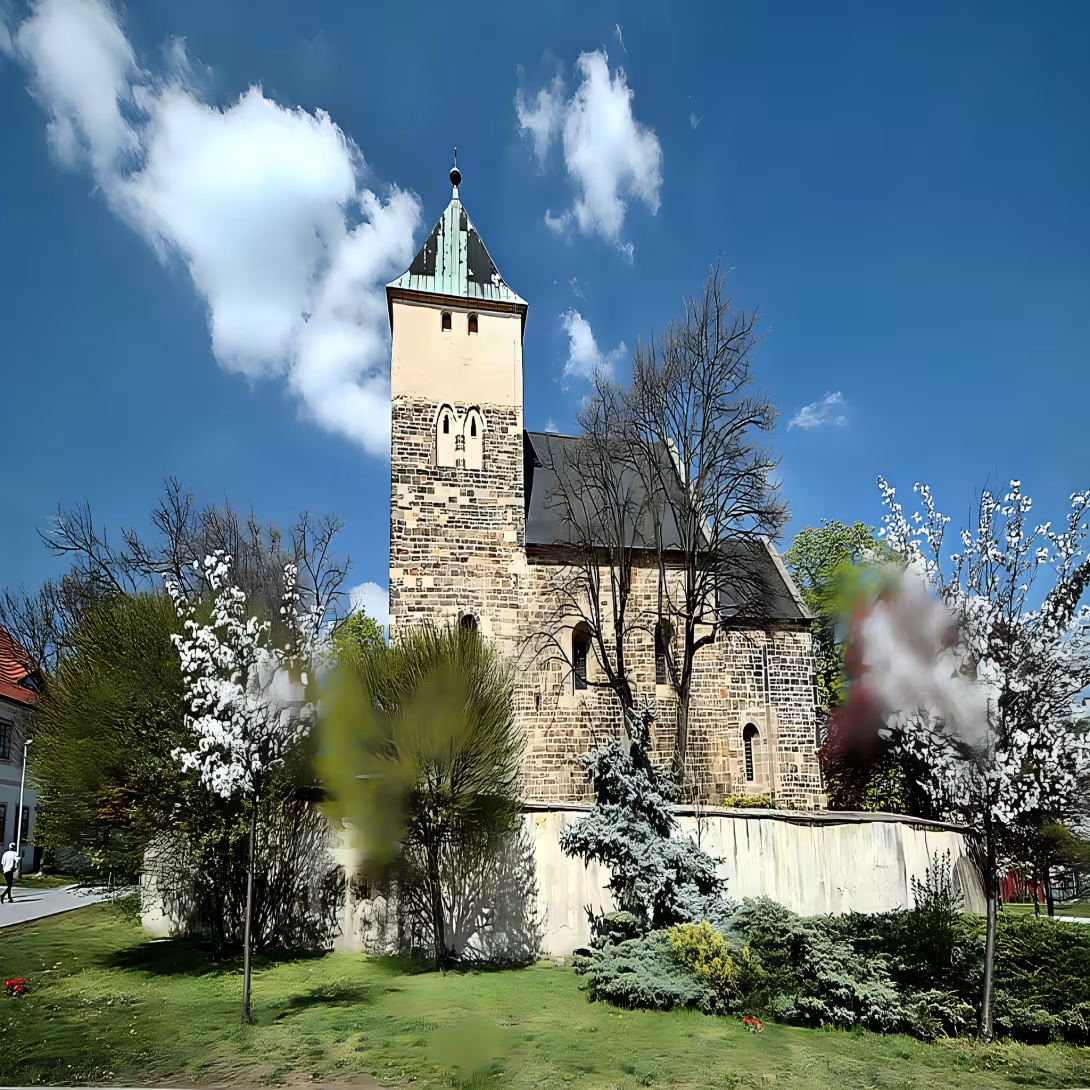
The church of St. Bartholomew in Kiev is one of the best preserved Romanesque buildings in Prague. It is a single-boat village church from the beginning of the 13th century, which is protected as a cultural monument since 1958.
The Prague Bishop Jan II. z Dražic, whose operation is confirmed by fresco in presbytery, probably founded the monument. Given the time of the late Romanesque style, Bishop Jan III., who worked in the mid-13th century, was also the founder. The first preserved written spring about the church comes from the charter of Bishop John IV of Dražice of 20 July 1306.
The construction was built from sandstone blocks that were imported from Prosek. The church had a tribune plan, which meant dividing the inner space into a part for the people and an elevated tribune with a bunk bed for the bishop or feudal. The bleachers were originally closed by stone wall and had wooden stairs leading from the west side. A massive prism-shaped tower with a rectangular plan has a single window with a broken arch on the west front, while the others are finished with a semi-circle.
During the reign of Charles IV and Václav IV, the Archbishop Jan z Jenštejna and the vicar general Jan Nepomucký worked in the church. Arnošt z Pardubic was briefly present. Between 1570 and 1743, the administration of the building was entrusted to the vicar of the New Town Church of St. Henry. In 1655, side nuggets for altars were demolished in the ship. In the 17th century, a baroque sacristy was added to the north side and a small hall to the west side, which covered the original entrance portal.
In the context of the recovery of the rectory in 1743, building modifications followed. In 1758 four new rectangular windows were broken in the presbytery, which replaced the original medieval windows. In the late 18th century, the bell of a dying man was hung in the south wall, which was not preserved. In 1781 the church was emptied and the inscription was discovered when removing the plaster in the presbytery.
In 1845, the architect Josef Kranner designed a baptist. In the middle of the 19th century frescoes depicting the Last Court on the south side of the ship and the Birth of the Lord on the north side were revealed. The interior has been preserved to this day with original frescos with biblical scenes and depictions of Prague bishops.
The biggest repair took place between 1973 and 1989, when the presbytery was reinforced with concrete and some sandstone blocks were replaced. The Baroque oblong windows were walled up and replaced with new Romanesque windows. The interior was repaired between 1987 and 1991, gradually removing Renaissance and Baroque elements in the sacristy and presbytery.
The Church of St. Bartholomew is a rare testimony about the development of the parish network and Romanesque architecture in Prague. This monument offers a unique view of the Middle Ages and is worth visiting every interested person in history.
Then and now
Drag the slider to compare how the landmark may have looked when it was built with the view today.
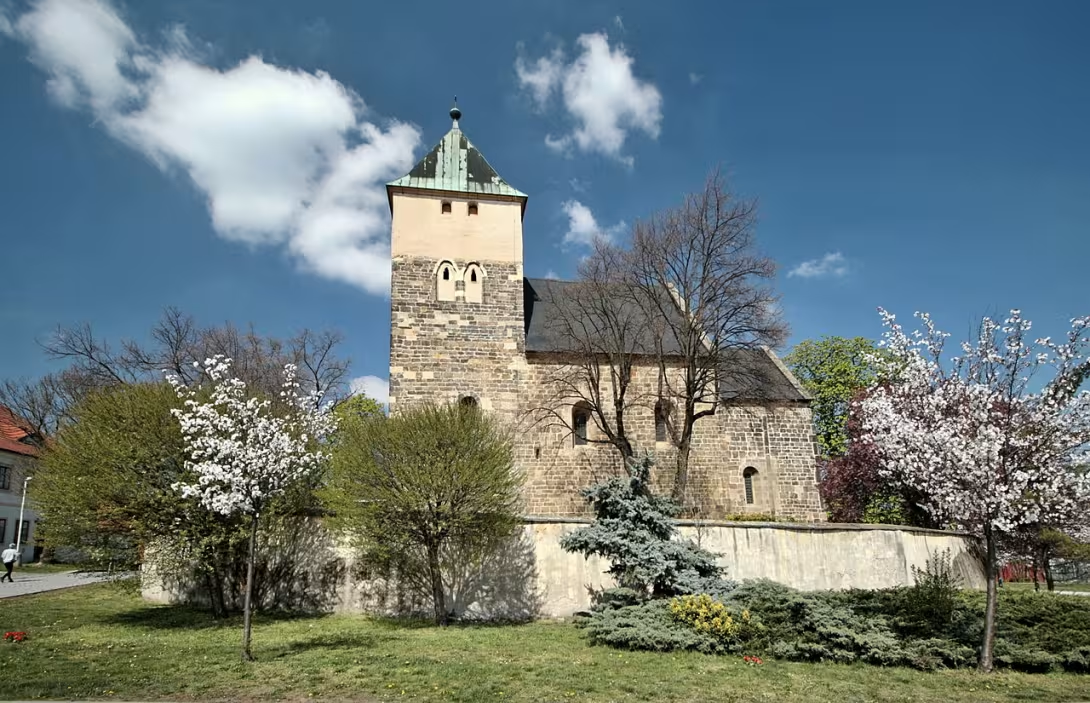
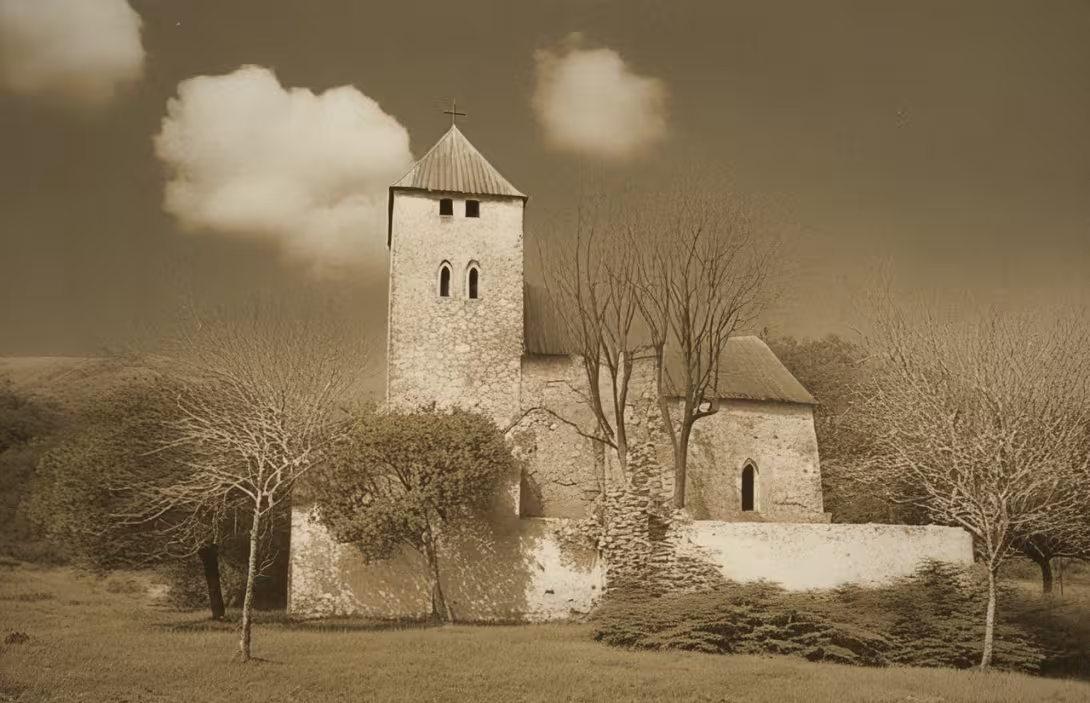
The historical appearance on the left is an AI-generated visualisation and serves as inspiration only.
Historical milestones
- beginning of the 13th century
- The creation of a Romanesque single-boat church
- 1306
- First preserved written spring about church
- 1655
- Breaking down side niche for altars in the ship
- 1758
- Replacement of medieval windows in rectangular presbytery
- 1958
- The church was declared a cultural monument
- 1973-1989
- Largest repair and restoration of Romanesque windows
Architectural development
The construction was created in late Romanesque style as a tribune church of sandstone blocks. In the 17th century, a Baroque sacristy and a small hall were built to cover the original portal. In the years 1973- 1989 a major reconstruction took place in which presbytery was reinforced and Baroque windows were replaced by new Romanesque windows.
Historical events
In 1306 the church was first mentioned in the charter of Bishop Jan IV of Dražice. In 1958, the building was declared a cultural monument.
Owners
roman catholic parish
Points of interest
- Church of St. Bartholomew is one of the best preserved Romanesque buildings in Prague. - It is a single-boat village church from the beginning of the 13th century, which is protected as a cultural monument since 1958. - Prague Bishop Jan II. z Dražic or Bishop Jan III., whose operation is confirmed by fresco in the presbytery, probably founded the monument. - The first preserved written spring about the church comes from the charter of Bishop John IV of Dražice of 20 July 1306. - In connection with the restoration of the rectory in 1743, building modifications were followed, including the discovery of fresco depicting the Last Court and the Birth of the Lord.
Guide
This guide is narrated by a synthetic voice generated by artificial intelligence.
Show guide text
This text was created by artificial intelligence and has not been editorially reviewed. It may contain inaccuracies.
The Church of Saint Bartholomew in Prague's Kyje is a medieval village church of the Roman Catholic parish. It was built in the first half of the thirteenth century in the late Romanesque style. Inside, original frescoes have been preserved depicting biblical scenes and figures of some Prague bishops. It has been a cultural monument since 1958.
The church was most likely founded by Prague Bishop Jan Druhý z Dražic, who served in the years 1226 to 1236. He is mentioned in one of the frescoes in the presbytery. The late style characteristics, however, also allow for Bishop Jan Třetí from the middle of the thirteenth century. The first written source about the church is a document from Bishop Jan Čtvrtý z Dražic dated July 20, 1306. When the church was dedicated to the Apostle Bartholomew is not known.
The building is constructed from sandstone blocks brought from Prosek. It was a so-called tribune church. The space for the congregation was supplemented by an elevated tribune with a gallery for the bishop or the lord of the manor, from where he watched the services. He lived in a neighboring building and entered the church through his own entrance via a bridge. The tribune was formerly enclosed by a stone parapet wall and reached by wooden stairs from the west. These have not been preserved.
During the time of Charles the Fourth and Wenceslas the Fourth, Archbishop Jan z Jenštejna served here, and Jan Nepomucký spent some time here shortly before his death. Arnošt z Pardubic also stayed here for several days.
From the year 1570 to 1743, the church was managed by a parish priest from the Church of Saint Henry in the New Town. In 1655, side niches for altars were created in the nave. The surrounding buildings, which together with the church formed a unified whole, had meanwhile fallen into disrepair. This is why a Baroque sacristy and a small vestibule were added in the seventeenth century, which covered the original entrance portal. After the parish was restored, four rectangular windows were cut into the presbytery in 1758. During whitewashing in 1781, an inscription was discovered under the old plaster.
The baptismal font was designed in 1845 by architect Josef Kranner. In the nineteenth century, frescoes of the Last Judgment were uncovered, along with remains of the Nativity of the Lord and other paintings.
The major renovation took place in the years 1973 to 1989. The presbytery was reinforced with concrete, part of the stone blocks were replaced, and Baroque windows were replaced with new Romanesque ones. The church was whitewashed again and traces of frescoes in the nave disappeared.
The massive prismatic tower has a single window with a pointed arch in the western facade. All other windows of the church are rounded at the top.
Tips for visitors
The best time to visit is early morning or late afternoon when soft light hits sandstone blocks, which will highlight the texture of Romanesque walls beautifully.
We recommend to bring comfortable shoes and a photographic machine. Given the nature of the construction and its location, it is advisable to carry its own drinking water, especially during the summer months.
For the best pictures, focus on the details of sandstone masonry and the overall view of the construction from a distance. If you have more time, you can visit the Church of St. Wenceslas at Prosek.
For families with children, the place is ideal thanks to its quiet atmosphere, which allows a short walk and easy introduction to the history of the medieval village church without much noise and hustle.
Frequently asked questions
Can the monument be visited?
Religious buildings are usually open mainly during services; at other times a visit is normally arranged with the parish or the operator. We have not verified specific times.
Where is the monument?
Location: Prelátská, Kyje, Praha, Hlavní město Praha. The map on this page shows the exact spot.
Why is the monument protected?
It is listed in the Central List of Cultural Monuments of the Czech Republic as a cultural monument (register no. 40820/1-1703).
For kids
This is a story about the church of St. Bartholomew in Kiev, which stood 726 years ago. It was the time when Praha became a city and people began to build churches.
It was like a game where heroes built the city and the church was their favorite place. This is where weddings, funerals and prayers were held. The church was so important that people from all over the country gathered here.
Businesses nearby
Do you run a restaurant, accommodation, shop, museum, rental, wellness or other visitor service near this monument? Show yourself directly to the people heading to it — this is how they will see you in the app and on the web:
Events nearby

Zdroj akcí: otevřená data měst a obcí ČR (Národní katalog otevřených dat) a kalendář akcí Národního památkového ústavu.
Nearby
St. Wenceslas Church on Prosek
Accommodation nearby
Trips and activities nearby
Guided tours, tickets and activities nearby from GetYourGuide
Affiliate link: if you buy from the partner, we may receive a commission. The price for you does not change.
Search tours and activities →Themed route
1.Kostel svatého Bartoloměje (Kyje) (courtyard) - Type: outdoor area. Why: A tour of the outside facade and historical surroundings. 2. Kostel svatého Bartoloměje (Kyje) (indoor space) - Type: sacral space. Why: Admiring interior equipment and architecture. 3. Church of St. Wenceslas on Prosek - Type: Church. Why: Visit other important church buildings nearby.
Seasonal recommendations
Here is the seasonal recommendation for visiting the Church of St. Bartholomew in Kyje, Prague:
Spring (Spring)
What is specific: At this time of year the church surrounding nature is in full force. Green grass and flowers create an amazing contrast to historical construction. The atmosphere is slightly attractive, but still pleasant.
Practical advice: Since the church is a popular destination for tourists, we recommend arriving in the morning or late afternoon to avoid the ladies. He'll bring warm clothes well, because it can still be cold in April.
Summer (Summer)
What is specific: Summer season is the most popular time to visit the church. The lighting of the church is slightly weakened to avoid overheating. The atmosphere is relaxed and summer.
Practical Advice: If you want to visit the church in the main summer season, we recommend arriving earlier because large groups of tourists are gathered here. Well, he'll bring an umbrella or sunglasses to protect himself from the sun.
Autumn (Autumn)
What is specific: Autumn season is an amazing time to visit the church. The lighting of the church is slightly weakened to avoid overheating. The atmosphere is slightly attractive and summer.
Practical advice: Since autumn season is relatively quiet, we recommend arriving at any time. He'll bring warm clothes well because it can still be cold in October.
Winter (Winter)
What is specific: Winter season is an amazing time to visit church. The lighting of the church is slightly weakened to avoid overheating. The atmosphere is slightly lustful and cold.
Practical advice: If you want to visit the church in winter, we recommend arriving in the morning or late afternoon to avoid the ladies. He brings warm clothes and shoes with a good grip, because the streets can be wet and slippery.
Visualizations and artistic views


The visualisations are generated by artificial intelligence and serve as inspiration.
Photos from the area
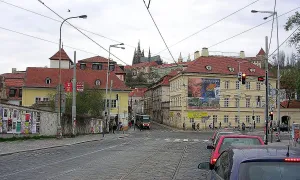
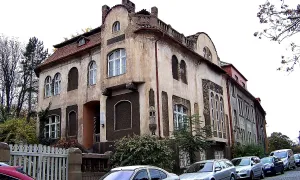
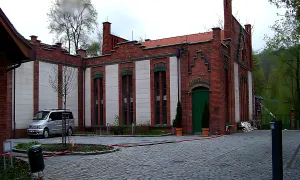
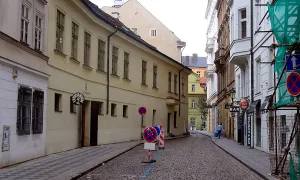
Real photos taken near the monument


Zdroj a licence jsou uvedeny u každého snímku.
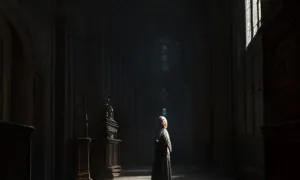
Atmosphere of the place
This atmospheric visualisation of the place and period was generated by artificial intelligence. It is not real footage of the location.
Tips from visitors
No tips yet. Be the first!
Log in and add your tip.
Sources and literature
Photos: VitVit / CC BY-SA 4.0, rozlišení zvýšeno umělou inteligencí — Wikimedia Commons. The author and licence also appear when you hover over the image.
Faktickým podkladem tohoto textu byl článek na Wikipedii, jehož autory jsou přispěvatelé Wikipedie. Článek je dostupný pod licencí CC BY-SA 4.0.
Location on the map

Příběhy a pověsti
Legendy, pověsti a příběhy spjaté s touto památkou
Fotografie návštěvníků
Zatím žádné fotografie. Buďte první, kdo přidá fotografii z návštěvy!
Log in a přidejte svou fotografii nebo hodnoťte.
Za ověřenou návštěvu v aplikaci získáte víc bodů — poznáme podle GPS, že jste na místě.
Reviews and comments