






Kostel svatého Jiljí (Pardubičky) Church
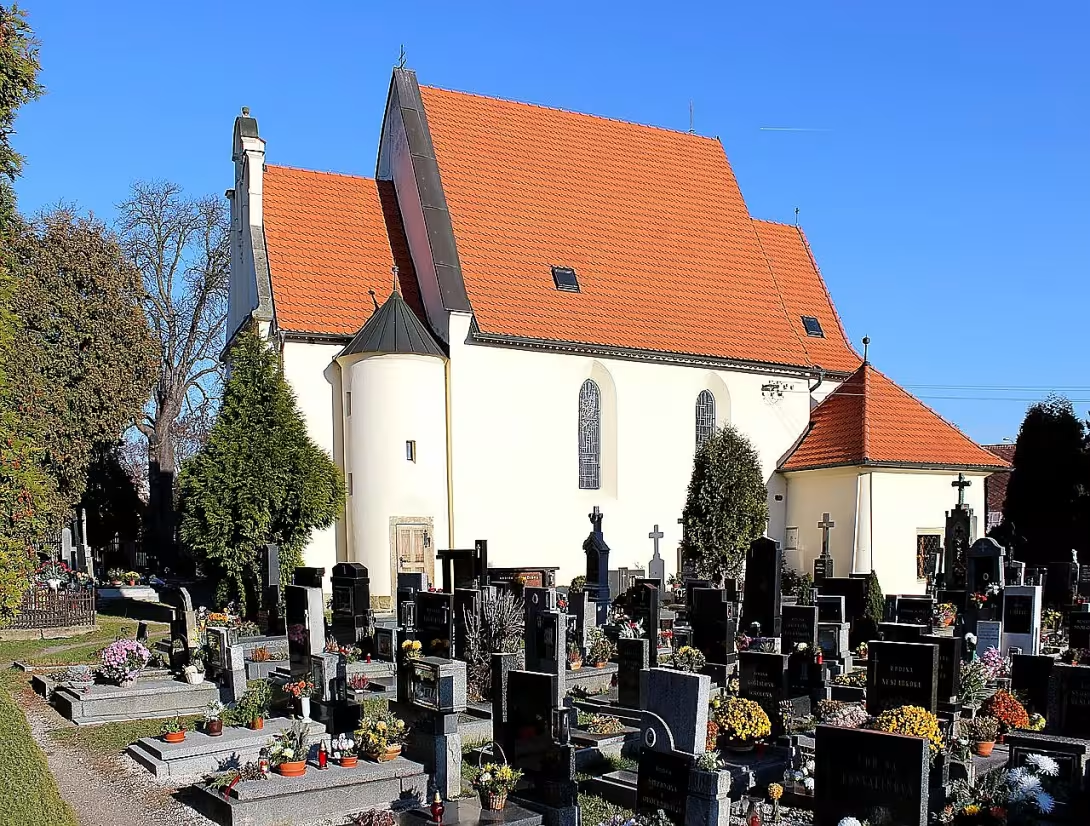
Holy Church Jilji is located in the city area Pardubičky and is among the oldest and most important sacral monuments of the region. Since 1964 it has been protected as a cultural monument of the Czech Republic. It is dedicated to St. Eli, Abbot and the hermit who was among the great saints of medieval Europe.
The first mention of the church dates back to 1295 from the Bula of Pope Boniface VIII - probably only a wooden object at the time. A cemetery was set up around him, which still persists today. At the end of the 13th century, this area became a key place for Pardubice church administration. Ernest I. of Hostyn, a Pardubice lord, donated a part of Pardubice to the order of the Cyriak, where a monastery was built for ten order brothers and a new church of St. Bartholomew. The original Elite Church became a chapel. Ernest made sure that the monks served two mass daily for his soul and the soul of his ancestors. The area around the monastery was known as Pardubice Munich and this designation probably lasted for its existence. Ernest was buried here in 1342.
The 1421 Hussite storms left a deep mark. The monastery with both churches was burned and damaged when the Hussites launched extensive destruction of church property throughout the Czech Republic. The recovery lasted long - between 1421 and 1512. The present church of St. Jilje was founded in Gothic style at the turn of the 15th and 16th centuries. The Hussite destruction was remembered for generations - there was an iron glove hanging over the north entrance, later transferred to the sacristy, and around 1860 there was also a Hussite helmet.
During the 16th and 17th centuries the church gradually changed. In the first period of the 16th century roof roofs and western shield were added. In the second half of the 17th century, a western and northern hall was added; The north hall was later torn down, while the west hall was adjusted several times. Major changes were made between 1904 and 1905, when the general restaurant was under the direction of architect Boží Dvořák. It was adjusted to the west hall, increased by a floor and equipped with a high shield with a saddle roof. It was in 1904 that the original Gothic wall paintings appeared.
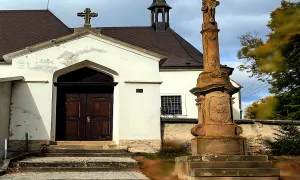
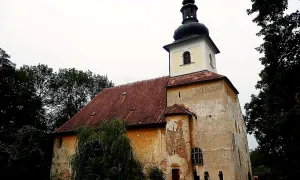
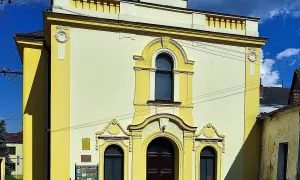
Holy Church Jilji is a Gothic one-ship construction with a vaulted presbytery with five sides and a square sacristy. The main facade is dedicated to a distinctive Renaissance shield with a characteristic arc finish called "swallows' tails" - a typical element of the Czech late Renaissance. The embossed sculpture of Christ holding the chalice, created in 1905 by Vilém Amort, is placed in the centre. Under the shield is a neo-gothic portal with a concession profile. The church stands in the middle of the cemetery, which probably copies the original fence of the settlement. The wooden bell tower was preserved west of him.
The church was closed in 1948. Since 1964 it has been declared a landmark again and gradually repaired. After the fall of communism, he suffered several burglaries. The latest serious modifications took place between 2007 and 2008 and included repair of wiring, ventilation and other professional internal work. There were also new stained glass windows designed by Master Louis Kolk of Brno and produced by the Brno company Mitvalský.
Then and now
Drag the slider to compare how the landmark may have looked when it was built with the view today.
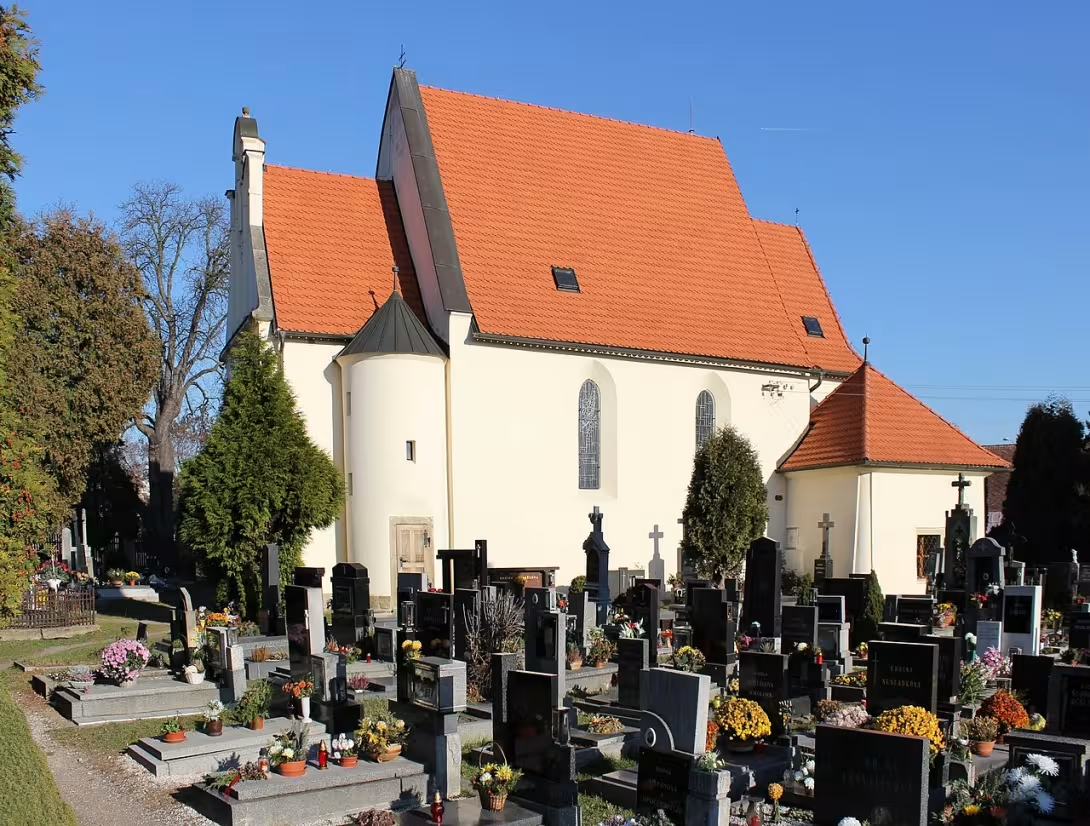
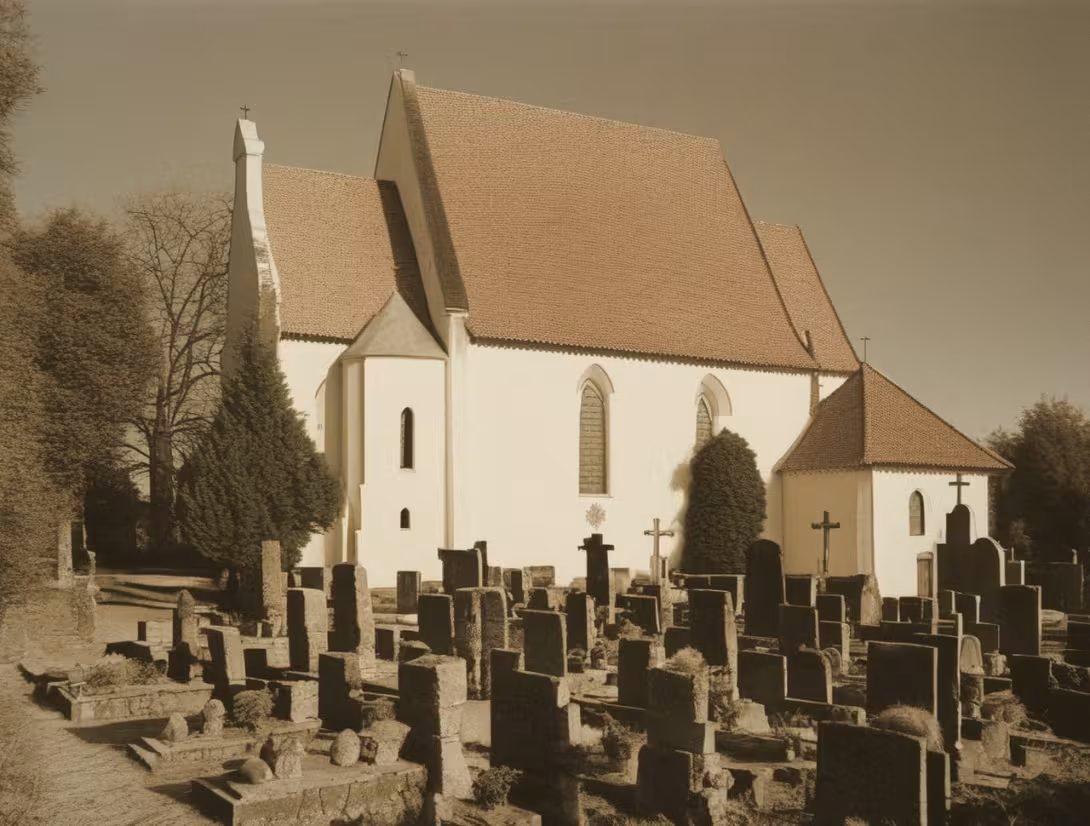
The historical appearance on the left is an AI-generated visualisation and serves as inspiration only.
Historical milestones
- 1295
- The first written mention of the church of St.
Architectural development
The church was founded at the turn of the 15th and 16th centuries as a late Gothic building. In the 16th century, the roofs and the western shield of the ship were added. In the 17th century, the western hall was built, which was later modified. In the 19th century there was a neo-gothic treatment, including a shield with Christ's plastic. Large-scale repairs were carried out in the 20th century, including the restoration of the windows in 2007-2008.
Historical events
- 1295
- The first written mention of the church in the Bull of Pope Boniface VIII, probably like a wooden chapel.
- 1421
- The destruction of the church and monastery of the Hussite during the Hussite Wars.
- 1904-1905
- Restoration of the church under the direction of architect Boži Dvořák, in which Gothic paintings were discovered and a Renaissance shield was added.
Points of interest
- The church of St. Jilji is one of the oldest sacral monuments in the Pardubice region and the first written mention of it dates back to 1295.
- In the original form, the church was probably wooden and served as a chapel before being replaced in the 14th century by the new church of St. Bartholomew at the monastery.
- In 1421, the church and the monastery were burned by geese, which caused a long period of restoration until 1512.
- Over the north entrance, after Hussite events, there were iron gloves and Hussite helmets that resembled the destruction of the church.
Guide
This guide is narrated by a synthetic voice generated by artificial intelligence.
Show guide text
This text was created by artificial intelligence and has not been editorially reviewed. It may contain inaccuracies.
Welcome to the church of St. Gilya in Pardubice. You are standing at one of the oldest sacral monuments in the entire Pardubice region, whose history dates back to the 13th century. In front of you is a simple but impressive late Gothic building with a pentagon presbytery and sacristy, surrounded by a quiet historical cemetery. Notice how the church was imprinted in the surrounding countryside - its walls, although seemingly modest, bear traces of many centuries.
Let's go back to the past for a while. The first written mention of this church dates back to 1295, when Pope Bonifac VIII mentioned it in the eyeball. At that time it was probably still wooden, perhaps just a small chapel serving the locals. Later, in the 14th century, it was replaced by a stone building, which stood next to the monastery, which was founded here by Ernest I. from Hostyn. He was buried near the church in 1342, and thus this place became an important centre not only of religious but also of social life.
Now pay attention to the facade of the church. Its dominant feature is the Renaissance shield, which was built only at the beginning of the twentieth century, between 1904 and 1905, thanks to the efforts of architect Wilhelm Amort. On it you can find the sculpture of Christ holding the chalice - a symbol of the Eucharist, which gives the whole facade a noble and calm expression. During the tour you will also notice that the church has undergone many modifications, especially in the nineteenth and twentieth centuries, when original Gothic paintings were discovered, which are reviving its interior again today.
But the church has not lived its history without shadow. In 1421, the Hussites destroyed it during their wars, so it had to be restored. Yet he kept his role as an important spiritual place. In 1964 it was declared a cultural monument of the Czech Republic, which confirmed its importance not only for Pardubičky but also for the whole region.
The interesting thing is that the original church of St. Gilji was probably just a chapel before the new church of St. Bartholomew was built in the 14th century. This fact shows how religious life evolved here and adapted to the needs of the time.
There is not only a church before you, but also a place that bears witness to many fates. The bell tower, located west of the church, adds harmony to the whole area and shows that this place has always been an important point not only for believers but also for the whole village.
Before leaving, look again at the surrounding cemetery surrounding the church. Every tombstone, every cross here has a history, and this is where we meet the past. If you have time, go further around - Pardubičky and their surroundings offer many other attractions that are worth knowing.
May the visit bring you peace and inspiration. Thank you for taking the time to explore one of the oldest monuments of our region. Goodbye!
Tips for visitors
{'text': 'Best time to visit the church of St. Gilji is in the morning or late afternoon. The church is quiet in these times and you can look at the detailed decoration without disturbing crowd. In addition, in the morning light it is ideal for shooting Renaissance shield with Christ's plastic, which dominates the building. In summer it is advisable to avoid hot noon hours when the interior of the church can be unpleasantly warm.'}
{'text': 'The church is accessible by car and public transport. In the vicinity of the monument you can find the parking lot, but the actual availability and prices are better checked on the site or on the official site of the village. If you arrive by bus or train, the stops are nearby, but the exact connection is good to check before travelling. Public transport stops are located in the centre of Pardubice, where the church is only a short walk away.'}
{'text': 'When visiting, take on comfortable shoes, because the church stands in a historic cemetery with uneven terrain. In winter it is advisable to wear warmer clothes because it can be cold in the interior. If you are planning to photograph, bring a larger focus lens to capture the details of the Renaissance shield and interior decoration. Don't forget the mobile charger too, because there are often many photographers in the church.'}
{'text': 'The best places for photography are the Renaissance shield with Christ's plastic on the facade and the interior of the church, especially the presbytery with its late Gothic architecture. For quality images is ideal natural light from window holes that illuminates the inner space. The exterior photo is the most successful in the morning or afternoon light, avoiding hard shadows. If you want to capture a general view of the church, go to the historical cemetery, where the view of the whole building is best.'}
{'text': 'In the vicinity of St. Jilji's Church is worth visiting the Cyriak monastery area, located just 500 metres north of the church. This archaeologically exposed area offers a fascinating view of the remains of the monastery from the 14th century. If you have more time, you can visit other historical sites in the Pardubice region, which are within 30 minutes' drive from Pardubice. For example, you can visit other churches or historic towns in the surroundings that are rich in cultural heritage. '}
{'text': 'For families with children, a visit to the church of St. Gilje is interesting due to its historical significance and picturesque atmosphere. Children can see the Gothic architecture and Renaissance details that fascinate them. There is also a possibility of walking around the historical cemetery in the vicinity of the church, which can be an interesting adventure for children. If you go to the Cyriak monastery, children can imagine living in a monastery and explore archaeological findings. It is also advisable for children to visit the local playground or parks in the centre of Pardubice, located near the church.'}
Frequently asked questions
Is St. George's Church (Pardubičky) open to the public?
Yes, St. George's Church is open to the public. The tour is possible during the opening hours.
How do I get to the place by car / public transport?
You can get by car or public transport bus No. 1 or 2, which stops near the church. Parking is possible in the nearby parking lot or around the city area Pardubičky.
How much is the entrance fee and is it paid on the spot?
Payment is made at a place where it is also possible to buy souvenirs.
Is the tour suitable for children and seniors?
Yes, a tour of St. Jili's Church is suitable for families with children and seniors. The church has accessible staircases and there are no obstacles for people with disabilities.
How long does the tour take?
The tour of St. Jilij's Church takes approximately 30 minutes. You can also listen to a guide who will be able to answer your questions.
What are the opening times and booking is required?
The church of St. Jilije is open from 9: 00 a.m. to 5: 00 p.m. Reservation is not necessary, but we recommend to check opening hours in advance, especially during the summer period.
What's interesting in the immediate vicinity?
There are several restaurants and caviar in the immediate vicinity of St. Jilije's Church, where you can listen to music or have breakfast. There is also a park with a playground suitable for families with children.
For kids
Imagine going back to the past, when our country was full of life and culture. The city of Pardubičky was a small town at the time, but it had its significant church of St. Jilij.
How did it look here? Who lived here? What happened here? Now it's hard to imagine because most of the buildings have been destroyed or rebuilt. But at that time there were people who lived by Christian values and tried to be good people. The church of St. Jili was their main holy place where religious services were held and people came to beg for help and protection.
Businesses nearby
Do you run a restaurant, accommodation, shop, museum, rental, wellness or other visitor service near this monument? Show yourself directly to the people heading to it — this is how they will see you in the app and on the web:
Events nearby
Zdroj akcí: otevřená data měst a obcí ČR (Národní katalog otevřených dat) a kalendář akcí Národního památkového ústavu.
Nearby
{'memoirs': [{\ 'Nazek': 'Cyriak monastery', 'description': 'Archeologically exposed remains of a monastery from the 14th century, north of the church.', 'outage': '500 meters'}], 'priroda': [{'Nazen': 'Pardubický kraj', 'description': 'The church stands in the historical core of Pardubice, surrounded by green areas and historical settlements.'}}}}
Accommodation nearby
Themed route
Thematic cruise route: Church of St. Jilji and its surroundings (Pardubičky)
1.Kostel svatého Jiljí (Pardubičky) - * Type: * Historical landmark - * Why is it worth visiting: * The Church of St. Gilji is one of the most important historical and architectural monuments in Pardubice. His Gothic character attracts lovers of history and architecture who want to immerse themselves in the atmosphere of the past.
2. The Cyriak monastery area - * Type: * Archaeological location - * Why is it worth a visit: * Approximately 500 metres north of the church of St. Jilje is located the premises of the Cyriak monastery, whose archaeological remains bear witness to the rich history of the area. Visiting this resort is an opportunity to explore the extinct structures and imagine life in the monastery of the 14th century.
3. Historical mansions - * Type: * Cultural landmark - * Why is it worth visiting: * Pardubičky are famous for its historical estates, which still retain the characteristic elements of regional architecture. A walk between these buildings offers visitors a view of the past and an understanding of local cultural heritage.
4. Green areas in the historical core - * Type: * Natural space - * Why is it worth a visit: * The Church of St. Jilje is situated in the middle of green areas that give the place peace and beauty. Walking through these spaces offers the opportunity to relax in the natural environment and enjoy a panoramic view of the historical buildings of the village.
This route offers visitors a comprehensive view of the cultural and historical richness of Pardubice, from the main church to the archaeological sites to the green areas of the village.
Seasonal recommendations
Spring: In the spring season, the Church of St. Jilje in Pardubice opens up a new life when flowers and trees begin to bloom around it. Sunshine days bring a warm atmosphere that is ideal for walking around the green landscape. At this time the church can be open for trips until late afternoon, so it is recommended to take an earlier or noon time to avoid early winter cold. Clothes should be moderately warm, with the possibility to remove layers on a sunny day.
Summer: During the summer period, the Church of St. Gilje in Pardubice is a popular place for visitors who enjoy warm days and long evenings. The sunny lighting highlights the architectural details of the church and creates an attractive atmosphere for photography and relaxation on the surrounding green platforms. Summer is also the time when more visitors may appear, especially on Sunday or evening, therefore recommended arriving early in the morning or later in the day. Clothes should be light and light, with sun protection.
Autumn: In the autumn, the Church of St. Gilya in Pardubice becomes a unique atmosphere when tree leaves change colour and fall. The sunny day brings a warm and calm mood which is ideal for looking at the church in its new clothes. Autumn is a period with fewer visitors compared to winter and summer time, so you can plan your visit without fear of overloading. Clothes should be slightly warm, with the possibility of adding layers in colder days.
Winter: In the winter, the Church of St. Jilje in Pardubice has a romantic atmosphere where the surrounding area is covered with snow and the church is reflected in its beauty. The sunny days are rare, but they can be particularly charming, while the cold wind adds a certain intensity to visit. The opening hours of the church are usually shorter and early visits are recommended to make use of the available time. Clothes are important that provide adequate protection against cold, including warm jackets and hats.
Visualizations and artistic views


The visualisations are generated by artificial intelligence and serve as inspiration.
Photos from the area
Real photos taken near the monument

Zdroj a licence jsou uvedeny u každého snímku.
Atmosphere of the place
This atmospheric visualisation of the place and period was generated by artificial intelligence. It is not real footage of the location.
Tips from visitors
No tips yet. Be the first!
Log in and add your tip.
Sources and literature
Fotografie: Gampe / CC BY 3.0 — Wikimedia Commons. The author and licence also appear when you hover over the image.
Faktickým podkladem tohoto textu byl článek na Wikipedii, jehož autory jsou přispěvatelé Wikipedie. Článek je dostupný pod licencí CC BY-SA 4.0.
Location on the map

Příběhy a pověsti
Legendy, pověsti a příběhy spjaté s touto památkou
Fotografie návštěvníků
Zatím žádné fotografie. Buďte první, kdo přidá fotografii z návštěvy!
Přihlaste se a přidejte svou fotografii nebo hodnoťte.
Za ověřenou návštěvu v aplikaci získáte víc bodů — poznáme podle GPS, že jste na místě.
Reviews and comments