






Kostel svatého Jindřicha a svaté Kunhuty na Novém Městě v Praze Church
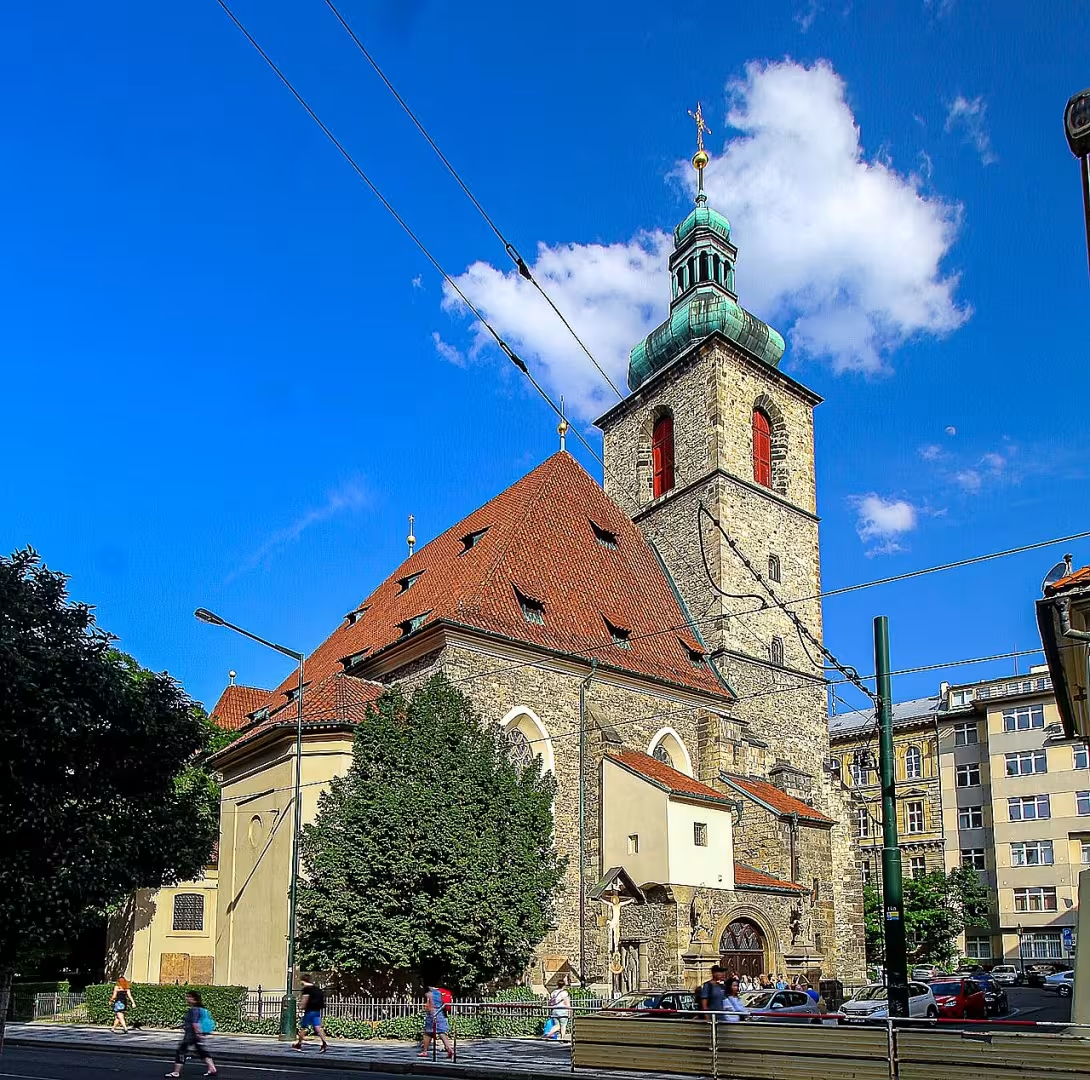
The church of St. Henry and St. Kunhuta is a parish temple on the New Town of Prague in Jindřiš Street, which the church named. The Gothic building from the 14th century is one of the important sights of the Prague city district.
The church was founded in the first half of the fourteenth century in the creation of New Town itself. It was built by a order of cruisers with a red star who had managed it for years. In February 1351, Archbishop Arnosht of Pardubice ordained it, and the month after that, on the 16th March of that year, he was promoted to the parish church. The temple is determined by the Roman-German king and Emperor Henry II, who lived between 972 and 973 to 1024, and his wife Kunhuta. Since its inception it has become part of the life of the urban area, especially intensely used by the inhabitants during the plague wounds, when it served as part of the largest inner city cemetery in Prague.
During the Hussite it was taken by the Hussites and was used by the priest Prokop from Pilsen. Later, he was taken over by the oppressors and the church preserved from their time, for example, the baptist from 1418. At that time one of the oldest and wealthiest literary fraternity in Czech countries developed here. This brotherhood was cancelled in 1784 by Emperor Josef II, and his property was sold out. In the seventeenth century the church was to return to the cruisers who rejected it in 1646. The order of barnabits, to which they then donated it, did not apply. Emperor Ferdinand III therefore transferred it to the administration of the village of New Town in 1649. In the coming days of the Baroque, several chapels were attached to the temple.
In 1529, the church passed through the Renaissance reconstruction, which created a circle, a hall and a leading stone staircase to the bark. In a later Baroque (1738-1741) the temple was equipped richly: paintings and sculptures were created by considerable Czech artists such as Václav Vavríce Reiner, Karl Šcreta, Jan Jiří Heinsch and Jan Jiří Bendl. In 1745 a cycle of wall paintings emerged from the life of St. Henry in a presbytery, funded by the Lithuanian Brotherhood. The main altar painting dates back to 1698 and Jan Jiří Heinsch is also the author; depicts Saint Henry protecting Prague from the Swedish siege and Saint Kunhutu walking around in hot alleys to prove his innocence when accused of adultery.
A fundamental change came in 1879, when under the leadership of architect Josef Mocker, the church was regotized along with the adjacent bell tower (Henry Tower, built 1472-1476). During this neogotic adjustment, the temple was significantly transformed: the facade was glued up to a bare stone, parts of side altars were demolished, new organs were built and a new entrance to the temple jeweler. New stained glass windows were created. The long-term used cemetery was abolished (the last funerals had not been held since 1787) and changed into a park; the skeleton and Jerusalem Chapel were demolished. The remaining tombstones were glued to the facade.
The chapel of St. Barbara was built in 1672 to thank you for saving us from the Swedish siege. Here was the Brotherhood of Saint Barbara, who took care of funerals and associated ceremonies and ceremonies. In 1964, the church was included in the state list of cultural monuments.
Then and now
Drag the slider to compare how the landmark may have looked when it was built with the view today.
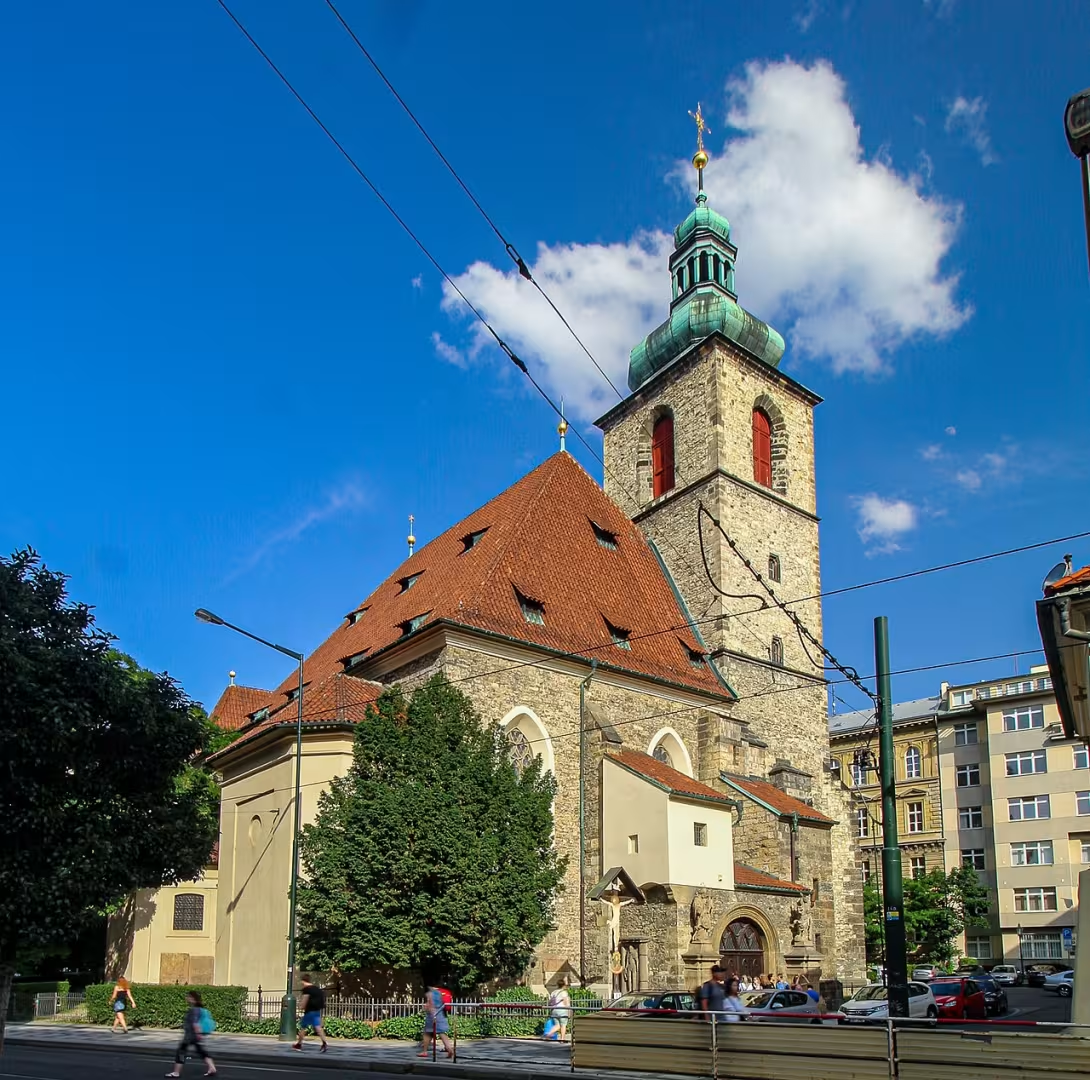
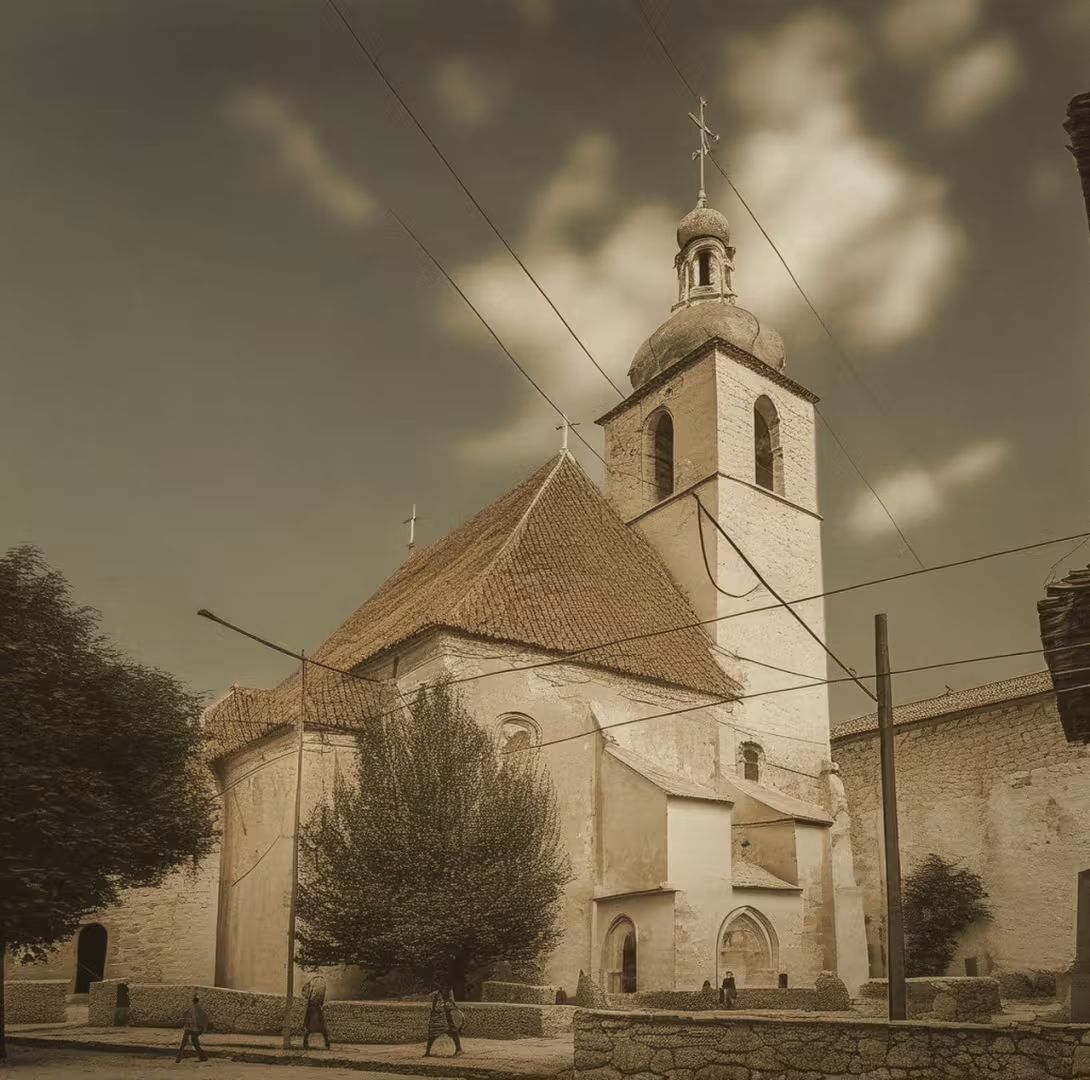
The historical appearance on the left is an AI-generated visualisation and serves as inspiration only.
Historical milestones
- 1351
- Church ordination
- 1472
- Establishment of a new bell tower
- 1698
- Altar painting
Architectural development
The church was exposed in a Gothic style. In the 19th century he underwent a major reconstruction under the guidance of architect Josef Mocker.
Historical events
- 1351
- Church ordination
- 1472
- Establishment of a new bell tower
- 1649
- Transfer of church to village Nové Město
Owners
Order of Cruisers with Red Star
Municipality of Nové Město
Points of interest
- The church of St. Henry and St. Kunhuta is a parish temple in the New Town of Prague.
- It was built by a order of cruisers with a red star who had managed it for years.
The temple was consecrated by Archbishop Arnost of Pardubice in February 1351.
- The church served as part of the largest inner city cemetery in Prague during plague wounds.
The church was preserved by a 1418 baptist.
Guide
This guide is narrated by a synthetic voice generated by artificial intelligence.
Show guide text
This text was created by artificial intelligence and has not been editorially reviewed. It may contain inaccuracies.
Welcome to the heart of Prague's New Town. You're standing right where history touches the present and where every stone tells stories from centuries ago. In front of your eyes is a monumental Gothic basilica that dominates this corner of Henry Street. Feel this atmosphere, this sense of seriousness and calm that radiates from these walls. While the modern world revolves around you, this temple stands as a fixed anchor of the past, ready to testify to everything Praha has gone through. Look at its overall form and try to imagine what this place looked like hundreds of years ago when a new city was being built here.
Let's go back to the Middle Ages together to understand why this place is so special. The whole history of this church, whose names are holy to many, begins in 1351. That was the year the temple was officially consecrated. Imagine the excitement and the religious seriousness that filled these streets. It was in February 1351 that the Archbishop of Arnošt of Pardubice, one of the most important and powerful figures at the time, sanctioned it with his ceremony. This church was not just an ordinary building, but it became the complete center of the spiritual life of the whole New Town. It was a pillar that held the whole community together and provided people with support in their daily struggle for survival and in their prayers.
Now pay attention to the architecture itself, which now surrounds you. This basilica is deeply anchored in a Gothic style, which you can see from its overall verticality and effort to go up to the sky. It's a style to erect a person and make them think about eternal things. Notice how this building changed over time. It wasn't just a static mass, it was a living organism that went through many reconstructions. One of the most important changes that fundamentally affected what you are seeing was work in the nineteenth century. At that time, interest in medieval values and purity of shapes returned to Europe. This was taken by the famous architect Josef Mocker. The church was neogotically altered, giving him back his original, noble character. Thanks to his work, you now perceive the specific harmony and precision that is so typical of neo-gothic style. If you look around now, you can see other traces of history, such as the bell tower, whose foundations and existence range back to 1472. Each part of this building is therefore the result of the long and complicated work of many generations of masters and builders.
But when you look at the name of this temple, you cannot forget the characters that imprinted his soul. The church is dedicated to St. Henry and St. Kunhute. Their names don't just know the books here, they know the walls themselves. They are patrons who protect this place and its visitors. But history doesn't end here with their names. Account must also be taken of the role of the order of the red star cruisers. It is this order that has managed and cared for this church for many years. Imagine the tireless care, the devotion the Order has given to this place to serve the people and God. This continuity of care is one of the reasons why you still feel such a strong presence here.
Perhaps you'll find one interesting thing that links the different epoch of this temple. Although its foundation is Gothic, history did not stop here in the Middle Ages. In 1698 there was an important event where a new altar painting was painted. This shows us how this church was able to absorb new artistic directions and adapt to the changing taste and needs of believers without losing its original essence. It is a fascinating example of how religious architecture can evolve and remain true to its mission. This temple was part of a wider whole that shaped the face of Prague, and even today remains an unmistakable symbol of this part of the city.
Now, we leave you with your impressions and the sense of wonder that this Gothic basilica is causing. We hope that this brief insight into the past has helped you better understand how deep roots this place has in Prague's history. Let yourself be carried away by the beauty of Henry Street and continue to explore the surroundings, which are full of other secrets and hidden treasures. Thank you for spending this moment right here, with us, at St. Henry's Church and St. Kunhuta. We wish you a beautiful and inspiring next part of your journey through the city.
Tips for visitors
The best time to visit the church of St. Henry and St. Kunhuta is from 9 a.m. to 16 p.m. If you want to escape sparkling traffic, visit the place on Tuesday or Thursday.
Frequently asked questions
Is Kostel svatého Jindřicha a svaté Kunhuty na Novém Městě v Praze open to the public?
Yes, the church is open to the public. The tour can be conducted separately or with a guide.
How do I get to the place by car / public transport?
The church is available by public transport line 3, 5, 9 or 14. Parking is possible on nearby streets or in garages.
How much is the entrance fee and is it paid on the spot?
Payment shall be made on the spot.
Is the tour suitable for children and seniors?
Yes, a church tour is suitable for families with children and seniors. We recommend that the seniors be accompanied to avoid narrow corridors and stairs.
How long does the tour take?
A tour of the church can be done separately or with a guide. The length of the tour depends on the number of visitors, but usually lasts around 30-45 minutes.
What are the opening times and booking is required?
The church is open to the public from Monday to Friday from 10 am to 16 pm. Sundays and public holidays are closed. Reservation is not necessary, but we recommend making it in advance for groups over 10 people.
What's interesting in the immediate vicinity?
In the immediate vicinity of the church you will find the Old Town Hall and Charles Square. If you want to visit other places in Prague, we recommend taking a map or GPS with you.
For kids
Imagine going back to the past, the Middle Ages when Praha was a young and dynamic city. Now, if you look at Nové Město, you'll find St. Henry and St. Kunhuta's church. It was built in 1400 and today it is one of the most beautiful monuments of Prague.
It's like time has stopped here. The church stood in the middle of the square where people met at markets and festivals. There were craftsmen, merchants and royal officials. The city was full of life, music and dance. And the church was the center of all this.
Businesses nearby
Events nearby

Zdroj akcí: otevřená data měst a obcí ČR (Národní katalog otevřených dat) a kalendář akcí Národního památkového ústavu.
Nearby
Praha, Nové Město
Accommodation nearby
Trips and activities nearby
Guided tours, tickets and activities nearby from GetYourGuide
Affiliate link: if you buy from the partner, we may receive a commission. The price for you does not change.
Search tours and activities →Themed route
1. Church of St. Henry and St. Kunhuta (sacral monument) - Explore the Gothic interior and preserved historical elements of this important temple. 2. The reservoir of the church (area) - Take a walk in a quiet space right by the temple and observe the details of its exterior structure. 3. Church tower (tower) - Head for the tower section so you can watch the surrounding urban development from a height.
Seasonal recommendations
Seasonal recommendation for visiting the church of St. Henry and St. Kunhuta in New Town in Prague:
Spring: Specific is the mild lighting that sings openness and brightness. In nature, flowers and leaves develop, creating a pleasant environment for walking. The atmosphere is relaxed and full of optimism. Practical Advice: Visit the church from 9 a.m. to 15 a.m. to avoid crowds of tourists. Dress comfortably because temperatures are about 15 degrees Celsius.
Summer: Specific is intense lighting that sings life and energy. In nature, crops and flowers develop, creating an amazing view. The atmosphere is relaxed and full of optimism. Practical Advice: Visit the church from 8 am to 12 pm to avoid crowds of tourists. Dress comfortably because temperatures are about 25 degrees Celsius.
Autumn: Specific is mild lighting that sings fatigue and meaning. In nature, tree leaves hatch, creating a pleasant environment for walking. The atmosphere is relaxed and full of introspective. Practical Advice: Visit the church from 9 a.m. to 15 a.m. to avoid crowds of tourists. Dress comfortably because temperatures are around 10 degrees Celsius.
Winter: Specific is intense lighting that sings fatigue and peace. In nature, snowflakes hatch, creating an amazing view. The atmosphere is relaxed and full of introspective. Practical advice: Visit the church in time from 10 to 14 hours to avoid crowds of tourists. Dress warm because temperatures are about 0 degrees Celsius.
Visualizations and artistic views


The visualisations are generated by artificial intelligence and serve as inspiration.
Photos from the area
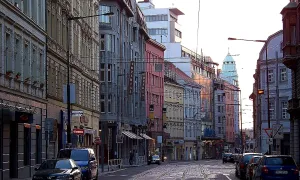
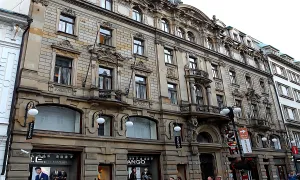
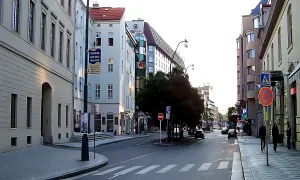
Real photos taken near the monument


Zdroj a licence jsou uvedeny u každého snímku.
Atmosphere of the place
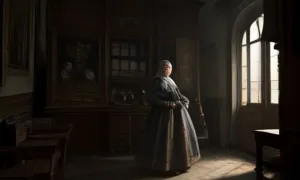
This atmospheric visualisation of the place and period was generated by artificial intelligence. It is not real footage of the location.
Tips from visitors
No tips yet. Be the first!
Log in and add your tip.
Sources and literature
Fotografie: VitVit / CC BY-SA 4.0 — Wikimedia Commons. The author and licence also appear when you hover over the image.
Faktickým podkladem tohoto textu byl článek na Wikipedii, jehož autory jsou přispěvatelé Wikipedie. Článek je dostupný pod licencí CC BY-SA 4.0.
Location on the map
More monuments – Nové Město
Show all in the municipality


Příběhy a pověsti
Legendy, pověsti a příběhy spjaté s touto památkou
Fotografie návštěvníků
Zatím žádné fotografie. Buďte první, kdo přidá fotografii z návštěvy!
Přihlaste se a přidejte svou fotografii nebo hodnoťte.
Za ověřenou návštěvu v aplikaci získáte víc bodů — poznáme podle GPS, že jste na místě.
Reviews and comments