






Kostel svatého Petra a Pavla v České Lípě Church
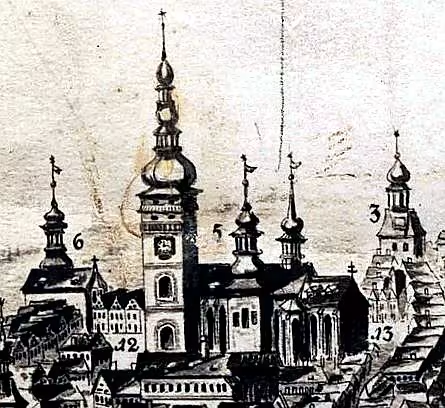
The Church of Saint Peter and Paul in Česká Lípa was a significant religious structure located at the heart of the town, on what is now Škroupovo Square. Likely constructed in the early 14th century, it served as a focal point for both Catholic and Protestant communities over several centuries. Its historical significance extends beyond its architectural style to its role within the religious and social dynamics of Česká Lípa. The church suffered multiple fires, with the final one leading to its demolition in 1820.
The origins of the Church of Saint Peter and Paul are somewhat obscure, as there are no definitive documents confirming its exact date of construction. However, historical sources suggest it was likely built in the early 14th century, coinciding with the establishment of Česká Lípa itself. Some historians propose that it may have been rebuilt on an earlier site around 1475. The church's history is intertwined with broader European religious tensions, particularly during the Thirty Years' War, reflecting the region's shifting denominational allegiances.
Architecturally, the Church of Saint Peter and Paul was a late Gothic building characterized by three naves. It featured a high tower equipped with bells crafted in Litoměřice in 1712. The interior housed several valuable altars, sculptures, and paintings, contributing to its artistic significance. Following a fire in 1617, the church underwent repairs, including relocating its bells to a newly constructed belfry in 1631.
Throughout its history, the church experienced dramatic changes in ownership and administration. Between 1608 and 1623, it was occupied by Protestants before being returned to Catholic services with support from Wenzel Treubner and Albrecht von Wallenstein in 1623. The church also served as a burial site for notable figures, including members of the Berků z Dubé family and the Vartenberků lineage.
Key events marked the church's history, notably its occupation by Protestants and subsequent return to Catholic services. Fires were significant occurrences, with the first major one occurring in 1787 and another devastating blaze in 1820 leading to its demolition. These fires not only damaged the structure but also resulted in the loss of many valuable items, though some artifacts like a baptismal font were saved and transferred to the Church of Saint Mary Magdalene.
Today, the site where the church once stood is no longer accessible as a religious monument, having been demolished after the 1820 fire. However, its historical significance remains preserved through documentation and artifacts housed in the Česká Lípa museum. Visitors interested in the town's rich history can explore these collections to gain insight into the cultural and architectural heritage of this once-prominent church.
The Church of Saint Peter and Paul stands as a testament to the religious and social transformations that shaped Česká Lípa over centuries. Its legacy, though no longer physically present, continues to intrigue historians and visitors alike, offering a glimpse into the past through preserved artifacts and historical records. For those interested in exploring the layers of history embedded within this town, a visit to the local museum provides an opportunity to connect with its storied past.
Then and now
Drag the slider to compare how the landmark may have looked when it was built with the view today.
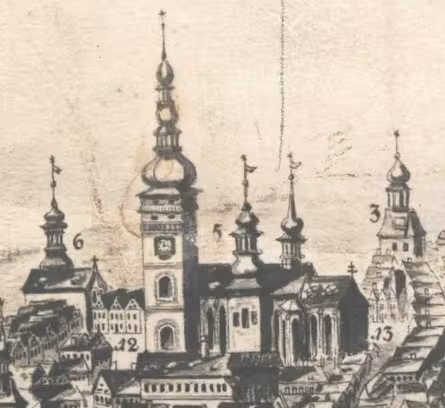
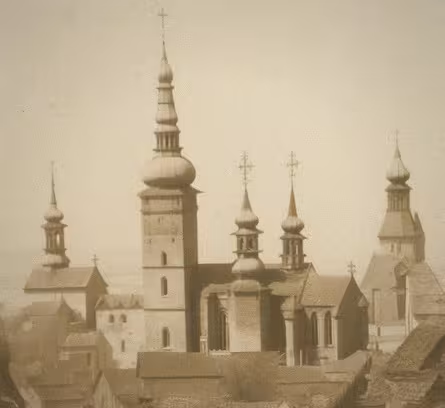
The historical appearance on the left is an AI-generated visualisation and serves as inspiration only.
Historical milestones
- c. 1300
- Probable founding of the Church of Saint Peter and Paul.
- 1475
- Possible reconstruction on older foundations.
- 1617
- The church was damaged by fire, followed by repairs.
- 1631
- Movement of bells to a new tower.
- 1608-1623
- The church occupied by Protestants.
- 1820
- Demolition of the church after its final fire.
Architectural development
The Church of Saint Peter and Paul was a late Gothic building with three naves. It featured a high tower with bells made in Litoměřice in 1712, and its interior included several valuable altars, sculptures, and paintings. After the fire in 1617, the church underwent repairs, including the relocation of its bells to a new belfry constructed in 1631.
Historical events
1608-1623: The church was occupied by Protestants, later returned to Catholic services with support from Wenzel Treubner and Albrecht von Wallenstein in 1623.
1617: A fire caused significant damage to the church, leading to the relocation of its bells to a new belfry.
1787: The first major fire struck the town center, affecting the church.
1820: A devastating fire led to the decision to demolish the remaining structure.
Points of interest
- The exact date of construction for the Church of Saint Peter and Paul is uncertain due to a lack of definitive documents, despite its likely establishment in the early 14th century alongside Česká Lípa itself.
- Historians suggest that the church may have been rebuilt on an earlier site around 1475, indicating it was part of a long-standing religious tradition even before its documented history began.
Guide
This guide is narrated by a synthetic voice generated by artificial intelligence.
Show guide text
This text was created by artificial intelligence and has not been editorially reviewed. It may contain inaccuracies.
Welcome to Škroupovo Square in Česká Lípa, where you stand before the historic site of the Church of Saint Peter and Paul. This church once stood proudly at the heart of our town, its presence a testament to centuries of cultural and religious history.
The origins of this significant structure are shrouded in mystery, likely dating back to the early 14th century when Česká Lípa itself was taking shape. Over time, it became a focal point for both Catholic and Protestant communities, reflecting the town's diverse spiritual landscape. The church underwent several reconstructions, adapting through turbulent times marked by fires and changing religious affiliations.
As you look around, imagine the church that once dominated this square. While its physical form is no longer present, its legacy endures in the stories embedded within these grounds. Notice how the space has evolved over time, yet still retains a sense of reverence for what once stood here.
The church's history is punctuated by key events and figures. In 1475, it was likely rebuilt on older foundations, signifying an era of renewal. The year 1617 saw the church damaged by fire, leading to essential repairs that preserved its structure. By 1631, the bells were moved to a new tower, symbolizing resilience amidst adversity.
The period between 1608 and 1623 was particularly significant as the church became a refuge for Protestants during times of religious conflict. This era highlights the church's role not just as a place of worship but as a sanctuary for those seeking solace in turbulent times.
Historical figures like Wenzel Treubner, Albrecht z Valdštejna, and Johann Christoph Preisler are intricately linked to this site, each contributing to its storied past. Their influence is woven into the fabric of Česká Lípa's history, leaving a legacy that continues to inspire.
One intriguing mystery surrounding the church is the uncertainty of its exact construction date. Despite being established alongside Česká Lípa in the early 14th century, definitive documents remain elusive, adding an air of intrigue to its origins.
As we conclude our journey through this historic site, I invite you to explore further and uncover more about the rich tapestry of stories that Škroupovo Square holds. Thank you for joining me today, and may your exploration continue to reveal the fascinating layers of Česká Lípa's past.
Tips for visitors
The best time to visit the site of the Church of Saint Peter and Paul in Česká Lípa is during late spring or early autumn when the weather is pleasant, and the town's natural beauty is at its peak. This period offers a comfortable climate for exploring outdoor sites and enjoying nearby attractions without the crowds typical of summer months.
Parking and transportation to the former site can be managed easily as it is located in the center of Česká Lípa. There are parking options available within the town, though availability may vary depending on the time of day. Public transport is also a viable option for reaching the area; however, it's recommended to check current routes and schedules through local transportation websites or apps.
When visiting the site, consider bringing comfortable walking shoes as exploring historical sites often involves some amount of walking. A hat and sunscreen are advisable during sunny days, while a light jacket might be necessary if you're visiting in cooler months. Additionally, carrying a water bottle will help stay hydrated throughout your visit.
For photography enthusiasts, the area around Škroupovo Square offers excellent opportunities for capturing the essence of Česká Lípa's historical and architectural charm. The best light is typically during the golden hours—shortly after sunrise or before sunset—when the sunlight creates a warm glow on the buildings. Exploring different angles can also reveal unique perspectives of the town's layout and remaining structures.
Nearby, within a 30-minute drive from Česká Lípa, is the charming village of Velenice, known for its picturesque landscapes and traditional Czech architecture. It's an ideal spot for families with children to explore, offering outdoor activities such as hiking trails and opportunities to learn about local history through guided tours or visits to nearby museums.
Businesses nearby
Do you run a restaurant, accommodation, shop, museum, rental, wellness or other visitor service near this monument? Show yourself directly to the people heading to it — this is how they will see you in the app and on the web:
Accommodation nearby
Themed route
Thematic Walking Tour: Česká Lípa and the Church of Saints Peter and Paul
Welcome to a delightful exploration of Česká Lípa, focusing on its historic heart and cultural treasures. This tour will guide you through three key sites that highlight the town's rich heritage.
1. Church of Saints Peter and Paul *Type: Historical Landmark* Begin your journey at the iconic Church of Saints Peter and Paul, a stunning example of Baroque architecture in Česká Lípa. This church is renowned for its ornate interior, featuring beautiful frescoes and an impressive organ that has been captivating visitors since the 18th century. Its historical significance as a central place of worship makes it a must-visit for anyone interested in religious art and history.
2. Česká Lípa Town Hall *Type: Architectural Landmark* A short walk from the church, visit the Česká Lípa Town Hall, located in the heart of the town square. This Renaissance building is notable for its elegant façade and historical importance as a center of civic life since the 16th century. The town hall's clock tower offers panoramic views of Česká Lípa, providing a perfect opportunity to appreciate the town’s layout and architecture.
3. Česká Lípa Museum *Type: Cultural Institution* Conclude your tour at the Česká Lípa Museum, situated nearby. This museum offers insights into the region's history through its diverse exhibits, ranging from local crafts to historical artifacts that tell the story of Česká Lípa’s development over centuries. It is an ideal place for those interested in understanding the cultural and social evolution of this charming town.
This tour provides a comprehensive glimpse into the heart of Česká Lípa, combining architectural beauty with rich history and culture. Enjoy your exploration!
Seasonal recommendations
Spring: Visiting the site of St. Peter and Paul Church in Česká Lípa during spring offers a unique experience as nature begins to awaken from its winter slumber. The surrounding landscape is transformed with fresh greenery, blooming flowers, and vibrant colors that create a picturesque backdrop for exploring historical remnants. This season provides a serene atmosphere, ideal for those who appreciate the subtle beauty of renewal and growth. While visiting in spring, be prepared for variable weather conditions; layers are recommended to accommodate sudden temperature changes. Early morning visits can help avoid larger crowds as tourists flock to enjoy the blossoming scenery.
Summer: The summer months bring abundant sunshine and warm temperatures to Česká Lípa, making it a popular time to explore the site of St. Peter and Paul Church. The lush greenery is at its peak, providing a refreshing environment for visitors. This season offers longer daylight hours, allowing ample time to enjoy outdoor activities around the historical area. However, summer can also mean increased visitor numbers, so arriving early in the day is advisable to avoid crowds. Comfortable walking shoes and light clothing are recommended due to the warmer weather, ensuring an enjoyable experience as you explore.
Autumn: Autumn in Česká Lípa presents a stunning display of fall foliage, with vibrant reds, oranges, and yellows painting the landscape around the site of St. Peter and Paul Church. The cooler temperatures create a crisp atmosphere that enhances the charm of exploring historical sites. This season is particularly appealing for photography enthusiasts who wish to capture the natural beauty of the changing leaves. As days become shorter, planning your visit during daylight hours is essential. Layered clothing is recommended to adapt to fluctuating temperatures throughout the day.
Winter: Winter transforms Česká Lípa into a serene and quiet landscape, with snow-covered surroundings that offer a unique perspective on the site of St. Peter and Paul Church. The colder months provide a peaceful atmosphere for reflection amidst historical remnants, often accompanied by shorter days and longer nights. While winter can be enchanting, it also requires practical preparation; visitors should dress warmly in layers to stay comfortable during their exploration. Be mindful that some facilities may have reduced hours or be closed due to the season, so checking ahead is advisable.
Visualizations and artistic views


The visualisations are generated by artificial intelligence and serve as inspiration.
Photos from the area
Real photos taken near the monument


Zdroj a licence jsou uvedeny u každého snímku.
Tips from visitors
No tips yet. Be the first!
Log in and add your tip.
Sources and literature
Fotografie: neznámý autor z 18. století / Public domain — Wikimedia Commons. The author and licence also appear when you hover over the image.
Faktickým podkladem tohoto textu byl článek na Wikipedii, jehož autory jsou přispěvatelé Wikipedie. Článek je dostupný pod licencí CC BY-SA 4.0.
Location on the map
Příběhy a pověsti
Legendy, pověsti a příběhy spjaté s touto památkou

Fotografie návštěvníků
Zatím žádné fotografie. Buďte první, kdo přidá fotografii z návštěvy!
Přihlaste se a přidejte svou fotografii nebo hodnoťte.
Za ověřenou návštěvu v aplikaci získáte víc bodů — poznáme podle GPS, že jste na místě.
Reviews and comments