



Kostel svatého Štěpána v Kouřimi Church
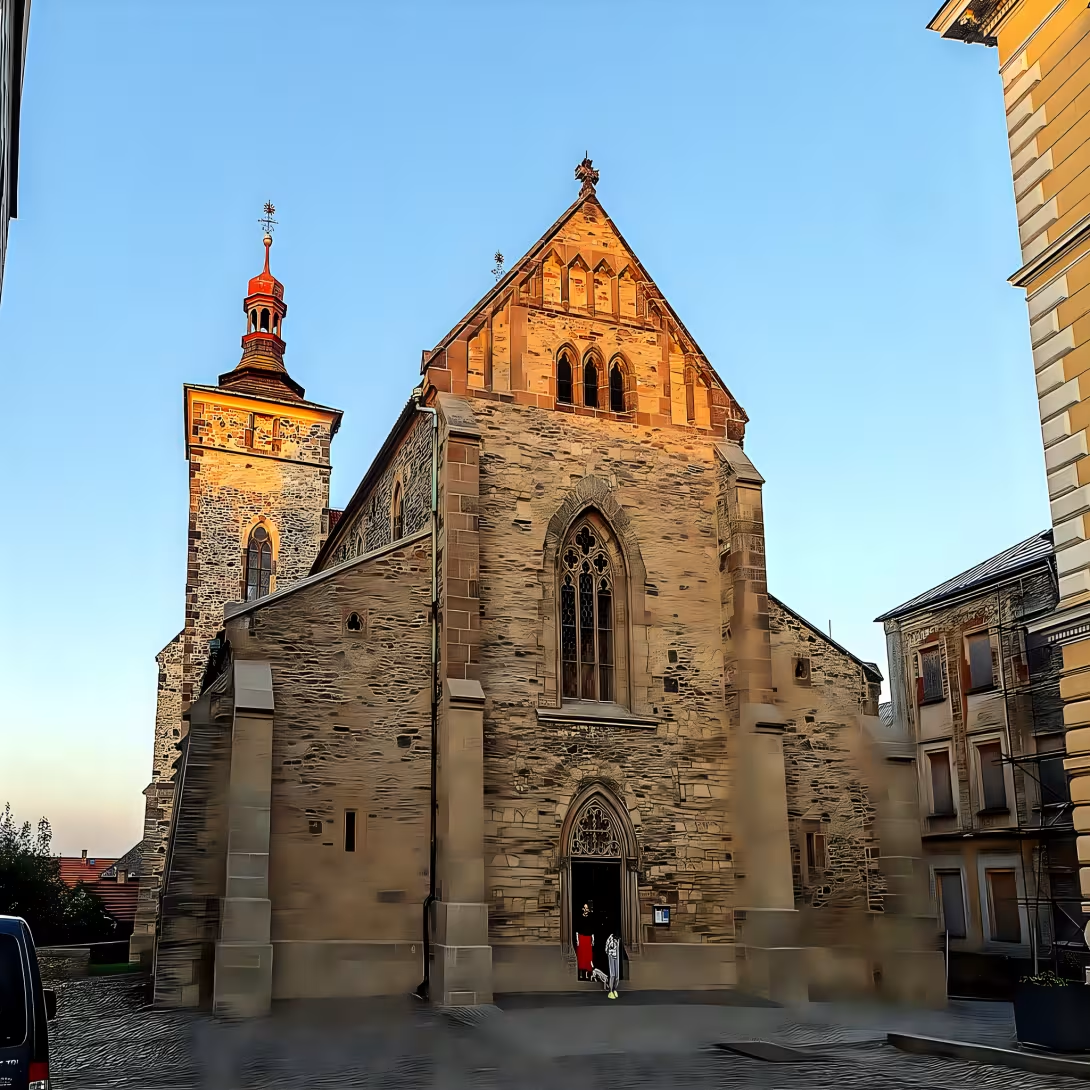
The Church of Saint Stephen in Kouřim stands as a prominent late Gothic architectural masterpiece located in the town square of Kouřim, within the Středočeský kraj region. Built on the site of an earlier Romanesque sanctuary before the town's establishment in the mid-13th century, this church has been preserved almost entirely in its original form and is a significant cultural monument. Its architectural style is notably influenced by Burgundian Gothic, making it an essential landmark for both Kouřim and Czech historical architecture.
The origins of the Church of Saint Stephen date back to the late 13th century when Kouřim was being developed. The church likely replaced a Romanesque sanctuary and was constructed as part of the town's foundation around the 1260s. This period saw Bohemia under the Přemyslid dynasty, transitioning to Luxembourg rule by the mid-14th century. Throughout its history, the church has been central to significant religious and political shifts in Central Europe.
Architecturally, the Church of Saint Stephen is a three-nave basilica with five-sided closures and two towering spires that were originally higher than their current state. The interior features a unique early Gothic crypt dedicated to Saint Catherine, adorned with star-shaped vaulting and medieval paintings depicting scenes such as the martyrdom of Saint Catherine and Christ's crucifixion. Additionally, the church houses Renaissance tombstones from the late 16th and early 17th centuries, showcasing its rich liturgical history.
Throughout its existence, the Church of Saint Stephen has witnessed numerous changes in ownership and administration, reflecting broader historical currents. Notably, it served as a hub for several significant figures, including Jakub, a chaplain to King Václav II., and Konrád z Písku, an imperial scribe during the reign of Empress Alžběta Pomořanská. The church became Utraquist following its occupation by Prague Hussites in 1421, who enforced adherence to the Prague Articles for nearly two centuries. After 1622, it returned to Catholicism under Dean Šimon Eustach Kapihorský's influence.
The church has endured several devastating fires over the centuries, with the most severe occurring in 1670 when its main nave collapsed. This event marked a period of decline until baroque restoration efforts were completed by 1740. Further renovations took place around 1850 under Dean Antonín Ladislav Dlask, who initiated significant restorations to preserve this architectural gem.
Today, the Church of Saint Stephen stands as a testament to its resilience and historical significance. Visitors can explore its richly decorated interior, including the crypt of Saint Catherine and the Renaissance tombstones that narrate stories from its past. The church's bell tower and surrounding hallowed grounds offer an immersive experience into Czech Gothic architecture and history.
The Church of Saint Stephen in Kouřim is not only a remarkable piece of architectural heritage but also a living chronicle of the region's religious and cultural evolution. Its preservation allows visitors to step back in time and appreciate the intricate details that have withstood centuries of change. For those interested in exploring Czech Gothic architecture, this church offers an invaluable glimpse into the past and is well worth a visit.
Then and now
Drag the slider to compare how the landmark may have looked when it was built with the view today.
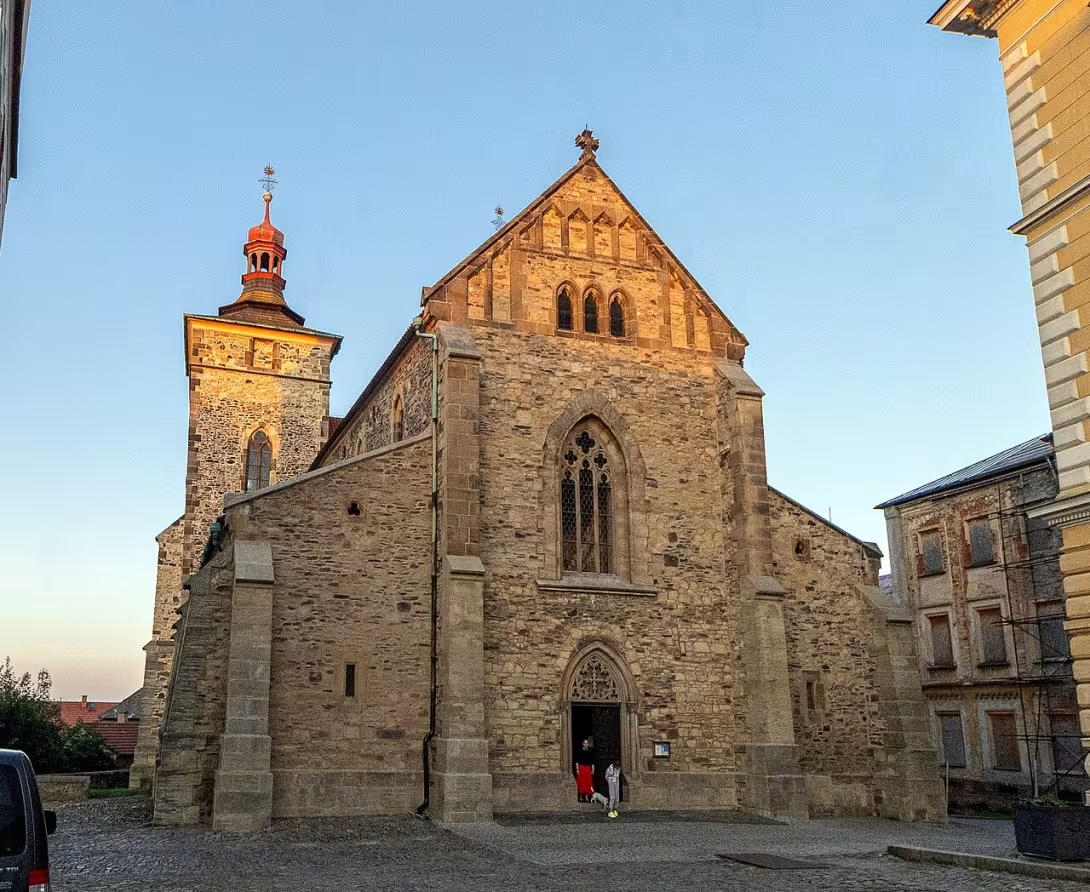
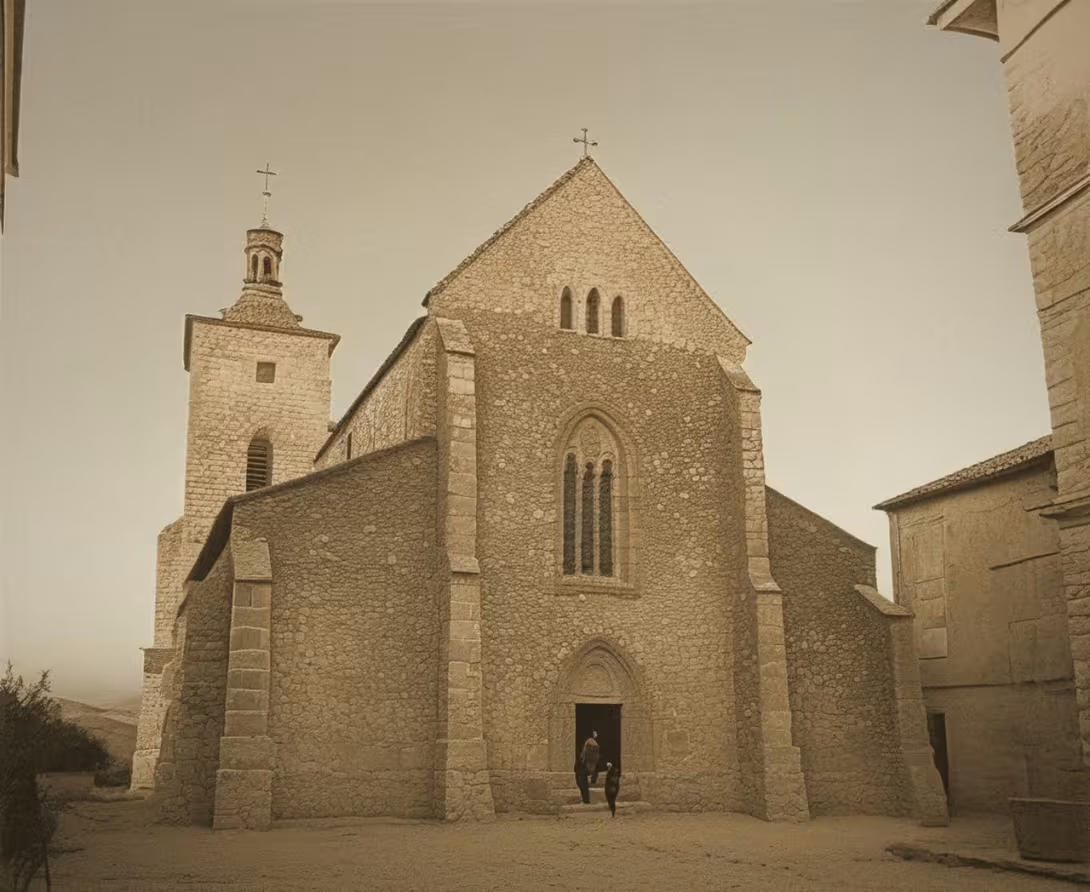
The historical appearance on the left is an AI-generated visualisation and serves as inspiration only.
Historical milestones
- 1334
- The church was first struck by fire.
- 1421
- Prague Hussites occupied Kouřim and enforced the Prague Articles.
- 1670
- A devastating fire caused significant damage to the church.
Architectural development
The church was likely built on the site of a previous Romanesque sanctuary before the town's founding in the mid-13th century. It suffered multiple fires over the centuries, with significant damage occurring in 1670 when its main nave collapsed. Baroque restoration took place until 1740, and further renovations occurred around 1850 under Dean Antonín Ladislav Dlask.
Historical events
In 1421, Prague Hussites occupied Kouřim and enforced adherence to the Prague Articles, making the Church of Saint Stephen an Utraquist church for nearly 200 years.
After 1622, the church returned to Catholicism under the influence of Dean Šimon Eustach Kapihorský.
Owners
The church has been owned by the Roman Catholic Archdiocese of Prague since its construction.
Points of interest
- The Church of Saint Stephen is built on the site of an earlier Romanesque sanctuary, indicating that Kouřim's religious significance dates back even before its establishment in the mid-13th century.
- The church features a unique early Gothic crypt dedicated to Saint Catherine, which includes medieval paintings depicting scenes such as her martyrdom and Christ’s crucifixion, offering rare insights into Gothic artistry.
- In 1421, the Church of Saint Stephen became Utraquist following its occupation by Prague Hussites, who enforced adherence to the Prague Articles for nearly two centuries, highlighting its role in religious reform movements.
- The most severe fire in the church's history occurred in 1670 when its main nave collapsed, marking a period of decline until baroque restoration efforts were completed by 1740, showcasing the resilience and adaptive history of the structure.
- Renowned figures such as Jakub, chaplain to King Václav II., and Konrád z Písku, an imperial scribe during Empress Alžběta Pomořanská's reign, were associated with the church, linking it to significant historical personalities.
Guide
This guide is narrated by a synthetic voice generated by artificial intelligence.
Show guide text
This text was created by artificial intelligence and has not been editorially reviewed. It may contain inaccuracies.
The Church of Saint Stephen is the main landmark of Kouřim town square and the entire city. It is a late Gothic structure that, despite many fires, has been preserved in almost its original form. The church and the adjacent bell tower are cultural monuments.
The church probably arose on the site of an older Romanesque sanctuary from the time before the city was founded. The new building grew together with the city in the sixties of the thirteenth century as a three-aisled basilica in the so-called Burgundian style. In the Middle Ages, a number of important figures worked here. Among them were Jacob, chaplain to King Wenceslas the Second, Conrad of Písek, scribe to Empress Elizabeth of Pomerania, scholars Christian of Prachatice and Stephen of Páleč, and also John Vinkler, scribe to Sigismund of Luxembourg.
In April 1421, Prague Hussites occupied Kouřim and the church became Utraquist for nearly two hundred years. The local literary brotherhood is recalled by two important songbooks, a late Gothic gradual from 1470 and a Renaissance Advent hymnal from 1581. After 1622, the church became Catholic again and Dean Simon Eustach Kapihorský completely recatholized the city with the help of troops.
The church was repeatedly struck by fires, first in 1334. The most devastating fire was in 1670. The vault of the main nave collapsed, the towers with their connecting bridge burned, the roofs and most of the Gothic furnishings were destroyed. Kouřim, devastated by the Thirty Years' War, had no money for reconstruction, so the burned church had to wait seventeen years. The Baroque restoration extended until 1740, when the lower towers received their present roof. Around 1850, Dean Antonín Ladislav Dlask initiated further renovation and the restoration was led by architect Josef Schulz. The Neo-Gothic modifications were meant to restore the church to its original appearance, but they actually damaged the building. The western façade with its large window was significantly altered in the Neo-Gothic style.
The three aisles of the church are closed by pentagonal ends. Above them rise two massive towers, which were originally taller and on the top floor were connected by a covered bridge. Inside is a gallery of fifteen Renaissance tombs made of marble and red sandstone from the turn of the sixteenth and seventeenth centuries. A stone block at the eastern wall of the choir commemorates the mass grave of those who fell in the Battle of Kolin in 1757.
Beneath the presbytery lies an early Gothic crypt of Saint Catherine. Its octagonal star vault is decorated with paintings of the martyrdom of Saint Catherine and Christ and angels playing musical instruments. The central pillar symbolizes Christ as the Tree of Life and the space is the oldest of its kind in continental Europe.
The church also contained a Romanesque ensemble called the Kouřim Lions, probably created around 1200. It consists of a monster standing on two lions and served as a pulpit or pedestal for a font. The original is now in the Lapidary of the National Museum, a copy in the Kouřim Museum.
Tips for visitors
The best time to visit the Church of Saint Stephen in Kouřim is during late spring or early autumn when the weather is mild, and the crowds are smaller compared to peak summer months. This period also offers beautiful natural lighting for photography, enhancing the intricate details of the church's Gothic architecture. Additionally, visiting on a weekday can provide a more tranquil experience, allowing visitors to appreciate the serene atmosphere of this historic site.
When visiting the Church of Saint Stephen, consider bringing comfortable walking shoes, especially if you plan to explore Kouřim further after your visit. A camera is recommended to capture the stunning architectural details and stained glass windows of the church. Since the interior lighting may be subdued, a portable light source can also enhance your photography experience.
For photography enthusiasts, the best spots for capturing the Church of Saint Stephen are from the front entrance or along the path leading up to it, where the contrast between the sky and the structure creates dramatic images. The late afternoon offers golden hour lighting that beautifully highlights the church's façade. Inside, photographing the altar area during a service can provide dynamic shots with natural light streaming through the windows.
Nearby attractions within 30 minutes include the Kouřim Castle, which showcases medieval architecture and history, offering insight into the region's past. For families with children, exploring the surrounding parks in Kouřim provides a relaxing outdoor activity after visiting the church. These areas are ideal for picnics or leisurely walks, making them perfect for a family-friendly day out.
Frequently asked questions
Can the monument be visited?
Religious buildings are usually open mainly during services; at other times a visit is normally arranged with the parish or the operator. We have not verified specific times.
Where is the monument?
Location: Mírové náměstí, Kouřim, Středočeský kraj. The map on this page shows the exact spot.
Why is the monument protected?
It is listed in the Central List of Cultural Monuments of the Czech Republic as a cultural monument (register no. 46168/2-806).
Businesses nearby
Do you run a restaurant, accommodation, shop, museum, rental, wellness or other visitor service near this monument? Show yourself directly to the people heading to it — this is how they will see you in the app and on the web:
Nearby
The church is located in the town of Kouřim, in the Central Bohemian Region. The surrounding landscape is characterized by rolling hills and wooded areas.
Accommodation nearby
Trips and activities nearby
Guided tours, tickets and activities nearby from GetYourGuide
Affiliate link: if you buy from the partner, we may receive a commission. The price for you does not change.
Search tours and activities →Themed route
Tematická výletní trasa Kouřim
1. Kostel svatého Štěpána v Kouřimi (Kostel) Začneme naším hlavním cílem, kostelem svatého Štěpána, který je jedním z nejstarších gotických chrámů ve Středních Čechách. Jeho historie sahá do 13. století a je znám pro významné architektonické prvky, jako jsou jeho vysoké okna a bohatě zdobená interiéry. Je to ideální místo pro ty, kteří mají zájem o historii a architekturu.
2. Náměstí Míru (Veřejný prostor) Přibližně 5 minut chůze od kostela se nachází Náměstí Míru, centrální veřejné prostranství v Kouřimi. Toto místo je známo svou historickou architekturou a klidným prostředím. Je to skvělý okamžik k odpočinku a prohlídce místních budov, které nesou na sobě stopy minulosti.
3. Kostel svatého Petra a Pavla (Kostel) Krátce od Náměstí Míra se nachází kostel svatého Petra a Pavla, další historický chrám v Kouřimi. Tento barokní kostel je znám pro svou krásnou architekturu a bohaté interiéry. Je to ideální místo pro ty, kteří chtějí hlouběji prozkoumat náboženskou historii města.
4. Kostel svatého Mikuláše (Kostel) Kolem 10 minut chůze od kostela svatého Petra a Pavla se nachází kostel svatého Mikuláše, další významná náboženská památka. Tento gotický kostel je znám pro svou jednoduchost a historickou hodnotu. Je to skvělý příklad středověké architektury, který nabízí klidný útočiště od hlavních turistických tras.
Tato trasa vás provede historickými a náboženskými památkami Kouřimi, což je ideální pro ty, kteří mají zájem o architekturu a historii.
Seasonal recommendations
Spring: The arrival of spring at the Church of Saint Stephen in Kourim brings a refreshing atmosphere with blooming flowers and vibrant greenery enveloping the historic site. Natural light bathes the church in soft, warm hues, enhancing its architectural details and creating an inviting ambiance for visitors. This season is ideal for those seeking tranquility away from summer crowds. It's advisable to wear comfortable layers as temperatures can fluctuate; early mornings or late afternoons are perfect times to visit when the weather is milder and fewer people are around.
Summer: During the summer, the Church of Saint Stephen enjoys long daylight hours, providing ample time for exploration under clear skies. The lush surroundings make it a picturesque spot for photography enthusiasts. However, this is also the peak tourist season, so expect larger crowds. To enhance your experience, consider visiting early in the morning or later in the evening to avoid the midday heat and busiest times. Wear light, breathable clothing and stay hydrated as you enjoy the vibrant atmosphere of summer.
Autumn: Autumn at the Church of Saint Stephen offers a stunning display of fall foliage, with golden leaves creating a picturesque backdrop that enhances the church's historic charm. The cooler temperatures make for pleasant walking conditions, ideal for leisurely exploration without the summer crowds. This is a great time to appreciate the serene atmosphere and take in the natural beauty. Dress warmly in layers to accommodate the chillier weather, and consider bringing a scarf or hat to stay comfortable during your visit.
Winter: Winter transforms the Church of Saint Stephen into a serene, almost magical setting with snow-covered landscapes that provide a stark yet beautiful contrast to its historic architecture. The shorter days mean fewer visitors, allowing for a more intimate experience. However, be prepared for colder temperatures and potentially icy paths; wearing warm clothing, including boots, is essential. Plan your visit during daylight hours as the church may have reduced opening times, ensuring you make the most of your time exploring this enchanting winter wonderland.
Visualizations and artistic views


The visualisations are generated by artificial intelligence and serve as inspiration.
Photos from the area
Real photos taken near the monument


Zdroj a licence jsou uvedeny u každého snímku.
Tips from visitors
No tips yet. Be the first!
Log in and add your tip.
Sources and literature
Photos: VitVit / CC BY-SA 4.0, rozlišení zvýšeno umělou inteligencí — Wikimedia Commons. The author and licence also appear when you hover over the image.
Faktickým podkladem tohoto textu byl článek na Wikipedii, jehož autory jsou přispěvatelé Wikipedie. Článek je dostupný pod licencí CC BY-SA 4.0.
Location on the map

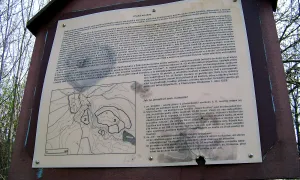



Příběhy a pověsti
Legendy, pověsti a příběhy spjaté s touto památkou
Příběh: Kostel svatého Štěpána v Kouřimi
Bylo to v pondělí ráno, kdy Mikuláš se probudil s pocitem zátěže na svém hrudi a pocitem úzkosti, který neznal. Okna kostela svatého Štěpána byla stále zapuš…
Číst příběh
Pověst: Kostel svatého Štěpána v Kouřimi
Podle místní pověsti sahají kořeny kouřimského kostela mnohem hlouběji do země, než se zdá pouhým okem. Dávno před tím, než zdejší kraj poznala gotická klenb…
Číst příběhFotografie návštěvníků
Zatím žádné fotografie. Buďte první, kdo přidá fotografii z návštěvy!
Log in a přidejte svou fotografii nebo hodnoťte.
Za ověřenou návštěvu v aplikaci získáte víc bodů — poznáme podle GPS, že jste na místě.
Reviews and comments