






Králův stůl Memorial stone
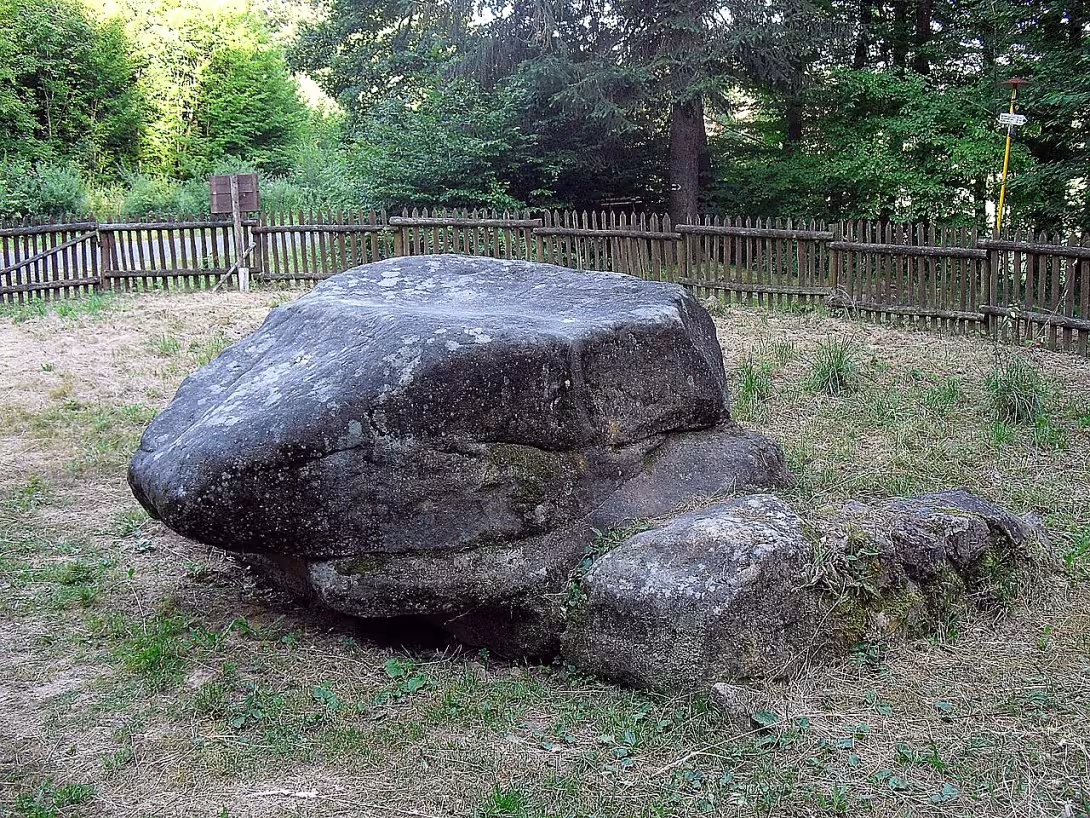
Zlínský kraj Králův stůl, sandstone rock in river hills, Uherské Hradiště, has a mysterious and interesting history from the 13th century. Its unique shape sparked a debate among researchers about its origin and purpose. Králův stůl is believed to have served as a border marker for the territory of the Velehrad Abbey and perhaps for astronomical observation or as a ritual for the Slavic King.
Králův stůl is a ground sandstone formation with red-brown to light grey. Its lower part, known as "foot," passes to foam limestone. The surface and sides were damaged by erosion and human activity. Králův stůl measures approximately 2,6 metres long, 1.9 metres wide and 1 metre high. Its original shape, including destroyed benches, is discussed.
Králův stůl is mentioned in historical documents, including 1228 charter issued by King Prehmi Otakar I., confirming ownership of the Velehrad Abbey on the surrounding soil. In 1694, the surveyor described Králův stůl with various symbols, inscriptions, and signs, including the name JHS and the bishop's mitre image. In 1706 a border agreement was signed between Velehrad Abbey and Jan of Rottal, which marks the end of use of Králův stůl as a border.
Králův stůl could be used for astronomical observations or as a ritual for Slavic kings. Some researchers think it might suggest solstice and equinox. But archaeological research has not confirmed these theories. Králův stůl is located near the village of Jankovice and hunting cottages of Nové Dvory, near the Blue-Zdounky road and the Cyriac travel direction.
Today, Králův stůl is an important historical place that offers a view of the region's rich cultural heritage. Visitors can explore the site and learn about its history and significance. Králův stůl is a bridge-visit destination for those interested in history, archaeology and natural beauty of the Claw Hill.
Then and now
Drag the slider to compare how the landmark may have looked when it was built with the view today.
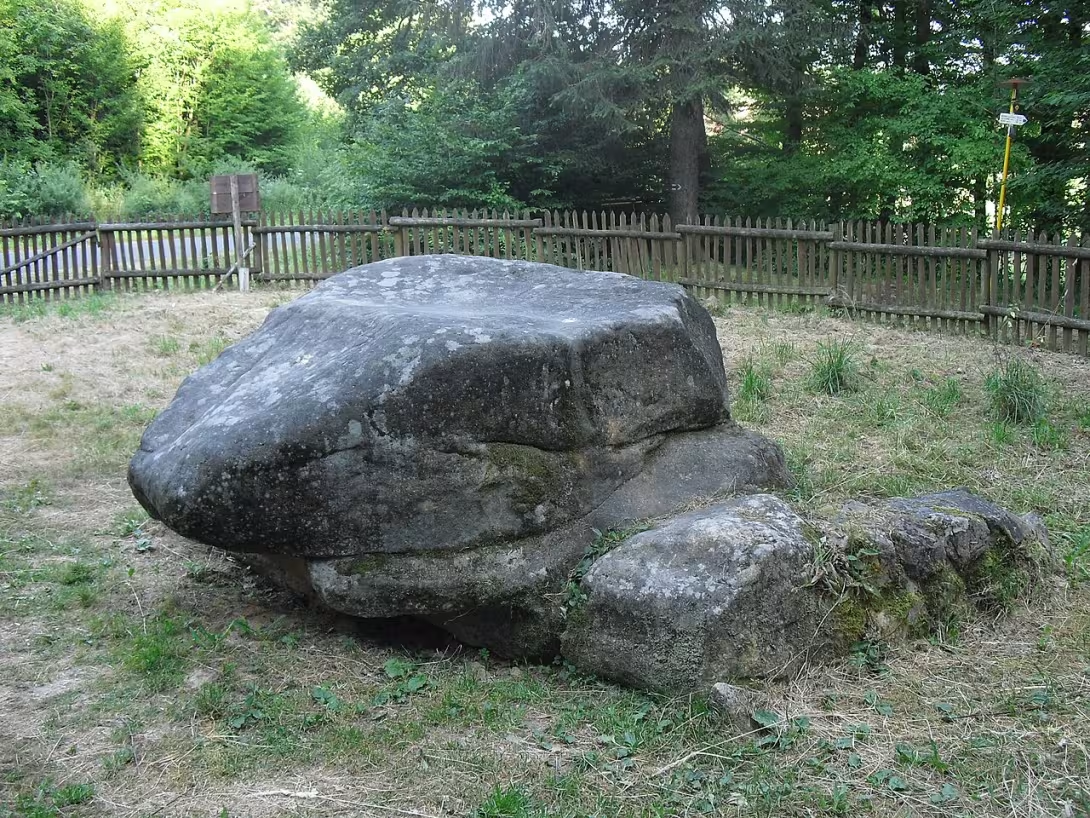

The historical appearance on the left is an AI-generated visualisation and serves as inspiration only.
Historical milestones
- 1228
- Listed in the Charter issued by the King Primoz Otakar I.
- 1694
- Described by the surveyor as with different symbols, inscriptions, and markings, including the name of the JHS and the image of the bishop mitre.
- 1706
- A border agreement was signed between Velehrad Abbey and Jan of Rottal, the owner of Napajedla.
Architectural development
The rock formation is made from ground sandstone with red-brown to light grey. Its lower part, known as "foot," passes from sandstone to fine grained limestone. The surface and sides of the rock were damaged by natural erosion and human activity.
Historical events
1228: Mentioned in the charter issued by the King Primohmi Otakar I.
1694: Described by the surveyor as various symbols, inscriptions and signs, including the name of the JHS and image of the bishop's mitra.
1706: Between The Abbey and Jan of Rottal, the owner of Napajedla, were signed a border agreement.
Owners
Velehrad Abbey, Jan of Rottal
Points of interest
- Králův stůl was also used as a ritual for Slavic kings, although archaeological research did not confirm this theory.
- Some researchers believe that Králův stůl may indicate solstice and equinox, but this has not been proven.
- Králův stůl was mentioned in the 1228 charter issued by King Prehmi Otakar I., confirming ownership of the Abbey Velehrad on the surrounding country.
- In 1706 a border agreement was signed between the High Hrad Abbey and Jan of Rottal, which marks the end of use of Králův stůl as a border.
- Králův stůl has a roughly grained sandstone with red-brown to light grey colour, and its lower part passes into fine grained limestone.
Guide
This guide is narrated by a synthetic voice generated by artificial intelligence.
Show guide text
This text was created by artificial intelligence and has not been editorially reviewed. It may contain inaccuracies.
Králův stůl is a sandstone rock formation in Chřiby, not far from Velehrad in the Uherské Hradiště district. The nearest village is Jankovice, about a kilometer away, and nearby stands the Nové Dvory hunting lodge. A road passes through this area from Modré to Zdounek, as well as the blue-marked section of the Cyrilometodějská trail.
The stone is made of coarse-grained sandstone, brownish to light grey in color, which is commonly found in Chřiby. It has approximately the shape of a rectangular block measuring about two point six by one point nine by one meter. It was artificially placed at its current location already in prehistoric times. Originally it consisted of three parts, a main section and two side pieces. The eastern part was broken up in the nineteenth century and used as gravel for road construction. The western fragment measures one hundred fifteen by sixty-five centimeters. The stone is carved into the form of a sacred animal, perhaps a bull's head or a horse's back. From the side it resembles an anvil. The amateur archaeologist Antonín Galatík considered the carved marks on it to be Celtic runes.
In the Middle Ages, the stone was a boundary marker for the lands of the Velehrad Cistercian monastery. It is first mentioned in a charter of King Přemysl Otakar the First from November twenty-seventh, twelve twenty-eight. In that charter, among the boundary points, it mentions a stone in the west, which is called Králův stůl. A report about a boundary inspection from sixteen ninety-four first mentions marks on its upper surface. It describes various letters and inscriptions, including the name JHS, and also figures similar to a bishop's crosier. As recently as October sixth, seventeen oh-six, a treaty concerning the boundary between the monastery and Jan of Rottalu, the owner of the Napajedly estate, was concluded directly on Králův stůl.
According to local legends, the stone served as a table at banquets of rulers, such as Přemysl Otakar the First, Charles the Fourth, or Matthias Corvinus. However, archaeologists have found no bones or pottery fragments. Researchers from the middle of the nineteenth century believed that Slavic tribal rulers were elected here, who took power by sitting on the stone.
The stone was first professionally surveyed and described by Josef Chodníček in nineteen oh-three. František Soják continued his work in nineteen sixty-four. According to him, the stone could have served to determine annual cycles or to track the sunrise and sunset of the sun. Some researchers see it as a megalithic dolmen that marked the solstices and equinoxes. The latest research by Jiří Pavelčík from nineteen ninety-seven did not confirm this assumption. However, it revealed that a circle of flaked stone ran around the stone. Roughly worked stones oriented to the four cardinal directions lay on its perimeter.
Frequently asked questions
Can the monument be visited?
This is a structure in a public space that can usually be seen from outside free of charge. We have not verified that this particular one is freely accessible.
Where is the monument?
Location: Velehrad, Zlínský kraj. The map on this page shows the exact spot.
Why is the monument protected?
It is listed in the Central List of Cultural Monuments of the Czech Republic as a cultural monument (register no. 1000144094).
Businesses nearby
Do you run a restaurant, accommodation, shop, museum, rental, wellness or other visitor service near this monument? Show yourself directly to the people heading to it — this is how they will see you in the app and on the web:
Events nearby
Zdroj akcí: otevřená data měst a obcí ČR (Národní katalog otevřených dat) a kalendář akcí Národního památkového ústavu.
Nearby
The place is located near the village of Jankovice and the hunting lodge Nové Dvory. Located near the Blue - Zdounky Road and the Cyriac Travel Directions.
Accommodation nearby
Trips and activities nearby
Guided tours, tickets and activities nearby from GetYourGuide
Affiliate link: if you buy from the partner, we may receive a commission. The price for you does not change.
Search tours and activities →Themed route
Velehrad route
1. Králův stůl (memorial stone), memorial - This monument is an important historical monument, which is recalculated by the resulting event. It is needed in a beautiful place and offers an appropriate outlet in the surroundings.
2. New Dvory, Hunting Castle - Located near the King's table and offers interesting hunger for historical architecture and landscape.
3. Cyril and Methodius trail, cycling route - You can find the King's table with this cycling route and offer the opportunity to thrive in beautiful nature and discover historic places.
4. Blue. This road leads to the proximity of the King's table and offers the possibility of producing local villages and nature.
5. Jankovice, village - Located near the King's table and offers the possibility of traditional village architectures and smaller life.
Seasonal recommendations
Spring: Spring is an ideal challenge to the challenges of Králův stůl monuments. The atmosphere is full of life and the event is in full volume. Specific is Lighting, which is a bright and sunny world Lighting Beauty Friday. It is reported that these measures are consistent with the objectives to be met and there are no more. Clothes could be suitable for use.
Summer: Summer is the main sector for the own sources of monuments that Králův stůl. Specific is warm weather and short days that increase the profile of monuments from morning to evening. We recommend arriving early in the morning to avoid a large crowd of tourists crossing during the day.
Autumn: Autumn is a beautiful season for visitors, including Králův stůl. The atmosphere is calm and the event is full of colors. The specific weather is mild, which amplifies the products of the monuments in comfort support. We recommend to build a memorial in late support, when the sun is south over the horizon and light is soft.
Winter: Winter is a quiet secon for the Monuments, including Králův stůl. I recommend visiting the memory in the morning hours, when it is necessary to be quiet and it is possible to see the memory in peace. Forget to take the warm round to make these be if necessary.
Visualizations and artistic views


The visualisations are generated by artificial intelligence and serve as inspiration.
Photos from the area
Real photos taken near the monument

Zdroj a licence jsou uvedeny u každého snímku.
Tips from visitors
No tips yet. Be the first!
Log in and add your tip.
Sources and literature
Photos: jib / CC0 — Wikimedia Commons. The author and licence also appear when you hover over the image.
Faktickým podkladem tohoto textu byl článek na Wikipedii, jehož autory jsou přispěvatelé Wikipedie. Článek je dostupný pod licencí CC BY-SA 4.0.
Location on the map

Příběhy a pověsti
Legendy, pověsti a příběhy spjaté s touto památkou
Příběh: Králův stůl
Bylo to v pondělí ráno, kdy Martin zjistil, že jeho ruce se třesou, jakoby ovládaly jinou sílu než touhou po zemědělském právu. Vyrostl do historie Králův st…
Číst příběh
Pověst: Králův stůl
Podle místní pověsti přišel na toto místo v Chřibech sám král. Bylo to za časů, kdy husté lesy kolem Velehradu ještě pamatovaly pohanské obřady a kdy hranice…
Číst příběhFotografie návštěvníků
Zatím žádné fotografie. Buďte první, kdo přidá fotografii z návštěvy!
Log in a přidejte svou fotografii nebo hodnoťte.
Za ověřenou návštěvu v aplikaci získáte víc bodů — poznáme podle GPS, že jste na místě.
Reviews and comments