






Mariánský sloup (Plzeň) Marian column
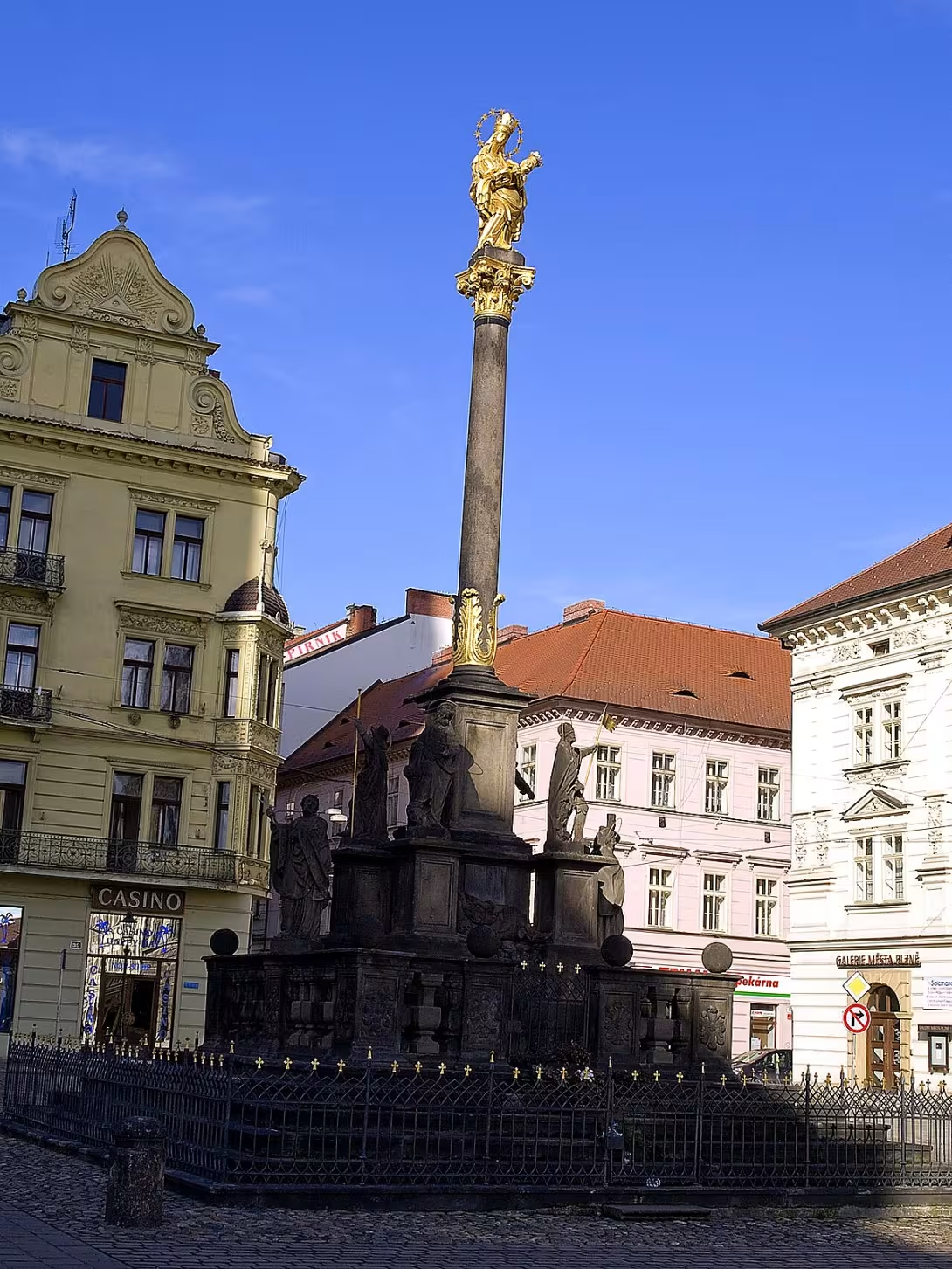
The Marian column in Pilsen is a Baroque work from 1681. It stands in the northwest corner of Republic Square outside the Imperial House. It came as a thank you for ending the plague epidemic. Since 1958 it has been protected as a cultural monument of the Czech Republic.
The creation of the building is linked to the plague epidemic in the 17th century. On 22 September 1680, at the ceremony with the Holy Sacrament in Plzeň Square, the City Council, with the consent of the townspeople, undertook to build a pillar to honor the Holy Mother of God. The goal was to avert God's wrath and ease the plague. The foundations started digging on October 24th. On November 7, 1680, the archdeacon Alexius Čapek, Mayor of Pavel Martinec and master of Cyprián Frozín laid the foundation stone. They put the coins and a description of the construction into the foundation. The work, completed in 1681, was carried out by stonemason Jan Milich, sculptor Kristián Widmann and bricklayer Martin Novák.
The architectural monument refers to a pattern from the Old Town Square in Prague. It consists of a three-stroke base and a cylindrical blade. The base has a square floor plan with a circumferential balustrade which separates six steps from the tiles. The replacement consists of prism pillars with decorative rosettes. The gate on the east side was added in 1891. The front of the balustard is cut in the middle by an altar, which originally had a baroque forged door. The acantic base of the blade still shows the brand of the stone master J. Meilík.
The top of the column is the statue of the crowned Madonna with Jesus. It is a free replica of the Gothic Pilsen Madonna. In the corners of the second stage, Kristián Widmann placed four figures of saints. Saint Bartholomew is depicted with a knife and his own skinned skin, St. Wenceslas is dressed in armour with shield and flag, Saint Shebestian holds arrows and St. Roch has clothes of pilgrim, staff and dog with loaf of bread. In front of the altar lies a picture of the sleeping St. Rosalie of Palermo with a cross and skull in the cave. Behind it was a marble plate with information about construction and repairs in 1931.
In 1714, after averting the second plague, the son of sculptor Kristian, Lazar Widmann, added three other characters to the balustrad. They are Saint Francis of Xaversky with a cross, Saint Peter of Alkantara with a mighty cross and Saint Barbara with a chalice and host. According to the available reports, the plague in Pilsen ended on the day of St. Barbara's feast in 1713.
The owner of the memorial is the City Council of Pilsen. The last extensive reconstruction of the sculpture took place in 2020- 2021. In this repair, the statue of the Virgin Mary with Jesus, the Corinthian head and the acantic base of the pillar were newly gilded.
The work represents an important example of an early Baroque and is a tangible testament to the historical experience of the city with epidemics. Thanks to detailed sculpting and current condition after reconstruction, this is a major stop during the tour of the centre of Pilsen.
Then and now
Drag the slider to compare how the landmark may have looked when it was built with the view today.
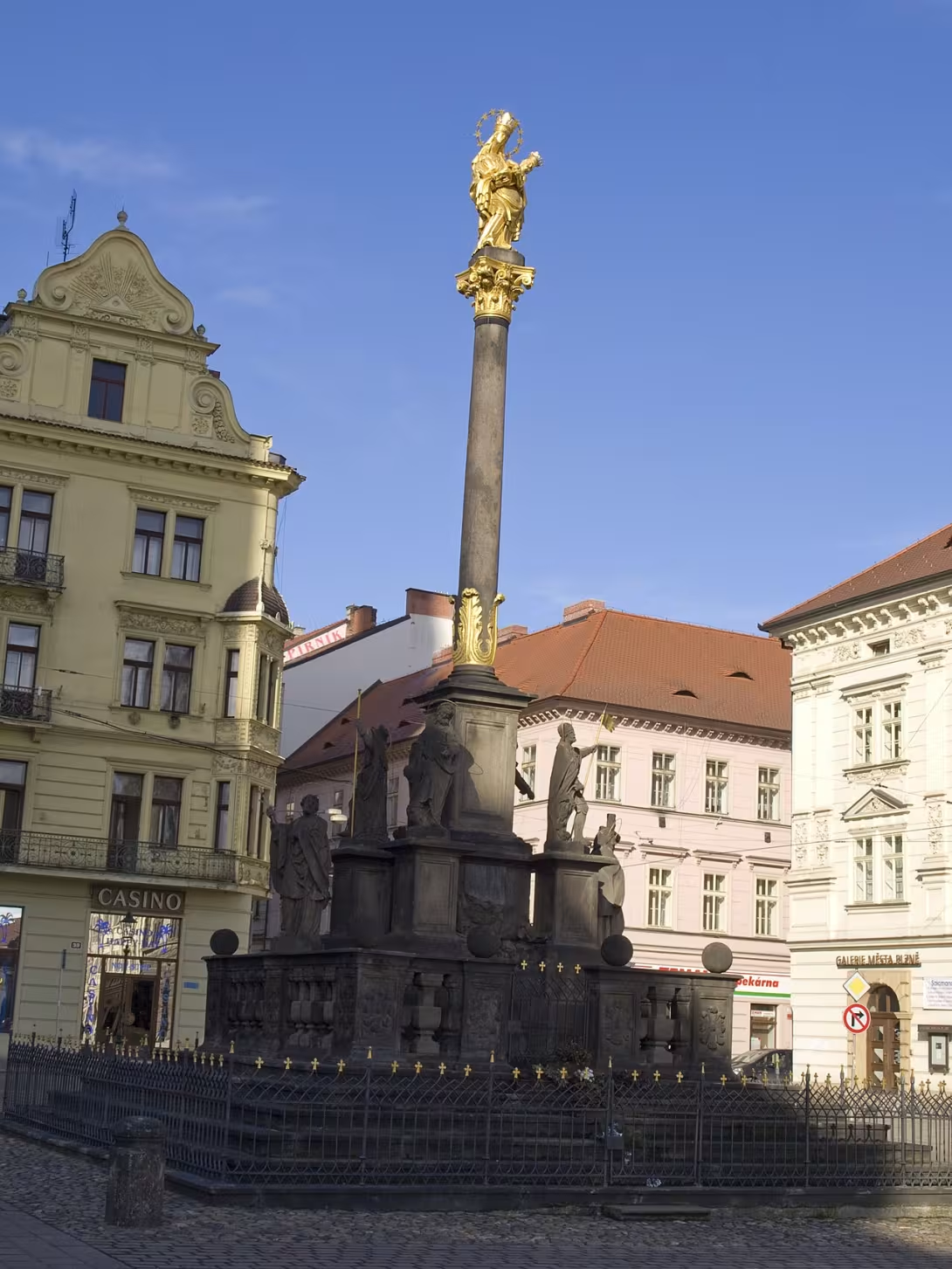
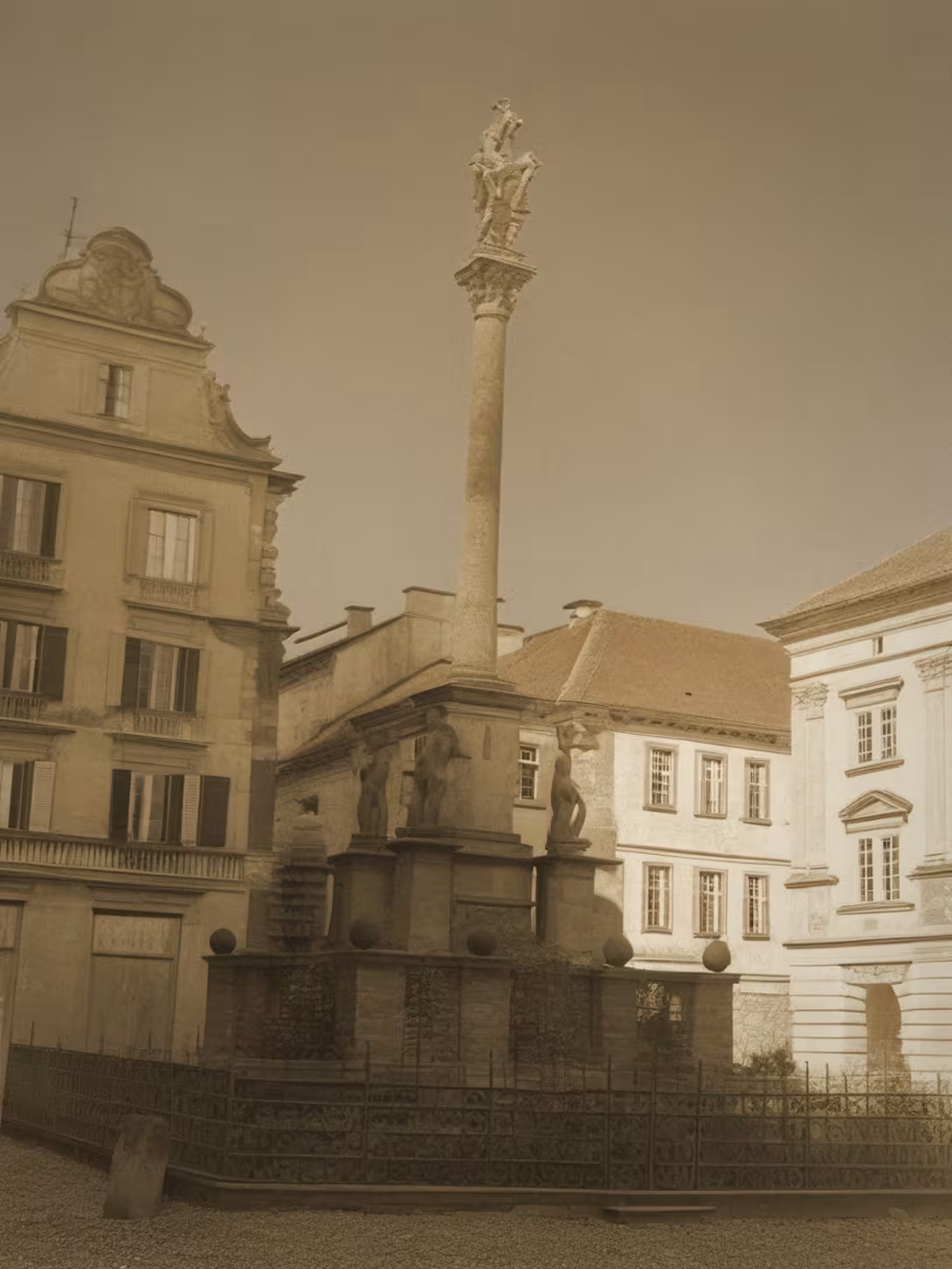
The historical appearance on the left is an AI-generated visualisation and serves as inspiration only.
Historical milestones
- 1680
- Laying of the base stone
- 1681
- Completion of column construction
- 1714
- Addition of the statues of saints after averting the second plague wound
- 1891
- The formation of the fence including the goal
- 1958
- Protection as a cultural monument of the Czech Republic
Architectural development
The column has a three-stroke base and a cylindrical blade. In 1891 an additional fence was created with a goal. In 1714 new statues of saints were added to the balustrade.
Historical events
september 22, 1680 - the ceremonial procession and promise of the city council; 7 november 1680 - laying of the base stone; 1681 - completion of construction; 1714 - addition of statues of saints; 1958 - declaration for cultural monument.
Owners
City Council of Pilsen
Points of interest
- The Marian column is a Baroque work from 1681, which was created as a thank you for ending the plague epidemic. - The architectural monument refers to a pattern from Old Town Square in Prague. - The top of the column is the statue of the crowned Madonna with Jesus, which is a free replica of the Gothic Pilsen Madonna. - The acantic base of the blade still shows the mark of the stonemason master J. Meilík. - The last extensive reconstruction of the sculpture took place in 2020- 2021.
Guide
Show guide text
This text was created by artificial intelligence and has not been editorially reviewed. It may contain inaccuracies.
Welcome to the heart of our city. You're standing in the Republic Square, in his northwest corner, right outside the impressive Imperial House. In front of your eyes stands the Marian Column, a monumental witness to ancient history, bearing a deep story of hope, faith and deep gratitude. Feel the atmosphere of this place where the daily movement of the city meets with the quiet and noble presence of this historical work. This monument is not just a stone building, it is an expression of the human spirit that sought light in difficult times.
Let us now return together to the time when this pillar was created, to a period that was very difficult for our city. Centuries ago, the country was walked by an invisible and deadly enemy, a plague epidemic that brought fear and uncertainty to every house. People were looking for protection and direction, looking for a way to express their relief when the dark times finally came to an end. This monument was erected as an expression of deep gratitude for the fact that the plague was averted. The whole process of the creation of this work was planned into several important stages. The first stones were laid for that purpose in the year one thousand six hundred and eighty. The work continued and in the year one thousand six hundred and eighty one the construction of the column itself was completed. But history kept coming. When a few decades later, in the year one thousand seven hundred fourteen, a second plague appeared again, people were researching for a connection with the heavens, and thanks to this, the work was supplemented by other statues of saints standing here today. In this way, the column became a layered story that grew with every new experience of the city.
Now pay attention to the very form of this work and what you're seeing right now. The column is exposed in a noble early Baroque style, which is evident in its dynamics and the way it operates. If you look at its overall form, you can see a clear reference to the pattern from Old Town Square in Prague. It is fascinating how the creators decided to transfer some of Prague's glory here to Pilsen, creating a spiritual connection between these two important cities. Now look up to the very top of the column. That's where the most important and impressive are. The highlight is the statue of Madonna, which is crowned and in her arms holds Jesus. This statue is not a random piece, it is a true form, i.e. a free replica, the older, Gothic Pilsen Madonna. Feel the beautiful connection between the ancient medieval art and the Baroque splendour that meets here. On the column you can see also fine and rich decorative elements, such as ornaments resembling the leaves of the acant, which provide the whole part with an organic and lively touch.
This magnificent work is behind the particular people whose names we now remember thanks to this monument. Architects like Jan Milich, Kristián Widmann or Martin Novák had to combine their artistic vision with a huge technical skill to stand firm for centuries. In the history of this place there are also other important personalities that have been associated with the construction and the Tsar. Names such as Alexius Čapek, Pavel Martinec or Cyprián Frozín are part of this historical fabric. Even names like Lazar Widmann are firmly involved in the history of this place. Each of them contributed to the fact that this pillar is not only a stone, but a living witness to human effort and beauty in times of greatest difficulty.
You might find this interesting thing that gives this place another dimension. Even though the world around it was constantly changing, new times were coming, political systems were changing, and everything was supposed to go away, this pillar was still there. It's a symbol of resilience. And to ensure its future for future generations, since one thousand nine hundred and fifty eight, this monument has been protected as an important cultural monument of the Czech Republic. This tells us how much we value our heritage as a society and how important it is to keep these traces of the past.
Now that you have better known this monument and understood its depth, I suggest you continue your walk around the inner city. Explore further corners, look at the facades of buildings and perceive the spirit of history that floats at every step in Pilsen. Thank you for spending this moment with us at the Marian Column. We wish you a beautiful and inspiring journey through the next survey of our city.
Tips for visitors
The best time to visit the Marian Column is in the early afternoon when there are fewer people and light provides beautiful photos. The Baroque details are best visible in clear weather.
Parking in the vicinity of the Republic Square is limited, therefore we recommend using public transport. Bus and tram stations are nearby, which ensures comfortable access to the monument.
When visiting, bring sun protection clothes and water. It may also be useful to have a map or use GPS to easily find your way to the Marian Column.
The best place for photography is in front of the memorial itself, where light falls directly from the east. Also interesting are the angles from a distance which include the Imperial House and the Cathedral.
Other historical monuments such as St. Bartholomew Cathedral can be visited in the vicinity of the Republic Square. The Imperial House, which offers various educational activities, can also be interesting for families with children.
Businesses nearby
Do you run a restaurant, accommodation, shop, museum, rental, wellness or other visitor service near this monument? Show yourself directly to the people heading to it — this is how they will see you in the app and on the web:
Events nearby

Zdroj akcí: otevřená data měst a obcí ČR (Národní katalog otevřených dat) a kalendář akcí Národního památkového ústavu.
Nearby
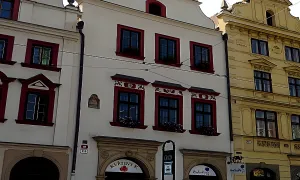
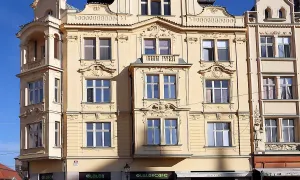
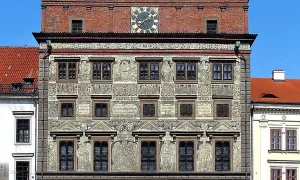
Náměstí Republiky, Císařský dům, katedrála svatého Bartoloměje.
Accommodation nearby
Trips and activities nearby
Guided tours, tickets and activities nearby from GetYourGuide
Affiliate link: if you buy from the partner, we may receive a commission. The price for you does not change.
Search tours and activities →Themed route
First Cathedral of St. Bartholomew, religious temple. This magnificent building dominates the whole area with its height. 2. Imperial house, historical building. This building represents an interesting look in this area. 3. The square of the Republic, the urban area. It's the main place that connects different parts of the city. 4. Marian column, monument. This revered object is the main point of your path.
Seasonal recommendations
Spring: In the spring period, the Marian pillar in Pilsen appears in a new light when the surrounding nature is revived by flowering trees and bushes. Sunset illuminates the monument with fine colours, which gives the atmosphere a romantic touch. During this period it is recommended to visit the memory late in the afternoon, when the special light is best reflected. Despite the morning cold, the day is gradually warm, so it is advisable to wear layered clothes. Her visit to the spring season can be surprisingly quiet without large crowds.
Summer: In the summer period, the Marian Column becomes the center of attention, where the surroundings are full of life and heat. The sun illuminates the monument in the best light, which increases its historical beauty. During this period more visitors may appear, especially on Friday and Saturday afternoon, so it is advisable to visit the memory earlier in the afternoon. Thanks to warm days, it is recommended to wear light clothes and bring a hot drink with you.
Autumn: In the autumn period, the Marian Column offers a view of the surrounding nature in the coloured garment of the leaves. The sun illuminates the monument with weaker rays, which gives the atmosphere a melancholy touch. This period is ideal for a quiet walk without large crowds, because many people have reached in before winter cold winds. It is advisable to wear warmer clothes and plan to visit the monument on sunny days when visibility is best.
Winter: In winter, the Marian pillar is dazzling in the light of the ice rays and pale moonlight. The atmosphere is calm, often covered with snow, which gives the memory extraordinary beauty. This time is suitable for visiting in the early afternoon when the temperature is milder and the monument is dazzling. It is important to wear warm clothes, especially because opening hours may be shorter due to winter conditions. Despite the cold this season you can enjoy a quiet and comfortable walk without fear of crowds.
Visualizations and artistic views


The visualisations are generated by artificial intelligence and serve as inspiration.
Photos from the area
Real photos taken near the monument

Zdroj a licence jsou uvedeny u každého snímku.
Tips from visitors
No tips yet. Be the first!
Log in and add your tip.
Sources and literature
Photos: Honza Groh (Jagro) / CC BY-SA 3.0 — Wikimedia Commons. The author and licence also appear when you hover over the image.
Faktickým podkladem tohoto textu byl článek na Wikipedii, jehož autory jsou přispěvatelé Wikipedie. Článek je dostupný pod licencí CC BY-SA 4.0.
Location on the map
Příběhy a pověsti
Legendy, pověsti a příběhy spjaté s touto památkou

Fotografie návštěvníků
Zatím žádné fotografie. Buďte první, kdo přidá fotografii z návštěvy!
Log in a přidejte svou fotografii nebo hodnoťte.
Za ověřenou návštěvu v aplikaci získáte víc bodů — poznáme podle GPS, že jste na místě.
Reviews and comments