






Nosticova 6 House
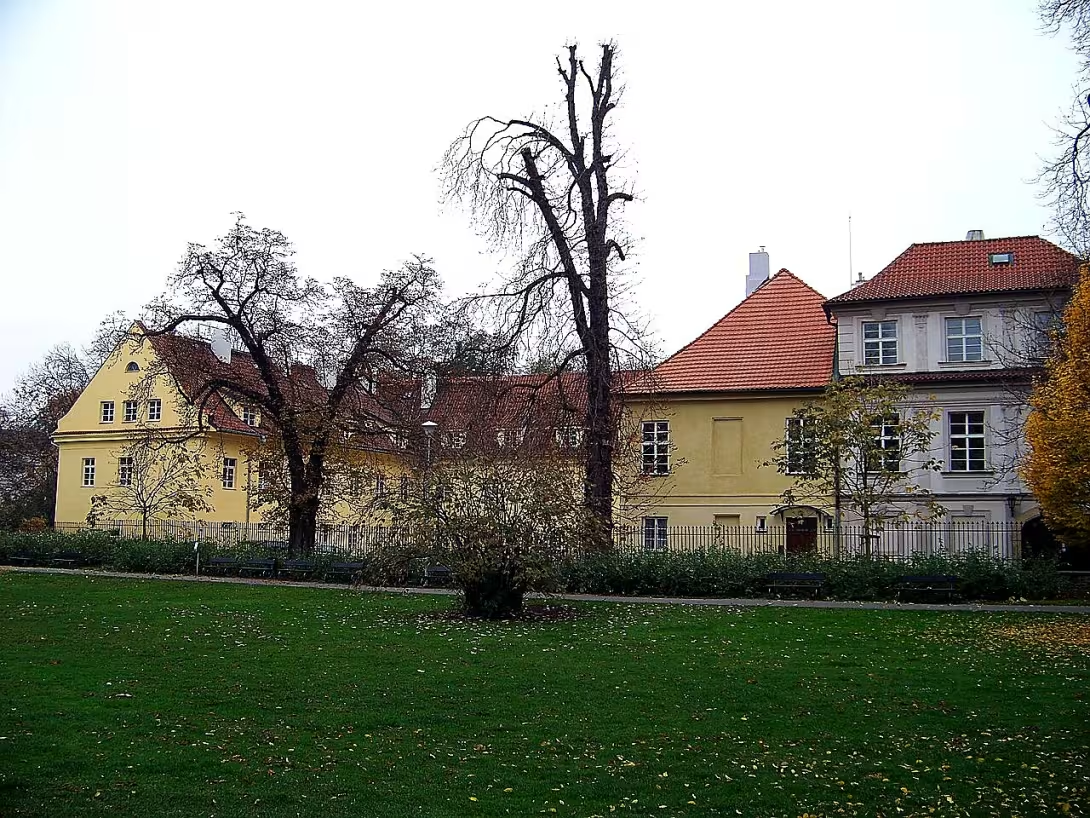
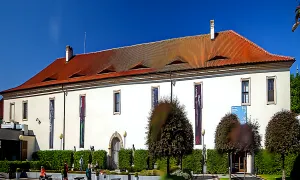
The Broken Mill, also known as the Maltese or Wendlinger Mill, is a former water mill on the left bank of Certovka on the Prague Malá Strana. This cultural monument is an important evidence of the industrial history of the city. Over the centuries, it has undergone a transformation from mill operation to aristocratic residence to a large laundry room.
The first written mention of the building dates back to the year 1400, when it was charged to the Johanite commendation at the Virgin Mary under a chain. During Hussite wars, the mill burned down and was marked as burned and destroyed in the springs. Subsequently, it was transferred to an inheritance lease on condition of renewal. While the development of the mill is linked to the development of urban infrastructure in the 14th century, later baroque modifications reflected the transformation of Little Party into an aristocratic neighborhood.
The original brick building was single storey. The mill and residential area were located under the same roof, but were available separated. The water was coming to the mill with the drive. In the 17th century, probably for the possession of Baron John George Wendlinger, the building was converted into a noble residence. The basic building modifications took place between 1765 and 1766 for the needs of Count Nostice's laundry room. That's when the partitions were demolished and the passports replaced. Another reconstruction according to the plans of architect K. Pollaka took place in 1834. Until today, only the remains of the refrigerator have been preserved from the original technology.
The building's property history is colorful. After the Johanite commendation of the mill in 1532 he bought the miller Pavel Zlomek, from which the name Zlomkovský is derived. In 1583 the owner became Vilém z Rožmberka. In 1639 the object was sold together with two neighboring houses, laundry and a halter for fish. Since 1684 it was owned by the Wendlinger family, in 1810 it was joined by Nostitz to its palace complex and since 1924, the building is owned by the State under the administration of the Ministry of Education.
The operation of the laundry room in the 18th century is one of the attractions. In 1782, it was equipped with 10 copper boilers, one iron boiler and 43 laundry facilities, with 10 almonds available. This establishment was transferred to the building from the house No. 470 / III.
Today, the construction serves as a reminder of the technical development and economic background of the small-scale palaces. As a protected monument, it offers insight into the history of Prague's mill industry and the transformation of the use of buildings in the city centre. Walk around Certovka and adjacent historical objects allows you to understand the importance of this location in the context of the development of Prague architecture.
Then and now
Drag the slider to compare how the landmark may have looked when it was built with the view today.
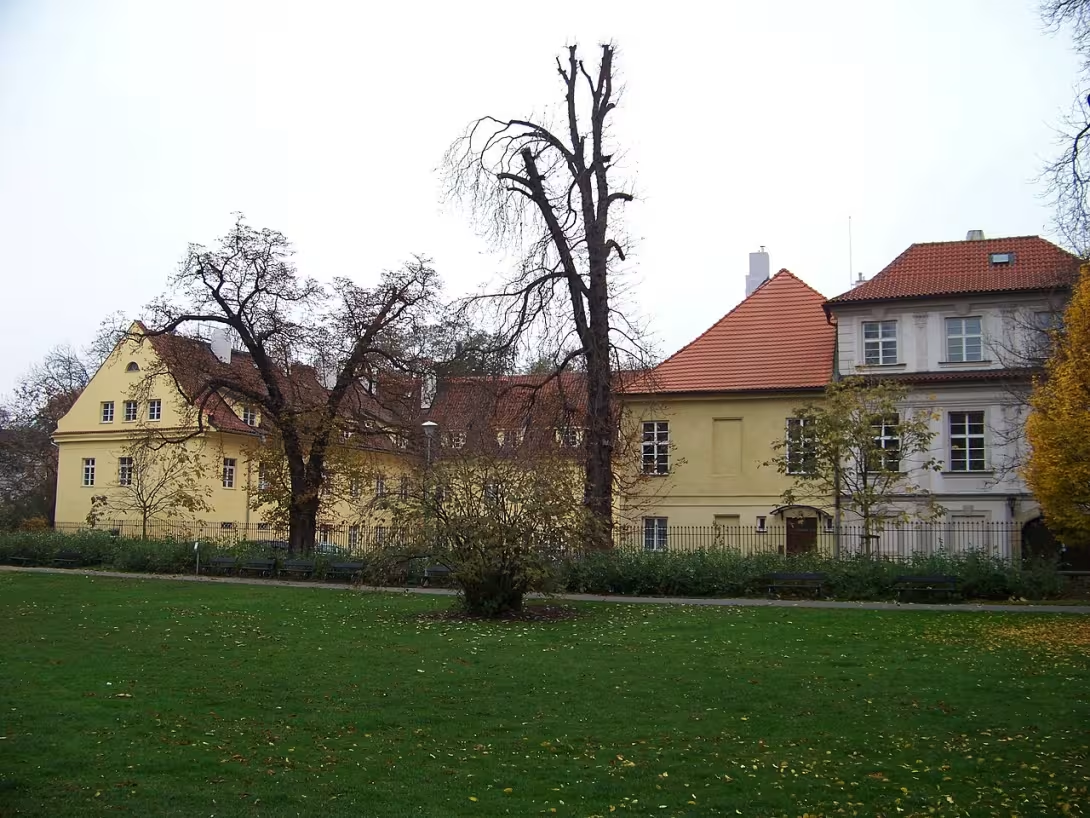
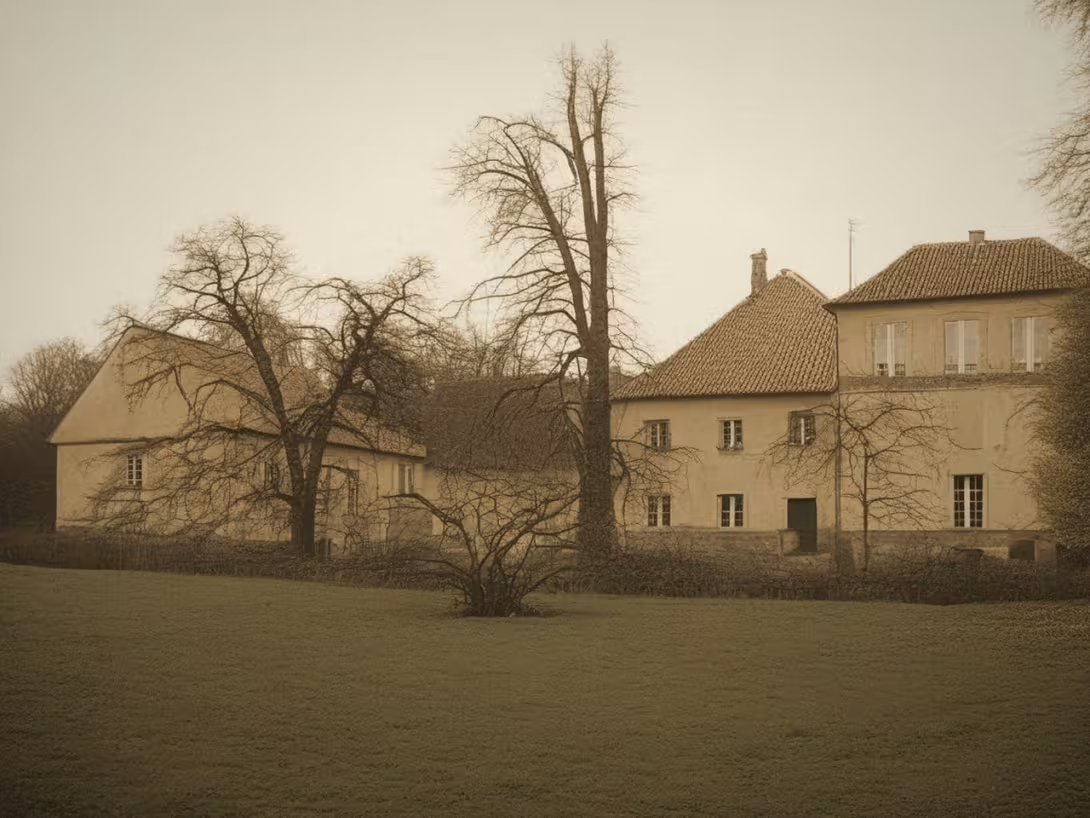
The historical appearance on the left is an AI-generated visualisation and serves as inspiration only.
Historical milestones
- 1400
- The first written mention of the mill as a burdensome Yohanite commendation.
- 1532
- The mill is bought by the miller Pavel Zlomek and the object is named Fromkovsky.
- 1766
- Finishing the reconstruction to Count Nostice's laundry with ten almonds.
- 1924
- The building is transferred to state property under the Ministry of Education.
Architectural development
The originally walled one-storey mill was converted into a noble mansion in the 17th century. In 1765- 1766 there was a major adjustment for the needs of the laundry room, during which the partitions were demolished and passports replaced. In 1834 another reconstruction was carried out according to the plans of K. Pollaka.
Historical events
Burning down the mill during Hussite wars, rebuilding into a noble mansion in the 17th century and setting up a large laundry room by Count Nostic in 1765-1766.
Owners
Johanite commenda, Pavel Zlomek (from 1532), Vilém z Rožmberka (from 1583), family Wendlinger, family Nostitz (from 1810), state (from 1924).
Points of interest
- The building has undergone a transformation from mill operation to aristocratic mansion to large laundry. - During Hussite wars, the mill burned down and was marked as burnt and destroyed in the springs. - In 1782, the laundry service was equipped with 10 copper boilers, one iron boiler, 43 laundry and 10 almonds. - Only the remains of the fridge have been preserved from the original mill technology until today. - In 1639, the building was sold together with two neighboring houses, laundry and a halter.
Guide
Show guide text
This text was created by artificial intelligence and has not been editorially reviewed. It may contain inaccuracies.
Welcome to the Lesser Side, in one of the most atmospheric corners of Prague, where history intersects with the noise of water in every stone. You're standing in front of a building in Nostico Street, number six, a place that carries layers of many centuries. You see before you the object we now know as the Broken Mill. Stop for a moment, feel the surrounding silence and imagine what this place looked like centuries ago, when there were not only the footsteps of tourists, but there was a rhythm of hard work, the rumbling of the water wheel and the noise of the water flowing from the left side of the Devil. It was this river that was the life nerve of the entire complex and determined its fate from the very beginning.
Let us now return together in time very far, until a year ago a thousand four hundred. The first written references lead us to the time when this mill was charged to the Johanite commendation. Imagine the knighthood of the Johanites, who influenced the local economy by their administration and influence. At that time the mill was an essential part of every community, a centre where the grain turned into flour and where people from all around met. It was a time of beginnings when the construction was much easier, but its strategic position at the water made it very valuable.
But the history of this place is full of dramatic twists. If we look at the period of Hussite wars, we will find that the mill has not passed this stormy time without a scar. In period springs, this object is marked as burned and destroyed. Imagine the chaos, the flames rising to the sky and the silence that followed the demise of a prosperous operation. However, the building was able to be reborn from the ashes, indicating its importance for Prague's Little Party.
The breaking point in the history of the monument occurred in the year one thousand five hundred thirty-two. This year the mill was purchased by the mill Pavel Zlomek. It is thanks to him that the object has acquired its name today, the Broken Mill. Pavel Zlomek wasn't just the owner, it was the person who put new energy into the place. At that time the mill was once again a key point in the local industry. It is fascinating to think how the names of particular people, such as Pavel Zlomek, can enter the city map for hundreds of years and become part of its identity.
Now pay attention to the building itself. Look at its facade and see its overall appearance. Although the object has changed many times over time, its architecture reflects changes in the functions it has served. In connection with the building appears the name of architect K. Pollaka, who helped shape it. Notice how the building fits into the narrow alleys of the Little Side and how closely it is connected to the water flow. Do not just look here for rough walls, but try to read the transition from purely industrial traffic to a more representative seat.
This object has undergone an incredible transformation. The original water mill gradually became an aristocratic mansion and then turned into something completely different. In the year one thousand seven hundred sixty-six, a large reconstruction was completed, which made the building the Earl of Nostice's laundry. Imagine the contrast. Instead of flour dust, water vapours and the smell of soap started floating here. Count Nostitz built a modern facility of his time, which was equipped with ten almonds, which were at the time machines for ironing and extermination of fabrics.
If we try to figure out how this laundry room worked, we have to look at the details of 1,000 seven hundred and eighty-two. At that time, the laundry was equipped with ten copper boilers and one large iron boiler. A total of three and forty washing paddles were available. Try to imagine the noise, the hot couple filling the room, and the dozens of hands that gave out fine fabrics and linen plates for noble families every day. It was a real purity factory that used the power of the Devil's water to operate its machines.
This place is associated with the names of prominent personalities who at different times influenced Prague and its surroundings. In addition to the already mentioned Pavel Fránek and Ervinus Nostitz, figures like Vilém z Rožmberka or Jan Jiří Wendlinger appear here in history. Each of them has brought to the history of this house a different story, a different ambition and a different view of what this strategic position by the river could serve.
The interesting thing that might interest you is the constant variability. Few buildings in Prague have experienced the same range of changes in functions as the Broken Mill. From the religious administration of the johanites, to the craftsmanship of the miller, to the luxury of the noble manor, to the hard industrial work in the laundry room. It's basically a mirror of the social development of the entire city. From medieval craft to baroque ambitions to modern government.
The last major change in property occurred in the year one thousand nine hundred twenty-four, when the building was transferred to state property under the Ministry of Education. By doing so, the chapter of private ownership of noble families has definitively closed and the building has started to serve other purposes while maintaining its historical character. Today the building is protected as a real cultural monument, which means that its walls are guardians of the memory of Prague industry and craft.
Now, if you look at the building again, you don't just see the house on Nosticova Street, but you see a place where water, fire, work and power are mixed. You see a place that survived wars, fires and regime changes. The Broken Mill is a silent witness to how Malá Strana evolved from the suburbs with mills and craftsmen into one of the most prestigious centres of the European city.
Thank you for accompanying me on this short journey through time. I hope you could imagine the noise of a water wheel and a couple of copper boilers. Now I invite you to explore the area further. Walk along Certovka, see its current and look for other traces of ancient Prague that are hiding in these narrow streets. I wish you a pleasant continued journey and many new discoveries in the heart of our city. Goodbye.
Tips for visitors
{'best _ cas': 'We recommend a visit in the morning during the working week when the Chertovka location is the quietest and avoid crowds of tourists, allowing you to better perceive the historical atmosphere of the mill.', 'transport': 'The location is located in the historic centre where the entry of vehicles is restricted. We recommend to use public transport and get off at the nearest stop within walking distance, or take a walk from the centre of Mala Strana.', 'equipped with _ and _ photo': 'Take comfortable shoes for walking on historic tiles. For photography is the ideal soft morning light, which beautifully depicts details of the mill and water level of the Certovka.', 'everything': 'In the immediate vicinity you can visit the picturesque Certovka, walk on the Camp, admire the architecture of the Palace of Nostitz or visit the historical church of the Virgin Mary under the chain.', 'family': 'For families with children, the location is suitable as part of a walk beyond history. The terrain is flat, but due to historical tiles we recommend sports models with larger wheels for prams.'}
Businesses nearby
Events nearby

Zdroj akcí: otevřená data měst a obcí ČR (Národní katalog otevřených dat) a kalendář akcí Národního památkového ústavu.
Nearby
The Devil, the Camp, the Nostitz Palace, the Church of the Virgin Mary under a chain.
Accommodation nearby
Trips and activities nearby
Guided tours, tickets and activities nearby from GetYourGuide
Affiliate link: if you buy from the partner, we may receive a commission. The price for you does not change.
Search tours and activities →Themed route
Certova Type: Historical water sewerage and natural monument. Why is it worth a visit: It is a unique technical building from the 19th century, which still serves its function as a drainage of rainwater. Walk along its bank offers a quiet atmosphere and a view of the historical infrastructure of Prague.
Church of the Virgin Mary under the chain Type: Baroque sacral monument. Why is it worth a visit: This church is an important historical place where ceremonies connected with the crowning of Czech kings took place. Its interior and history are closely linked to the fates of Czech statehood.
Palác NostitzZ Type: Historical building and cultural monument. Why is it worth a visit: The representative residence of the nobility Nostici offers insight into the life of the Prague aristocracy. The architectural details and history of the building illustrate the importance of this family in Czech history.
Nosticova 6 (mill) Type: Historical mill and main destination of the route. Why is it worth a visit: This monument presents a demonstration of traditional mill craft and technique. It is a key point that links industry history with surrounding architecture and water flows.
Kampu Type: Local historical zone. Why is worth a visit: This area around the main destination allows you to explore local urban development and the atmosphere of the village Malá Strana. It serves as a natural conclusion or the beginning of a walk that complements the image of the historical environment.
Seasonal recommendations
Spring: In the spring period Nosticova 6 is charming with its vibrant greenery and flowering bushes, which add a vital touch to the historical architecture of the mill. Sun rays illuminating the roof cross and sweet floral odour create a pleasant atmosphere that attracts visitors to walk. This is an ideal time to visit because crowds are less than in the summer and open doors allow comfortable access to all attractions. It is recommended to wear clothes suitable for a mild temperature, perhaps with a light jacket for any cold morning or evening.
Summer: During the summer period Nosticova 6 gets special shine thanks to long, light days and warm sun, which emphasizes historical architecture. The atmosphere is full of life with many visitors from around the world, which adds exciting dynamics to the walk. For this period it is appropriate to visit early morning or evening to avoid the main crowds during the day. It is advisable to prepare light clothes and water for the journey because the temperature may be high.
Autumn: In autumn months the Nosticova 6 melancholic charm takes place with colour palette leaves and lighter days. This season is ideal for visiting because the crowds are less than in the main summer period, which allows for a more intimate experience of historical monuments. The atmosphere becomes calm and resembles the orphans' moods, which are supported by solar and cloud-heating days. It is recommended to wear multiple layers of clothing to change the temperature and possibly protect the skin against moisture.
Winter: In winter, Nosticova 6 takes a unique look, where the surrounding area is covered with snow or freezing clouds, adding a romantic atmosphere to historical architecture. Open doors are often limited due to lower temperatures, so it is good to know about the current conditions before visiting. This period is ideal for those who seek a quieter experience without large crowds. It is necessary to dress with warm cups and jackets and have protection against rain if possible, as the weather can suddenly be variable.
Visualizations and artistic views


The visualisations are generated by artificial intelligence and serve as inspiration.
Photos from the area
Real photos taken near the monument


Zdroj a licence jsou uvedeny u každého snímku.
Tips from visitors
No tips yet. Be the first!
Log in and add your tip.
Sources and literature
Fotografie: ŠJů (cs:ŠJů) / CC BY-SA 3.0 — Wikimedia Commons. The author and licence also appear when you hover over the image.
Faktickým podkladem tohoto textu byl článek na Wikipedii, jehož autory jsou přispěvatelé Wikipedie. Článek je dostupný pod licencí CC BY-SA 4.0.
Location on the map

Příběhy a pověsti
Legendy, pověsti a příběhy spjaté s touto památkou
Fotografie návštěvníků
Zatím žádné fotografie. Buďte první, kdo přidá fotografii z návštěvy!
Přihlaste se a přidejte svou fotografii nebo hodnoťte.
Za ověřenou návštěvu v aplikaci získáte víc bodů — poznáme podle GPS, že jste na místě.
Reviews and comments