



Nová strašnická škola School building
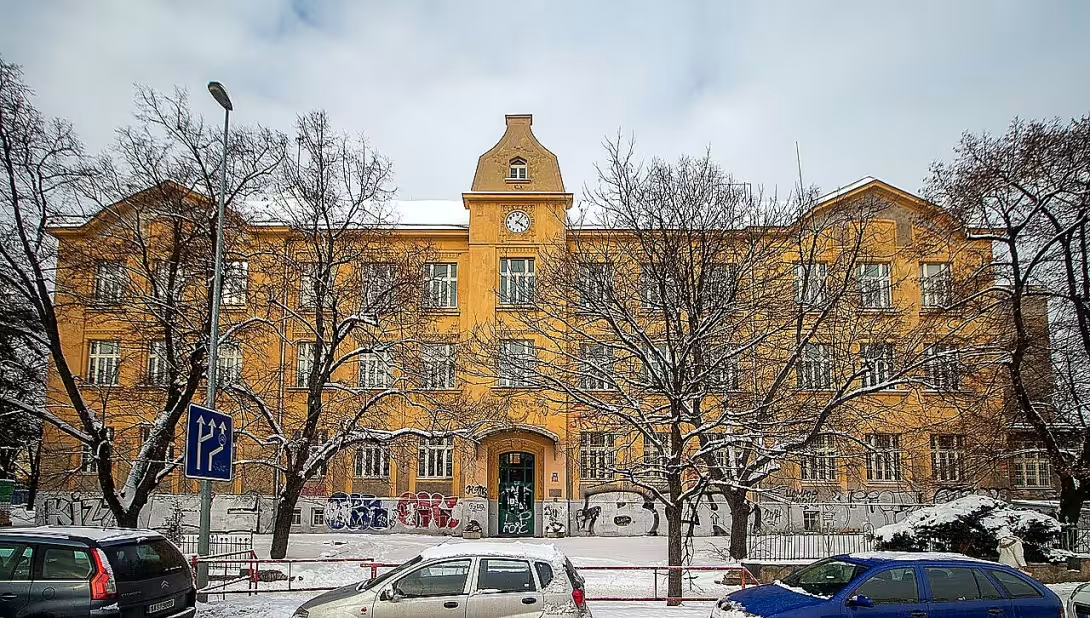
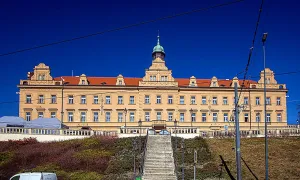
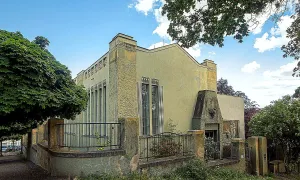
The primary school in Olšiny in Prague 10-Strašnice, known as the new scary school or among the locals as an old school, is an important Art Nouveau building built in 1909 according to the design of architect Josef Domko. Located in the neighbourhood of Strašnická Metro Station and since 2014 it has been registered as a cultural monument. After a complete reconstruction completed in 2025, it serves its original purpose again.
The main building of the school was built in Art Nouveau style according to the design of Josef Domka. It was established in a period when the Czech countries belonged to the Austrian-Hungarian monarchy and the Art Nouveau movement culminated in the construction of Europe, which affected many public buildings. At that time, the development of modern education and urban architecture took place. The building development continued in the years 1927-1929, when the purist part was added.
The building has undergone various phases of use during the twentieth century. At the end of the Second World War in May 1945, the staff of the armed actions of the Prague May Uprising was based here. In the post-war period, she hosted a special and elementary school for pupils with behavioural disorders associated with high school. The owner is the City of Praha 10.
After 2009 the building was unused and gradually decayed. She was speculated on her involvement in the new building of Prague City Hall 10, but in the end another building was chosen for this purpose in Vinohradská Street Pod Viničí. The break came in 2017 with the initiative of teachers and parents who sought to open the school in these premises. In May 2021, the representative of the MČ Praha 10 expressed its intention to issue a public contract for reconstruction, which was launched on 27 May 2022 and included reconstruction of the building and adjacent land. The reconstruction was completed in 2025 and on 1 September there began teaching for the first to fourth years, with a plan of gradual expansion to the entire first and second stages.
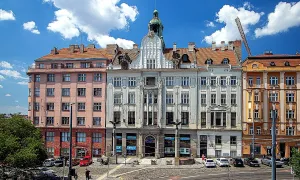
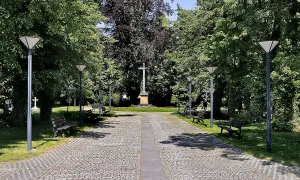
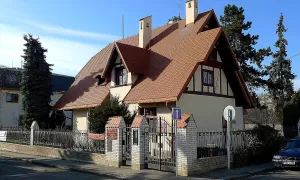
The surrounding area of the school offers interesting places connected with the history and present of the Strašnice. There is a metro station in the vicinity of Strášnický, the Cultural House of Barricades known as Barča, Bečvář's courtyard and former Bečvářová's villa, the new Gutova Elementary School of 1962 and also the former Horror School, known as the manor.
Nová strašnická škola represents a valuable example of Art Nouveau architecture and is associated with important historical events, including Prague's May uprising. Its rescue and restoration shows how successful it can be to build on the original purpose of historical buildings, making it interesting for a visit to explore architectural changes in Prague 10.
Then and now
Drag the slider to compare how the landmark may have looked when it was built with the view today.
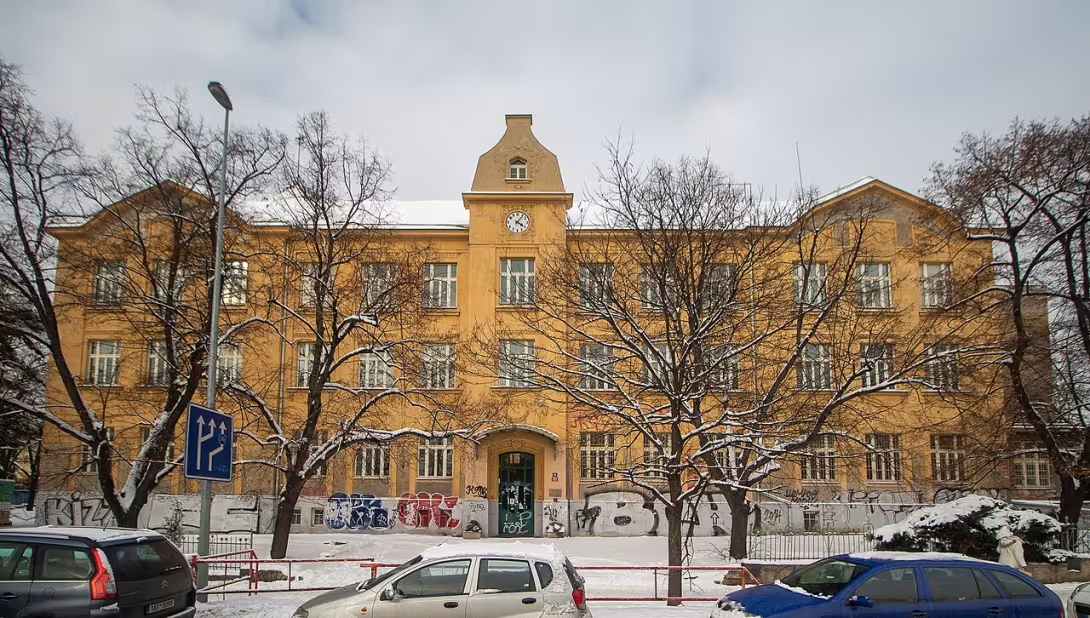
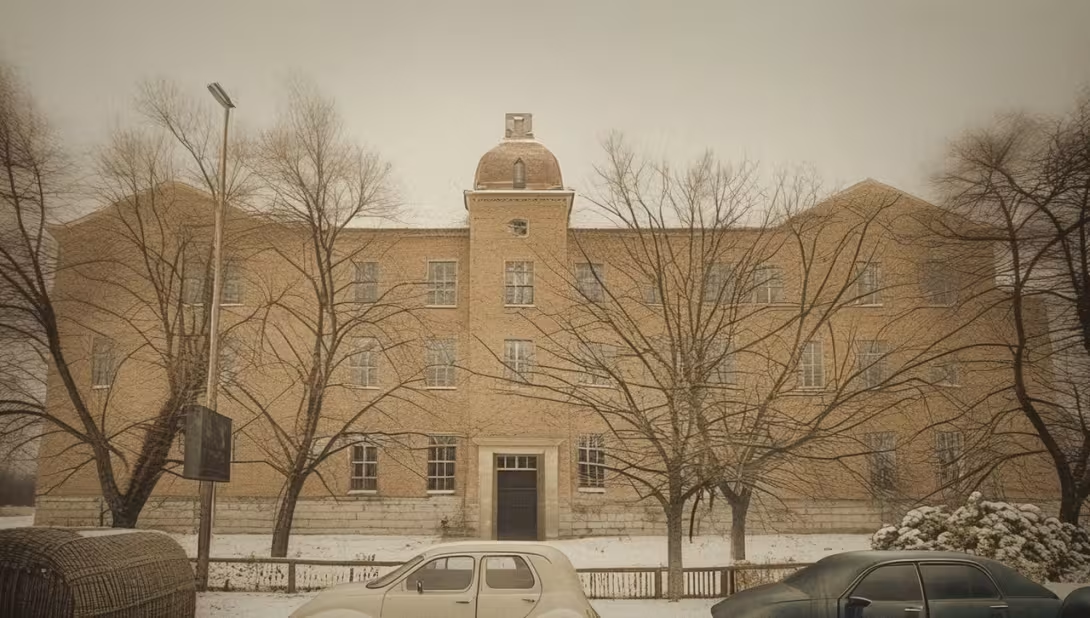
The historical appearance on the left is an AI-generated visualisation and serves as inspiration only.
Historical milestones
- 1909
- The position of the main building of the school in the Art Nouveau style according to the project Josef Domka.
- 1927
- The construction of a purist extension was completed in 1929.
- 1945
- The staff of the Prague May Uprising had its seat at the school at the end of World War II.
- 2014
- The Art Nouveau building of the school was registered as a cultural monument.
- 2025
- Completion of the overall reconstruction and start of teaching in the renewed school.
Architectural development
The main building was built in Art Nouveau style in 1909. A purist extension was added to it between 1927 and 1929. After 2009, the building was fading, but in the years 2022 to 2025 its total renovation and reconstruction of adjacent land took place.
Historical events
In 1909 the main building of the school was built. In May 1945 there was a staff of Prague's May Uprising. On 27 May 2022, a complete reconstruction of the building was started, which was completed in 2025.
Owners
City area Praha 10
Points of interest
- The primary school in Olšiny known as the new scary school is a Art Nouveau building built in 1909 according to the design of architect Josef Domko. - The building was the headquarters of the staff of the armed events of the Prague May Uprising in May 1945. - It's been registered as a cultural monument since 2014. - After reconstruction completed in 2025, it serves its original purpose again. - It represents a valuable example of Art Nouveau architecture and is associated with important historical events, including Prague's May uprising.
Guide
Show guide text
This text was created by artificial intelligence and has not been editorially reviewed. It may contain inaccuracies.
Welcome to the 10th district of Prague. Right now, you're standing in front of a building that carries a deep story of education, dramatic history and incredible transformations. Take your earphones off for a while and put them back on, because we're gonna take you on a journey through time. In front of you is a building that, after long years of decaying and uncertainties, comes back to life and today serves its original purpose as a primary school. Let us dive together into her rich history and explore every detail that this extraordinary monument offers.
When you look closely at each other, you see a magnificent structure whose roots go back to the first decade of the last century. The year was nineteen hundred and nine when this main building was built. Its form was not created by accident, but it came from the ideas and plans of a capable creator who was the architect Josef Domek. The development of this district in Prague called for modern spaces for children's education, and thus a building was built to serve many future generations. The architectural concept bears the distinctive features of the then modern artistic direction, which celebrated beauty, fine lines and connection of utility with aesthetics. Pay attention to the overall sounds of the facade and the proportions of the building, which, even after over a hundred years, give respect and admiration.
Less than two decades later, namely in nineteen hundred twenty-seven, work started to develop this place further. That is when the construction of the new extension, which was successfully completed two years later, started in nineteenth century. This new section sensitively supplemented the original architectural basis and extended the possibilities for teaching an ever-increasing number of pupils. The building grew along with the city and became a natural center of social and cultural events in the surroundings.
The darkest, but also the most famous, chapter is connected to this building in the troubled days of the end of World War II. In May, nineteen hundred forty-five, instead of a quiet school education, became the center of major historical events. This school served as the headquarters of the armed forces during the Prague May uprising. In these walls, the fate of many people was decided, steps were planned to be liberated, and the building was so indelibly written into the modern history of our nation. When you walk around these walls today, try to close your eyes for a moment and imagine the tense atmosphere of the spring days of the year forty-five, when people here fought for freedom with their own lives.
Let's move forward in time. For decades, the building was fulfilling its mission, but there was also a period of decline. After a year of twenty-sests, there was a long period of decaying, when the building was losing its former glare and glory, and no one was sure at that time what fate this important building was facing. Yet there were no people who could break her staff. The breaking point occurred in the year twenty-sixteen, when this Art Nouveau building was officially listed as a cultural landmark. This recognised its huge historical and architectural value for the whole city and the Republic.
A real miracle in the form of a rescue and a new breath then came recently. Between twenty-two and twenty-five, the whole building underwent a major and challenging reconstruction. The dilapidated spaces had a thorough restoration, which restored the construction of its original beauty, but also equipped it with everything needed for modern teaching of the twenty-first century. The result of this huge effort is that in the year twenty-five, the overall reconstruction was completed and the children's laughter and the excitement of teaching returned to the school. Today, this monument is once again proud to stand in its place and perform the task for which it was created over a century ago.
Stop for a moment and feel the atmosphere of this place. You are at the address where the art of the old masters is enacted with the drama of great history and joy from a new beginning. We believe that this stop has been rewarding for you and that with your eyes open, you will explore other interesting places in our capital. Thank you for listening, we wish you a wonderful rest of the day and goodbye to other history stories from Prague.
Tips for visitors
Search of Art Nouveau Building The new horrors schools in Prague 10 are best enjoyed during the morning hours, when the sun illuminates the rich historical decoration and architectural details on the facade. Don't forget to take your camera with you for a walk, solid shoes for comfortable walking around, and according to current weather, also a headgear or umbrella. The best places to get great pictures are located right in front of the building, where there is a perfect view of the whole building and its historical surroundings, covered with morning or late afternoon light. If you go on a tour of the wider surroundings within 30 minutes' walk, you can visit the nearby Barricade Cultural House known as Barča, the historic Bečvář court, the remains of Bečvářová's villa, the newer building of the Gutova Elementary School built in nineteen hundred and sixty-two or older haunted building called the manor. For families with children, this area is great for a light walk associated with the discovery of local history, while in the surrounding area you will find plenty of space to relax and observe interesting buildings from various historical periods.
Frequently asked questions
Can the monument be visited?
The building is in use (offices, a school, shops and the like). The interior is generally accessible only during operating hours and tours are not usually offered; we have not verified the details. You can see the exterior from the street.
Where is the monument?
Location: Praha 10. The map on this page shows the exact spot.
Why is the monument protected?
It is listed in the Central List of Cultural Monuments of the Czech Republic as a cultural monument (register no. 1857811612).
Businesses nearby
Do you run a restaurant, accommodation, shop, museum, rental, wellness or other visitor service near this monument? Show yourself directly to the people heading to it — this is how they will see you in the app and on the web:
Events nearby

Zdroj akcí: otevřená data měst a obcí ČR (Národní katalog otevřených dat) a kalendář akcí Národního památkového ústavu.
Nearby
V blízkosti školy se nachází stanice metra Strašnická, Kulturní dům Barikádníků nazývaný Barča, Bečvářův dvůr a bývalá Bečvářova vila, nová Základní škola Gutova z roku 1962 a bývalá strašnická škola zvaná zámeček.
Accommodation nearby
Trips and activities nearby
Guided tours, tickets and activities nearby from GetYourGuide
Affiliate link: if you buy from the partner, we may receive a commission. The price for you does not change.
Search tours and activities →Themed route
1. metro station Strašnická (Transport Node) - Great place to start the trip thanks to easy availability. 2. The Cultural House of Barricades called Barča (Cultural Place) - Here you can see a place for different events. 3. a former school called castle (Historical building) - This construction represents an interesting historical element in the surroundings. 4. Bečvář's Court (Historical Place) - This area shows older architecture in this neighborhood. 5. Nová strašnická škola (others) (Main objective) - The main destination of your route, which closes the whole tour.
Seasonal recommendations
Spring: In spring, the surroundings of the school wake up and everything around them starts to green. The light is very fine and pleasant in this period, which highlights the shapes of the building without unwanted, sharp shadows. The best time for observation is in the morning. Dress with layers because the morning cold can quickly take turns with heat from the sun.
Summer: In the summer months, the sun is strong and creates strong, dark shadows on the facade. Nature around is dense and full of life. I recommend a visit in late afternoon, when the air is more pleasant and the colors are more saturated. Get ready with light and breathable clothes.
Autumn: Autumn brings a melancholy atmosphere and colours of gold and brown to the area. Morning fog can create a mysterious environment around the building. It is advisable to carry a waterproof jacket and shoes suitable for wet surfaces. The best light is in short afternoon hours.
Winter: Zimą makes the surroundings more peaceful and steep, with the predominance of bare branches of trees. The sun is low, creating long shadows on the ground and on the walls. For comfort, I recommend wearing a warm jacket, hat and gloves. The best is to come around noon when the lights are the most.
Visualizations and artistic views


The visualisations are generated by artificial intelligence and serve as inspiration.
Photos from the area
Real photos taken near the monument


Zdroj a licence jsou uvedeny u každého snímku.
Tips from visitors
No tips yet. Be the first!
Log in and add your tip.
Sources and literature
Photos: JiriMatejicek / CC BY-SA 3.0 — Wikimedia Commons. The author and licence also appear when you hover over the image.
Faktickým podkladem tohoto textu byl článek na Wikipedii, jehož autory jsou přispěvatelé Wikipedie. Článek je dostupný pod licencí CC BY-SA 4.0.
Location on the map
Příběhy a pověsti
Legendy, pověsti a příběhy spjaté s touto památkou
Fotografie návštěvníků
Zatím žádné fotografie. Buďte první, kdo přidá fotografii z návštěvy!
Log in a přidejte svou fotografii nebo hodnoťte.
Za ověřenou návštěvu v aplikaci získáte víc bodů — poznáme podle GPS, že jste na místě.
Reviews and comments