






Nový židovský hřbitov na Olšanech Cemetery
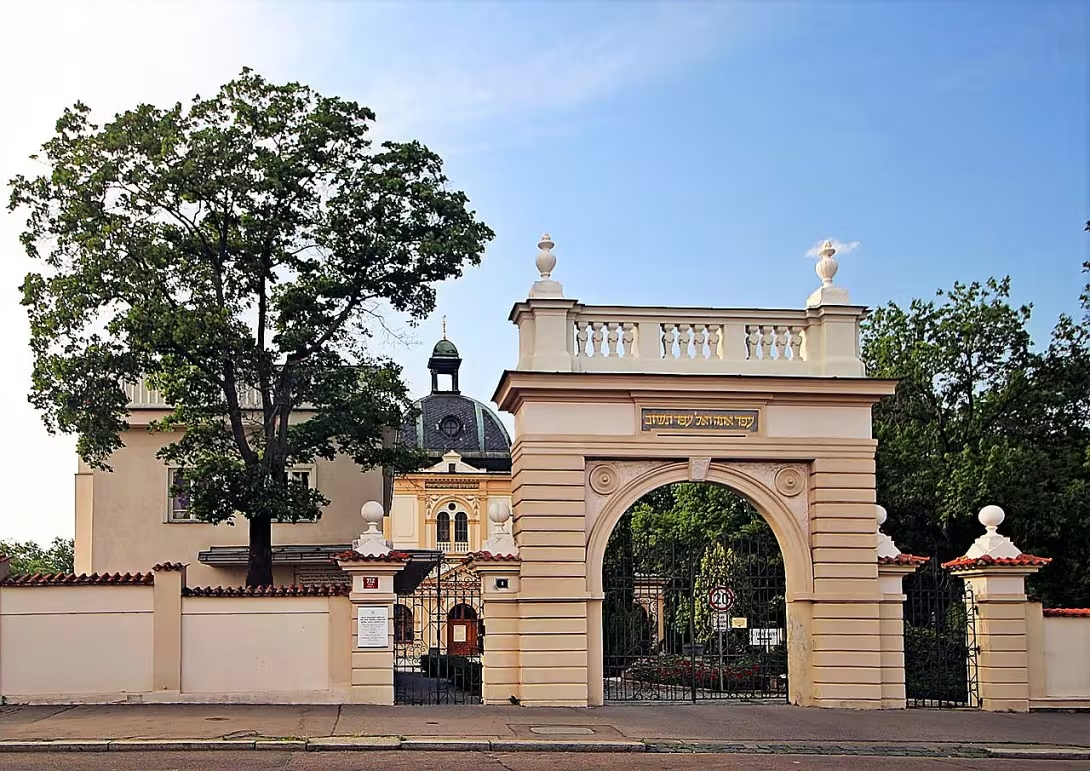
Nový židovský hřbitov na Olšanech in Prague at Žižkov forms a separate part of the Olšanské cemeteries complex and occupies an area of 101 430 square meters. Its size and number of about 25,000 preserved tombstones is the largest Jewish cemetery in the Czech Republic. Since its founding at the end of the 19th century it has been continuously serving as Prague's main Jewish cemetery and since 1964 it has been protected as a cultural monument.
The historical context of the creation of the cemetery falls within the period of the end of the 19th century in Czech countries and Europe. This period was marked by the rapid industrialisation, urbanisation and expansion of large urban conurbations. The creation of new large cemeteries beyond the former borders of central parts of cities responded to growing hygiene requirements and lack of capacity for older burial sites. The cemetery itself was founded in 1889 on an area of 74 037 square meters after the old Jewish cemetery was closed at Žižkov. It was ceremoniously opened on 6 July 1890, but the first funeral took place here two days earlier, 4 July. Although it was designed for 100 000 graves, approximately 100 years old, it had to be expanded in the 1920s. Another important landmark came in 1933, when the area grew by a new urn cemetery with its own ceremonial hall. In 2001 a symbolic tumba was discovered in the open space of the new part of the cemetery. The remains were exhumed in the place of the oldest Jewish cemetery in Prague, in the area of the so-called Jewish garden.
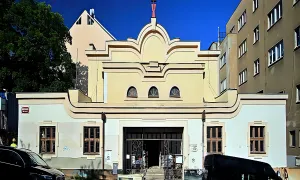
The architectural form of the cemetery forms two ceremonial halls. The original Neo-Renaissance hall stands at the highest location of the cemetery at the main entrance to the complex. It was designed by architect Bedřich Münzberger and builder Alfons Wertmüller, and the construction took place between 1891 and 1893. Behind it there is a house of cleansing to be tahara and mortuary in a classical style that served the needs of the funeral fraternity. The second ceremonial hall stands in the new eastern part of the cemetery. It dates back to 1933 and was designed in a functionalist style by the architect Leopold Ehrmann. Among the tombstones are a number of artfully valuable works. These were designed by leading architects and sculptors such as Antonín Balšánek, Josef Fanta, Otto and Karl Kohn, Jan Kotěra, Fritz Lehmann, Max Spielmann, Jan Štursa and Josef Zasche.
The administration and history of the cemetery were accompanied by building modifications and capacity extensions in response to demographic developments. There are about 25,000 tombstones in the area and there are monuments and symbolic graves of Holocaust victims. The final resting place was found here by a number of prominent figures of politics, science, industry and culture. Among the buried are members of the Petschk family, Waldes and the Bond family, writers Franz Kafka, Jiří Orten, Ota Pavel, František R. Kraus, Arnošt Lustig and Lenka Reiner, painters Jiří Kars and Max Horb, singer Ladislav Blum, rabbi Gustav Sicher and many others.
Today, this object continues to serve its original purpose as Prague's main Jewish cemetery. It also represents an important cultural monument documenting history, architecture and art associated with the Jewish community in Prague. Visiting this vast area in ŽižkovA offers a unique meeting with the history and legacy of many personalities that shaped the Czech cultural and social environment.
Then and now
Drag the slider to compare how the landmark may have looked when it was built with the view today.
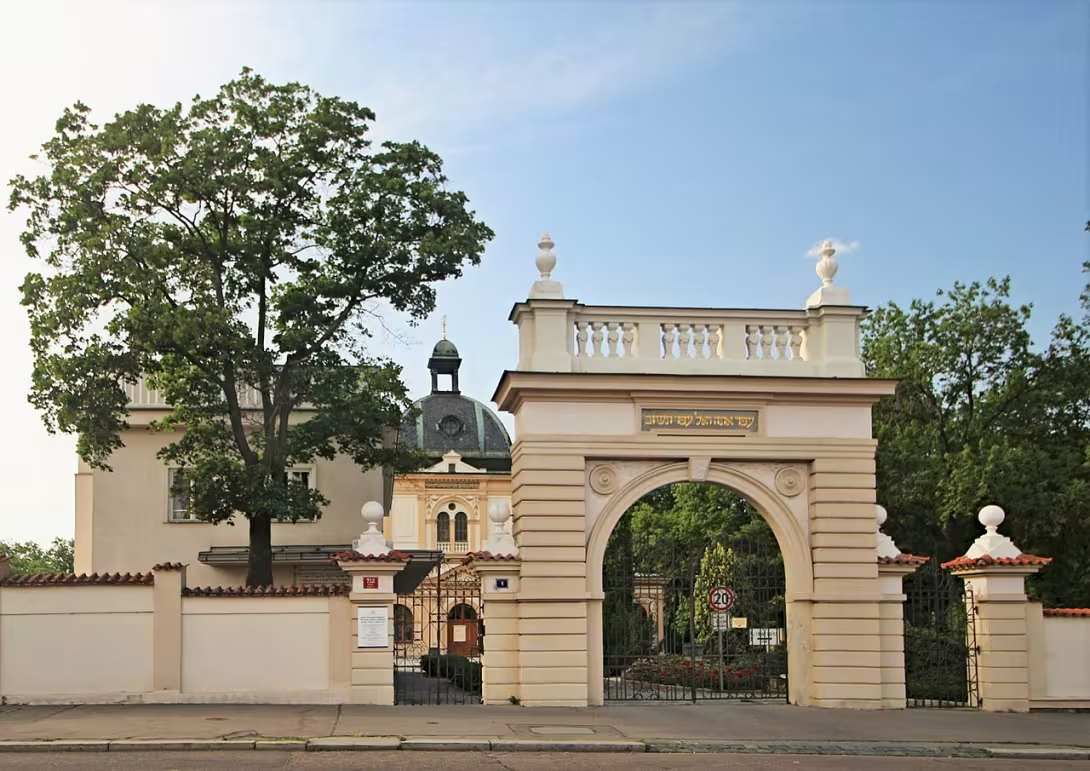
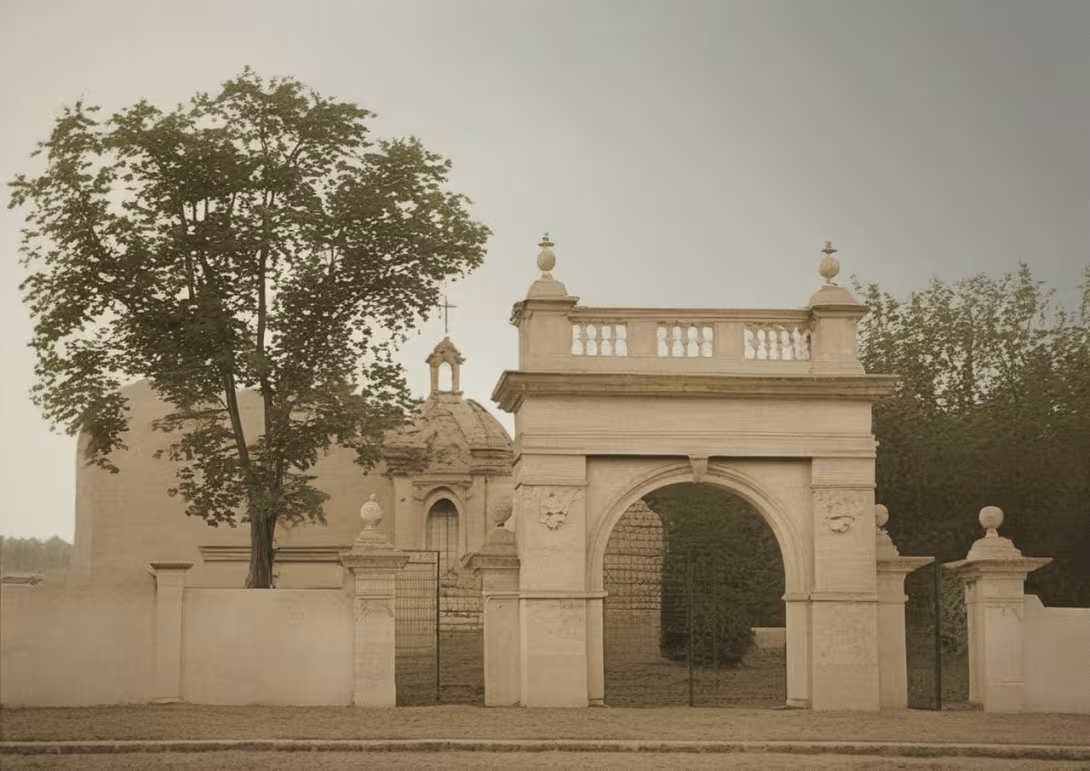
The historical appearance on the left is an AI-generated visualisation and serves as inspiration only.
Historical milestones
- 1889
- The cemetery was based on an area of 74 037 square meters.
- 1890
- The cemetery was ceremoniously opened on July 6, the first funeral being held on July 4.
- 1933
- The area has grown with a new urn cemetery with its own ceremonial hall in a functionalist style.
- 2001
- In the open space of the new part was discovered symbolic tumba with remains from the old Jewish cemetery.
Architectural development
The original Neo-Renaissance ceremonial hall with the morgue was built according to the design of Bedřich Münzberger and Alfonse Wertmüller in 1891-1893. A new ceremonial hall, designed in a functionalist style by architect Leopold Ehrmann, was established in the eastern part of 1933. Among the tombstones are a number of artfully valuable works designed by leading Czech architects and sculptors.
Historical events
1889: Establishment of a cemetery on an area of 74 037 square meters. 1890: Ceremonial opening of the cemetery and the first funeral. 1933: Extension of the cemetery and construction of a new urn cemetery with ceremonial hall. 2001: Discovering a symbolic tumba with exhumed remains from the oldest Jewish cemetery in Prague.
Points of interest
- With an area of 101 430 square meters and about 25,000 preserved tombstones, it is the largest Jewish cemetery in the Czech Republic. - The cemetery was founded in 1889, ceremonially opened on 6 July 1890, but the first funeral took place here on 4 July 1890. - In 1933 the area grew with a new urn cemetery with its own ceremonial hall in functionalist style from architect Leopold Ehrmann. - In 2001, a symbolic tumba was discovered in the open area of the new part of the cemetery, where remains from the oldest Jewish cemetery in Prague were stored. - Among the buried persons are writers Franz Kafka, Jiří Orten, Ota Pavel, Arnošt Lustig and Lenka Reiner.
Guide
Show guide text
This text was created by artificial intelligence and has not been editorially reviewed. It may contain inaccuracies.
Welcome to the place where time has stopped and where every polished layer of earth tells stories about the people who have shaped the face of our city and the whole country. You are standing just outside the gate to the New Jewish cemetery in Olšany, which is a separate and inseparable part of the extensive Olšanská complex. While the surrounding streets of Žižkova vibrate with life, here, in this space, a different kind of peace and nobility prevails. Now, if you look around you, try to perceive the incredible extent. This area does not take up just a small piece of land, but it spreads over 100,000 square feet. It's a space that can consume you with its size and silence.
Let's go back to history together to understand why this place was created and how it became what it is today. To understand the meaning of this place, we need to look at the end of the nineteenth century. At that time, the Jewish community of Prague needed a new, dignified space for its deceased. This is why the cemetery was founded in 1889 on an area of approximately 70,000 square metres. Although the cemetery was officially opened on the sixth of July in 1890, the first funeral took place two days earlier, i.e. the fourth of July 1890. Since then, without any continuous breaks, it serves as the main Jewish cemetery in Prague. It is a place that has constantly embraced new stories, new families and new generations.
Now pay attention to what you see around you. This place is not just a set of tombstones, it's a monumental work of architecture and art. Look at the density and variety of monuments. It is estimated that there are approximately twenty-five thousand preserved tombstones resting here. Each witness a different era, a different artistic influence and a different personality. When you walk between the lines, notice how different creative visions mix. Many important architects, who breathed their aesthetics into this space, participated in the development of this complex. You can see traces of the work of such names as Bedřich Münzberger, Alfons Wertmüller or Leopold Ehrmann. The architecture of the space also reflects the work of Antonín Balšánek, Josef Fanta or Jan Kotěra. Notice how different styles and approaches intertwine in this space, creating a unique overall atmosphere.
If you go further into the premises, you'll find a part that has a slightly different character. In 1933 the cemetery grew into a new urn cemetery. Notice his ceremonial hall, which is built in a typical functionalist style. This element represents a modern chapter in the history of this place, where the purity of lines and functionality meet the sacred purpose of the entire complex. It's a fascinating contrast to the historical tombstones that have been standing here since the late nineteenth century.
When you stop at specific graves, you realize that you're walking on a land where people whose names have been written in the history of literature, art and social life have rested. This place is connected with characters that have defined Czech and world culture. Imagine the silence that exists here, and remember names such as Franz Kafka, whose ideas and creation are still resonating around the world. There are also other important personalities like the writer Ota Pavel, Arnošt Lustig or young poet Jiří Orten. A walk between these tombs is not just a sightseeing tour, it's a encounter with the spirit of the past. Names like Jiří Kars or Gustav Sicher are part of this endless chronicle of life and death.
But now I want to invite you to think about something that may not be so obvious at first sight, but it carries deep symbolism and mystery. This place is not only about what we see now, but also about what was here before and what was lost in time. In 2001 a symbolic tumba was discovered in the open space of the new part. This monument is not just an ordinary stone, but serves as an honor and a place to preserve the remains of an old Jewish cemetery. It's a reminder of continuity, a bridge between what's gone and what's going on. This tumba reminds us that history is layered and that although some parts of the past seem to be gone, they are still part of the identity of this place.
In your next passage, save room for your own reflection. Let yourself be carried away by the atmosphere of this largest Jewish cemetery in the Czech Republic. Feel every detailed work on the tombstones, feel the silence that is not empty but full of memories. This site is protected as a cultural monument precisely so that these stories can also be told to us, people from another time.
Thank you for joining us on this short journey through history. Continue now in a quiet walk and discover another corner of this important place. Every step can lead you to another surprise or another name worth knowing. We wish you a peaceful and inspiring visit.
Tips for visitors
The best time to visit the New Jewish Cemetery in Olšany is in the morning when the area is quiet and light penetrating through the trees creates a very impressive and piety atmosphere. Traffic to the place is possible by car and by public transport, while the current connections and parking possibilities in the surrounding streets are best checked in advance in the respective search engine. Take the headgear with you, which is mandatory for men when entering the Jewish cemetery, as well as comfortable shoes for walking on uneven terrain and old paved roads. Photography is allowed, with the best places and light for images offering the rear part of the cemetery with monumental tombs and overgrown tombstones covered with ivy. In the immediate vicinity, you can reach other parts of the Olšanska cemetery complex within 30 minutes or explore the nearby former freight station Žižkov. When visiting with children it is necessary to ensure that it is a fine and quiet place, therefore it is advisable to explain in advance the rules of behaviour and keep the atmosphere quiet.
Businesses nearby
Do you run a restaurant, accommodation, shop, museum, rental, wellness or other visitor service near this monument? Show yourself directly to the people heading to it — this is how they will see you in the app and on the web:
Events nearby

Zdroj akcí: otevřená data měst a obcí ČR (Národní katalog otevřených dat) a kalendář akcí Národního památkového ústavu.
Nearby
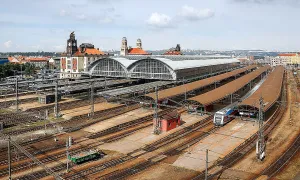
Other parts of the Olšanské cemetery complex, former freight station Žižkov.
Accommodation nearby
Trips and activities nearby
Guided tours, tickets and activities nearby from GetYourGuide
Affiliate link: if you buy from the partner, we may receive a commission. The price for you does not change.
Search tours and activities →Themed route
1.Nový židovský hřbitov na Olšanech Type: Cemetery Why is it worth a visit: This main destination of the route hides a beautiful Art Nouveau ceremonial hall and the tomb of the writer Franz Kafka. The place offers a deep atmosphere and unique artistic decoration of tombstones covered with ivy.
2. Other parts of the Olšanské cemete Type: Cemetery Why is it worth a visit: Right next door is a vast historical cemetery complex full of greenery, chapels and statues. It is a quiet place to walk between monuments connected with many important personalities of Czech history.
3. Former freight station Žižkov Type: Industrial monument Why is it worth a visit: This monumental functionalist structure represents the peak of industrial architecture. The area shows an interesting past associated with freight transport in this Prague district.
Seasonal recommendations
Spring at the New Jewish Cemetery in Olšany takes place in a sign of a awakening nature, when ancient tombstones slowly grow fresh green ivy and early spring flowers. The light is soft due to the low sun and penetrates thin trees, creating a melancholy and calm atmosphere ideal for quiet contemplation. During this period you will meet only a minimum of tourists, so you can go through the area undisturbed. Solid waterproof shoes are suitable because the roads can be wet after winter thaw, and warmer laminated clothing, as morning temperatures at Žižkov are still low. The best time to visit is in the morning, when the sun warms pleasantly, but the air is still fresh.
Summer brings lush vegetation, which turns the cemetery into an oasis of peace and shade in the middle of a hot city. The dazzling midday rays create a dramatic game of light and shadow on stone monuments through thick leaf trees. The atmosphere is mysterious and deeply meditative, as the growing green reduces the noise of the surrounding city. Since public interest is growing slightly in the season, it is worth arriving early in the morning after opening to enjoy absolute solitude. Choose light, breathable clothes to cover the shoulders and knees out of respect for the place, don't forget the headgear and bottle of drinking, as the shady corners cool, but in open spaces it may be hot.
Autumn transforms the Zizkov necropolis into an open-air gallery, where ancient tombstones are lost under golden and red leaves. The light is foggy during autumn days, dispersed, and often creates a melancholy background that perfectly fits this piety place. There are no crowds here at this time, but with the evening approaching and the days of November, daylight is rapidly declining. The walk requires a warm coat, scarf and non-slip shoes due to wet and slippery leaves on the old sidewalks. The ideal time for visiting is around noon, when the fog retreats and the sun's rays shine through the cold autumn air for a while.
Winter covers the New Jewish Cemetery into deep silence and often into a snow blanket that dampens any sounds from the outside. The lighting is very economical, the sun sets early in the afternoon and the low horizon creates sharp contrasts between white snow and dark granite or sandstone tombstones. The atmosphere is raw, extremely quiet and encourages deep reflection on fleeting. Due to the short winter days, it is necessary to plan a notice for morning or early afternoon hours and to count on the earlier closure of the premises. The absolute necessity is winter, warm and waterproof shoes, warm gloves, hats and several layers of clothing, as freezing cold is held between stone walls.
Visualizations and artistic views


The visualisations are generated by artificial intelligence and serve as inspiration.
Photos from the area
Real photos taken near the monument

Zdroj a licence jsou uvedeny u každého snímku.
Tips from visitors
No tips yet. Be the first!
Log in and add your tip.
Sources and literature
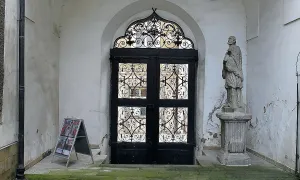
Fotografie: VitVit / CC BY-SA 4.0 — Wikimedia Commons. The author and licence also appear when you hover over the image.
Faktickým podkladem tohoto textu byl článek na Wikipedii, jehož autory jsou přispěvatelé Wikipedie. Článek je dostupný pod licencí CC BY-SA 4.0.
Location on the map
Příběhy a pověsti
Legendy, pověsti a příběhy spjaté s touto památkou
Fotografie návštěvníků
Zatím žádné fotografie. Buďte první, kdo přidá fotografii z návštěvy!
Přihlaste se a přidejte svou fotografii nebo hodnoťte.
Za ověřenou návštěvu v aplikaci získáte víc bodů — poznáme podle GPS, že jste na místě.
Reviews and comments