






Olivův dům čp. 1032/14 v Divadelní ulici Tenement house
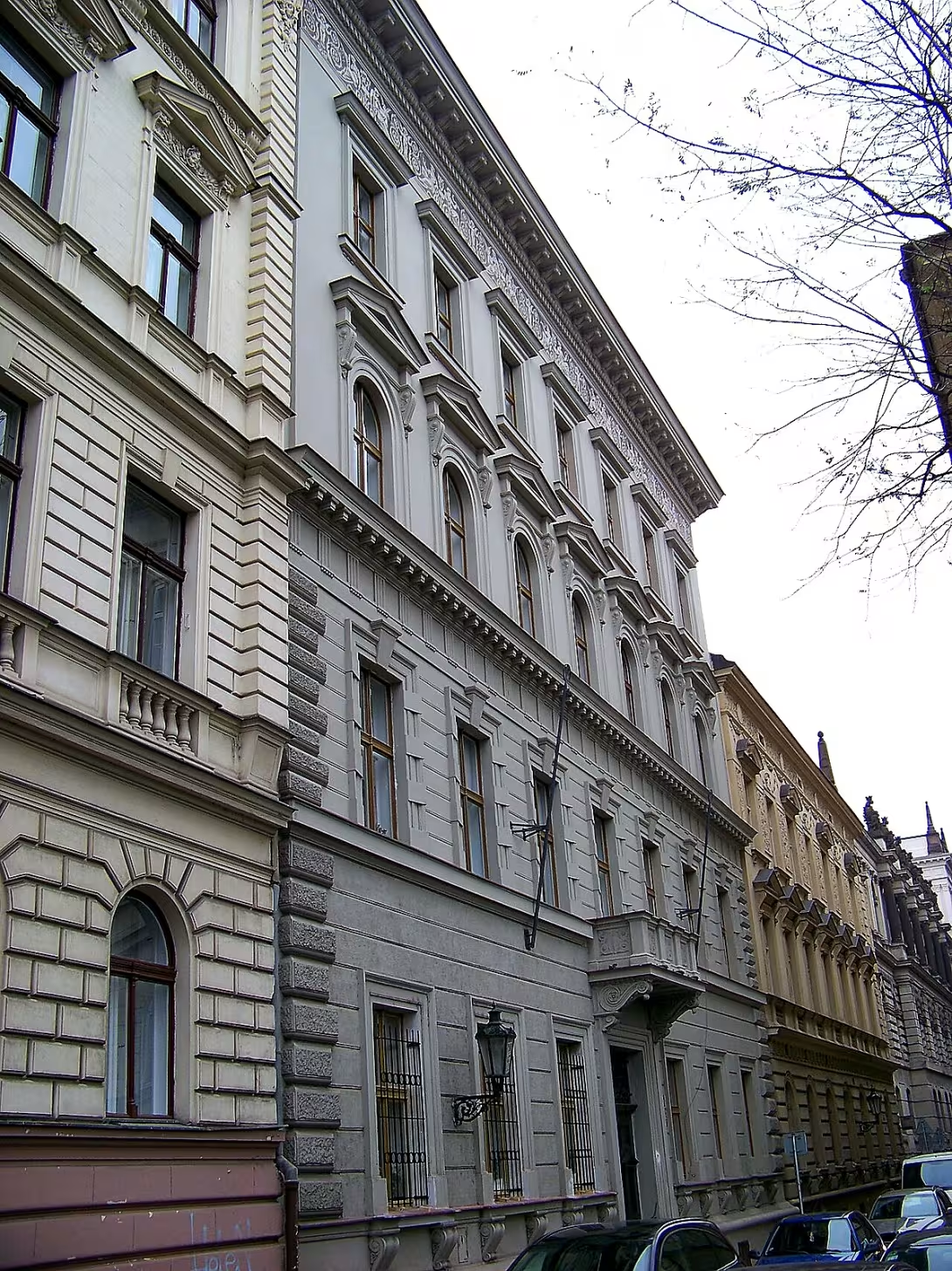
Olivův dům čp. 1032/14 v Divadelní ulici is a Neo-Renaissance building in the Old Town of Prague, built for Alois Olive in 1876. Architect Antonín Wiehl designed this object in cooperation with Jan Zeyer and Josef Tulka processed the sgraffite decoration of the facade. The house is one of the first Prague rental houses decorated with sgraffiti, which contributed to its historical and architectural importance. It is listed in the Central List of Cultural Monuments.
The house was built in the second half of the 19th century, a period of national revival and expansion of history in Bohemia. Wiehl tried to formulate a new concept of neo-Renaissance architecture expressing national identity. The house is influenced by the Italian Renaissance and the facade is arranged in late Renaissance forms. Wiehl has determined the area for sgraffite decoration that Josef Tulka has processed. Vlys in the lobby by Josef Václav Mymebek with the theme "Victory parade of the Battle and Slavoj" adds national style to the overall appearance.
The house is an architectural three-story flat house with seven axes. The flat rustic on the ground floor and the first floor, the console ledge above the first floor and the smooth second and third floors characterize its facade. Wiehl's proposal was implemented in 1876 together with Jan Zeyer, who also participated in other neo-Renaissance projects.
The house was owned by Alois Olive since the construction was completed in 1876. Antonín Wiehl established his office here after the completion of the house, but he moved it to Cavalry Street (now Havlíčkov) in 1886.
The house is a key example of Prague's neo-Renaissance architecture and its sgraffiti decoration was innovative for its time. Wiehl, Tulka and Mysbek worked together on this project, which contributed to its historical significance.
Today the house is still listed in the Central List of Cultural Monuments and represents a valuable part of Prague's architectural heritage. Its history and artistic value make Olive's house an interesting place to visit, offering a look into the past of neo-Renaissance architecture.
This building is not only a monument in the Old Town, but also a witness to Prague's rich history and culture. His visit offers an opportunity to explore the architectural innovations of the 19th century and to appreciate the artistic talent of his creators.
Historical milestones
- 1874
- The design of the house was created by Antonín Wiehl.
- 1875
- The creation of the draft feature of the Victory Parade of the Battle and Slavoj Josef Václav Mybek.
- 1876
- Finishing the building.
- 1886
- Moving Antonín Wiehl's office to Horseman Street.
Architectural development
A three-story towering house with seven axes, influenced by the Italian Renaissance. The ground floor and the first floor show a flat rustic, above them is a console ledge. The facade is decorated with the graphics of Josef Tulka and with the hair of Josef Václav Mymebek.
Historical events
1876: completion of building the house; 1886: Antonín Wiehl moves his office from the house to Horseman Street.
Owners
Alois Oliva (construction from 1876)
Points of interest
- Olive's house is a Neo-Renaissance building built for Alois Olive in 1876. - Architect Antonín Wiehl designed the object in cooperation with Jan Zeyer and Josef Tulka processed the design of the facade. - The house is one of the first Prague rental houses decorated with sgraffiti, which contributed to its historical and architectural importance. - Wiehl tried to formulate a new concept of neo-Renaissance architecture expressing a national identity, influenced by the Italian Renaissance. - The house is listed in the Central List of Cultural Monuments and represents a valuable part of Prague's architectural heritage.
Guide
Show guide text
This text was created by artificial intelligence and has not been editorially reviewed. It may contain inaccuracies.
Welcome to Olive's house in Theatre Street, one of the pearls of Prague's Old Town. You are standing in front of a Neo-Renaissance tenement house that boasts rich sgraffiti decoration and fascinating historical background. Look up at its facade - you will see the fulfillment of time when architecture was not only functionality but also artistic expression.
Olive's house was built in 1876 by the order of the industrialist Alois Oliva. His design was initiated by architect Antonín Wiehl, who collaborated with Jan Zeyer and Josef Tulka to create this unforgettable object. In 1874 the design of the house began to arise, while in 1875 it was also designed by a lysse in the style of the Battle and Slavoj by Josef Václav Mysbek. This house is one of the first Prague rental houses decorated with graphics, which contributed to its important position in the history of urban architecture.
Take a closer look at the facade and see how the house captures the essence of the Neo-Renaissance. Notice the rich sgraffiti motifs that decorate his facade - these are details that tell us about artistic taste and the innovative approach of that time. In the vestibule there is a feature depicted by the Battle and Slavoj, the work of Josef Václav Mysbek, which adds space to another layer of historical importance.
This house is connected to several key personalities. The Alois Oliva for which it was built became its first owner. Architect Antonín Wiehl, who not only designed this object, but also moved here his office in 1886, is another important person associated with this place. In addition, Josef Václav Myslbek, whose artistic talent is reflected in the noble glare in the lobby, contributed to this important historical monument.
The interesting feature of this monument is its role as one of the first rental houses in Prague decorated with sgraffiti. This artistic detail not only decorated the street, but also influenced other architectural trends in the city.
Now that you've looked at Olive's house, we'll invite you to continue your journey along Theatre Street. Every step here is full of history and artistic majesty. Whether you're curious about other architectural pearls or looking for new stories that this street is hiding, we welcome you to explore this rich cultural environment. Thank you for your visit and we hope you will be back soon.
Tips for visitors
The best time to visit Olive's house is in the spring or autumn season, when the weather is pleasant and sunlight of the sun is ideal for tours. This time of year also allows you to enjoy beautiful architecture without excessive temperatures.
Parking in the vicinity of the Olive House can be difficult, therefore we recommend the use of public transport. Staré Město is well connected by buses and trams, making it easier to access the monument without the need to find a parking space.
When visiting Olive's house take with you suitable clothes according to the weather as well as water and sunglasses. The house is a historical monument, so suitable footwear goods can be useful for comfortable walks.
For shooting the Olive House are the best places near it where it is possible to capture the overall picture of the building. Photographs are best taken in the early morning or evening when light is softer and shading is beneficial.
Other historical places like the Old Town Hall or the Týnská Chapel can be visited in the vicinity of the Olive House. These monuments are ideal for fun families with children who like history and architecture.
Businesses nearby
Do you run a restaurant, accommodation, shop, museum, rental, wellness or other visitor service near this monument? Show yourself directly to the people heading to it — this is how they will see you in the app and on the web:
Events nearby

Zdroj akcí: otevřená data měst a obcí ČR (Národní katalog otevřených dat) a kalendář akcí Národního památkového ústavu.
Nearby
Staré Město v Praze 1, Divadelní ulice
Accommodation nearby
Trips and activities nearby
Guided tours, tickets and activities nearby from GetYourGuide
Affiliate link: if you buy from the partner, we may receive a commission. The price for you does not change.
Search tours and activities →Themed route
1. Theatre Street (Type: Street) - Start your journey through this historic path. There's a real atmosphere of the old town. 2.Olivův dům čp. 1032/14 v Divadelní ulici (Type: Building) - This is your main destination. Take a look at the details of this building. 3. Staré Město in Prague 1 (Type: Quarter) - Finish the whole trip in this historic area. It offers a rich environment for a final walk.
Seasonal recommendations
In the spring, the surroundings of the house are lit by the fine sun and the air smells of awakening nature. The atmosphere is fresh and hopeful. We recommend wearing more layers of clothing because the weather is variable. The best is to come in the morning when the streets are still relatively quiet.
The summer season brings intense light and hot air, which in the narrow streets of Old Town creates a specific heat. The city is very lively and full of people in the high season. To avoid the biggest crowds and heat, we recommend a visit first thing in the morning. Light, breathable clothes and plenty of fluids are suitable.
In autumn, the surroundings of the monument are colored in golden tones and morning fog gives the place a mysterious touch. Light is softer and shadows longer, which is ideal for observing facade details. It is practical to wear moisture resistant shoes and lighter coats. The ideal time to visit is late afternoon.
The winter is dominated by freezing air and evening lighting, which in advent time creates a cozy mood. The streets tend to be emptier in some times, but in the center there is still a holiday rush. It is necessary to have warm winter clothes and remember that opening hours may be shorter.
Visualizations and artistic views

The visualisations are generated by artificial intelligence and serve as inspiration.
Photos from the area
Real photos taken near the monument

Zdroj a licence jsou uvedeny u každého snímku.
Tips from visitors
No tips yet. Be the first!
Log in and add your tip.
Sources and literature
Photos: ŠJů (cs:ŠJů) / CC BY-SA 3.0 — Wikimedia Commons. The author and licence also appear when you hover over the image.
Faktickým podkladem tohoto textu byl článek na Wikipedii, jehož autory jsou přispěvatelé Wikipedie. Článek je dostupný pod licencí CC BY-SA 4.0.
Location on the map

Příběhy a pověsti
Legendy, pověsti a příběhy spjaté s touto památkou
Fotografie návštěvníků
Zatím žádné fotografie. Buďte první, kdo přidá fotografii z návštěvy!
Log in a přidejte svou fotografii nebo hodnoťte.
Za ověřenou návštěvu v aplikaci získáte víc bodů — poznáme podle GPS, že jste na místě.
Reviews and comments