






palác Kinských (Praha 1) Palace
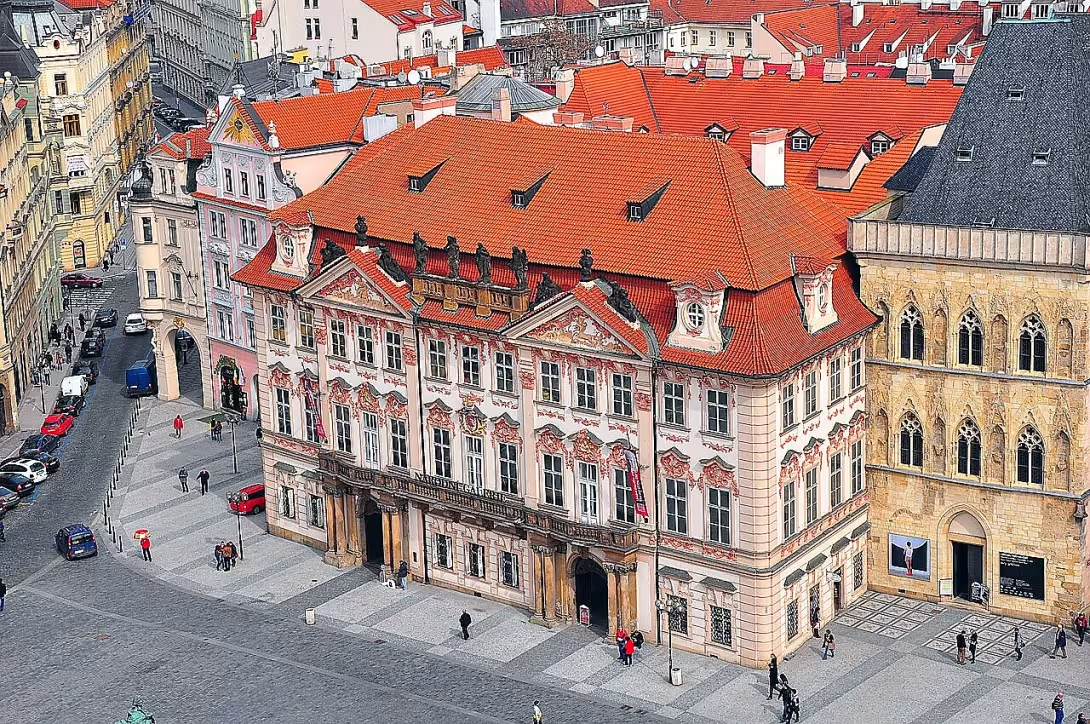
The Palace of Kinski, originally called the Palace of Goltz-Kinski, stands on the east side of the Old Town Square near the monument of Jan Hus. This rococo building from the second half of the 18th century is among the most famous palaces in the historical centre of Prague.
There were two older houses in the Middle Ages where the palace stands today. The remains of the Romanesque building have been preserved in its underground, and the remains of the early Gothic house have been preserved. The palace was built between 1755 and 1765 for Count John Arnošt of Goltz of the House of Goltz. The construction was based on the older plans of Kilián Ignác Dientzenhofer and carried out under the leadership of architect Anselm Lurago. The rich stucco decoration of the facade was performed by C.G. Bossi. The facade of the palace ends with two attics decorated by a series of statues of ancient gods created by sculptor Ignac František Platzer. Two symmetrically located monumental entrances lined with stone columns connect a narrow balcony on the first floor.
After the death of Count Goltza in 1765, the palace was purchased in 1768 by Prince Rudolf Kinský, from whom the palace later carried its name. Under Kinski, the palace was rebuilt in classical style. The palace was also extended to the second courtyard, which spread out between three wings in Empire style; the project for this reconstruction was developed by Josef Kranner. In 1835 another building was attached to the palace and the whole structure spread to Týnská alley. This part was rebuilt under Kranner's leadership in a neo-Baroque style. Since 1964, the Kinsky Palace has been protected as a cultural monument.
The palace is associated with the fate of a number of prominent personalities. It was on June 9, 1843 that Bertha Kinská was born, who later became known as Berta von Suttner, secretary of Alfred Nobel. In 1905 she became the first woman to receive the Nobel Peace Prize. At the end of the 19th century there was a German Gymnasium in the building, which he went to from 1893 to 1901 and Franz Kafka; His father Hermann had his shop in the palace as well. A decade later František R. Kraus also studied here. In the interwar period, namely between 1922 and 1934, the Polish Embassy was located in the palace.
The palace is also closely linked to the events of February 1948. According to official communist propaganda, Klement Gottwald was to make a historic speech from the balcony of the Kinsky Palace, beginning with "I just got back from Castle..." Historical sources, however, state that Gottwald stood on the balcony on 21 February, and the said sentence was uttered only at Wenceslas Square from the truck. On the balcony of the Kinsky Palace in February 1948 stood beside Gottwald also Vladimír Clementis and both were captured in period photography. When later Clementis was charged with conspiracy and execution, he became undesirable to the Communist regime; Therefore, it was subsequently reprinted from the image.
In 1949, the Palace of Kinský became the seat of the collection of graphics of the National Gallery in Prague. At the turn of the 1960s and 1970s, the group The Plastic People of the Universe was in the palace under the patronage of the Prague Cultural Centre. In 1992 the palace and the Old Town Square were declared a national cultural monument. Today it remains one of the most important buildings in the Old Town Square and a witness to the rich history of Czech culture and politics.
Then and now
Drag the slider to compare how the landmark may have looked when it was built with the view today.
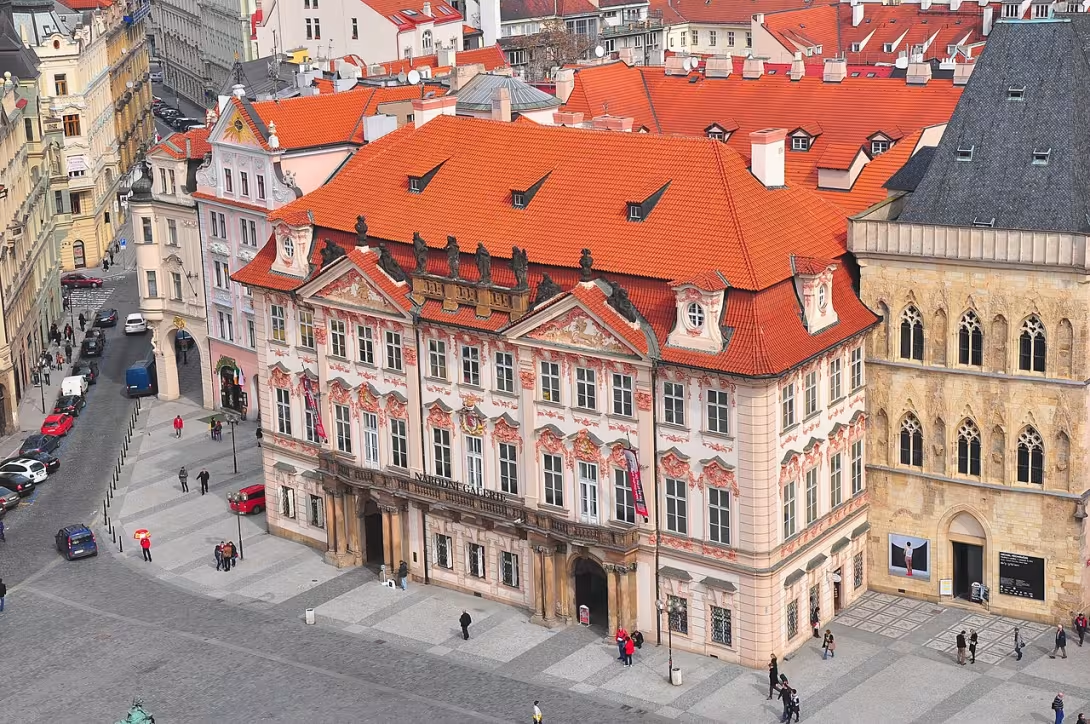
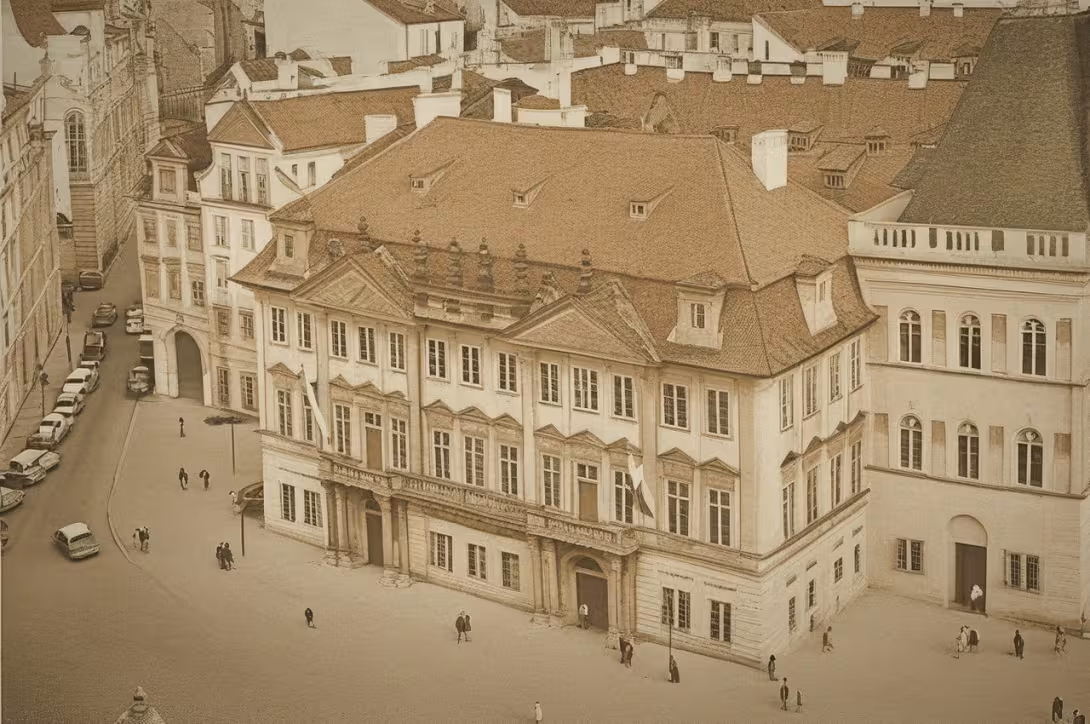
The historical appearance on the left is an AI-generated visualisation and serves as inspiration only.
Historical milestones
- 1755-1765
- Basic building of the palace for Count John Arnošt of Goltz according to the plans of Anselm Luraga.
- 1768
- The purchase of the palace by Prince Rudolf Kinski, followed by a classical reconstruction of interiors.
- 1835
- The connection of another house and the neo-Baroque reconstruction of part of the palace under the direction of Josef Kranner.
- 1964
- Listed on the list of cultural monuments.
- 1949
- It became the seat of the coll
Architectural development
The palace was built in 1755-1765 according to plans by Anselm Luraga and Anselma Luraga, with rococo facade and stucco decoration by C. G. Bossi. In the first half of the 19th century, Josef Kranner rebuilt the court wings in empirical style and expanded the palace up to Týnská alley. The interiors were classically modified and a new Baroque reconstruction took place in the 19th century. Sculpture decoration of the facade is the work of Ignatius František Platzer.
Historical events
- 1843
- Bertha Kinsky (von Suttner), later Nobel Peace Prize winner.
- 1948
- Communist propaganda event - Klement Gottwald gave a speech here (February 21), which was later distorted.
- 1992
- The palace was declared a national cultural monument along with the Old Town Square.
Owners
Kinski family
Points of interest
- The palace was built between 1755 and 1765 for Count John Arnošt of Goltz according to the plans of Kilián Ignác Dientzenhofer and under the direction of Anselm Luraga.
- The remains of the Romanesque and early Gothic buildings from the Middle Ages have been preserved underground.
- The facade of the palace is decorated with stucco decoration by C. G. Bossi and statues of ancient gods by Ignatius František Platzer.
Bertha Kinska, the later Berta von Suttner, was born in the palace, the first woman to win the Nobel Peace Prize.
Guide
This guide is narrated by a synthetic voice generated by artificial intelligence.
Show guide text
This text was created by artificial intelligence and has not been editorially reviewed. It may contain inaccuracies.
Welcome to the Kinsky Palace, which is now opening up to you with its beautiful facade in Old Town Square. You are standing in front of one of the most distinctive Rococo palaces in Prague, whose facade immediately captures you with rich stucco decoration and statues of ancient gods. These sculptures, the work of Ignatius František Platzer, add to the construction not only beauty but also deep historical significance. The palace, which seems to you as a living witness of the past century, was built on the site of medieval houses, whose tracks are still hidden in its underground.
Let's move a little back to 1755 when the palace was built for Count John Arnošt of Goltz according to the plans of Anselm Luraga. This Rococo pearl has become the seat of important personalities, but also witnessed many historical events. After the purchase of the palace by Prince Rudolf Kinski in 1768, the interiors went through a classical reconstruction that gave him a new face. In the 19th century it was then extended up to Týnská Street and the neo-Baroque modifications from 1835 under the guidance of Josef Kranner completed its present form.
Now pay attention to the facade of the palace. Look at her stucco decoration, which is the work of C. G. B., and see how artistic decoration and historical value are combined here. The facade is like an open book that tells stories about how Praha and its architecture evolved. Note also that the palace is based on medieval buildings - the remains of the Romanesque and early Gothic houses are hidden under the current floor.
The Palace of Kinski was included in the list of cultural monuments in 1964, which confirms its extraordinary importance. Since 1949, his home is a collection of graphics from the National Gallery in Prague, which means that even today you can discover works of art which are part of our cultural treasures.
The key personalities associated with this place include Bertha Kinská, also known as von Suttner, who was the first woman in Austria-Hungary to receive the Nobel Peace Prize. Other significant visitors were Franz Kafka, who stayed here, as well as important politicians such as Klement Gottwald and Vladimír Clementis. Each of them contributed to making the palace a place where various epochs and ideas met.
Now let's talk about something that might surprise you. The remains of the medieval house that stood there before the Rococo Palace was built were preserved under the palace. These tracks are like a time capsule that reminds us that Praha has deep roots and its history is much older than it seems at first sight. Notice how the past and the present connect here - how medieval walls meet the stucco stucco decoration.
The Palace of Kinski is not only an architectural gem, but also a place where different layers of history meet. Its interiors, which host today's collection of graphics, are full of works of art that can charm you. If you like this building, it's certainly worth looking inside and exploring its inner beauty. Local graphics collections can surprise you with their range and quality.
Before we say goodbye to you, we want you to take away the feeling that you have witnessed part of Prague's history. The Palace of Kinski is like a living story that tells how the city evolved, how the owners took turns and how different cultures and ideas met here. You are standing in front of a place that has witnessed great events and that still holds its beauty and importance.
We wish you a pleasant exploration and when we meet again at the next Prague Gem. Thank you for seeing the Kinsky Palace with us today.
Frequently asked questions
Is palác Kinských (Praha 1) open to the public?
Yes, the Kinski Palace is open to the public. Opening hours are Monday to Friday from 10: 00 to 18: 00, Saturday and Sunday from 11: 00 to 5: 00.
How do I get to the place by car / public transport?
The Palace of Kinsky is situated in the centre of Prague. The closest you can get is bus number 9 or 18, stop Old Town Square. The car can be parked on nearby streets or in garages nearby.
How much is the entrance fee and is it paid on the spot?
Payment is made on site, at the entrance to the palace.
Is the tour suitable for children and seniors?
Yes, a tour of the Kinsky Palace is suitable for all age groups. The Palace also offers special tours for families with children and seniors.
How long does the tour take?
The tour of the Kinsky Palace takes approximately 45 minutes.
What are the opening times and booking is required?
Opening hours are Monday to Friday from 10: 00 to 18: 00, Saturday and Sunday from 11: 00 to 5: 00. Reservation is not necessary, but it is recommended for groups over 10 people.
What's interesting in the immediate vicinity?
In the immediate vicinity there is the Old Town Square with monuments such as the House of the Stone Bell and the Church of St. Jilje. There are also many restaurants, cafés and shops.
For kids
Imagine going back 271 years to when our capital was still young and beautiful. Now imagine that you are in the center of Prague, in Old Town Square, where the amazing Kinsky Palace stands.
How did it look here? The palace was built in 1755, so it was centuries since Praha became a capital city. And who lived here? Nobles, people with money and influence. They had dresses that were like books, and they wore them to balls and to theatres. It was a wonderful time, full of life, music, ballet and art.
Businesses nearby
Events nearby

Zdroj akcí: otevřená data měst a obcí ČR (Národní katalog otevřených dat) a kalendář akcí Národního památkového ústavu.
Nearby
Old Town Square, Stone Bell House
Accommodation nearby
Trips and activities nearby
Guided tours, tickets and activities nearby from GetYourGuide
Affiliate link: if you buy from the partner, we may receive a commission. The price for you does not change.
Search tours and activities →Themed route
1. Palace of Kinsky (Palace): A distinctive Baroque building, which serves as a gallery and offers space for artistic exposition. 2. House U Stone Bell (monument): It is located next to the palace and is one of the oldest houses in the Old Town Square. 3. Jana Hus Memorial (memorial): It stands near the east side of the square and reminds of an important Czech reformer. 4. Old Town Hall (Town Hall): It lies northeast and represents the administrative heart of the historical centre. 5. Tynese Temple (Temple): Located northwest and dominates the square with impressive towers.
Seasonal recommendations
Spring The Palace of Kinsky in the spring months offers a unique atmosphere where its Baroque facade is reflected in green surrounding trees and first flowers appear in the courtyard. The light of the sun, which penetrates the glass ceilings of interiors, creates a game of shadows and colors that emphasizes the details of stucco decoration. Specific is also mild lighting, when morning rays highlight gold ornaments in the halls. Practically, it is best to visit the palace in March or April, when crowds do not accumulate as in the summer months. It is recommended to dress suitable for variable weather - light layers that protect against spring wind but allow movement in interiors where it can be warmer. The most important time is the afternoon, when the palace is illuminated pleasantly, but not yet full of tourists.
Summer In the summer months, the Kinský Palace will turn into a magnet for visitors who come here not only for its architectural beauty, but also for pleasant sitting in nearby gardens. The warm sun emphasizes the contrast between dark stone façades and bright window frames, while evening hours bring golden glitter on stucco reliefs. In the main summer season, however, it is necessary to count on higher attendance, so it is advisable to come early in the morning to avoid crowds in the main tourist area. It is recommended light, breathable clothes that protect from Prague heat, and comfortable shoes for walking on stone sidewalks. Due to the longer days, the time is ideal from 9: 00 to 11: 00 or from 16: 00, when the palace is illuminated pleasantly, but it is not yet crowded.
Autumn The autumn visit to the Kinsky Palace brings a calm, almost intimate atmosphere where golden and red shades of leaves are reflected in the windows and create contrast with baroque details. Colder air and shorter daylight highlight darker tones of interiors, which gives space a more mysterious touch. During this period, the palace is often less visited, which allows a quieter tour without rush. A warmer outfit is recommended, which protects against autumn wind, but still allows movement in interiors where it can be more pleasant. The best time is the afternoon when the sun shines directly into the halls and creates a light game on the ceiling frescoes. In November, when the weather is cooling, it is advisable to visit the palace in the morning to avoid the evening cold.
Winter Winter visit to the Kinsky Palace is like a view of the past, when snow cover and shining windows create a magical atmosphere. Freezing air and short daylight highlight darker tones of the facade, while interiors are lit with artificial light, which provides space warmth and hospitality. In advent time, when the palace often becomes part of Christmas decorations, there is a sense of holiday and peace. In winter, however, shorter opening times should be envisaged, so it is appropriate to inform yourself in advance of specific hours. It is recommended to warm but comfortable clothes that protect against freezing, but allow movement in the interiors where is usually a pleasant temperature. The best time is the afternoon when the palace is lit with artificial light and creates a pleasant atmosphere for the tour.
Visualizations and artistic views


The visualisations are generated by artificial intelligence and serve as inspiration.
Photos from the area
Real photos taken near the monument

Zdroj a licence jsou uvedeny u každého snímku.
Tips from visitors
No tips yet. Be the first!
Log in and add your tip.
Sources and literature
Fotografie: W.Rebel / CC BY 3.0 — Wikimedia Commons. The author and licence also appear when you hover over the image.
Faktickým podkladem tohoto textu byl článek na Wikipedii, jehož autory jsou přispěvatelé Wikipedie. Článek je dostupný pod licencí CC BY-SA 4.0.
Location on the map

Příběhy a pověsti
Legendy, pověsti a příběhy spjaté s touto památkou
Fotografie návštěvníků
Zatím žádné fotografie. Buďte první, kdo přidá fotografii z návštěvy!
Přihlaste se a přidejte svou fotografii nebo hodnoťte.
Za ověřenou návštěvu v aplikaci získáte víc bodů — poznáme podle GPS, že jste na místě.
Reviews and comments