



Pomezí Castle
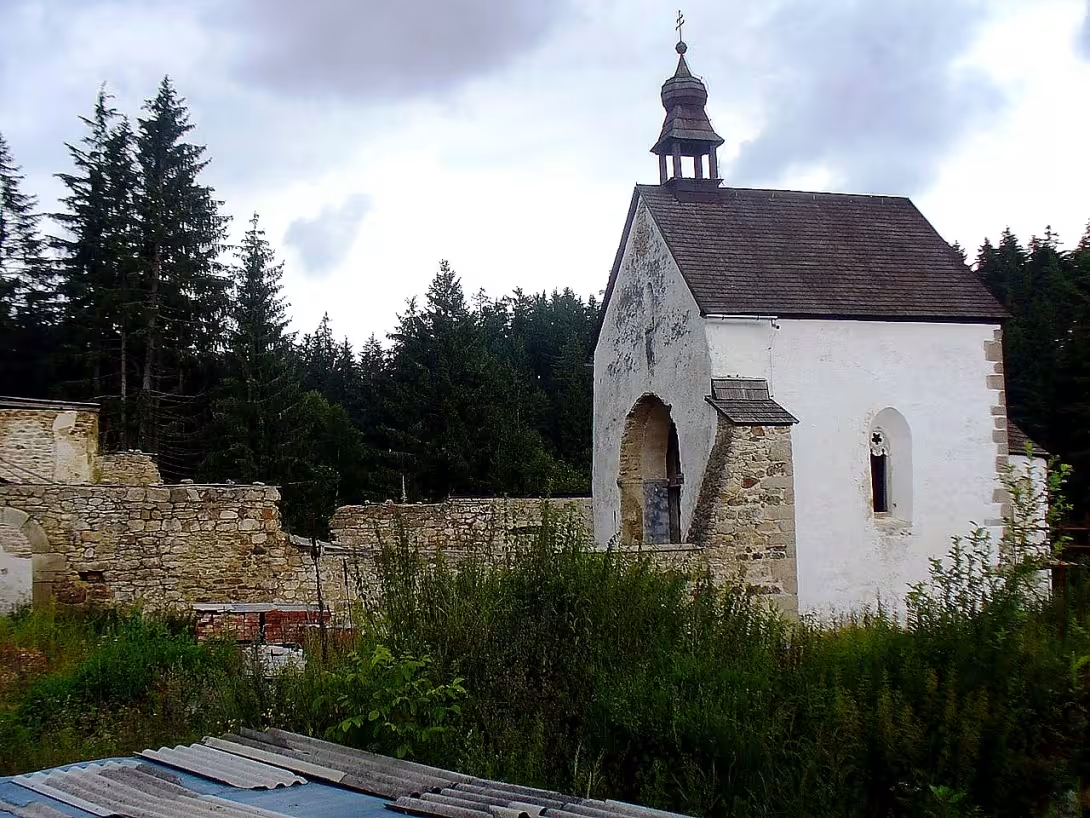
Pomezí is a historical monument located in the village of Pomezí within the Jindřichův Hradec District, Jihočeský kraj. This site features remnants of what was once a fortified castle, notable for its Romanesque church dedicated to Saint John the Baptist. Established at the end of the 12th century, Pomezí served as an administrative center following Vitorazska's separation from Bohemia in 1179. The most significant surviving structure is this ancient church, protected as a cultural monument since 1963.
The origins of Pomezí trace back to a period marked by political shifts and territorial disputes within the Holy Roman Empire. At the end of the 12th century, Bohemia was undergoing changes, including Vitorazska's separation from Bohemia in 1179. This division reflects broader regional tensions and underscores Pomezí's strategic importance as an administrative center for the Austrian part of Vitorazska.
Architecturally, Pomezí began as a wooden fortification before transitioning to stone around 1200. The castle featured a large rampart with an inner wall built at its base, creating a formidable defensive structure. By the mid-13th century, a moat was added on the northern side, enhancing its defenses. A Gothic tower, documented archaeologically, once stood near the west front of the church. The Romanesque church itself, originally part of a larger complex, underwent modifications around 1300 and remains one of the oldest surviving churches in the region.
The first mention of the church of Saint John the Baptist dates to 1232, following a deliberate fire that destroyed much of the castle. This event highlights the structure's resilience amidst adversity. The church's survival through such events adds to its historical significance as a testament to medieval fortification techniques and architectural transitions.
Today, Pomezí stands as a site of cultural heritage, offering visitors insights into medieval architecture and history. While much of the original castle has been lost to time, the Romanesque church remains a focal point for those interested in exploring the region's past. Its status as a protected monument ensures its preservation for future generations.
Visiting Pomezí provides an opportunity to connect with a pivotal chapter in Czech history. The site invites exploration and reflection on medieval architectural ingenuity, making it a worthwhile destination for anyone interested in historical monuments.
Then and now
Drag the slider to compare how the landmark may have looked when it was built with the view today.
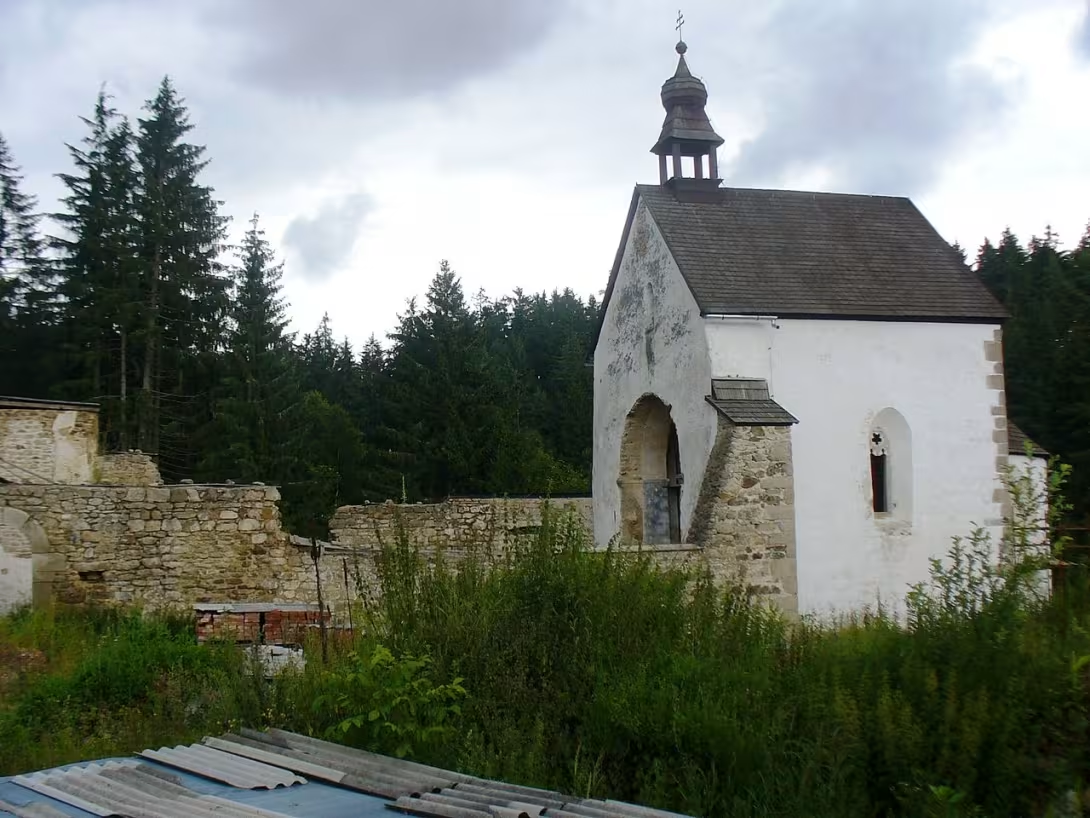
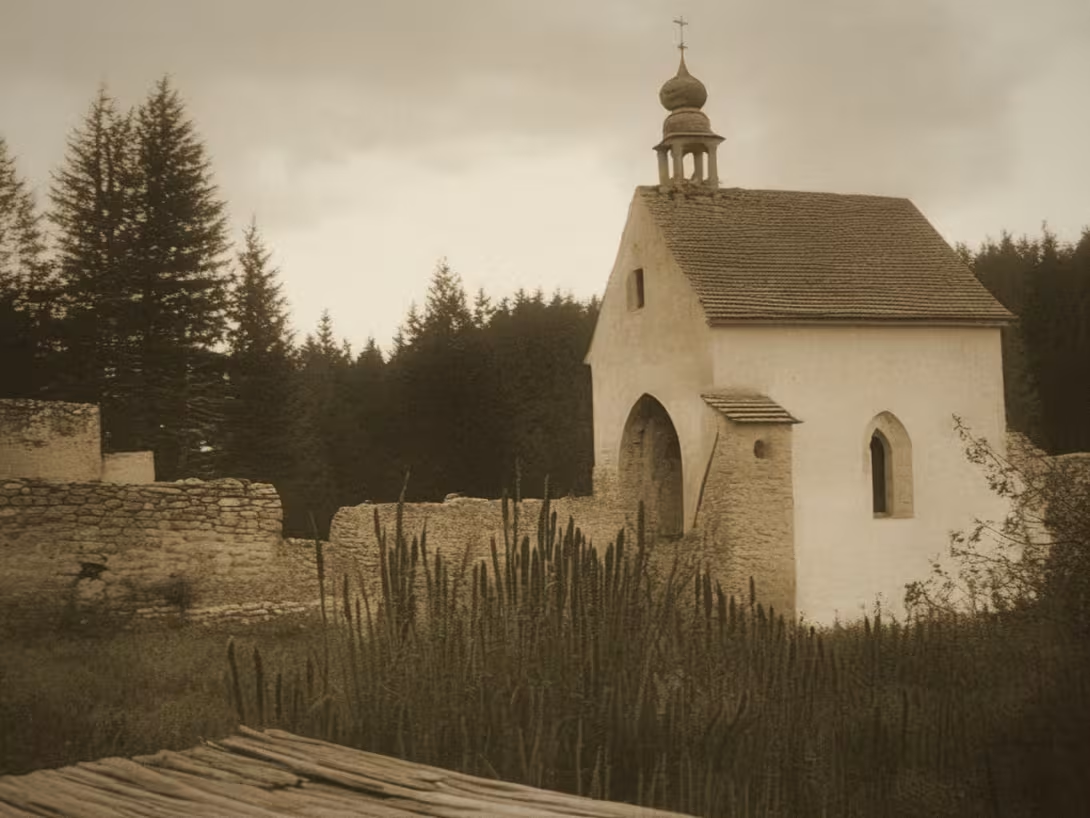
The historical appearance on the left is an AI-generated visualisation and serves as inspiration only.
Historical milestones
- 1179
- Vitorazska se separated from Čech.
- end of 12th century
- The border area was established as an administrative center.
- 1200
- The castle was rebuilt into a stone structure.
- mid-13th century
- A pond was added on the northern side for defense.
- 1232
- First mention of the church of Saint John the Baptist after a fire.
- 1963
- The church was protected as a cultural monument.
Architectural development
Pomezí began as a wooden fortification and transitioned to stone around 1200. The castle featured a large rampart with an inner wall built at the base of an older rampart, creating a formidable defensive structure. By the mid-13th century, a moat was added on the northern side, enhancing its defenses. A Gothic tower documented archaeologically stood near the west front of the church.
Historical events
The initial fortified settlement was established at the end of the 12th century.
In 1232, the church of Saint John the Baptist is first mentioned, surviving a deliberate fire that destroyed much of the castle.
Points of interest
- Pomezí features remnants of a fortified castle with a notable Romanesque church dedicated to Saint John the Baptist. - Established at the end of the 12th century, it served as an administrative center following Vitorazska's separation from Bohemia in 1179. - The site began as a wooden fortification before transitioning to stone around 1200 and included a large rampart with an inner wall and later a moat on the northern side. - A Gothic tower once stood near the west front of the church, documented archaeologically. - The Romanesque church underwent modifications around 1300 and remains one of the oldest surviving churches in the region.
Guide
This guide is narrated by a synthetic voice generated by artificial intelligence.
Show guide text
This text was created by artificial intelligence and has not been editorially reviewed. It may contain inaccuracies.
Pomezí, which is also called Markl, is a ruined castle in the village of the same name in the Jindřichův Hradec district. It stood on an inconspicuous promontory at an altitude of approximately six hundred meters, less than two hundred fifty meters west of the ruins of the younger castle Landštejn. The remains of fortifications have been preserved from the castle, and most notably a Romanesque church of Saint John the Baptist. The church, along with its surroundings, has been protected as a cultural monument since nineteen sixty-three.
Archaeological research has shown that a fortified settlement emerged here at the end of the twelfth century. It was the administrative center of the Austrian part of Vitorazsko, which Bohemia lost after the year eleven seventy-nine. The castle was initially wooden and acquired a stone form around the year twelve hundred. The church of Saint John the Baptist is first mentioned in the year twelve thirty-two. The castle was later destroyed by a deliberately set fire, and the church alone survived.
The castle occupied the northwestern part of a larger stronghold, which was protected by an embankment. Around the year twelve hundred, a stone wall enclosed the trapezoidal area. The builders erected it at the inner base of the older embankment and filled in the space between the wall and the embankment. This created a powerful embankment with a wall on its inner side. In the middle of the thirteenth century, a ditch was added on the northern side and beyond it another embankment.
A Gothic tower stood at the western façade of the church, which archaeologists have documented. In the lowest-lying part of the area was a stone Romanesque building, which researchers consider to be a palace. Another tower was later added to it.
Tips for visitors
The best time to visit the Pomezí Castle ruins is during late spring or early autumn, when the weather is mild and pleasant for exploring. During these seasons, you can enjoy the lush greenery surrounding the site without the discomfort of summer heat or winter cold. Additionally, visiting on a weekday rather than a weekend might offer a more tranquil experience as it tends to be less crowded.
The castle is also reachable by car for a more flexible itinerary.
When planning your visit, consider bringing comfortable walking shoes as exploring the ruins involves some uneven terrain. A hat and sunscreen are recommended if visiting during sunnier months, while layers are advisable in cooler weather. Don't forget to bring water and perhaps a packed lunch if you plan on spending several hours at the site.
For photography enthusiasts, early morning or late afternoon provides the best light for capturing the dramatic ruins of Pomezí Castle against the sky. The western side offers particularly striking views as the sun sets behind the structure.
Nearby attractions within a 30-minute drive include the historic town of Jindřichův Hradec, known for its charming architecture and cultural events. Another option is the scenic landscapes around the Šumava National Park, offering opportunities for hiking and nature exploration.
Frequently asked questions
Can the monument be visited?
This is a ruin. Such sites are often freely accessible, but some can only be visited with a guide or are closed for safety reasons. We have not verified the current situation – take care and respect any restrictions.
Where is the monument?
Location: Pomezí, Jihočeský kraj. The map on this page shows the exact spot.
Why is the monument protected?
It is listed in the Central List of Cultural Monuments of the Czech Republic as a cultural monument (register no. 26519/3-2214).
Businesses nearby
Do you run a restaurant, accommodation, shop, museum, rental, wellness or other visitor service near this monument? Show yourself directly to the people heading to it — this is how they will see you in the app and on the web:
Accommodation nearby
Trips and activities nearby
Guided tours, tickets and activities nearby from GetYourGuide
Affiliate link: if you buy from the partner, we may receive a commission. The price for you does not change.
Search tours and activities →Themed route
Pomezí
1. Pomezí (hrad) - Hrad Pomezí is a medieval castle complex surrounded by fortifications, located on an island at the confluence of the Nežárka and Strážná rivers. It is a well-preserved castle that symbolizes the history and culture of the region.
2. Kostel svatého Mikuláše (kostel) - The Church of St. Nicholas is a Gothic church located in the center of Pomezí. It is a beautiful example of medieval architecture and worth visiting for its historical and artistic value.
3. Zámek Nový Hrádek (zámek) - Castle Nový Hrádek is a Baroque castle situated near Hrad Pomezí. It is an exquisite example of Baroque architecture and worth visiting for its historical and cultural significance.
Seasonal recommendations
Jaro: In the spring season, Pomezí is surrounded by blooming trees and flowers, creating a pleasant atmosphere. A specific element is also the spring lighting that illuminates historic buildings and highlights their architectural details. We recommend visiting Pomezí in the spring season when crowds of visitors are smaller than in the summer months. The best time to visit is from April to May, when the weather is pleasant and not too warm.
Léto: During the main summer season, Pomezí is a very popular tourist destination, so we recommend visiting it early in the morning or later in the afternoon to avoid large crowds. Summer lighting on the castle creates a pleasant atmosphere, and visitors can enjoy the beauty of historic buildings in sunny weather. Summer is also an ideal time for walks around the area and enjoying nature.
Podzim: In the autumn season, Pomezí is surrounded by beautiful colors of falling leaves, creating a pleasant atmosphere. A specific element is also the autumn lighting that illuminates historic buildings and highlights their architectural details. We recommend visiting Pomezí in the autumn season when crowds of visitors are smaller than in the summer months. The best time to visit is from September to October, when the weather is pleasant and not too cold.
Zima: In winter, Pomezí is less visited, making it an ideal time for those who want to explore historic buildings without large crowds. Winter lighting on the castle creates a pleasant atmosphere, and visitors can enjoy the beauty of historic buildings covered in snow. We recommend visiting Pomezí in winter with warm clothing and footwear to avoid cold temperatures.
Visualizations and artistic views


The visualisations are generated by artificial intelligence and serve as inspiration.
Photos from the area
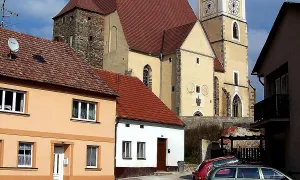
Real photos taken near the monument

Zdroj a licence jsou uvedeny u každého snímku.
Atmosphere of the place
This atmospheric visualisation of the place and period was generated by artificial intelligence. It is not real footage of the location.
Tips from visitors
No tips yet. Be the first!
Log in and add your tip.
Sources and literature
Photos: Tomas.andreas / CC BY-SA 4.0 — Wikimedia Commons. The author and licence also appear when you hover over the image.
Faktickým podkladem tohoto textu byl článek na Wikipedii, jehož autory jsou přispěvatelé Wikipedie. Článek je dostupný pod licencí CC BY-SA 4.0.
Location on the map

Příběhy a pověsti
Legendy, pověsti a příběhy spjaté s touto památkou

Fotografie návštěvníků
Zatím žádné fotografie. Buďte první, kdo přidá fotografii z návštěvy!
Log in a přidejte svou fotografii nebo hodnoťte.
Za ověřenou návštěvu v aplikaci získáte víc bodů — poznáme podle GPS, že jste na místě.
Reviews and comments