






Prvního pluku 4 Tenement house
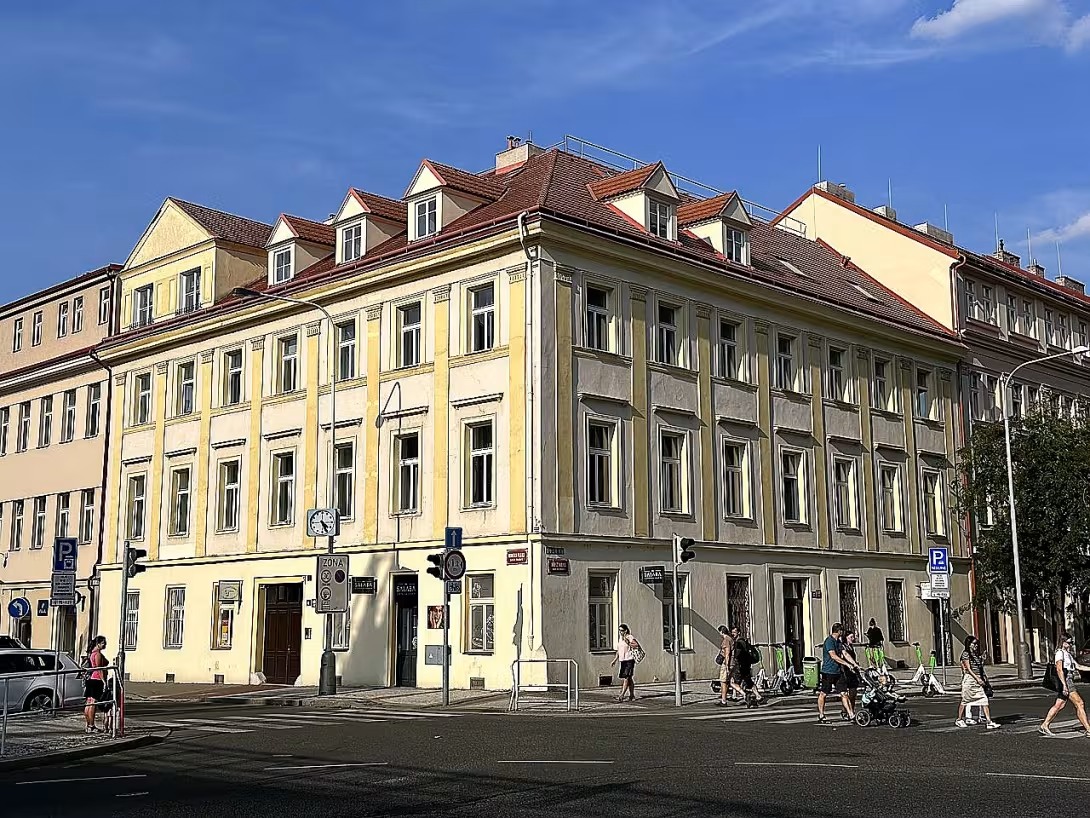
The building at Prvního pluku 140 in Prague's Karlín district is a remarkable example of late classicism, constructed in 1837 by architect Jan Ripota. This three-story structure features symmetrical facades adorned with high-order pilasters and cornices extending over the first and second floors. Its architectural significance was recognized when it was listed as a cultural monument in 1964. Situated in an area known for historical architecture, this building predates significant developments such as Křižíkova ulice and Negrelliho viadukt.
Constructed during a period of cultural and architectural development within the Austrian Empire, the house reflects broader European trends towards classicism. The choice of late classicist style underscores its alignment with contemporary aesthetic values. Architect Jan Ripota designed it as part of Karlín's valuable classical architecture, contributing to the district's historical fabric.
Architecturally, the building features a distinctive late classicist facade on both its western and southern sides. The western facade faces the viaduct in Prvního pluku street, while the southern side opens into Křižíkova ulice. Both facades are seven bays wide, showcasing high-order pilasters and cornices spanning across the first and second floors. Additionally, a northern courtyard wing was added in 1859 as a single-story structure. This wing underwent significant modifications in 1923 to include a large dormer window facing Prvního pluku street, enhancing its architectural complexity.
Throughout its history, the building has undergone various changes, most notably during a renovation from 2020 to 2024. During this period, architect Petr Jančálka introduced an attic apartment with an outdoor atrium, modernizing the structure while preserving its historical essence. This renovation reflects ongoing efforts to maintain and adapt historic buildings for contemporary use.
Today, Prvního pluku 140 remains a testament to Karlín's architectural heritage. Its status as a cultural monument ensures preservation for future generations. Visitors can explore this building not only to admire its classicist design but also to gain insight into the historical context of Prague's development during the 19th century.
The value of Prvního pluku 140 lies in its ability to connect us with Karlín's architectural and cultural history, offering a tangible link to the past. Its preservation as a cultural monument highlights its importance within the district's heritage landscape. Visitors are invited to explore this historic site, where they can appreciate the enduring beauty and significance of late classicist architecture in Prague.
Then and now
Drag the slider to compare how the landmark may have looked when it was built with the view today.
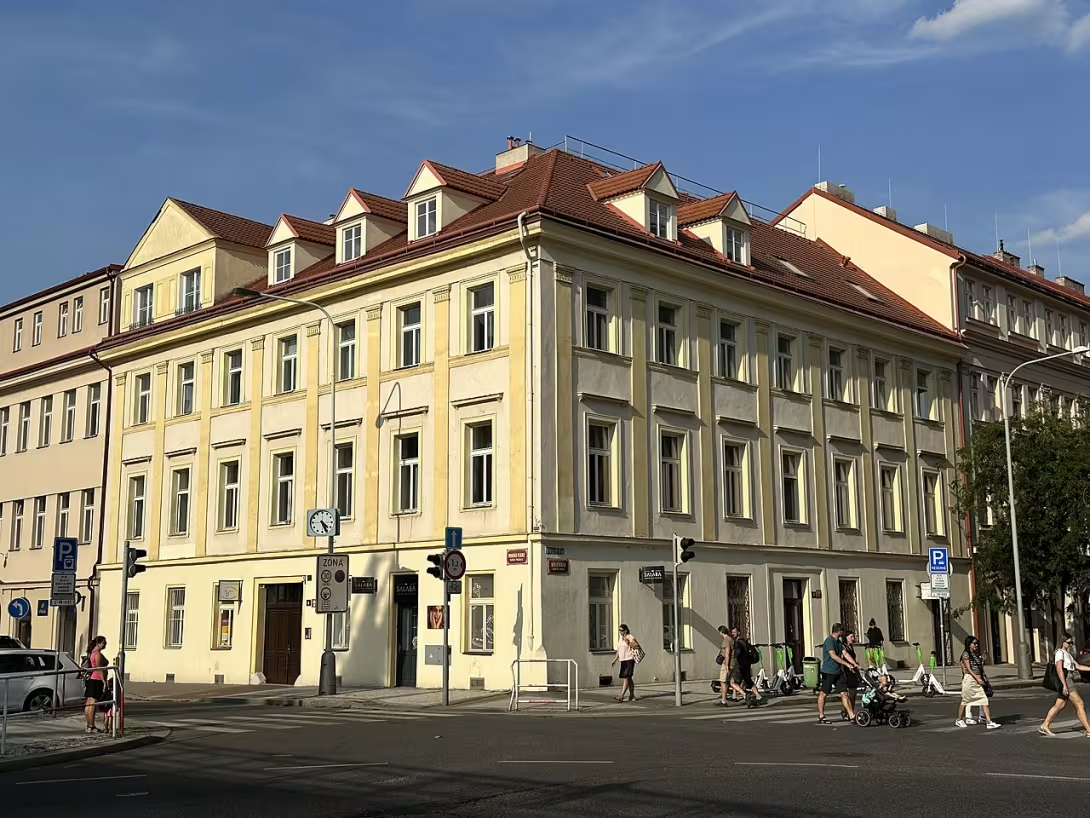

The historical appearance on the left is an AI-generated visualisation and serves as inspiration only.
Historical milestones
- 1837
- The rental house was built by architect Jan Ripota.
- 1859
- A single-story northern wing was added.
- 1923
- To the northern wing, a large cellar extending towards Prvního pluku street was added.
- 1964
- The house was registered as a cultural monument.
- 2020
- A renovation began with the addition of a terrace and a tower on the roof.
Architectural development
Originally built in 1837, the house features late classicist facades. The northern courtyard wing was added in 1859 and later modified in 1923 to include a large dormer window facing Prvního pluku street. Recent renovations from 2020 to 2024 introduced an attic apartment with an outdoor atrium.
Historical events
The house was built in 1837, predating significant developments like Křižíkova ulice (1884) and Negrelliho viadukt (1846-1849).
In 1964, the building was registered as a cultural monument.
A renovation from 2020 to 2024 included the construction of an attic apartment with an outdoor atrium by architect Petr Jančálka.
Points of interest
- The building at Prvního pluku 140 in Prague's Karlín district is a remarkable example of late classicism, constructed in 1837 by architect Jan Ripota. - It was listed as a cultural monument in 1964 due to its architectural significance. - Architecturally, the building features symmetrical facades adorned with high-order pilasters and cornices extending over the first and second floors. - A northern courtyard wing added in 1859 underwent significant modifications in 1923 to include a large dormer window facing Prvního pluku street. - The renovation from 2020 to 2024 introduced an attic apartment with an outdoor atrium, modernizing the structure while preserving its historical essence.
Guide
This guide is narrated by a synthetic voice generated by artificial intelligence.
Show guide text
This text was created by artificial intelligence and has not been editorially reviewed. It may contain inaccuracies.
The corner building with description number 140 on Prvního pluku Street belongs among the valuable Classicist buildings in Prague's Karlín district. It was built in 1837 by builder Jan Ripota in Late Classicist style. In 1964, the building was entered into the state register of cultural monuments.
The building is older than its current surroundings. Křižíkova Street was created only in 1884, when its western part, leading from Florence to Karlínské náměstí, was connected with the eastern part from Karlínské náměstí to Invalidovna. Negrelliho Viaduct was built in the years 1846 to 1849, also only after the building was completed.
The structure has three storeys. The western street facade stands on Prvního pluku Street and faces the viaduct, the southern facade is oriented toward Křižíkova Street. Both facades have seven window axes and Late Classicist ornamentation. They are divided by cornices and pilasters in high order, which connect the first and second floors.
The building also includes a northern courtyard wing from 1859. Originally it was only ground floor. The attic with a large dormer window toward Prvního pluku Street was created during renovation in 1923.
The most recent transformation took place in the years 2020 to 2024. During the building modifications, an apartment with an exterior atrium was created in the roof according to a design by architect Petr Jančálek.
Frequently asked questions
Can the monument be visited?
This is a residential or farm building, not a museum with opening hours. Please view it from public space and respect the owners' privacy. We have no information about access to the interior.
Where is the monument?
Location: Karlín, Hlavní město Praha. The map on this page shows the exact spot.
Why is the monument protected?
It is listed in the Central List of Cultural Monuments of the Czech Republic as a cultural monument (register no. 1000152723).
Businesses nearby
Do you run a restaurant, accommodation, shop, museum, rental, wellness or other visitor service near this monument? Show yourself directly to the people heading to it — this is how they will see you in the app and on the web:
Events nearby

Zdroj akcí: otevřená data měst a obcí ČR (Národní katalog otevřených dat) a kalendář akcí Národního památkového ústavu.
Nearby
Located in Prague's Karlín district, the area is known for its historical architecture and proximity to landmarks like Křižíkova ulice and Negrelliho viadukt.
Accommodation nearby
Trips and activities nearby
Guided tours, tickets and activities nearby from GetYourGuide
Affiliate link: if you buy from the partner, we may receive a commission. The price for you does not change.
Search tours and activities →Themed route
Karlín's Historical Gems
Stop 1: First Regiment 4 (nájemní dům) Visit this 19th-century building, a rare example of a residential house from the era of the Austro-Hungarian Empire. Its unique blend of architectural styles and rich history make it a must-see in Prague's Karlín district.
Stop 2: Křižíkova ulice Walk along this charming street, lined with beautiful Art Nouveau buildings, cafes, and shops. The street is a great place to experience the local atmosphere and enjoy the city's unique architectural heritage.
Stop 3: Negrelliho viadukt Explore this historic railway viaduct, a masterpiece of engineering from the 19th century. The viaduct offers stunning views of the Vltava River and the cityscape.
Stop 4: Karlín Square End your tour at this picturesque square, surrounded by beautiful buildings and lively cafes. The square is a great place to relax and enjoy the local culture.
Seasonal recommendations
Jaro: In the spring, tours of the historical landmark First Battalion 4 in Karlín are characterized by clear lighting and beautiful atmosphere. Practical tips for visitors: the best time to visit is in the morning or early afternoon to avoid crowds that usually gather later in the day. You should not forget appropriate light clothing, as it can still be relatively cool during the spring season.
Léto: During the main summer season, tours of the historical landmark First Battalion 4 in Karlín are characterized by warmth and vibrancy. Practical tips for visitors: the best time to visit is in the morning or early morning to avoid crowds that usually gather later in the day. You should not forget appropriate light clothing and sun protection.
Podzim: In the autumn season, tours of the historical landmark First Battalion 4 in Karlín are characterized by beautiful autumn lighting and a calm atmosphere. Practical tips for visitors: the best time to visit is in the morning or early afternoon to avoid crowds that usually gather later in the day. You should not forget appropriate light clothing, as it can still be relatively cool during the autumn season.
Zima: In winter, tours of the historical landmark First Battalion 4 in Karlín are characterized by warmth and a calm atmosphere. You should not forget warm clothing and appropriate footwear.
Visualizations and artistic views


The visualisations are generated by artificial intelligence and serve as inspiration.
Photos from the area
Real photos taken near the monument


Zdroj a licence jsou uvedeny u každého snímku.
View from the area
This animation was generated by artificial intelligence from a real photograph of the surroundings. The motion and details are not real footage of the location.
Tips from visitors
No tips yet. Be the first!
Log in and add your tip.
Sources and literature
Photos: Petr Jančálek / CC BY-SA 4.0 — Wikimedia Commons. The author and licence also appear when you hover over the image.
Faktickým podkladem tohoto textu byl článek na Wikipedii, jehož autory jsou přispěvatelé Wikipedie. Článek je dostupný pod licencí CC BY-SA 4.0.
Location on the map


Příběhy a pověsti
Legendy, pověsti a příběhy spjaté s touto památkou
Fotografie návštěvníků
Zatím žádné fotografie. Buďte první, kdo přidá fotografii z návštěvy!
Log in a přidejte svou fotografii nebo hodnoťte.
Za ověřenou návštěvu v aplikaci získáte víc bodů — poznáme podle GPS, že jste na místě.
Reviews and comments