






Výklenková kaplička sv. Václava Niche chapel
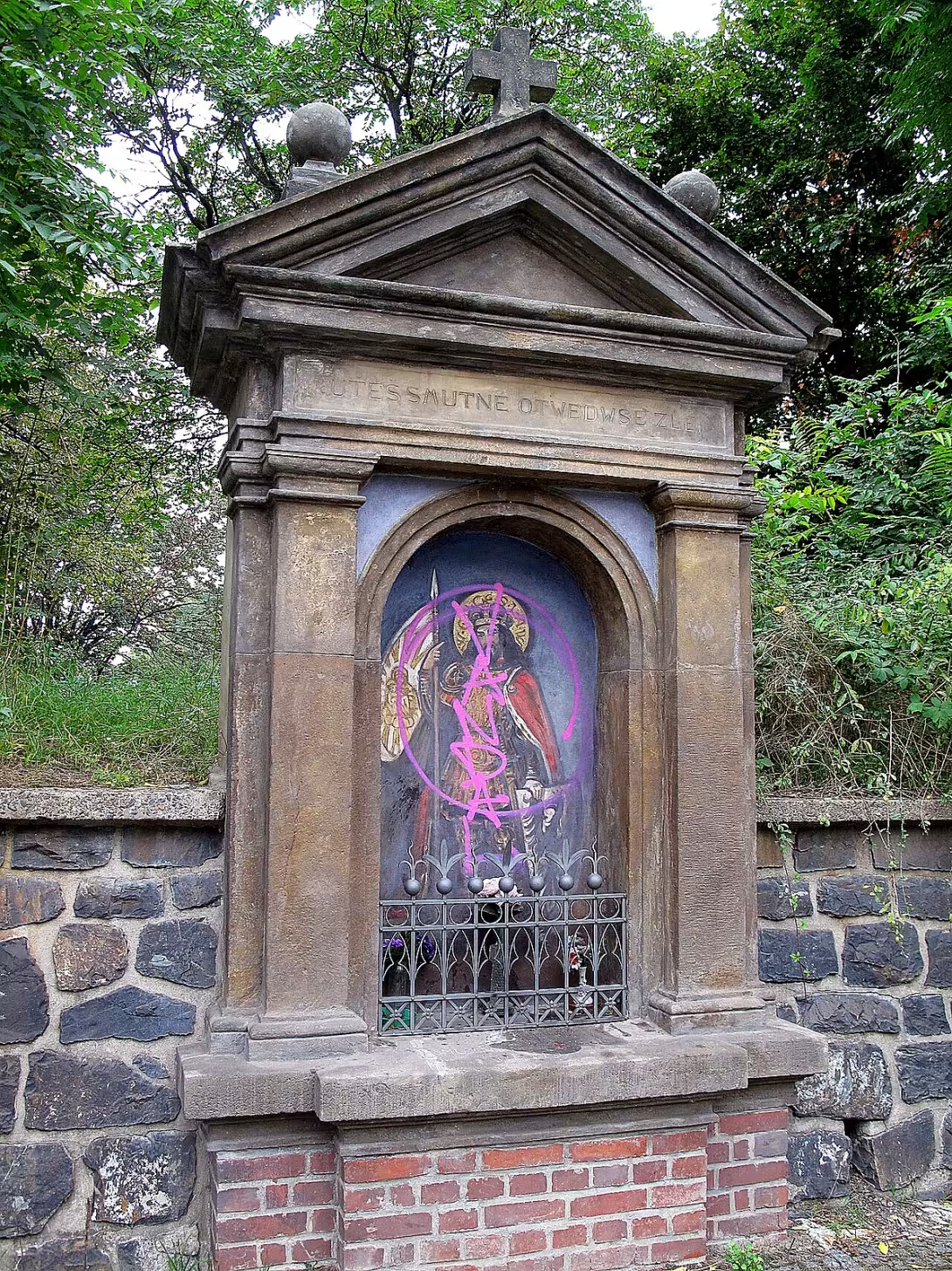
The Výklenková kaplička sv. Václava is a small, protected edicule located in Prague's Karlín district. Situated on Sokolovská Street near a former railway embankment and facing Kaizlovy sady, this monument dates to the mid-nineteenth century. It is notable for its distinct architectural features, including Tuscan pilasters and a specific inscription, and houses a 1929 painting of Saint Wenceslas. As a registered immovable cultural monument of the Czech Republic, it serves as a preserved example of local religious architecture and historical memory within the urban fabric.
The chapel's origins lie in the mid-1800s, a period of significant industrial and urban growth in Prague. Historical records suggest the structure was likely built around this time. While the precise circumstances of its founding are not extensively detailed, its position along Sokolovská Street indicates a link to the area's evolving infrastructure, particularly the nearby former railway embankment. The chapel has remained here for over a century, serving as a constant landmark amidst Karlín's changing landscape. Its survival reflects its status as a protected cultural asset, ensuring this piece of local heritage remains intact.
The architectural design follows the edicule style, characterized by a small, shrine-like form. The structure rests on a solid brick socle, providing a sturdy base. Rising from this foundation is a frame of Tuscan pilasters arranged in a twice-stepped configuration, creating a layered visual effect that adds depth to the facade. The simplicity of the Tuscan order is evident in the clean lines of these vertical supports. This choice gives the monument a classical appearance, distinguishing it from the more ornate or Gothic structures found elsewhere in the city. The brick socle contrasts with the likely stone or plastered finish of the pilasters and entablature, highlighting the base's structural integrity.
Above the pilasters, the entablature bears a significant inscription: "Uťeš smutné otweď wše zlé," which translates to "Comfort the sorrowful, turn away all evil." This devotional message reinforces the site's religious purpose. The text is a key element of the chapel’s identity, offering a direct link to the spiritual intentions of its creators. Positioned on the entablature, the phrase is visible to passersby, integrating the monument into the daily experience of the street. The specific orthography of the inscription adds historical authenticity, marking it as a product of its era.
The upper section is crowned by a triangular tympanum. At its apex sits a cross, a Christian symbol that clearly identifies the building’s function. Flanking the central area are two stone spheres resting on small pedestals, adding a decorative touch to the otherwise austere classical design. The central field of the tympanum is recessed, creating a shadowed area that contrasts with the raised cross and spheres. This panel likely served as a space for additional decoration or as an architectural detail to break up the flat surface. Together, the cross, spheres, and recessed panel create a balanced, symmetrical composition characteristic of traditional chapel design.
Inside, the focal point is a painting of Saint Wenceslas, the patron saint of the Czech lands. Created in 1929, the artwork indicates that the interior was updated in the early twentieth century. The painting is inspired by the Beuron school, a monastic art movement emphasizing spiritual symbolism and traditional iconography. Saint Wenceslas is depicted in armor, reflecting his historical role as a warrior prince and defender of the faith. In his right hand, he holds a banner featuring the Staroboleslavský palladium motif, a significant religious relic. In his left, he holds a shield bearing an eagle. These attributes carry deep symbolic weight, connecting the viewer to the narratives surrounding the saint.
The Beuron school's influence is evident in the meticulous detail and symbolic accuracy of the iconography. This style sought to revive medieval artistic traditions, emphasizing clarity and spiritual depth. By adopting this approach, the artist aligned the chapel with a broader movement of religious art restoration. The armor, banner, and shield are rendered with precision, allowing viewers to easily identify the saint and his attributes. The banner's Staroboleslavský palladium motif is particularly noteworthy, linking the local monument to a wider national heritage, while the eagle shield reinforces the saint’s status as a protector of the Czech nation.
Located on Sokolovská Street, the chapel exists within a specific urban context. It stands near a former railway embankment, recalling the industrial history of the Karlín district. The proximity to Kaizlovy sady, a public garden, provides a green contrast to the built environment. This setting allows the chapel to serve as a quiet spot for reflection amidst the city's bustle. The former railway infrastructure suggests the area was once a transport hub, and the chapel's presence marks a transition toward a more contemplative space. Facing Kaizlovy sady, it offers visitors a pleasant view that combines natural elements with historical significance.
As a protected immovable cultural monument of the Czech Republic, the Výklenková kaplička sv. Václava is subject to preservation efforts that ensure its structural integrity and authenticity. This status recognizes its value as both a religious site and a piece of architectural heritage. Protection helps maintain original features, including the brick socle, Tuscan pilasters, and the entablature's inscription. It also safeguards the 1929 painting, ensuring the artwork is preserved for future generations. This designation underscores the chapel's importance in Prague’s broader history and its role within the local community.
Visitors to Karlín can easily find the chapel on Sokolovská Street, where it stands as a distinct landmark. Its compact size and specific location make it an accessible stop for those interested in the finer details of Prague’s architectural heritage. The chapel offers a glimpse into past religious and cultural practices, providing a tangible connection to local history. The combination of classical architecture, a meaningful inscription, and a detailed painting makes it a site of interest for tourists and locals alike. The cross and stone spheres further enhance its visual appeal, inviting closer inspection.
The chapel’s history, from its mid-nineteenth-century construction to the 1929 painting, reflects the evolving nature of religious expression in Prague. The use of the Beuron school style indicates a deliberate choice to connect with traditional forms, while the inscription highlights the enduring nature of devotional messages. The monument’s survival in a changing urban environment testifies to its cultural significance. It serves as a reminder of the importance of preserving small, local landmarks that contribute to the city's overall character.
For the curious visitor, the Výklenková kaplička sv. Václava offers a unique opportunity to explore the intersection of architecture, art, and history. Its location near the former railway embankment and opposite Kaizlovy sady provides a convenient setting for a brief visit. The chapel’s features, from the twice-stepped Tuscan pilasters to the recessed tympanum, offer ample detail for observation. The painting of Saint Wenceslas, with its specific attributes and stylistic influences, provides a focal point for reflection, while the inscription "Uťeš smutné otweď wše zlé" serves as a poignant reminder of the site's original purpose.
In conclusion, the Výklenková kaplička sv. Václava is a significant cultural monument that warrants attention from those exploring the Karlín district. Its architectural details, historical context, and artistic elements combine to create a site of lasting interest. Its protected status ensures that the monument will remain part of Prague’s heritage for years to come. Visitors are encouraged to visit this small but meaningful chapel to appreciate its craftsmanship and reflect on the history it represents. The chapel stands as a quiet witness to the past, offering a moment of pause and contemplation in the heart of the city.
Then and now
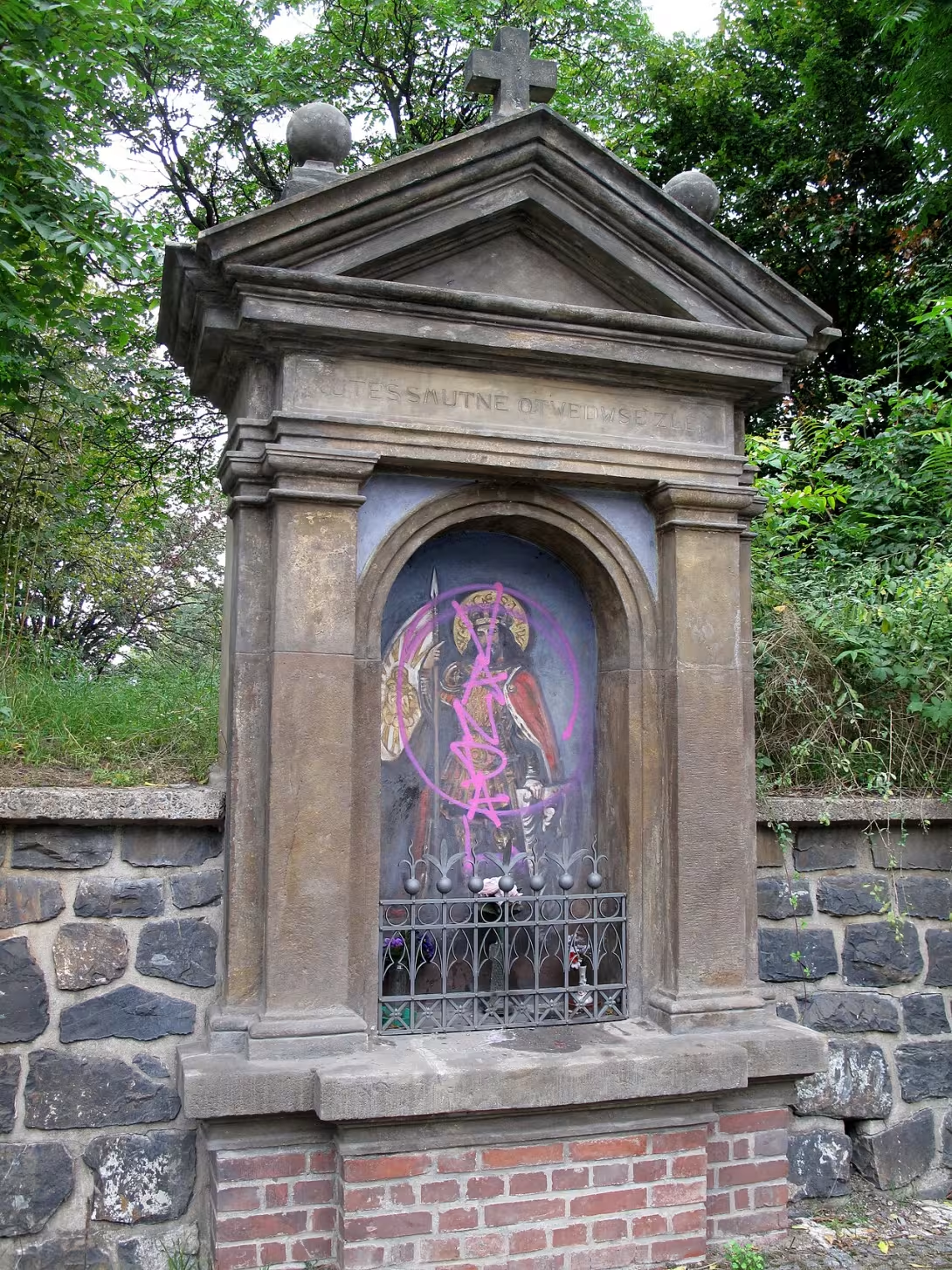
Drag the slider to compare how the landmark may have looked when it was built with the view today.
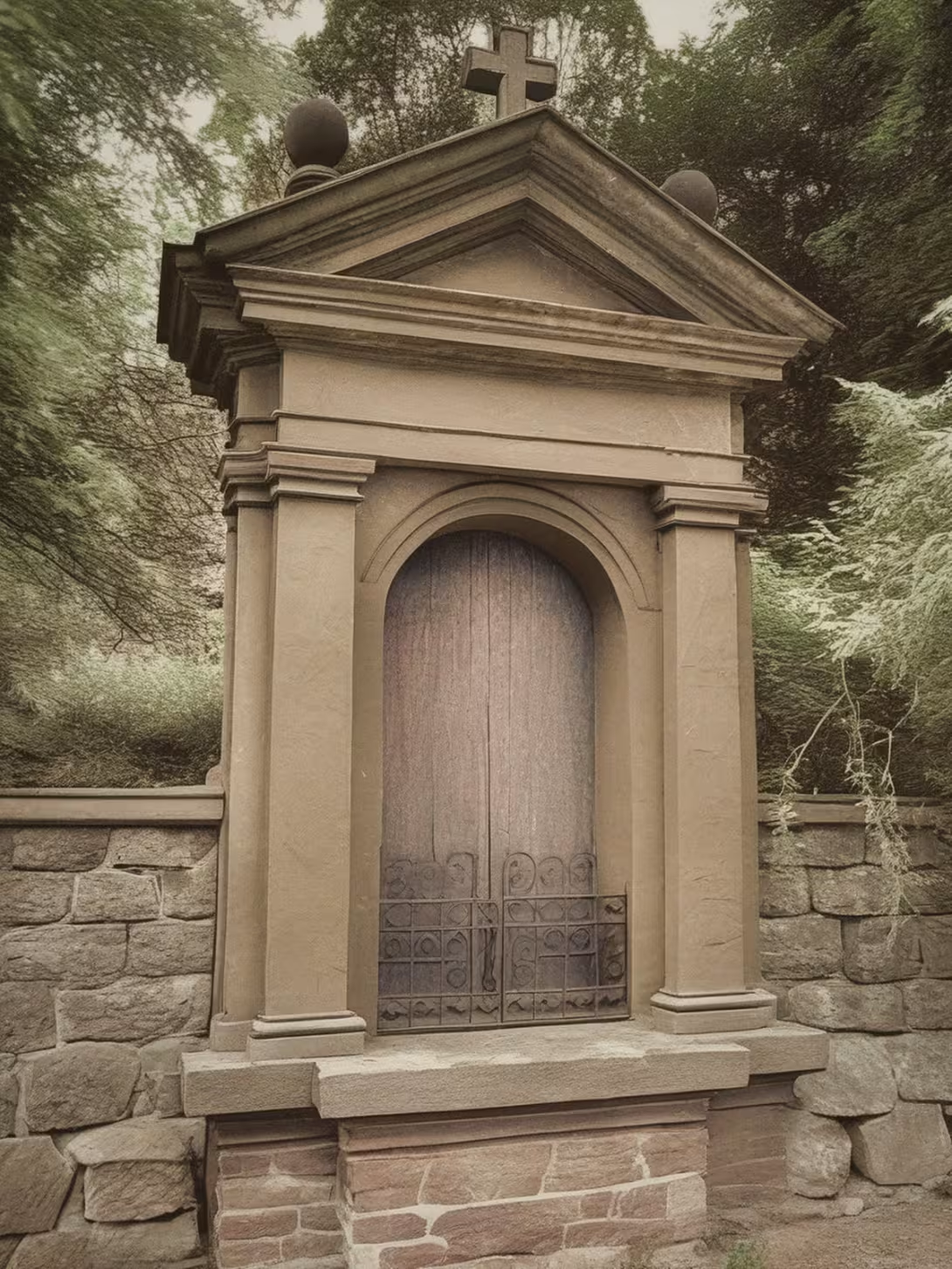
The historical appearance on the left is an AI-generated visualisation and serves as inspiration only.
Historical milestones
- around 1850
- Construction of the Výklenková kaplička sv. Václava
- 1929
- A painting of Saint Wenceslas was placed in the chapel
Architectural development
The chapel was likely constructed around the middle of the 19th century. It is an edicule-style structure built on a brick socle with Tuscan pilasters. The design includes a triangular tympanum with a recessed central field.
Historical events
The painting of St. Wenceslas was created in 1929.
Points of interest
– The Výklenková kaplička sv. Václava is a small, protected edicule located on Sokolovská Street in Prague's Karlín district. – This mid-nineteenth-century monument houses a 1929 painting of Saint Wenceslas. – The structure features a solid brick socle and Tuscan pilasters arranged in a twice-stepped configuration. – The entablature bears a devotional inscription that translates to "Comfort the sorrowful, turn away all evil." – The upper section is crowned by a triangular tympanum with a cross at its apex and two stone spheres on small pedestals.
Guide
Show guide text
This text was created by artificial intelligence and has not been editorially reviewed. It may contain inaccuracies.
Welcome, dear visitor. You are standing before the modest yet striking Výklenková kaplička sv. Václava, a little edicule chapel tucked into the bustling heart of Karlín, on Sokolovská Street. Directly across the way you can glimpse the green expanse of Kaizlovy sady, while the former railway embankment looms nearby, reminding you of the district’s industrial past. The chapel’s simple silhouette—its brick base, the rhythm of pilasters, and the triangular pediment crowned with a cross—offers a quiet counterpoint to the surrounding cityscape. Take a moment to let the scene settle: the stone‑faced brick socle anchors the structure, and the gentle rise of the roofline draws your eye upward, inviting you to explore the story hidden within these walls.
Now let us step back to the mid‑nineteenth century, around 1850, when this chapel first rose from the ground. At that time Karlín was undergoing rapid transformation, evolving from a modest suburb into a vibrant industrial quarter. The construction of the chapel was part of a broader movement to provide spiritual waypoints for workers and residents who were moving into the area in great numbers. Although the names of the architects and the patrons who commissioned the building have been lost to history, the very act of erecting a dedicated place of worship for Saint Wenceslas—Czech patron saint and a symbol of national identity—speaks to the community’s desire for a tangible link to tradition amid change. The chapel was intended as a small, intimate sanctuary where passersby could pause, reflect, and perhaps say a quick prayer before continuing on their daily routines.
As you look more closely at the architecture, notice the careful composition of the façade. The structure rests on a solid brick socle, a sturdy foundation that has withstood more than a century and a half of Prague’s weather and traffic. Rising from this base are two tiers of Tuscan pilasters, each set back slightly from the one below, creating a sense of depth and rhythm. The Tuscan order, the simplest of the classical orders, was often chosen for its unadorned dignity—a fitting choice for a modest chapel meant to serve ordinary people rather than grand ceremonies. The pilasters frame the central opening, guiding the eye toward the triangular tympanum that tops the edicule. Within that tympanum, a plain cross sits at the apex, a clear and unmistakable sign of the building’s sacred purpose. The overall effect is one of restrained elegance: the chapel does not shout for attention, yet its proportions and classical references convey a quiet confidence.
Now, let us turn our attention to the interior, or rather, to what you can perceive through the modest doorway. Although the chapel’s interior is not open to the public in the same way as larger churches, you can still appreciate a key artistic element that has been on display since 1929: a painting of Saint Wenceslas. This work, installed more than seventy years after the chapel’s construction, adds a layer of historical continuity. The image of the saint, rendered in the style of early twentieth‑century religious art, serves both as a devotional focus and as a visual reminder of the chapel’s namesake. Even from the outside, the presence of the painting can be sensed in the way the light filters through the modest windows, casting a soft glow on the altar space behind the door.
While the chapel’s creators remain anonymous, the building itself has become a silent witness to the lives of countless individuals who have passed by over the decades. Workers commuting to nearby factories, families strolling through Kaizlovy sady, and travelers navigating the old railway routes have all paused here, perhaps to light a candle, to whisper a prayer, or simply to take a breath of calm amidst the urban rush. Though we do not have recorded stories of particular personalities linked directly to the chapel, its very existence tells us about the collective spirit of the Karlín community—a desire to carve out a small sanctuary of faith and reflection in the midst of rapid industrialization.
Here is a little curiosity that often intrigues visitors: despite its modest size, the Výklenková kaplička sv. Václava is officially protected as a cultural monument. This designation underscores the value that the city places on preserving even the most unassuming pieces of its architectural heritage. The protection ensures that the brick socle, the Tuscan pilasters, and the triangular pediment will be maintained for future generations, allowing the chapel to continue serving as a tangible link between past and present. Moreover, the fact that a simple edicule can achieve such status invites us to consider what makes a building worthy of preservation. Is it grandeur, or is it the ability to encapsulate a moment in the social and cultural fabric of a neighborhood? In this case, the answer leans toward the latter.
As you stand here, imagine the sounds that would have filled this spot in the late nineteenth century: the clatter of horse‑drawn carts on cobblestones, the distant hum of steam engines on the nearby railway, and perhaps the faint echo of a hymn drifting from the chapel’s doorway. The juxtaposition of those industrial noises with the serene presence of the chapel creates a subtle tension that defines Karlín’s character—a district where progress and tradition have always walked hand in hand.
Before we part, I invite you to linger a little longer and let the atmosphere settle around you. Observe how the light plays across the brick socle, how the shadows accentuate the stepped pilasters, and how the cross atop the tympanum catches the sun’s rays at different times of day. If you feel inclined, you might step onto the sidewalk and follow the path toward Kaizlovy sady, where the park’s trees provide a natural extension of the chapel’s quiet refuge. Alternatively, a short walk along Sokolovská Street will reveal other historical markers of Karlín’s evolution, each telling its own piece of the district’s story.
Thank you for joining me in this brief exploration of the Výklenková kaplička sv. Václava. May the calm you have felt here accompany you as you continue your journey through Karlín, and may the hidden histories of this neighborhood continue to inspire curiosity and wonder. Safe travels, and enjoy the rest of your visit.
Tips for visitors
The best time to visit the Výklenková kaplička sv. Václava is during the early morning or late afternoon. The soft, angled light of the golden hour highlights the architectural details of the edicule and provides a peaceful atmosphere away from the peak midday traffic of Sokolovská street.
The chapel is easily accessible by both car and public transport. Since parking in the Karlín district can be limited, it is recommended to verify current parking options or check a search engine for the most up-to-date public transport connections to the area.
When visiting, bring comfortable walking shoes and a camera. Because the chapel is an outdoor structure, there are no specific requirements for entry, but having a map of the Karlín district can help you navigate the surrounding urban landscape.
For photography, the best vantage points are located across Sokolovská street, allowing you to capture the chapel's silhouette against the city backdrop. Focus on the contrast between the historical edicule and the surrounding modern urban environment.
Families with children will find this a convenient stop during a neighborhood walk. Within a 30-minute stroll, you can visit the nearby Kaizlovy sady or observe the area around the former railway embankment, making it a simple and educational outing for all ages.
Businesses nearby
Events nearby

Zdroj akcí: otevřená data měst a obcí ČR (Národní katalog otevřených dat) a kalendář akcí Národního památkového ústavu.
Nearby
The chapel is located near the former railway embankment and opposite Kaizlovy sady.
Accommodation nearby
Trips and activities nearby
Guided tours, tickets and activities nearby from GetYourGuide
Affiliate link: if you buy from the partner, we may receive a commission. The price for you does not change.
Search tours and activities →Themed route
1. Kaizlovy sady (Park) – A peaceful green area that serves as an ideal starting point for the walk. 2. Výklenková kaplička sv. Václava (Chapel) – The main destination, featuring a unique niche architecture dedicated to St. Wenceslaus. 3. Former railway embankment (Historical site) – An interesting walk along the old railway infrastructure located near the chapel.
Seasonal recommendations
In spring, the area around Výklenková kaplička sv. Václava in Karlín awakens with fresh greenery and soft, diffused light that highlights the chapel's architectural details. The atmosphere is one of renewal and quiet anticipation. Visitors should wear a light jacket to protect against unpredictable showers and are encouraged to visit during the early morning hours to experience the site in peace before the city's daily rush begins.
During the summer, the chapel is bathed in intense sunlight, creating sharp contrasts and a vibrant energy typical of the high season. The surrounding urban environment feels lively and warm. To avoid the peak heat and larger crowds of tourists, it is best to arrive early in the day. Lightweight, breathable clothing and sun protection are essential for a comfortable visit.
Autumn brings a moody, reflective atmosphere to Karlín, with golden leaves contrasting against the stone of Výklenková kaplička sv. Václava. The low angle of the sun in the late afternoon provides a warm glow that is ideal for photography. Since temperatures can drop quickly, wearing layered clothing is recommended to stay comfortable while exploring the neighborhood.
In winter, the chapel takes on a serene and solemn character, often framed by frosty air or a blanket of snow. The atmosphere is particularly poignant during the advent season. Because daylight is limited, it is advisable to plan the visit for the middle of the day. Heavy winter clothing, including gloves and a scarf, is necessary to withstand the cold while admiring the monument.
Visualizations and artistic views


The visualisations are generated by artificial intelligence and serve as inspiration.
Photos from the area
Real photos taken near the monument


Zdroj a licence jsou uvedeny u každého snímku.
Tips from visitors
No tips yet. Be the first!
Log in and add your tip.
Sources and literature
Fotografie: Dezidor / CC BY 3.0 — Wikimedia Commons. The author and licence also appear when you hover over the image.
Faktickým podkladem tohoto textu byl článek na Wikipedii, jehož autory jsou přispěvatelé Wikipedie. Článek je dostupný pod licencí CC BY-SA 4.0.
Location on the map


Příběhy a pověsti
Legendy, pověsti a příběhy spjaté s touto památkou
Fotografie návštěvníků
Zatím žádné fotografie. Buďte první, kdo přidá fotografii z návštěvy!
Přihlaste se a přidejte svou fotografii nebo hodnoťte.
Za ověřenou návštěvu v aplikaci získáte víc bodů — poznáme podle GPS, že jste na místě.
Reviews and comments