



Florenc Other
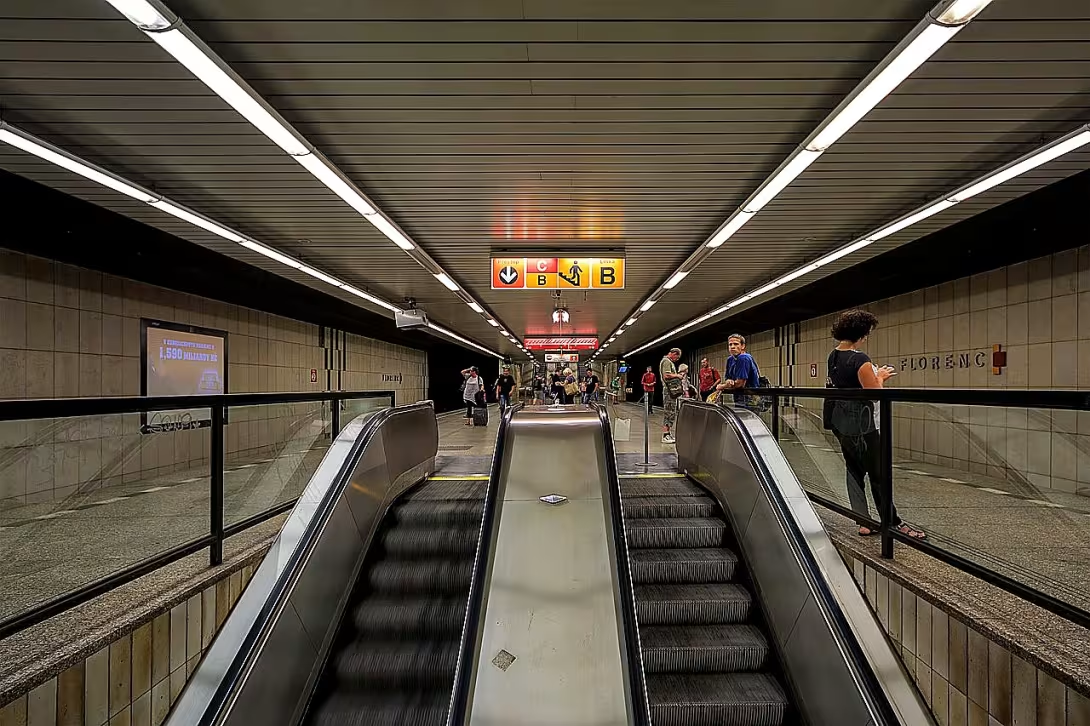
Florenc is a significant interchange station in Prague's metro system, located beneath the bustling intersection of Florenc in Karlín. It serves as a crucial hub where lines B and C intersect, each with its own platform. The station opened initially for line C in 1974 and later for line B in 1985, playing an essential role in facilitating public transportation within the city. Notable for its modern architectural design, Florenc features ceramic tiles and Ekrona panels, reflecting the era's emphasis on urban planning and infrastructure development.
The construction of Florenc began during a period when Czechoslovakia was under communist rule, influencing its architectural style and public transportation development. The station's establishment aligns with mid-20th-century efforts to modernize Prague's transit system. Line C opened in 1974, initially serving as the northern terminus until extended in 1984. Line B commenced operations at Florenc in 1985, initially functioning as a terminal until its extension in 1990.
Architecturally, Florenc is distinguished by unique design elements. The Line B station features a three-vault structure with an elevated central vault and is constructed using ceramic tiles in brown and beige tones. It lies 39 meters underground, deeper than the Line C platform at 9.35 meters. The construction of Line B spanned from 1977 to 1985, costing 560 million Czechoslovak crowns. In contrast, the Line C station, opened in 1974, is a cut-and-cover structure with no internal columns and a ceiling made of prefabricated concrete beams. Its platform is adorned with marble and granite sourced from Liberec.
Florenc has undergone several modifications since its inception. Notably, in 2002, the station experienced flooding due to a Vltava river flood, leading to renovations that included replacing original cylindrical light fixtures with copper suspended ceilings. Accessibility improvements were made in 2006 with the installation of elevators, enhancing connectivity within the station.
The station's inter-line connection is facilitated by a single-track tunnel used for depot transfers, allowing trains to move between lines without reversing. This feature underscores Florenc's role as a pivotal interchange point in Prague's metro system. The area surrounding Florenc includes a bus terminal and connects to various parts of the city through significant roads like Wilsonova estakáda.
Today, Florenc remains an integral part of Prague's public transportation network. Its modern design and strategic location make it a vital hub for commuters. Visitors can appreciate its architectural features and the seamless connectivity it offers within the city. Florenc is not only a testament to mid-20th-century urban planning but also continues to serve as a functional and accessible transit point, inviting exploration and appreciation from both locals and tourists alike.
Historical milestones
- 1974
- Opening of line C at Florenc.
- 1985
- Line B began operations at Florenc.
- 2002
- The station was flooded during the Vltava river flood.
Architectural development
Florenc's construction spanned from 1977 to 1985 for line B, with costs amounting to 560 million Kčs. The station features a three-vault design with an elevated central vault and is equipped with escalators and elevators for accessibility. Initially serving as the terminal station until 1990, it underwent modifications including the addition of elevators in 2006.
Historical events
The station was opened for line C in 1974.
Line B began operations at Florenc in 1985.
In 2002, the station experienced flooding due to a Vltava river flood.
Points of interest
- Florenc's Line B station is uniquely constructed with a three-vault design featuring an elevated central vault, making it architecturally distinct among Prague metro stations. - The original cylindrical light fixtures at Florenc were replaced with copper suspended ceilings following flooding in 2002, showcasing the station’s adaptability and resilience to natural events. - Despite being deeper than Line C's platform at 39 meters underground, Florenc was constructed during a period of communist rule, reflecting the era's focus on extensive infrastructure development. - The use of ceramic tiles in brown and beige tones for Line B's construction is an example of mid-20th-century architectural trends that emphasize both functionality and aesthetic appeal. - Florenc features a single-track tunnel used exclusively for depot transfers between lines, highlighting its advanced design as a pivotal interchange point without requiring trains to reverse direction.
Guide
This guide is narrated by a synthetic voice generated by artificial intelligence.
Show guide text
This text was created by artificial intelligence and has not been editorially reviewed. It may contain inaccuracies.
Florenc is one of the most important interchange stations of the Prague metro. It lies beneath the same-named intersection in Karlín and here lines B and C cross, each with its own platform. Until February 21st, 1990, the station was called Sokolovská.
The older part is on line C. It was built between 1969 and 1974 and cost 210 million Czechoslovak crowns. It is cut and pillarless, the platform lies just over 9 meters below the surface and is covered with marble and granite from Liberec. Before construction, part of the bus station had to be relocated. In the station, the cutting shield Pavel turned around, which after breaking through the tunnel towards Háje traveled back through the second tunnel. Until 1984, Florenc was the terminus. Trains turned around here unusually, even before the station, because to the north of it there were no storage sidings back then. Moreover, the track here has, as in very few places in the Prague metro, a gravel base.
The platform of line B was opened in 1985 after eight years of construction and cost 560 million Czechoslovak crowns. It lies 39 meters below ground, deep below line C. It is a three-aisled columned station with a raised central aisle, lined with brown and beige ceramic tiles. A transfer corridor with a four-armed escalator connects it with line C. In 2006, two elevators for people with reduced mobility were added.
During the 2002 flood, the station was inundated. Just before that, two trains were stored here that could not be taken anywhere else. After being pulled out, they were reconstructed by the Škodovka factory in Plzeň. During the subsequent repairs, the original cylindrical lights typical of line B disappeared and the ceilings between the aisles have been copper-colored ever since.
The northern vestibule is shared by both lines and has five stories, four of which are below ground. Because of its construction in the early eighties of the twentieth century, several Karlín buildings had to make way. The southern vestibule leads to the bus station.
Both lines are connected by a single-track connection, along which trains can travel between depots without changing direction. Line B needed it for a long time because it only got its own depot in 1994. Until 1990, the connection also served to turn around line B trains. But they only ended here under the name Sokolovská, because the new section to Českomoravská opened on the very day the station was renamed. Above the connection stands the Hilton hotel today.
Tips for visitors
The best time to visit Florenc station is during off-peak hours, typically mid-morning or early afternoon on weekdays. This timing helps avoid the rush of commuters, allowing you to explore the station's architecture and design more comfortably. The natural light filtering through the glass domes creates a beautiful ambiance that enhances your experience.
The station itself serves as a major hub for Prague's metro lines B and C, making it convenient to reach from various parts of the city.
When visiting Florenc, consider bringing comfortable walking shoes as you may want to explore both the station and surrounding areas on foot. A camera is also recommended if you’re interested in capturing the unique architectural features of the station, such as its glass domes and spacious platforms. Additionally, carrying a map or using a navigation app can help you navigate the urban surroundings more easily.
For photography enthusiasts, some of the best spots to capture Florenc’s beauty include the main concourse with its expansive glass ceiling and the intersection where lines B and C meet. Early morning light provides a soft glow that highlights the station's design elements, while late afternoon offers dramatic lighting through the domes. Be mindful of other commuters when taking photos.
Within a 30-minute walk from Florenc, you can explore Wilsonova estakáda, an elevated pedestrian and cycle path offering scenic views of Prague’s urban landscape. This area is ideal for a leisurely stroll or bike ride. For families with children, consider visiting the nearby Karlín shopping center, which offers various entertainment options and dining choices suitable for all ages.
Frequently asked questions
Can the monument be visited?
We have not verified whether this monument is accessible. Please ask the owner or operator, or the local municipal office.
Where is the monument?
Location: Karlín, Hlavní město Praha. The map on this page shows the exact spot.
Why is the monument protected?
It is listed in the Central List of Cultural Monuments of the Czech Republic as a cultural monument (register no. 1999995313).
Businesses nearby
Do you run a restaurant, accommodation, shop, museum, rental, wellness or other visitor service near this monument? Show yourself directly to the people heading to it — this is how they will see you in the app and on the web:
Events nearby

Zdroj akcí: otevřená data měst a obcí ČR (Národní katalog otevřených dat) a kalendář akcí Národního památkového ústavu.
Nearby
The Florenc station area includes a bus terminal and is surrounded by urban infrastructure. It is located near significant roads such as Wilsonova estakáda and offers connectivity to various parts of Prague.
Accommodation nearby
Trips and activities nearby
Guided tours, tickets and activities nearby from GetYourGuide
Affiliate link: if you buy from the partner, we may receive a commission. The price for you does not change.
Search tours and activities →Themed route
Tematická výletní trasa z Florenc do obce Karlín
1. Florencká stanice metra (Metra a autobusové nádraží) Začni svůj výlet na Florencké stanici, která je nejen klíčovým uzlem pro dopravu ve městě, ale také fascinujícím architektonickým dílem. Stanice nabízí moderní design a efektivní propojení s ostatními částmi Prahy. Je to ideální místo k prozkoumání dopravní infrastruktury a zažití života ve městě.
2. Wilsonova estakáda Krátce po návštěvě Florenc se podívej na Wilsonovu estakádu, která je významnou silniční konstrukcí spojující Karlín a Vinohrady. Je to impozantní příklad inženýrství a městské architektury, nabízející pohled na moderní vývoj Prahy zevnitř i zvenčí.
3. Obec Karlín Přejdi do obce Karlín, která je známá svou živou atmosférou a bohatou historií. Prozkoumejte ulice s různorodými restauracemi, kavárnami a maloobchody. Karlín nabízí kulturní zážitky a je ideálním místem pro relaxaci po prohlídce architektonických památek.
4. Praha 8 – Karlín (městské náměstí) Navštiv Městské náměstí v Praze 8, které je centrem obce Karlín. Toto místo slouží jako srdce komunity a nabízí různorodé kulturní akce a události. Je to skvělý způsob, jak se dozvědět více o místní kultuře a dnešním životě v Praze.
5. Pražské spojení s Wilsonovou estakádou Zavěrka tvé trasy je procházka podél Wilsonovy estakády směrem k centru města, což ti umožní si užít pohled na Prahu z unikátní perspektivy. Tato konstrukce nejenže spojuje různé části města, ale také symbolizuje propojení historie a modernity v architektuře.
Tento výlet nabídne pohled na klíčová místa a infrastrukturu mezi Florencem a obcí Karlín, přičemž se zaměřuje na urbanistické a kulturní aspekty těchto lokalit.
Seasonal recommendations
Spring: Visiting the Karlín area of Prague, including Florenc station, during spring offers a refreshing experience as nature awakens. The blooming flowers and budding trees create a vibrant atmosphere that enhances the charm of this historic site. Spring light is softer, casting gentle shadows across architectural details, making it an ideal time for photography enthusiasts. Visitors should be prepared for occasional rain showers, so carrying a waterproof jacket or umbrella is advisable. Early mornings are typically less crowded, providing a peaceful opportunity to explore without the bustle.
Summer: Summer in Karlín brings long daylight hours and warm weather, perfect for enjoying outdoor spaces around Florenc station. The lively atmosphere of this season attracts both tourists and locals, making it a vibrant time to visit. While the sunny days enhance the beauty of historic architecture with their bright illumination, they can also lead to larger crowds. To avoid the busiest times, consider visiting early in the morning or later in the afternoon. Light clothing is recommended due to higher temperatures, along with sunscreen and comfortable walking shoes for exploring.
Autumn: Autumn offers a unique charm as Karlín's historic sites are enveloped in warm hues of red, orange, and gold. The cooler weather makes it pleasant to stroll around Florenc station and its surroundings without the summer heat. This is an excellent time for photography enthusiasts who wish to capture the picturesque scenery that autumn provides. While crowds tend to decrease compared to summer, weekends can still be busy, so planning visits on weekdays might offer a more relaxed experience. Layered clothing is recommended as temperatures can vary throughout the day.
Winter: Winter transforms Karlín into a magical setting with its historic architecture beautifully illuminated against snowy backdrops. The festive atmosphere during this season adds an enchanting touch to your visit, though it's essential to note that some outdoor attractions may have limited access due to weather conditions. Shorter daylight hours mean planning ahead is crucial; visiting in the late morning or early afternoon allows for maximum exploration time. Warm clothing, including hats and gloves, is necessary to stay comfortable during your visit, along with sturdy footwear for potentially icy paths.
Visualizations and artistic views


The visualisations are generated by artificial intelligence and serve as inspiration.
Photos from the area
Real photos taken near the monument

Zdroj a licence jsou uvedeny u každého snímku.
Tips from visitors
No tips yet. Be the first!
Log in and add your tip.
Sources and literature
Photos: A.Savin / FAL — Wikimedia Commons. The author and licence also appear when you hover over the image.
Faktickým podkladem tohoto textu byl článek na Wikipedii, jehož autory jsou přispěvatelé Wikipedie. Článek je dostupný pod licencí CC BY-SA 4.0.
Location on the map

Příběhy a pověsti
Legendy, pověsti a příběhy spjaté s touto památkou

Fotografie návštěvníků
Zatím žádné fotografie. Buďte první, kdo přidá fotografii z návštěvy!
Log in a přidejte svou fotografii nebo hodnoťte.
Za ověřenou návštěvu v aplikaci získáte víc bodů — poznáme podle GPS, že jste na místě.
Reviews and comments