



Radonice Motte
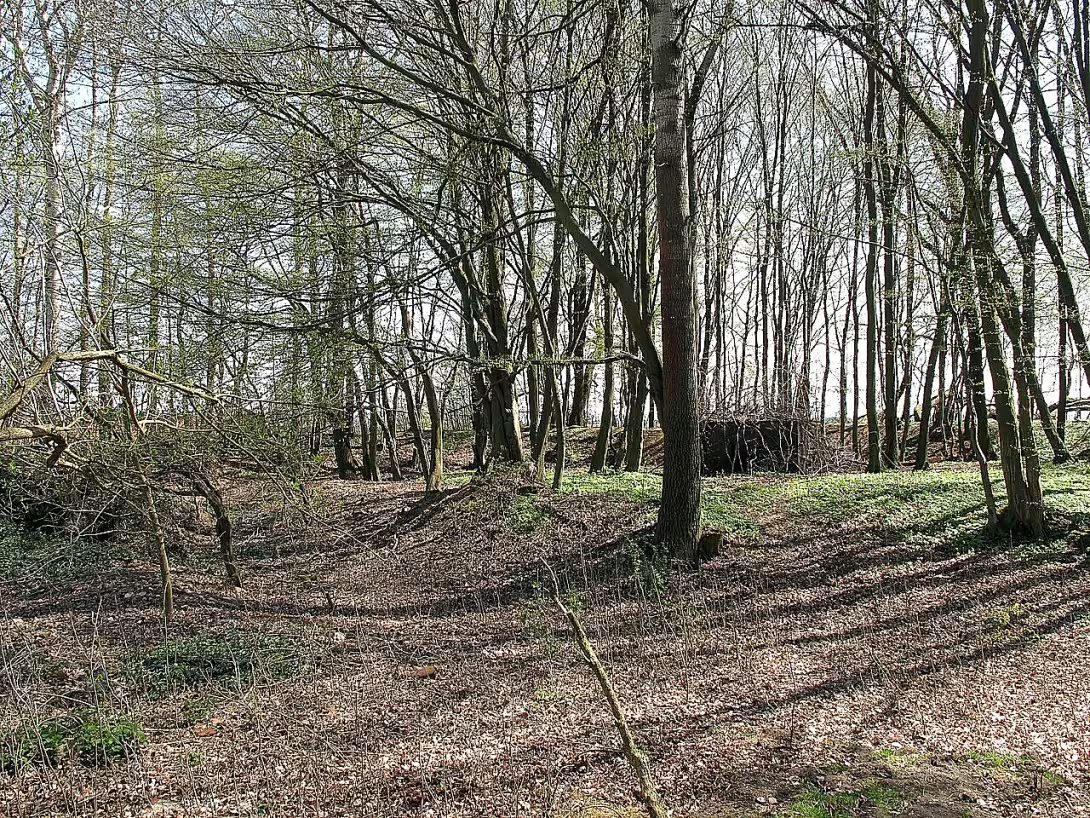
The archaeological site of the fortress in Radonice, which are part of the village Dolní Bukovsko in the district of České Budějovice, represents the remnant of the medieval noble residence from the end of the 13th century. The location is located on the southern edge of the historical core of the village and is registered in the Central List of Cultural Monuments of the Czech Republic. The location consists of a valuable document of a small feudal residence, which has left visible relief traces in the field to this day.
The foundation of the fortress was determined by the archaeological findings to the end of the 13th century. At this time there was extensive construction of fortified settlements of small nobles in Czech countries, which performed both residential and defence tasks. Written records of the construction itself and its specific owners have not been preserved. The first written mention of the village Radonice dates back to 1541. The existence of the fort was relatively short, since its demise occurred most likely during the Hussite wars in the 15th century.
The reinforced area reached an overall diameter of sixty-five meters. The seat itself stood on the hill of an irregular circular plan with a radius of 20 metres. The height difference between the top of the hill and the bottom of the surrounding terrain is up to four metres. The entire core was encircled by a 10-to-15-metre watercourse, which was reinforced on the west, north and east side by an external defensive force of one to one and a half meters high.
More detailed knowledge of the site was brought about by archaeological research. In the 1920s it was carried out by a teacher from Lower Bukovska František Švinger. Found items are stored in the City Museum in Týn nad Vltavou. People's verbs also bind to the place. One of the rumours speaks of the immoral lives of the people here who have been punished by the forfeiture of hell. Another legend tells of a man who signed up to the devil for a promise that every storm would rain gold. It ended up filling the fort with gold up to the roof and falling.
Today's visitor will find well preserved terrain relics in Radonice, which clearly define both the scale and method of medieval fortification. The place represents a valuable testimony of the life and manner of defence of medieval rural nobles. For archeology lovers, this quiet South Bohemia location is an interesting stop in exploring the history of the region.
Historical milestones
- End of 13th Century
- The creation of a fortress evidenced by archaeological findings.
- 1541
- First written mention of the village Radonice.
- 1920-1929
- Archaeological survey of the site carried out by František Švinger.
Architectural development
The seat was on a hill with an irregular circular plan with a radius of 20 metres. It was surrounded by a water moat of 10 to 15 metres wide and external defensive walls of up to 1.5 metres high. The total diameter of the fortified area was 65 metres.
Historical events
The fortress died during Hussite wars in the 15th century. In the 1920s, the local teacher František Švinger carried out archaeological research on the site.
Points of interest
- The remnant of the medieval aristocratic residence in Radonice dates back to the end of the 13th century and leaves clear relief marks in the field. - Written records of the construction itself and its specific owners have not been preserved, the first written mention of the village dates back to 15 hundred and forty-one. The collapse of the fort was most likely during the Hussite Wars in the 15th century. - The seat itself stood on the hill of an irregular circular plan, surrounded by a moat of water and reinforced on three sides by an external defensive wave. - The archaeological survey carried out in the 1920s by teacher František Švinger from Lower Bukovsk brought more detailed knowledge.
Guide
Show guide text
This text was created by artificial intelligence and has not been editorially reviewed. It may contain inaccuracies.
Welcome to this extraordinary historical place. Right now, you're standing outside an archaeological site in Radonice near Lower Bukovsk. If you look around you at the southern edge of the historical core of this village, you may at first glance think that there is an ordinary grassy high above you. But don't be misled by this peaceful touch of landscape. Our audio guide will guide you through a history that goes back many hundreds of years, and will help you discover the clues that the human hand left here in ancient times.
Let us now immerse ourselves in the very origin of this place and its historical context. What you see before you in the form of a terrain hill surrounded by remains is actually a very old remnant of a medieval noble mansion. The archaeological findings clearly show that this fortress was established at the end of the 13th century. Imagine the time when the region was ruled by nobles who needed a firm and safe haven for themselves and their economy. According to the historical sources available, this fortress was most likely destroyed during the stormy period of Hussite wars that affected the whole Czech country. Although the construction itself has taken its place, the country has kept secrets beneath its surface. Interestingly, the first written mention of the village Radonice itself dates back to the year 15-41, that is, when only memories and growing walls were left after the seat of the nobles.
Now pay attention to the very form of the place and what you can see here with your own eyes. As you stand in front of the extinct mansion, do not search here for preserved high walls, gates, towers or roofs. Instead, focus on off-road relays. The remains of the medieval residence in Radonice left in the field clear relief marks that you can observe right in front of you. Feel the shape of the elevation and contours that define the space where the manor building once stood surrounded by protective elements. It is these inequalities in the field that are the silent witnesses of human labour from the end of the Middle Ages.
When we think about the fate of this place, it's fascinating to realize that written records of the construction itself and its specific owners have not been preserved at all. The names of the people who lived here, built this mansion and lived their lives here, consumed time. All the more valuable are the footprints that left us the ground. And this is where we come to the stories of people who have begun to rediscover this past.
Let us move forward in time many centuries, to the modern history of research. The significant character associated with this place is František Švinger. It was he who conducted an important archaeological survey on this site between nineteen hundred twenty and nineteen hundred twenty-nine years. Imagine him with a spade, shovel, and measuring instruments going through where you're standing right now, carefully uncovering the layer by layer. Thanks to his work and the efforts of archaeologists he managed to confirm the age of the site and place it on a map of our historical treasures.
As you stand here, you may wonder what secrets Radonice is still hiding. The greatest mystery remains the anonymity of the creators and the first inhabitants. We know when the fort was founded, we know when it was approximately destroyed, and we know the outlines in the field, but the human faces and specific stories of the 13th century nobles remain hidden in mystery. Maybe that's what gives this place a strange, almost magical atmosphere. Every step you take around the hill is a step on the ground where the history of our region was once written.
We are coming to the conclusion of our joint walk on the Radouc site. I hope that you liked the sight of this inconspicuous, but extremely valuable historical memory and that you could imagine the glory of the medieval mansion being sent. When you walk around Lower Bukovsk, remember František Švinger and his archaeological discovery, which returned a piece of our forgotten past. Thank you for your attention, I wish you a nice rest of the day and I look forward to seeing you at other interesting places of our country.
Tips for visitors
The best time to visit the archaeological site in Radonice is autumn or spring, when the landscapes are particularly charming and less humane. This period offers a quiet experience with pleasant weather for a walk.
When visiting, bring protective clothing because the climate can be cold, especially in the winter months. Also remember the sunglasses and plenty of drinking in warm weather.
The best place for photography is on the ruins themselves, where you can see the remains of the medieval mansion. The best light will offer an early morning or late afternoon when the sun is lower and the light is softer.
In the vicinity you can visit the town of Týn nad Vltavou with its historical centre and local museum. For families with children it is advisable to explore the natural park of Blansky Forest, where there are different routes for both pedestrians and cyclists.
Frequently asked questions
Can the monument be visited?
This is an archaeological site. Often there is little to see on the ground and the land may be private. We have not verified access.
Where is the monument?
Location: Dolní Bukovsko, Jihočeský kraj. The map on this page shows the exact spot.
Why is the monument protected?
It is listed in the Central List of Cultural Monuments of the Czech Republic as a cultural monument (register no. 1000135882).
Businesses nearby
Do you run a restaurant, accommodation, shop, museum, rental, wellness or other visitor service near this monument? Show yourself directly to the people heading to it — this is how they will see you in the app and on the web:
Events nearby
Zdroj akcí: otevřená data měst a obcí ČR (Národní katalog otevřených dat) a kalendář akcí Národního památkového ústavu.
Nearby
Lokalita se nachází v jihočeské krajině u obce Dolní Bukovsko v okrese České Budějovice. Nedaleko leží město Týn nad Vltavou s městským muzeem.
Accommodation nearby
Trips and activities nearby
Guided tours, tickets and activities nearby from GetYourGuide
Affiliate link: if you buy from the partner, we may receive a commission. The price for you does not change.
Search tours and activities →Themed route
I propose a thematic cruise route in the South Bohemian landscape:
1.Dolní Bukovsko Type: Village Why it is worth visiting: This village represents the starting point of the whole trip and is located in its immediate vicinity the main destination. Provides facilities for the opening of the trip through the South Bohemian countryside.
Radonice Type: Archaeological site Why is it worth a visit: The main destination of our route lies in the landscape of the village Dolní Bukovsko. It offers insight into deep history and exploration of ancient traces of human activity.
3. Tyn nad Vltavou Type: City Why is it worth a visit: Not far from the main destination lies this town where you can visit the local city museum. It is an important residence in the district of České Budějovice, which enriches the cognitive route.
Seasonal recommendations
Spring is the perfect time to uncover the hidden foundations of the extinct village, because vegetation is not yet very lush. The light is bright and sharp at this time, which helps to better identify the terrain inequalities in the landscape. Nature is awakening and the surrounding forests smell of fresh sap. I recommend fixed waterproof shoes, because roads can be muddy after melting snow. It is best to set off in the morning, when the air is the cleanest and you will meet very few visitors here.
During the hot months, this place offers a quiet refuge in the shadow of grown trees that surround old stones. The atmosphere is saturated with the buzzing of insects and the smell of dry grass, while the sun paints deep shadows on the remnants of masonry. In the main summer season it is advisable to choose light clothes and not forget the sun protection and intrusive insects. In order to avoid the greatest heat, it is best to plan a walk for early morning or late evening when the landscape turns golden.
Autumn time brings to Radonic melancholy mood and a game of colored leaves that covers forgotten ruins. The fog blows give archeological sites a mysterious impact, and the low sun creates long shadows that highlight the plasticity of the terrain. It is necessary to count on a cooler wind, so it is good to take a warm windbreaker. Since the days are running out, it is advisable to arrive soon after lunch so that there is sufficient time for a tour before dark.
In winter, the whole site is covered in silence and white sheets, which softens sharp edges of debris. The lighting is dampened and cold at this time, which underlines the solitude and age of this place. Visiting in advent time requires very warm clothes and shoes with good sole, which does not slide on frozen ground. Since the sun sets early, it is ideal to visit the place around noon and take a hot drink with you in a jar for warm-up.
Visualizations and artistic views


The visualisations are generated by artificial intelligence and serve as inspiration.
Photos from the area
Real photos taken near the monument


Zdroj a licence jsou uvedeny u každého snímku.
Tips from visitors
No tips yet. Be the first!
Log in and add your tip.
Sources and literature
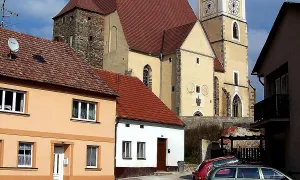
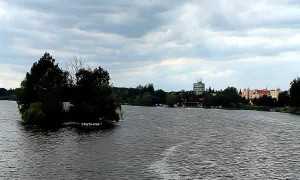
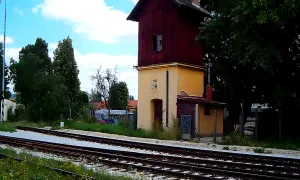
Photos: Juandev / CC BY-SA 3.0 — Wikimedia Commons. The author and licence also appear when you hover over the image.
Faktickým podkladem tohoto textu byl článek na Wikipedii, jehož autory jsou přispěvatelé Wikipedie. Článek je dostupný pod licencí CC BY-SA 4.0.
Location on the map

Příběhy a pověsti
Legendy, pověsti a příběhy spjaté s touto památkou

Fotografie návštěvníků
Zatím žádné fotografie. Buďte první, kdo přidá fotografii z návštěvy!
Log in a přidejte svou fotografii nebo hodnoťte.
Za ověřenou návštěvu v aplikaci získáte víc bodů — poznáme podle GPS, že jste na místě.
Reviews and comments