






Rottův dům House
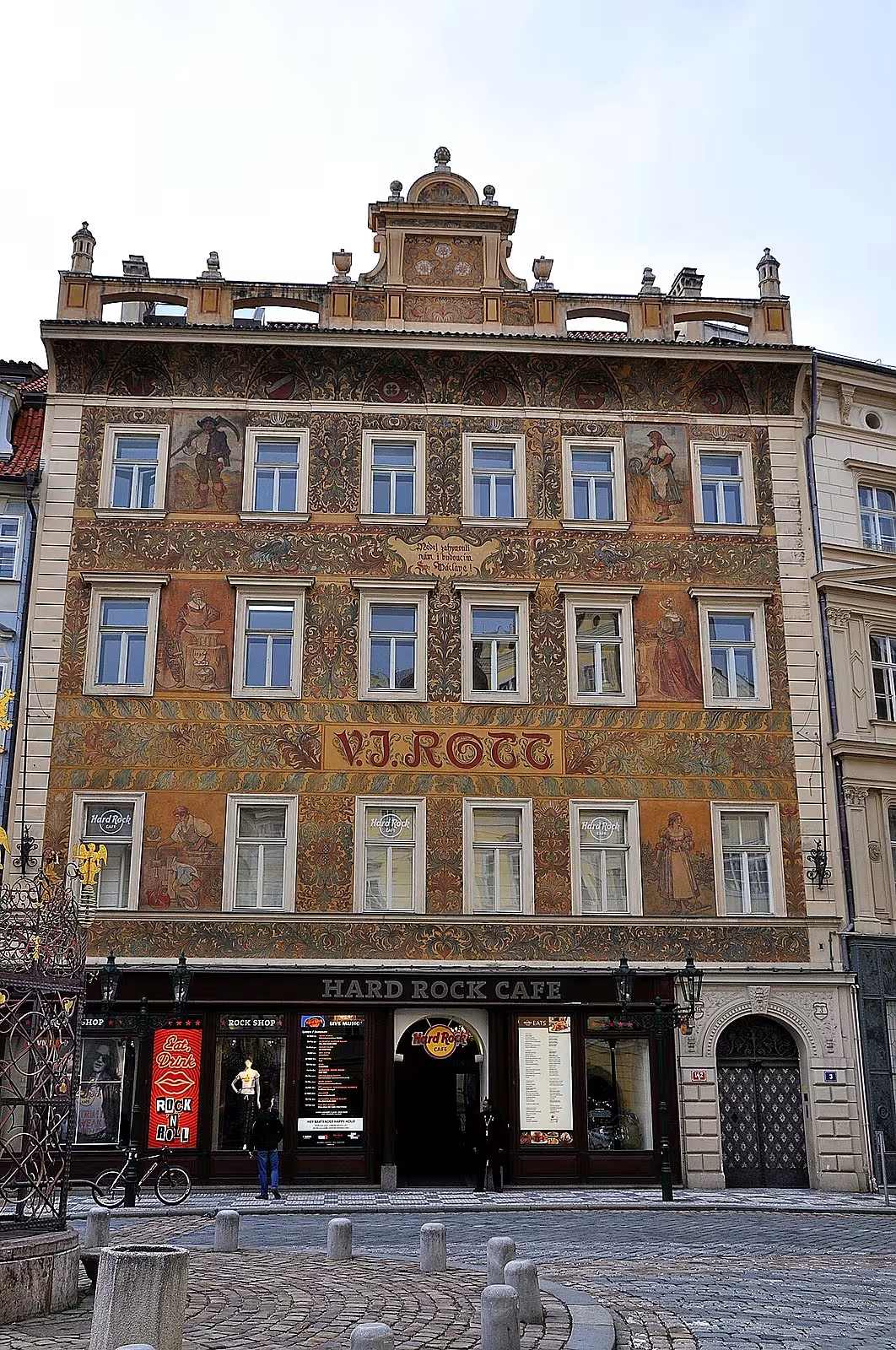
Rottův dům, located at Malé náměstí in Prague's Old Town, is renowned for its striking Neorenaissance façade painted according to Mikoláš Alš's designs. This cultural monument has been significant since 1964 and originally served as an ironmonger's shop until the mid-1990s. Its architectural evolution reflects important historical transitions from a single-story structure in the early 15th century to its current form, featuring decorative elements like plant motifs and allegorical paintings of crafts and agriculture.
The origins of Rottův dům trace back to around 1405 when it was known as U pštrosů. By the late 15th century, mason Jan Pytlík owned the building and contributed to the first printed Czech Bible in 1488. The property later became part of Vincenc Rott's estate in 1850. A significant transformation occurred between 1896-1897 when Ladislav Rott commissioned a Neorenaissance redesign by František Kindl, incorporating Mikoláš Alš’s artistic vision.
Architecturally, the building underwent several transformations over the centuries. Initially a single-story house around 1405, it evolved into its current form through various renovations and stylistic changes. The most notable architectural change occurred in the late 19th century when František Kindl redesigned the façade with Neorenaissance elements, including plant motifs and allegorical paintings of crafts and agriculture designed by Mikoláš Alš. These artistic contributions added a layer of cultural richness to the building's appearance.
Ownership of Rottův dům has seen several notable figures throughout its history. Initially known as U pštrosů around 1405, it later became U vola or U volka under owner Jan Ochse. By the late 15th century, mason Jan Pytlík owned the building and contributed to the first printed Czech Bible in 1488. In 1850, Vincenc Rott acquired the property, and his son Ladislav commissioned its Neorenaissance redesign between 1896-1897.
Key events associated with Rottův dům include its transformation into a significant cultural monument since 1964. The building's façade features allegorical paintings of crafts and agriculture designed by Mikoláš Alš, adding to its artistic value. A large inscription above the second floor reads "Nedej zahynouti nám ni budoucím Sv. Wáclave!" (Saint Wenceslas, do not let us or our descendants perish!), reflecting a historical and cultural sentiment.
Today, Rottův dům stands as an accessible monument in Prague's Old Town, a UNESCO World Heritage site known for its medieval architecture and vibrant cultural scene. The building has transitioned from housing an ironmonger’s shop to serving various commercial purposes over the years. Its rich history and architectural beauty make it a worthwhile visit for anyone interested in exploring Prague's historical landmarks.
Rottův dům offers visitors a glimpse into Prague's dynamic past, showcasing the city's cultural evolution through its architecture and artistry. Its significance as a cultural monument underscores its value not only to historians but also to those who appreciate architectural beauty. Visitors are invited to explore this remarkable site and immerse themselves in the rich tapestry of history it represents.
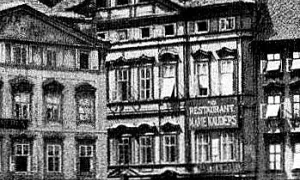
Then and now
Drag the slider to compare how the landmark may have looked when it was built with the view today.
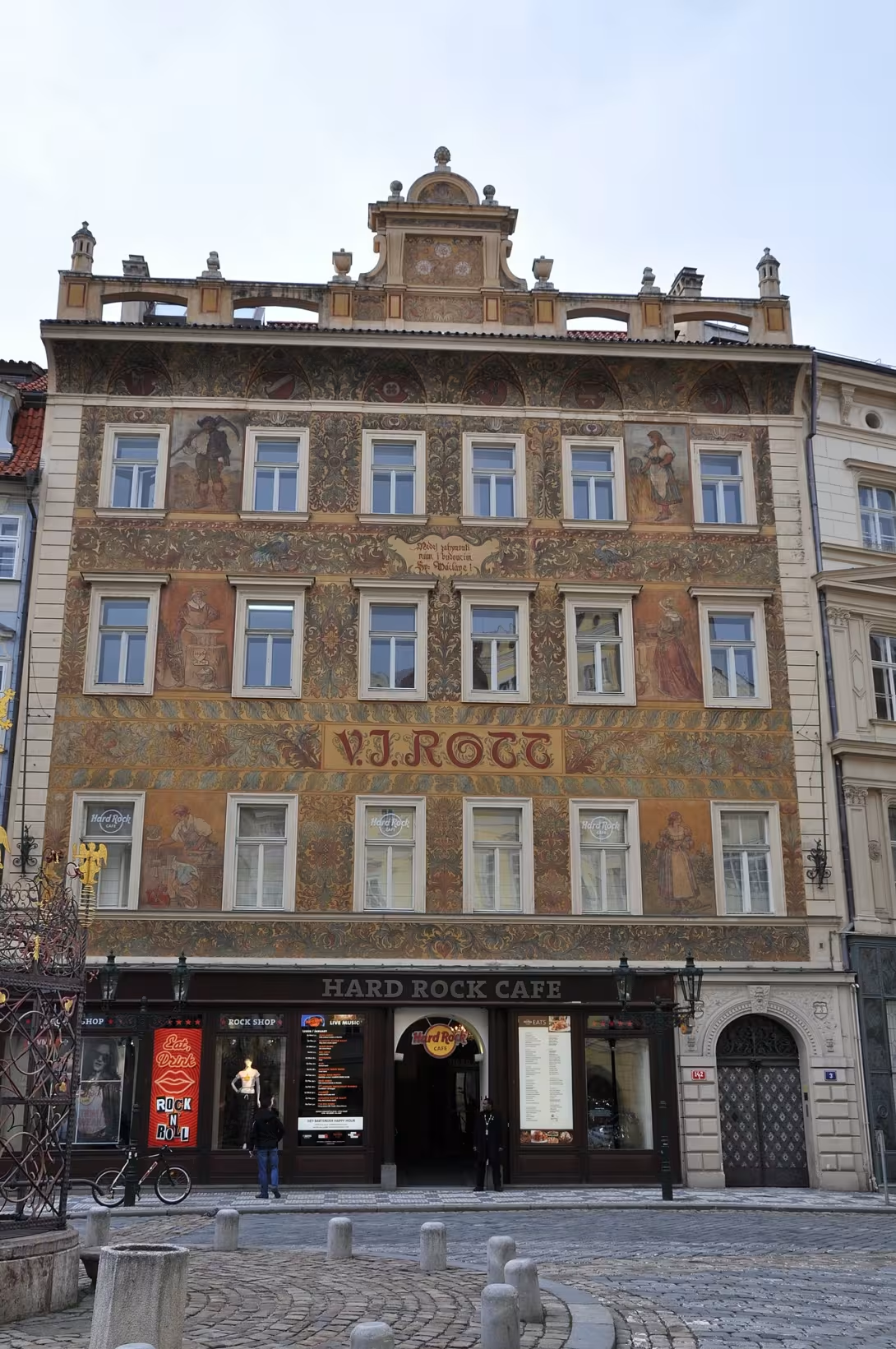
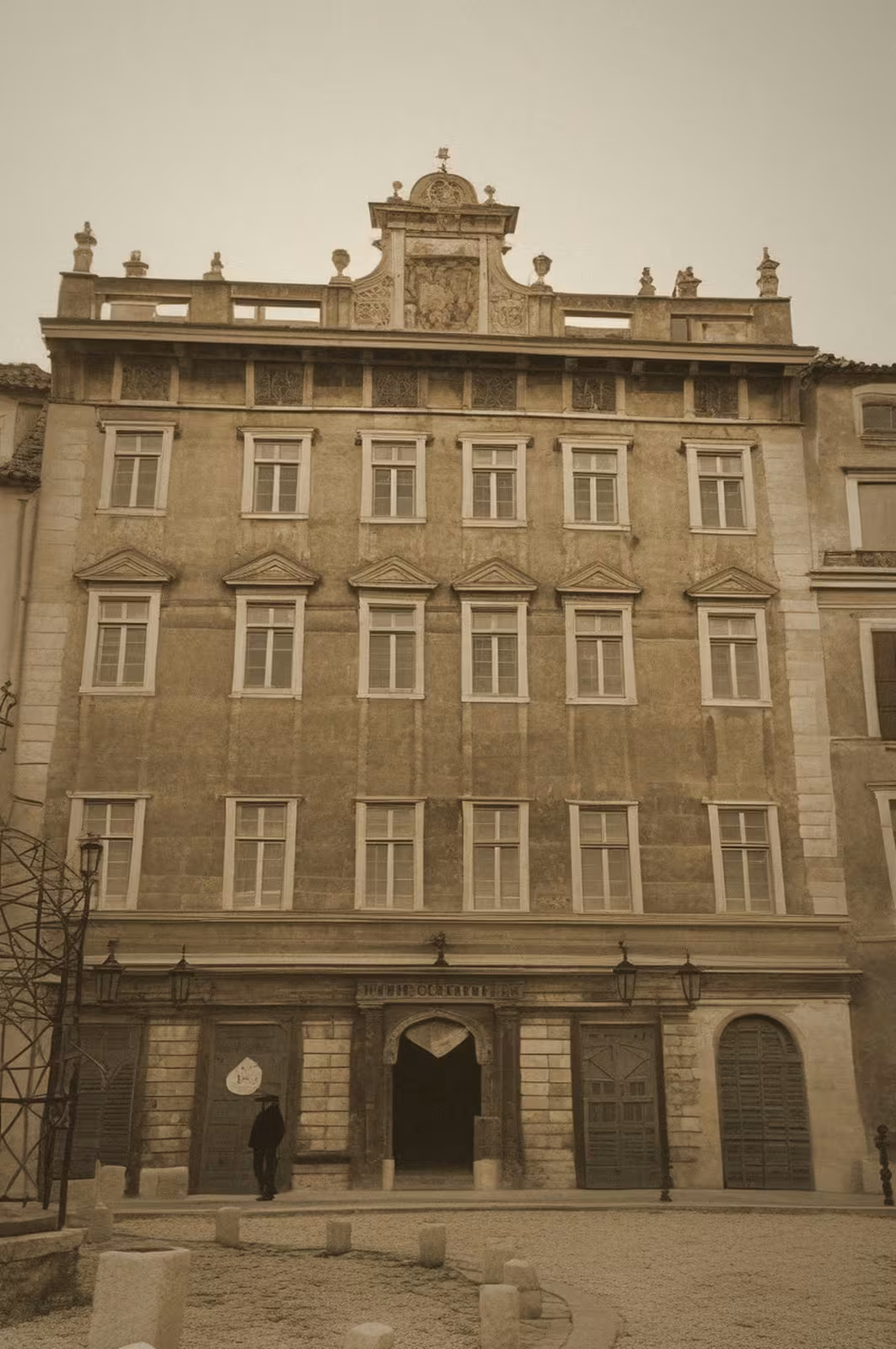
The historical appearance on the left is an AI-generated visualisation and serves as inspiration only.
Historical milestones
- 1405
- The house was known as U pštrosů.
- 1488
- Jan Pytlík contributed to the first printed Czech Bible.
- 1896-1897
- Ladislav Rott commissioned a Neorenaissance redesign by František Kindl.
Architectural development
Originally a single-story house around 1405, it underwent several transformations. By the late 15th century, it was owned by Jan Pytlík and later became part of Vincenc Rott's estate in 1850. The most significant architectural change occurred between 1896-1897 when Ladislav Rott commissioned a Neorenaissance redesign by František Kindl, featuring decorative elements inspired by Mikoláš Alš.
Historical events
In 1405, the house was known as U pštrosů.
Around 1500, Jan Pytlík owned the building and contributed to the first printed Czech Bible in 1488.
Between 1896-1897, Ladislav Rott commissioned a Neorenaissance redesign by František Kindl.
Owners
The house was initially known as U pštrosů around 1405, later becoming U vola or U volka under owner Jan Ochse. By the late 15th century, it belonged to mason Jan Pytlík, who contributed to the first printed Czech Bible in 1488. In 1850, Vincenc Rott acquired the property, and his son Ladislav commissioned its Neorenaissance redesign between 1896-1897.
Points of interest
- The building known as Rottův dům was originally called U pštrosů around 1405, reflecting its connection to ostriches or perhaps a symbol of the owner's trade.
- Mason Jan Pytlík, who owned the property in the late 15th century, played a role in producing the first printed Czech Bible in 1488, linking this historic building to an important milestone in Czech religious history.
- A large inscription above Rottův dům reads "Nedej zahynouti nám ni budoucím Sv. Wáclave!" (Saint Wenceslas, do not let us or our descendants perish!), which reflects a plea for protection and continuity from the past to future generations.
- The façade of Rottův dům features allegorical paintings designed by Mikoláš Alš that depict crafts and agriculture, adding layers of symbolic meaning and artistic value to its architectural design.
- Before becoming an iconic cultural monument, Rottův dům served as an ironmonger's shop until the mid-1990s, showcasing its evolution from a commercial space to a celebrated historical site.
Guide
This guide is narrated by a synthetic voice generated by artificial intelligence.
Show guide text
This text was created by artificial intelligence and has not been editorially reviewed. It may contain inaccuracies.
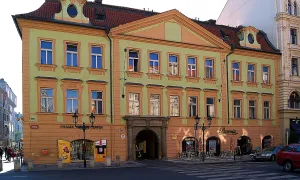
Rott's House on Malé náměstí in the Old Town is recognizable at first sight by its Neo-Renaissance facade, painted according to designs by Mikoláš Alš. It is also called the House U Rotta. In the past it bore a number of other names, such as U pštrosů, U volka, Pytlíkovský dům, U tří zlatých růží or U tří snopů. Since 1964 it has been a cultural monument.
The history of this place reaches deep into the past. In the basement, a Romanesque room with vaults on a central support has been preserved. It is a remnant of a palace from an original feudal court. The other basement spaces are Gothic. In 1405 a house called U pštrosů stood here. Later, according to its owner Jan Ochs, it was called U vola or U volka. Around 1500 it was owned by a townsman Jan Pytlík, who in 1488 participated in the first printed edition of the Czech Bible. Originally a single-storey house, it was later rebuilt in the Renaissance style and became famous for its gables and sgraffito decoration.
In 1850 the house was acquired by a company founded by Vincenc Rott. His son Ladislav Rott had the house rebuilt in the Neo-Renaissance style between 1896 and 1897 according to František Kindl. A commercial house was created with a sales hall and warehouses in the basement. The facade is decorated with floral motifs and paintings depicting crafts and agriculture. They show a blacksmith, a carpenter, a woodcutter, a reaper, a housewife and a gardener. According to Alš's design, they were executed by Láďa Novák and Arnošt Hofbauer. In the lunettes are depicted metal tools and implements. Between the first and second floors runs a large inscription with the company name Rott. One floor higher, in smaller letters it reads: Do not let us perish nor those to come, Saint Václav!
The three-storey terraced house has a facade with six bays. On the ground floor is a shop window, on the right side an entrance finished with a semicircle. At the top the facade is closed by a lunette cornice and above it a railing with vases, lanterns and a coat of arms in the middle.
Further alterations were carried out by František Schlaffer between 1922 and 1923. The Rott family ran an ironware shop here until 1948, when they emigrated. However, the ironware business continued to operate, and until the middle of the nineteen-nineties was a well-known multi-storey shop. After 1989 it was followed by a delicatessen shop, later luxury glassware, and eventually a restaurant opened there. The interiors have changed with modern alterations.
Tips for visitors
The best time to visit Rottův dům is during the late spring or early fall when the weather is pleasant, allowing you to comfortably explore both the interior of the building and its surroundings. During these seasons, Prague's Old Town Square bustles with cultural events and markets, enhancing your experience. Additionally, visiting outside of peak tourist season (summer months) can mean fewer crowds, providing a more intimate encounter with this architectural gem.
Transportation to Rottův dům is convenient via both public transport and by car. The building is easily accessible on foot from the Old Town Square, making it ideal for those exploring the area on foot or using public transportation.
When visiting Rottův dům, it is recommended to bring comfortable walking shoes as you'll likely explore more than just this site. A camera or smartphone for capturing the stunning architecture and vibrant atmosphere of Prague’s Old Town Square is also a must. Given that the building's interior may have restrictions on photography, checking these details in advance can help ensure your visit goes smoothly.
For those interested in photography, Rottův dům offers excellent opportunities from its exterior to capture its Neorenaissance façade, especially during golden hour when the light is soft and warm. The nearby Old Town Square provides a picturesque backdrop for photos with landmarks like the Astronomical Clock and Týn Church adding historical context. Early morning or late afternoon are ideal times for capturing these spots in the best light.
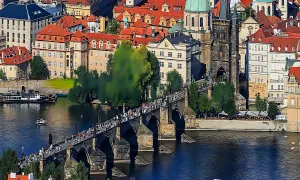
Nearby attractions within 30 minutes include the iconic Prague Castle, which offers panoramic views of the city, and Charles Bridge, a historic bridge lined with statues leading to Lesser Town. For families with children, consider visiting Letná Park, where you can enjoy open spaces and playgrounds. These sites provide a well-rounded experience of Prague's rich history and culture.
Frequently asked questions
Can the monument be visited?
This is a residential or farm building, not a museum with opening hours. Please view it from public space and respect the owners' privacy. We have no information about access to the interior.
Where is the monument?
Location: Staré Město, Hlavní město Praha. The map on this page shows the exact spot.
Why is the monument protected?
It is listed in the Central List of Cultural Monuments of the Czech Republic as a cultural monument (register no. 1000150226).
Businesses nearby
Do you run a restaurant, accommodation, shop, museum, rental, wellness or other visitor service near this monument? Show yourself directly to the people heading to it — this is how they will see you in the app and on the web:
Events nearby

Zdroj akcí: otevřená data měst a obcí ČR (Národní katalog otevřených dat) a kalendář akcí Národního památkového ústavu.
Nearby
Rottův dům is situated in Prague's Old Town, a UNESCO World Heritage site known for its medieval architecture and vibrant cultural scene. Nearby landmarks include the Old Town Square with the Astronomical Clock and Týn Church.
Accommodation nearby
Trips and activities nearby
Guided tours, tickets and activities nearby from GetYourGuide
Affiliate link: if you buy from the partner, we may receive a commission. The price for you does not change.
Search tours and activities →Themed route
Rottův dům
1. Astronomické orloj - historical landmark, iconic symbol of Prague's Old Town The Astronomical Clock is a must-see attraction in the heart of Old Town Square. This medieval astronomical clock is one of the oldest and most complex in the world, featuring an intricate system of dials and moving figures.
2. Týn Church - beautiful Gothic church with stunning architecture Týn Church is a stunning example of Gothic architecture in Prague's Old Town. Its intricate stone carvings and beautiful stained-glass windows make it a breathtaking sight.
3. Staroměstské náměstí (Old Town Square) - historic town square with a lively atmosphere Old Town Square is the heart of Prague's Old Town, filled with street performers, cafes, and historic buildings. It's a great place to soak up the atmosphere and take in the sights and sounds of the city.
Seasonal recommendations
Jaro In the spring season, Rottův dům is surrounded by blooming trees and flowers, creating a pleasant atmosphere. A specific feature is also the spring lighting, which creates a warm and soothing environment. If you wish to visit Rottův dům during the spring season, we recommend coming in the late morning or early afternoon to avoid crowds of tourists. It's also a good idea to bring comfortable shoes so that you can walk comfortably on the pathway.
Léto In the summer season, Rottův dům is surrounded by lush nature and pleasant weather. A specific feature is also the summer lighting, which creates a bright and cheerful environment. If you wish to visit Rottův dům during the summer season, we recommend coming early in the morning or late afternoon to avoid crowds of tourists. It's also a good idea to bring an umbrella or sunglasses to protect yourself from the sun.
Podzim In the autumn season, Rottův dům is surrounded by colorful nature and pleasant weather. A specific feature is also the autumn lighting, which creates a warm and soothing environment. If you wish to visit Rottův dům during the autumn season, we recommend coming in the late morning or early afternoon to avoid crowds of tourists. It's also a good idea to bring comfortable shoes so that you can walk comfortably on the pathway.
Zima In the winter season, Rottův dům is surrounded by a quiet and serene atmosphere. A specific feature is also the winter lighting, which creates a warm and soothing environment. It's also a good idea to bring warm clothing so that you feel comfortable.
Visualizations and artistic views


The visualisations are generated by artificial intelligence and serve as inspiration.
Photos from the area
Real photos taken near the monument

Zdroj a licence jsou uvedeny u každého snímku.
Tips from visitors
No tips yet. Be the first!
Log in and add your tip.
Sources and literature
Photos: Ben Skála / CC BY-SA 3.0 — Wikimedia Commons. The author and licence also appear when you hover over the image.
Faktickým podkladem tohoto textu byl článek na Wikipedii, jehož autory jsou přispěvatelé Wikipedie. Článek je dostupný pod licencí CC BY-SA 4.0.
Location on the map

Příběhy a pověsti
Legendy, pověsti a příběhy spjaté s touto památkou
Fotografie návštěvníků
Zatím žádné fotografie. Buďte první, kdo přidá fotografii z návštěvy!
Log in a přidejte svou fotografii nebo hodnoťte.
Za ověřenou návštěvu v aplikaci získáte víc bodů — poznáme podle GPS, že jste na místě.
Reviews and comments