






Rotunda svatého Vavřince v Praze Church
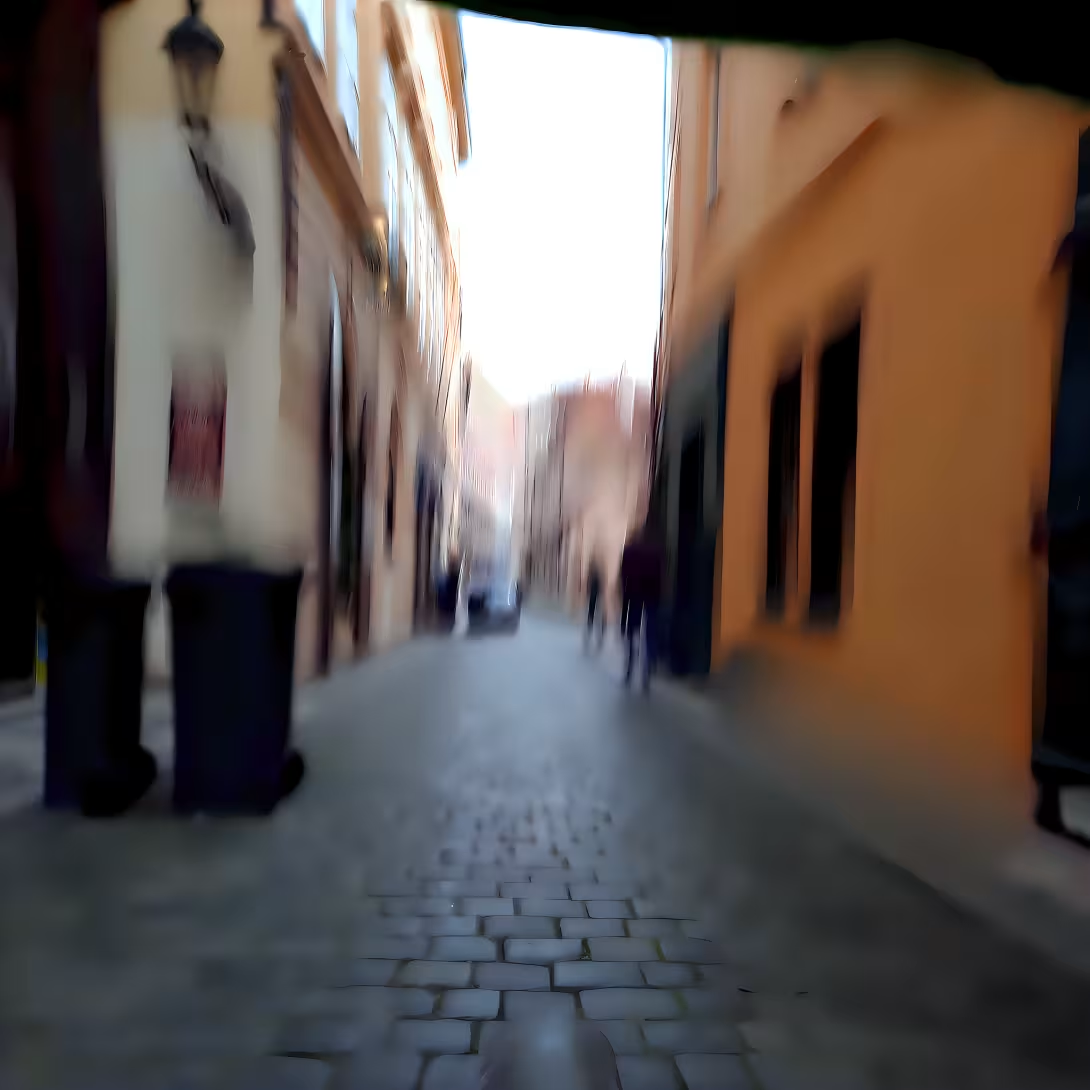
Objekt se nedochoval — na místě dnes nestojí. Následující text popisuje jeho historii, ne současnou návštěvu.
The Rotunda of Saint Lawrence in Prague stands as a testament to the city's medieval past, located in the historic Old Town area. Originally constructed in the early 12th century, this Romanesque religious center featured a circular nave and semicircular apse. Its significance lies not only in its architectural form but also in its historical transformations under various monastic orders, including the Templars and Dominicans. Today, while the original rotunda no longer exists, archaeological excavations conducted between 1956-1957 have unveiled its layers, offering insights into Prague's rich medieval history.
Initially built as a classical Romanesque structure during the early 12th century, the Rotunda of Saint Lawrence reflects Bohemia's feudal consolidation under the Přemyslid dynasty. This period saw the spread of Romanesque architecture across Europe and the influence of monastic orders like the Templars. The rotunda served as a spiritual hub for the region, embodying the architectural and religious trends of its time.
Architecturally, the original structure featured a circular nave with a semicircular apse, constructed using opus quadratum masonry—a technique involving precisely cut stone blocks. In the 1230s, the Templars acquired the rotunda and modified it by adding a new apsidal extension, characterized by larger and more refined stone blocks compared to the original construction. This transformation highlights the evolving architectural practices of the period.
Ownership of the site transitioned from its initial feudal estate status in the early 12th century to the Templars in the 1230s. Following the dissolution of the Templar Order in 1312, the church and its associated lands were sold to the Dominicans of St. Anne's Convent in 1313. The Dominicans continued to use the site until the mid-14th century when the original Romanesque structure was dismantled.
Key events at this site include the Templars' acquisition and modification of the rotunda in the 1230s, adding a new apsidal extension that altered its architectural form. In 1312, the disbandment of the Templar Order led to the sale of the church to the Dominicans, marking another significant shift in ownership and use.
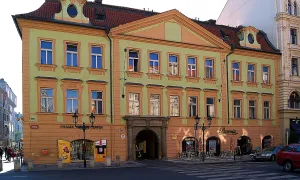
Today, the site is occupied by the Church of St. Anne, built on the foundations of the former rotunda. While the original Romanesque structure no longer stands, its historical significance remains accessible through archaeological findings that reveal its past layers. Visitors can explore this rich historical narrative within Prague's Old Town, a district renowned for its medieval architecture and cultural heritage.
The Rotunda of Saint Lawrence offers a unique glimpse into Prague's architectural evolution and monastic history. Its story, uncovered through careful excavation, invites visitors to appreciate the city's deep-rooted past and the enduring legacy of its religious institutions. For those interested in exploring the layers of history beneath modern structures, this site is a compelling destination within the vibrant tapestry of Prague's Old Town.
Then and now
Drag the slider to compare how the landmark may have looked when it was built with the view today.


The historical appearance on the left is an AI-generated visualisation and serves as inspiration only.
Historical milestones
- 1956-1957
- Archaeological excavations uncovered the existence of the rotunda.
Architectural development
Originally built as a classical Romanesque rotunda with a circular nave and semicircular apse in the early 12th century, it was later modified by the Templars who added a new apsidal extension. The structure featured opus quadratum masonry, with larger and more refined blocks used during the Templar reconstruction.
Historical events
The Templar Order acquired and modified the rotunda in the 1230s, adding a new apse.
In 1312, the Templars were disbanded, leading to the sale of the church to the Dominicans.
Owners
Initially a feudal estate in the early 12th century, ownership transitioned to the Templars in the 1230s, who then sold it to the Dominicans of St. Anne's Convent in 1313 after their order was dissolved in 1312.
Guide
This guide is narrated by a synthetic voice generated by artificial intelligence.
Show guide text
This text was created by artificial intelligence and has not been editorially reviewed. It may contain inaccuracies.
The Rotunda of Saint Lawrence belongs to the Prague monuments that no longer exist. It was a Romanesque rotunda in the Old Town, later expanded into a church. On its site today stands the Church of Saint Anne. Little was known about its existence until it was revealed by archaeological excavation in the years nineteen fifty-six through nineteen fifty-seven.
Originally it was a classic rotunda with a circular nave and a semicircular apse. It arose apparently in the first half of the twelfth century near an early feudal court.
In the nineteen thirties, excuse me, in the thirteen thirties of the thirteenth century, the order of the Knights Templar established a commandery there. The Templars rebuilt the rotunda. They demolished the original apse and attached to the circular nave a longitudinal space extending toward the east and narrowing toward the end, terminating in a new horseshoe-shaped apse. Both old and new walls were made of opuoka stone blocks. During the reconstruction, however, larger and more carefully worked blocks were used, so both building phases can be distinguished.
In the year thirteen twelve, the order of the Knights Templar was dissolved. The church with its commandery was purchased by the Knights Hospitaller and a year later they sold it to the Dominican nuns from the monastery of Saint Anne in Újezd. These nuns used the church from the year thirteen thirteen and at the same time began constructing the nave of today's Church of Saint Anne. Still in the year thirteen fifty-five a mention of the Church of Saint Lawrence appears, but in the year thirteen sixty-five it is already called the Choir of Saint Anne.
After the middle of the fourteenth century, the Romanesque church was demolished.
Businesses nearby
Do you run a restaurant, accommodation, shop, museum, rental, wellness or other visitor service near this monument? Show yourself directly to the people heading to it — this is how they will see you in the app and on the web:
Events nearby

Zdroj akcí: otevřená data měst a obcí ČR (Národní katalog otevřených dat) a kalendář akcí Národního památkového ústavu.
Nearby
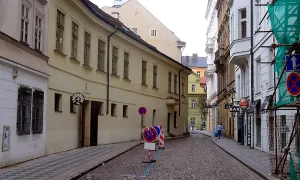
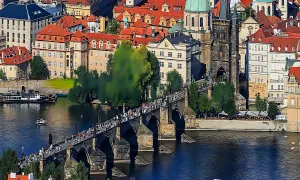
The site is located in Prague's Old Town, a historic area rich with medieval architecture and cultural heritage.
Visualizations and artistic views


The visualisations are generated by artificial intelligence and serve as inspiration.
Photos from the area
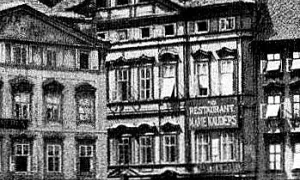
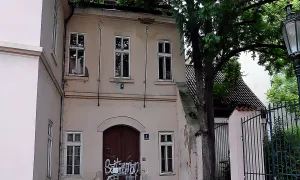
Real photos taken near the monument

Zdroj a licence jsou uvedeny u každého snímku.
Tips from visitors
No tips yet. Be the first!
Log in and add your tip.
Location on the map

Příběhy a pověsti
Legendy, pověsti a příběhy spjaté s touto památkou

Fotografie návštěvníků
Zatím žádné fotografie. Buďte první, kdo přidá fotografii z návštěvy!
Log in a přidejte svou fotografii nebo hodnoťte.
Za ověřenou návštěvu v aplikaci získáte víc bodů — poznáme podle GPS, že jste na místě.
Reviews and comments