






Sitrův dům House
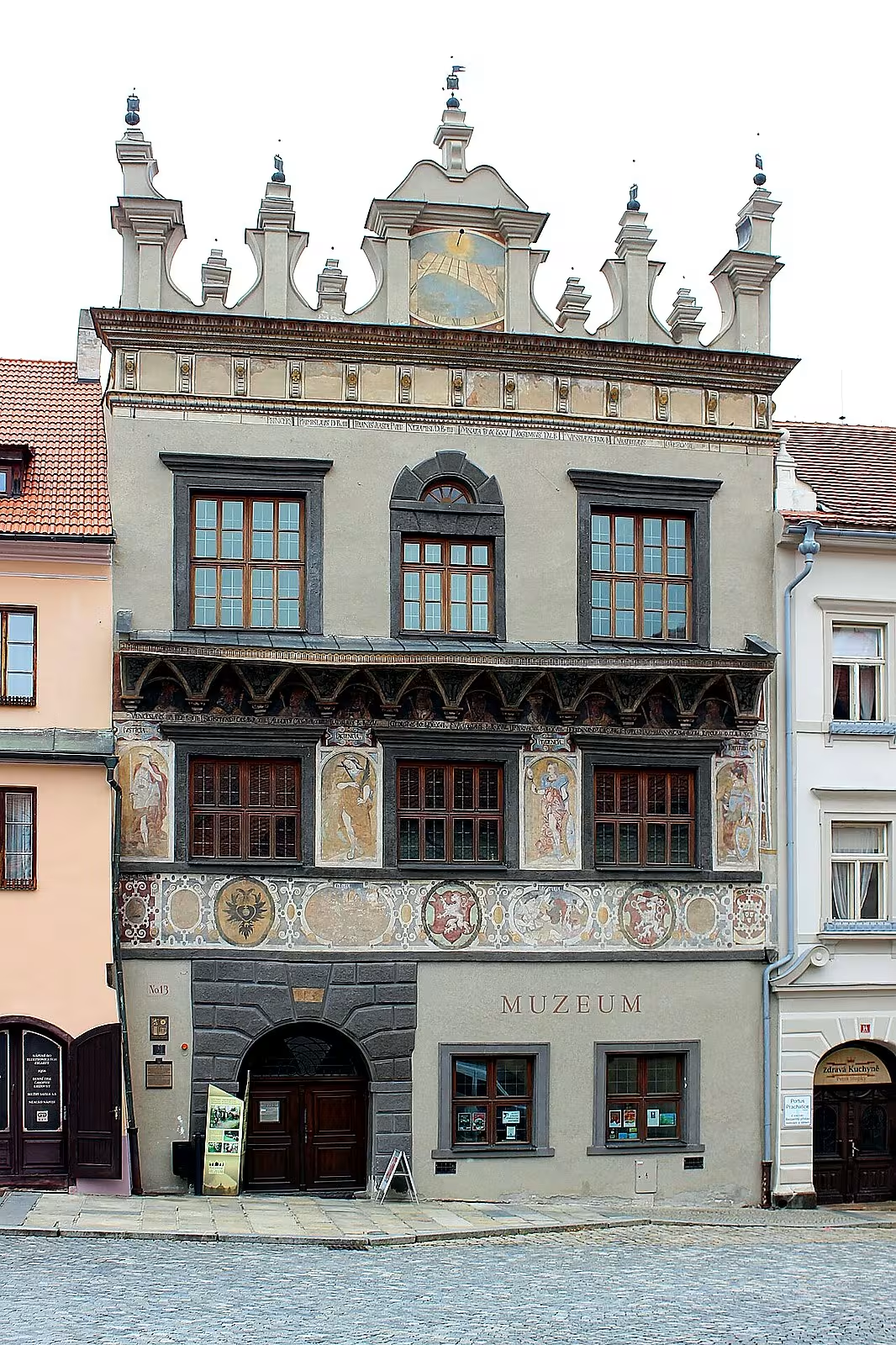
Sitrův dům, also known as Sitter's House or Zdářský, is an important historical monument in the Great Square in Prachatice. This two-story Renaissance Patrician house excels with rich mannerist fresco decoration and Renaissance atics with pylons. The Prachatic Museum is currently located in the building, which makes the building not only architectural but also cultural value of the city.
Originally, the house was Gothic and probably already in the 14th century it had a stone form. The oldest written record of him dates back to 1521, when Barbora Vack referred her property to son-in-law John and his wife. The subsequent owner was Nicholas Vacek, who sold the house in 1581 to Ambroz Sitro from Volar. The son of Ambrose, Tomáš Sitr, remodeled the building in 1604. The work was carried out under the leadership of the construction master Josef Fargit from České Budějovice. This reconstruction gave the house its characteristic architecture and artistic decoration, which still fascinates visitors.
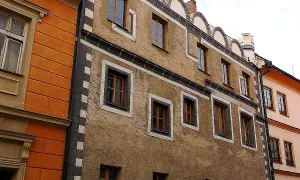
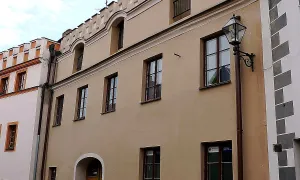
Architecturally, Sitrův dům presents a representative example of a Renaissance row house with three window axes and a bunk lunet cordon ledge. The façade is decorated with a rich painting of the rich painter Šebastián Hájek. These frescoes depict coats of arms, allegories of virtues and figures of Czech kings, reflecting the artistic spirit of the time. The house also contains Gothic cellars and Renaissance vaults, which testify to its long historical development.
The history of homeowners is rich in change. After the Siter family in 1614, the building was taken into the hands of Matthew Figuliani of Netolic, later belonging to Pavel Dicent and other locals. In 1865 it was purchased by the spouses Rozena and Václav Zdorsky, after which it was acquired by Johann Zdiarsky, Mayor of Prachatic from 1891 to 1907. After World War II, the state house fell and was intended for the needs of the city museum.
Today, Sitrův dům is a protected cultural monument and part of the Municipal Monument Reservation Prachatice. There is a rare painting of Christ's crucifixion from the 15th century, which represents an important work of art. The building serves not only as an architectural monument but also as a place for cultural events and educational projects.
Visiting the Sithrov House offers a unique view of the history of Prachatic and allows you to enjoy rich artistic heritage. It is a place where the past meets the present, which makes the visit attractive not only for historians, but also for any quitter who wants to learn more about the rich history of the Czech Republic.
Then and now
Drag the slider to compare how the landmark may have looked when it was built with the view today.
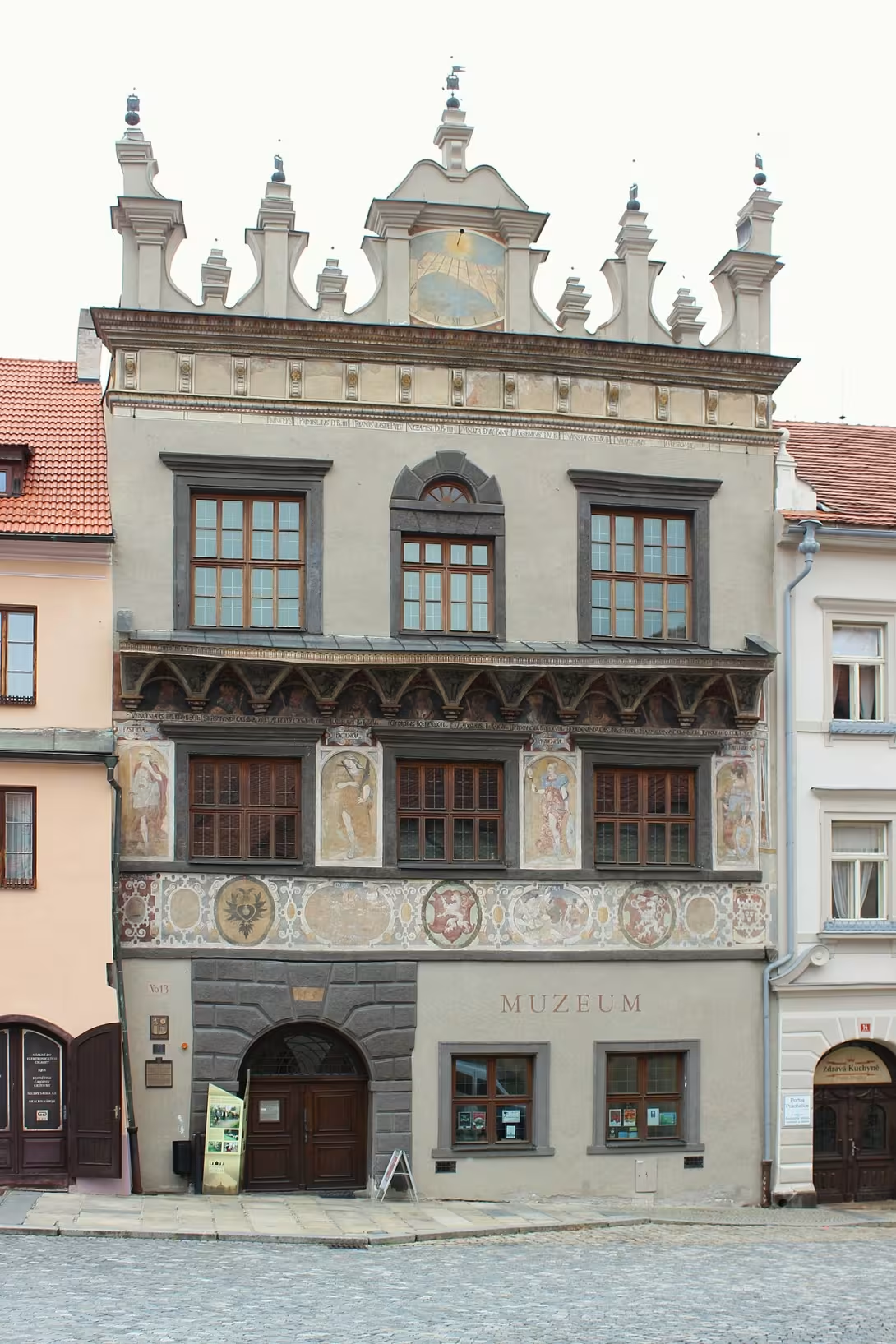
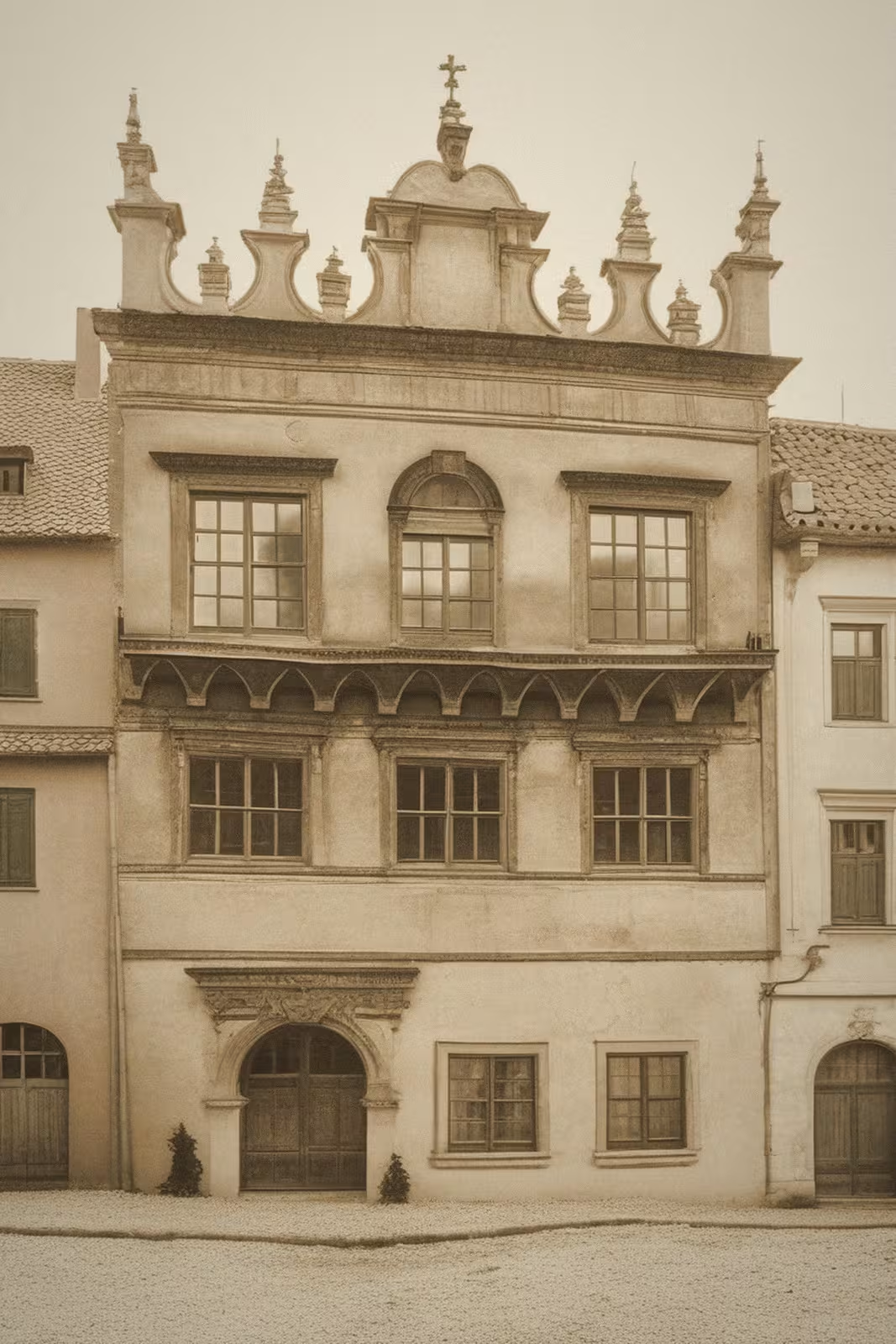
The historical appearance on the left is an AI-generated visualisation and serves as inspiration only.
Historical milestones
- 1521
- Oldest written record of the house
- 1604
- Contemporary mannerist design of the house
- 1885
- Establishment of a boarding school for students of German grammar school
- 1945
- Acceptance of the house by the state
Architectural development
The original Gothic object was rebuilt in 1604 in Renaissance style. Gothic cellars and Renaissance vaults were preserved in the construction. The northern part of the house is Renaissance, while the southern part has baroque and classicist elements.
Historical events
1521 oldest written record of the house, 1604 reconstruction into the contemporary renaissance form, 1885 establishment of boarding school for students of the gymnasium, 1945 takeover of the house by the state.
Owners
1521 Jan Vacek, 1555 Nicholas Vacek, 1581 family of Siters, 1614 Matthew Figuliani, 1722 Pavel Dicent, after 1771 Josef Meerwald and Petr Mauer, 1865 married Zdorsky, 1894 Johann Zdiarsky, 1945 state.
Points of interest
- The two-story Renaissance Patrician house excels with rich mannerist fresco decoration and Renaissance attics with pylons. - The building was rebuilt in 1604 by Tomáš Sitr under the leadership of the construction master Josef Fargit. - The façade is decorated with paintings by Šebastián Hájek, which show coats of arms, allegory of virtues and figures of Czech kings. The house contains Gothic cellars and Renaissance vaults. - There is a rare painting of Christ's crucifixion from the 15th century.
Guide
Show guide text
This text was created by artificial intelligence and has not been editorially reviewed. It may contain inaccuracies.
Welcome to Prachatice, a city that still amazes anyone who enters its Great Square with its beauty and history. Right now, you're facing one of the most important buildings in this place. In front of you is Sitrův dům, which is the real jewel of local architecture and a silent witness to centuries of urban life. The first impression from the building is the impression of stability, wealth and aesthetic taste. It's a two-story Renaissance Patrician house, which means it was built for a very wealthy and influential citizen who represented the top social class in that town. Feel the atmosphere of this place and imagine how people went through it hundreds of years ago, what the merchants' footsteps sounded like and how the town was viewed from the windows.
Now let's take a look together at how this building started and how it evolved. The history of the house dates back to the sixteenth century. The oldest written record of this place dates back to 1521, which tells us that the house was part of the city's core in the early Renaissance. But what you are seeing today is not the result of the initial construction, but of an ambitious transformation. In 1604 the house had a major reconstruction. It was this year that he acquired his current mannerist form. Mannerism was a period that followed on to the High Renaissance, but brought with it more dynamism, playfulness and desire for pomp. This reconstruction was not random, it was an expression of the power and social position of the Sithrin family.
Now pay attention to the architecture itself and look up. What you're probably interested in first is the top end of the house. Notice the Renaissance Atica with the pylons. Attica is the decorative wall that covers the roof and gives the building a more monumental look. Pylons are those vertical Roman columns or pilasters that rhyme the upper edge of the facade. This whole look was the work of the civil engineering master Josef Fargit. At that time it was common for rich owners to invite from Italy, i.e. Vlaška, top craftsmen and architects to bring the latest trends from southern Europe to Czech cities. Josef Fargit, under the leadership of the owner of the house, Thomas Sitra, was able to turn an ordinary townhouse into a true palace to compete with other buildings in the square.
When your eyes fall from the atics below, focus on the front of the house. The facade is decorated with a rich fresco decoration, which is one of the most distinctive features of the Sithrov house. These paintings are not just decoration, but they carry deep meaning. The author of these works was Šebastián Hájek. If you look carefully, you will see the coats of arms that spoke of the origin and union of the family, but above all the allegory of virtue. In the Renaissance time, it was very important for the homeowners to show not only their wealth, but also their moral integrity and education. Allegory of virtues was intended to remind visitors and bystanders of the values that the owner followed while highlighting his status in the community.
With this house are the names of the personalities who left their trail in Dachhatice. In addition to the construction master Fargit and painter Hájek, the members of the Sithrin family played a major role here. Ambrož Sitr and later Tomáš Sitr were the people who shaped this house. Tomáš Sitr was the visionary who decided in 1604 for radical reconstruction. Imagine their discussions with the Italian master, plans laid out on the table and gradually turning the house into what you see today. In later times, names like Johann Zdiarsky were added to the history of the house, which was part of the complex historical context of the city.
What's interesting is how the function of the house changed over the centuries. The house wasn't always just a family home. Let's move forward in time to 1885. At that time there was a boarding school for students of German gymnasium. It's fascinating to imagine the contrast. Instead of the silence and privacy of the rich Patrician family, there were suddenly many young students whose days were filled with study, arguments and dreams of the future. The luxury mansion became a place of education and life together. Another big break came in 1945 when the house fell to the state. Since then, the building has become a public space and today, even in its extension, the Prachatic Museum is located in it. This is the best possible way to preserve the memory, because the house itself is one of the most important exhibits of this museum.
You may be interested in one question that remains in the space between history and the present. When was the last time you thought about what secrets could hide the walls of a house that survived for 500 years? From early 1521 records to mannerist boom, student noise to museum hall silence. Every layer of facade, every pigment in Shebastian Hájek's paintings tells the story of ambition, art and a changing world. Sitrův dům is not just a stone and plaster construction, it is a materialized memory of Prachatic.
Now that you know the story of this house, its creators and its inhabitants, I suggest you let a look at the facade for a while and try to imagine what the Great Square looked like in 1604 when the house was newly completed and its colors were probably much more saturated than they are today. Note how the house is harmoniously supplemented with the surrounding urban conservation and how it defines the character of the entire square.
But your quest for knowledge does not end here. I ask you to enter and explore the premises of the Prachatic Museum. There is another layer of history, ancient objects and insights into the lives of the people who lived and formed in this region. Go through the halls, feel the silence of the old walls and be inspired by the genius of Josef Fargit and Šebastian Hájek.
Thank you for escorting me to this brief exposition outside of Sithro's house. I wish you a pleasant rest of the visit in Prachatice and many new discoveries in this beautiful city. Goodbye.
Tips for visitors
The best time to visit Sitrův dům is in the spring or autumn season when the weather is pleasant and fewer people. These years offer ideal lighting conditions for photography, especially in the evening when fresco decoration of the building becomes particularly dramatic.
Parking and transport: The place is easily accessible by car and public transport. The parking lot is located near the Great Square in Prachatice. For those travelling by bus or tram, the place is well connected to the city centre.
What to take with you: We recommend you bring warm clothes and sunglasses for a better look at frescoes. You will be happy to photograph, so don't forget the quality camera or mobile phone with a good camera.
Photos: The best places for photography are the west facade house in the late afternoon when the sun lights frescoes. Also check the interior of the house if you can access it.
What to visit in the area: Within 30 minutes you can visit the City Monument Reservation Prachatice. Explore the historic streets and other Renaissance houses that add character to this area.
Businesses nearby
Do you run a restaurant, accommodation, shop, museum, rental, wellness or other visitor service near this monument? Show yourself directly to the people heading to it — this is how they will see you in the app and on the web:
Nearby
Large square in Prachatice, City Monument Reserve.
Accommodation nearby
Themed route
Thematic cruise route Prachatice
1.Sitrův dům - * Type: * Historical residential house - * Why is it worth visiting: * Sitrův dům is one of the oldest buildings in Prachatice, which testifies to the rich history of the city. Its architecture and conservation offer a view of the past, making it an ideal beginning to explore urban monuments.
2. City Monument Reservation Prachatice - * Type: * Historical area - * Why is it worth a visit: * Walk on the streets of the city monument reservation offers a view of a number of historical buildings and architectural pearls. It is an opportunity to appreciate the charm of the Old Town environment, which is an excellent example of Czech construction tradition.
3. Large Square - * Type: * Historical public space - * Why is it worth a visit: * The great square is the heart of Prachatic and an ideal place to relax after exploring the surrounding monuments. Its historical significance, architecture and atmosphere offer the opportunity to enjoy quiet moments or to look at local events and events.
This route allows a deep understanding of the historical core of Prachatic, where each step brings a new chapter from the past.
Seasonal recommendations
Spring in Prachatice brings to the vicinity of Sitrova the house a gradual revival of nature. The surrounding gardens and parks awaken to life, trees bloom and the air is fresh after winter. The lighting is soft and scattered during this period, creating a calm atmosphere ideal for walking without rush. For visitors, the spring season is often less crowded than summer, allowing a quiet examination of historical details. It is recommended to dress in multiple layers because spring weather is variable and temperatures can change rapidly. The best time to visit is the late morning, when the sun is already getting to the height, but it does not heat too intensely. Avoid the morning if it rains because the roads can be slippery.
Summer is the main season of tourism and brings with it the longest days and the hottest temperatures. The sunlight is sharp and bright, highlighting the colors of the facade and surrounding green, but can also be eye-intensive. The atmosphere is vibrant and full of energy, but there is also a higher number of visitors involved. To avoid the biggest crowds, it is recommended to plan the visit for morning hours, right after opening, or late afternoon, when temperatures get slightly cold. Clothes should be light, breathable and suitable for movement, remember sunscreen and plenty of drinking mode. The surrounding area can be overcrowded in the morning, which reduces the comfort of the tour, therefore there is a calmer environment in the early morning hours.
Autumn offers a unique atmosphere thanks to the changing colour of leaves and colder air. The lighting is lower and warmer, which gives the historical monument a romantic and nostalgic touch. Nature around the house calms down and goes into sleep mode before winter. This time is ideal for lovers of peace and photography because the crowds are already smaller than in summer. The practical advice is to wear layered clothes, including light jackets, because the wounds and evenings are cold, while the noon can still be pleasantly warm. The best is to go out in the middle of the day when the light is most stable and the temperature is highest. Avoid rainy days if you do not have suitable shoes because wet tiles can be dangerous.
Winter brings a quiet and often snowy atmosphere to Prachatic, which covers historical monuments in a quiet shell. Lighting is short and dark, which creates a dramatic contrast between illuminated facades and dark sky. Nature is calm, the trees are bare and the landscape can be covered with snow. The winter visit is very quiet, with a minimum of tourists, which allows a private experience. It is necessary to dress in warm winter clothes, including jacket, scarf, gloves and warm shoes. The opening hours may be shortened in winter, so it is important to check the current operating times in advance. The most suitable is a visit in the afternoon when there is still enough light and the temperature is highest during the day. Avoid the evening walk if there is not enough lighting of the way.
Visualizations and artistic views


The visualisations are generated by artificial intelligence and serve as inspiration.
Photos from the area
Real photos taken near the monument


Zdroj a licence jsou uvedeny u každého snímku.
Tips from visitors
No tips yet. Be the first!
Log in and add your tip.
Sources and literature
Fotografie: Matěj "Dědek" Baťha / CC BY-SA 4.0 — Wikimedia Commons. The author and licence also appear when you hover over the image.
Faktickým podkladem tohoto textu byl článek na Wikipedii, jehož autory jsou přispěvatelé Wikipedie. Článek je dostupný pod licencí CC BY-SA 4.0.
Location on the map
More monuments – Prachatice I
Show all in the municipality

Příběhy a pověsti
Legendy, pověsti a příběhy spjaté s touto památkou

Fotografie návštěvníků
Zatím žádné fotografie. Buďte první, kdo přidá fotografii z návštěvy!
Přihlaste se a přidejte svou fotografii nebo hodnoťte.
Za ověřenou návštěvu v aplikaci získáte víc bodů — poznáme podle GPS, že jste na místě.
Reviews and comments