



Starý dvůr Motte
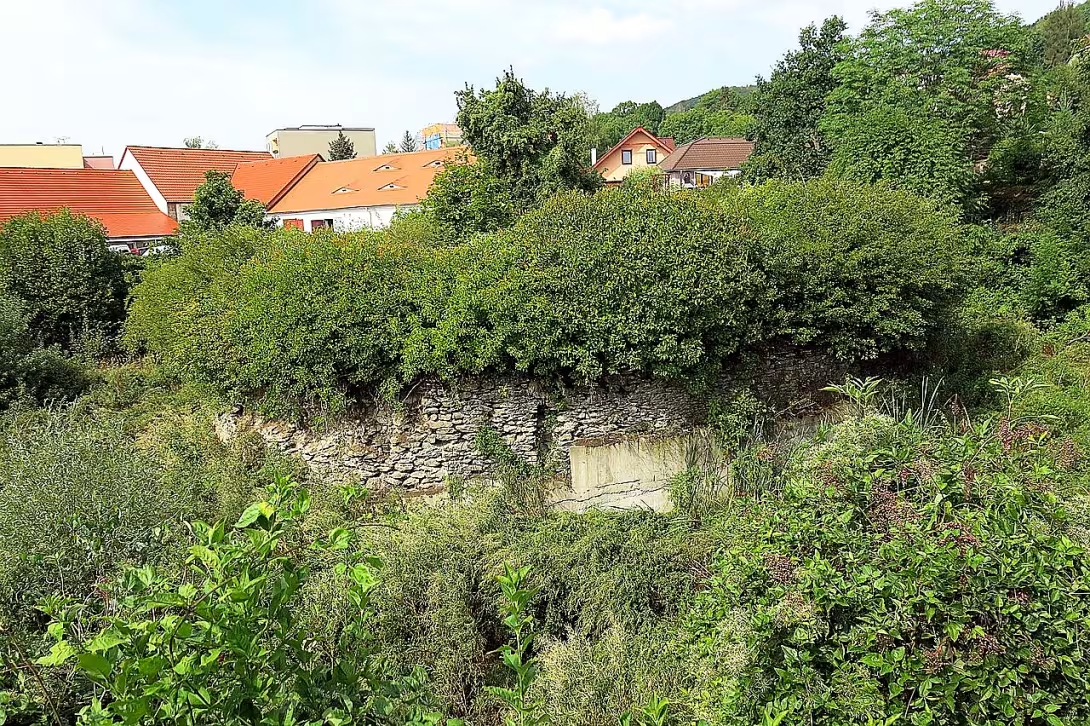
Objekt se nedochoval — na místě dnes nestojí. Následující text popisuje jeho historii, ne současnou návštěvu.
Starý dvůr is a extinct medieval fortress in the village Bohosudov near Krupka in Teplice district. Founded in the 14th century, this object is today protected as a cultural monument and represents a hill with a circular moat.
The sailing yard evolved during the 14th century. The historian August Sedláček, without hard evidence, believed that the fort was destroyed in 1426 during the Hussite wars after the losing battle at Ústí nad Labem. The first written mention of him dates back to 1433, when the townsman Martin Hengst of Krupka left his son Lorenzo half of his fortune.
The original building unit consisted of an island with a diameter of 24 metres, protected by a water moat up to 15 metres wide with plastered walls. In the centre there was a building with a rectangular plan of 8 × 11 metres, whose northwest corner contained a stairwell and the cellar was encapsulated by a vaulted vault. The fortification was also a wall built along the edge of the island.
In the fifteenth century, the fortress became the seat of the Glace family, originally associated with mining entrepreneurs from Krupka. Hanuš Glac bought the property from Martin and Peter's brothers around 1450, and the purchase price was settled after the litigation in 1452. In 1471 Hanuš and his relative Vavřenc received the coat of arms from the Emperor Fridrich III and a prediction from the Old Court. After several changes to the owners, including Kaspar Anders of Ottendorf, the fort was sold to the city of Krupka in 1552. In 1614 it was bought by Diviš Kluge, who had to leave the country to participate in the state uprising, which led to a four-year abandonment of the farm. After his return and sale to Adam Pecelio of Adlersheim in 1638, the new owner negotiated a promotion of the farm to the land farm. In 1651, Chomutov Jesuits bought the fort.
In 1664 the fortress burned down, but the Jesuits subsequently had it restored. After the cancellation of the order in 1773, the building went into private hands and was later regained by the city of Krupka. When the fort no longer fulfilled the function of the residence, it began to decay. At the end of the nineteenth century, namely in 1883, all the above-ground walls were torn down and the basement was buried by the owner Krügner. After 1945, the water moat was damaged in the construction of a nearby swimming pool that drew water from it.
Today the monument is represented only by a hill with a circular water moat. Since 1964, it has been protected as a cultural monument. Today, the lost appearance of the original mansion resembles only this landscape adjustment. Visiting this place offers insight into the history of medieval settlement and economic rise of the region.
Historical milestones
- 1433
- First written mention of the fort
- 1471
- Hanuš and Vavřinec Glac obtained a coat of arms and a prediction from the Old Court from the Emperor Friedrich III
- 1552
- Sale of the fortress to the city of Krupka
- 1651
- Sale of the farm to Chomutov Jesuits
- 1964
- Protection of the fortress as a cultural monument
Architectural development
Originally, it was a floating yard with a single rectangular building 8 × 11 metres with a stairway annex and a sealed vault in the basement. The whole area was a round island with a diameter of 24 metres with a wall. The fortification was supplemented by a circular water moat up to 15 metres wide with embossed walls.
Historical events
1471: Getting a coat of arms and predicate by the Glac family. 1664: Fortress fire. 1883: The demolition of all masonry. 1964: Announcement of the fortress by cultural monument.
Owners
Martin Hengst (1433), Hanuš Glac (ca. 1450), Kaspar Anderš z Ottendorf (1539), Valten Ruprecht z Hungrkošt, town of Krupka (1552), Jiří Klippel (1594), Diviš Kluge (1614), Adam Pecelius z Adlersheimu (1638), Jesuits in Chomutov (1651), town of Krupka, Krügner (after 1883).
Points of interest
- The original building unit consisted of an island with a diameter of 24 metres, protected by a water moat up to 15 metres wide. - In 1471 Hanuš Glac, along with his relative Vavřinec, received a coat of arms from the Emperor Friedrich III and a prediction from the Old Court. - In 1664, the fortress burned down, but the Jesuits subsequently had it restored. - In 1883 the owner Krügner tore down all the above-ground walls and buried the cellars. - After 1945, the water moat was damaged in the construction of a nearby swimming pool that drew water from it.
Guide
Show guide text
This text was created by artificial intelligence and has not been editorially reviewed. It may contain inaccuracies.
Welcome to the Old Dvora in Bohosudov, a unique place full of secrets and history. You are standing in front of a slightly raised hill, surrounded by a circular water moat. This empty space once carried a fortress that has been an important part of local history since the 14th century.
The fortress was founded in 1433 and quickly became a key residence for the Glac family who became its owners in the fifteenth century. Hanuš and Vavřinec Glac received a coat of arms and a prediction from the Old Court in 1471, which was a significant success for their family. The fortress served as a strategic residence for many years, handed over to various owners, including the town of Krupka and the Chomutov Jesuits.
Look up at the place of the fort. Imagine how once an island with a diameter of 24 meters was protected by a watercourse up to 15 meters wide. This defense system was key to protecting the fort and its population.
Now let's look at a few key historical figures associated with this monument. Hanuš Glac, who won the coat of arms from the emperor, played an important role in shaping the fate of the fortress. Diviš Kluge and Adam Pecelius z Adlersheimu also contributed to its history with their actions and decisions.
The interesting thing is that even though the fort burned down in 1664, the Chomutov Jesuits subsequently had it restored. This act shows its continued importance and value for the company at the time.
Let's move on to the conclusion. Old Dvoř is more than just a historical monument; It is a place that carries stories of the past and offers opportunities for further discovery. I urge you to explore the surrounding areas of Bohosudova and make sure that you acquire its entire rich heritage.
Thank you for your visit to the Old Court. I hope this guide inspired you to further discover and appreciate the history of this fascinating place.
Businesses nearby
Do you run a restaurant, accommodation, shop, museum, rental, wellness or other visitor service near this monument? Show yourself directly to the people heading to it — this is how they will see you in the app and on the web:
Nearby
Municipality of Bohosudov, town of Krupka, district of Teplice.
Visualizations and artistic views


The visualisations are generated by artificial intelligence and serve as inspiration.
Photos from the area
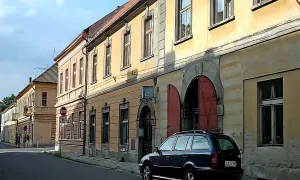
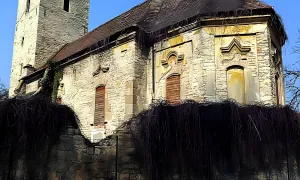
Real photos taken near the monument


Zdroj a licence jsou uvedeny u každého snímku.
Tips from visitors
No tips yet. Be the first!
Log in and add your tip.
Sources and literature
Photos: Barocco7 / CC BY-SA 4.0 — Wikimedia Commons. The author and licence also appear when you hover over the image.
Faktickým podkladem tohoto textu byl článek na Wikipedii, jehož autory jsou přispěvatelé Wikipedie. Článek je dostupný pod licencí CC BY-SA 4.0.
Location on the map

Příběhy a pověsti
Legendy, pověsti a příběhy spjaté s touto památkou
Fotografie návštěvníků
Zatím žádné fotografie. Buďte první, kdo přidá fotografii z návštěvy!
Log in a přidejte svou fotografii nebo hodnoťte.
Za ověřenou návštěvu v aplikaci získáte víc bodů — poznáme podle GPS, že jste na místě.
Reviews and comments