



Bazilika Panny Marie Bolestné Basilica
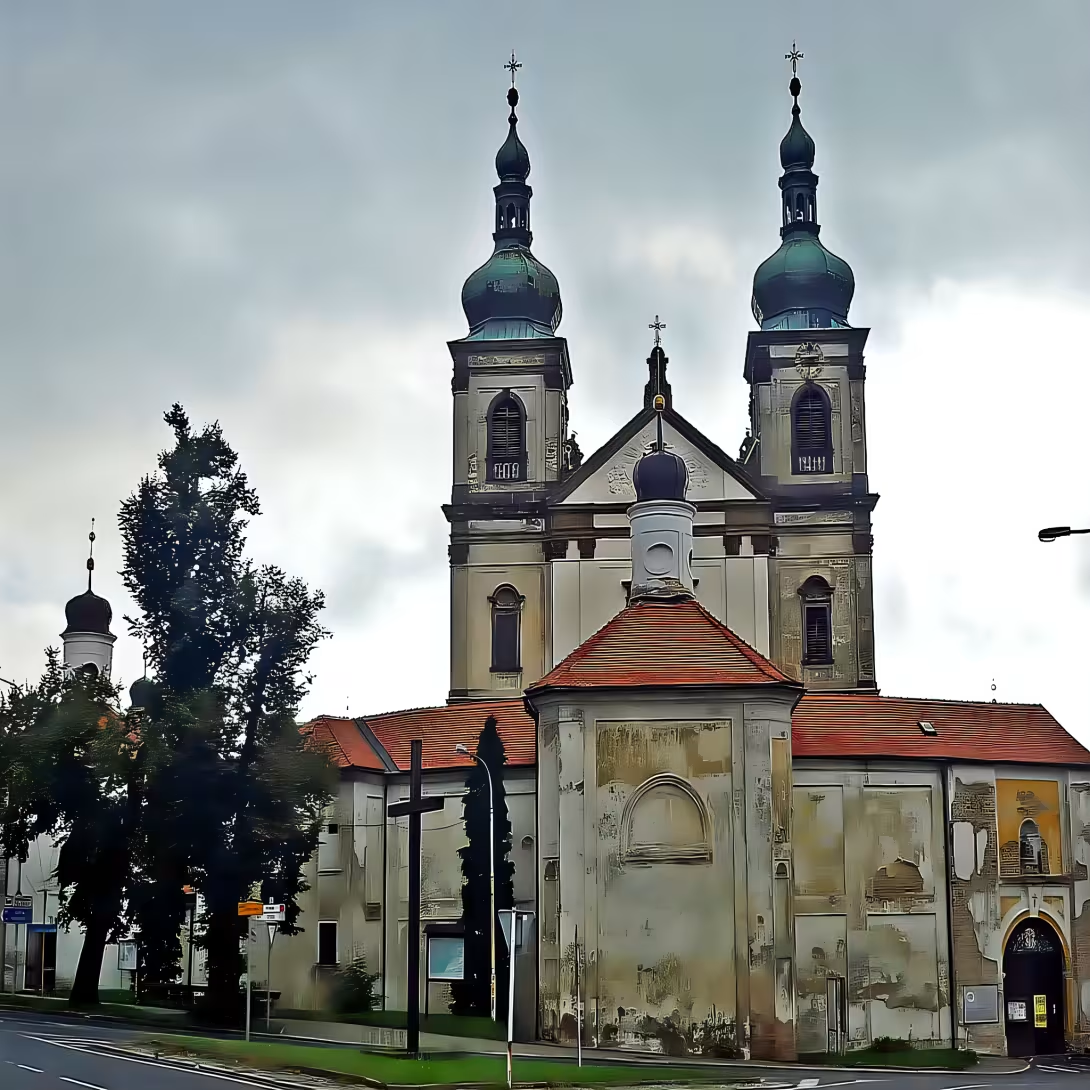
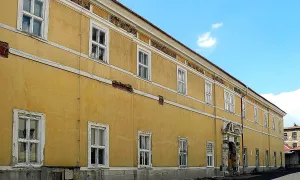
Bazilika Panny Marie Bolestné is located right in the center of Bohosudova in the square, where it forms an architectural whole with ambition and former Jesuit residence. It is one of the main North Bohemian pilgrimage churches, whose historical importance reached its peak in the early 20th century, when it was the second most visited pilgrimage site of the lithomeric diocese in 1911 and the fifth in the whole of Bohemia. Right before the Basilica in Filip in 1885, it even served as the most visited Marian shrine in northern Bohemia.
Today's construction was started in 1701 by builder Giulio and Octavius Broggie and was completed in 1708 when both towers were built in the western front. However, the construction was preceded by a rich история. The original small, probably wooden chapel was built here in 1426, expanded in 1507, but it was abandoned before 1620. The construction was subsequently rebuilt in 1621-1624, which preceded today's ambitious Baroque.
The core of the venering is a legend written in wall paintings from the years 1701- 1706 in the cross corridor of basilica. According to tradition, the legend emerges from the Hussite era, when the nun from the convent of the sisters of the Svěce near Bílina, who lived here since 1227, fled the Hussite raid. They took their most precious reliquary - a little Gothic statue of the Painful Virgin Mary. The beet trees were hidden in the woods in the places of the current Bohosudova and the last of them, before death, hid the statue in an excavated old linden. On the Day of the Birth of the Virgin Mary in 1425 there was supposed to be a girl from Krupa eating grass. Legend has it that she was attacked by a poisonous snake that wrapped around her hand, but instead of attacking her, she turned against the linden, hissed heavily and then paralyzed. The locals, to whom the girl told her strange experience, found the statue in the linden. When the statue from the Krupsky church, where they carried it, returned to the linden a few times, God's will was seen and the first chapel was built here. The water in the nearby well was already considered to be medicinal.
The Gothic statue itself, which was allegedly the centre of the cult, measures approximately 15 centimetres and is made of burnt clay. It depicts the seated Virgin Mary, holding her to the lap of the dead Christ and looking at him painfully.
Basilica has been protected as a cultural monument since 1964 and was declared a national cultural monument of the Czech Republic in 2018. The pilgrimage to this place is still alive in the 21st century - for example, about 500 Lusatian Serbs from the neighbouring German Lusatia come to a joint meeting every year. Visiting Basilica thus represents a meeting of over 500 years of human godliness and Marian tradition.
Then and now
Drag the slider to compare how the landmark may have looked when it was built with the view today.
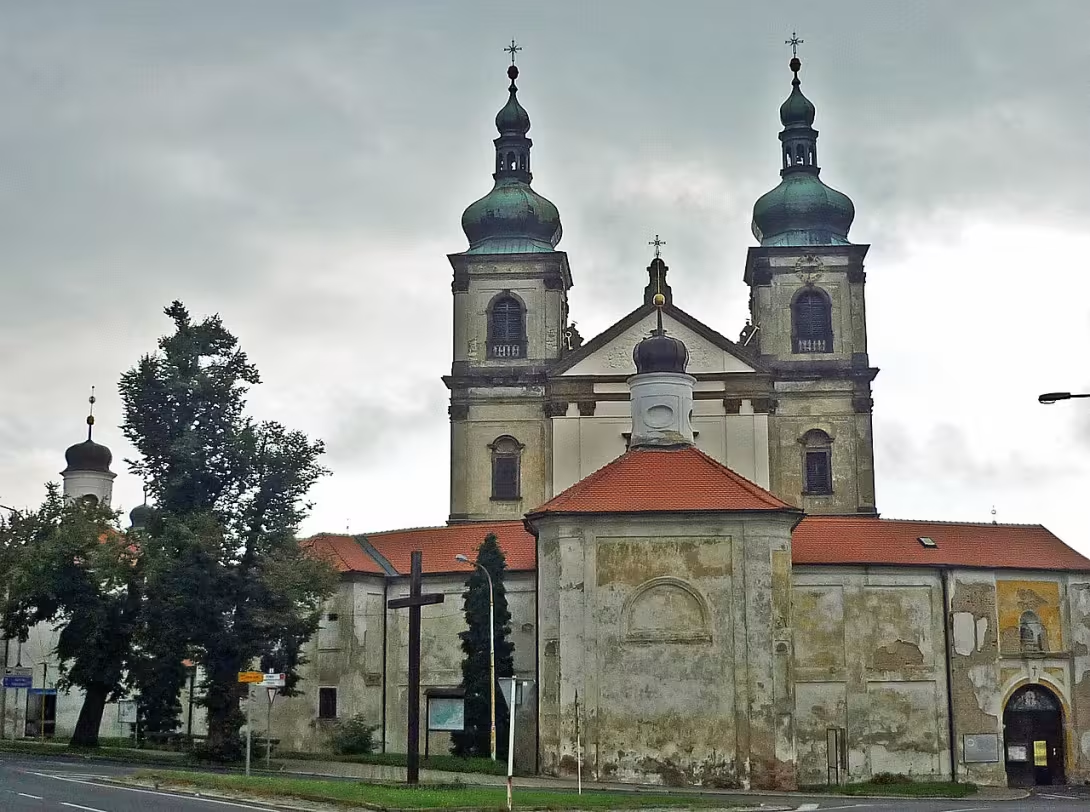

The historical appearance on the left is an AI-generated visualisation and serves as inspiration only.
Historical milestones
- 1425
- Finding a statue of the Painful Virgin Mary in an old linden.
- 1964
- Protected as a cultural monument.
- 2018
- Declared as a national cultural monument of the Czech Republic.
Architectural development
Originally there was a chapel from 1426, which was extended in 1507. After desolation before 1620 it was rebuilt between 1621 and 1624. The present Baroque building was started in 1701 and completed in 1708 when both towers were built.
Historical events
- 1426
- The position of the first chapel in memory of fallen Crusaders.
- 1701
- The beginning of the construction of the contemporary basilica Giulio and Octavius Broggie.
- 1911
- Basilica was the second most visited pilgrimage site of the lithomeric diocese.
Points of interest
- Bazilika Panny Marie Bolestné is one of the main North Bohemian pilgrimage churches and was the second most visited pilgrimage site of the lithomeric diocese in 1911.
- The original chapel in this place was built in 1426 and served as the most visited Marian shrine in northern Bohemia before the Basilica.
- The legend of the Painful Virgin Mary lies in the miraculous discovery of the statue that the beekeepers hid in the linden during the Hussite raid. The statue went back to the linden by itself.
- The Gothic statue of the Painful Virgin Mary measures approximately 15 centimeters, is made of burnt clay and represents the seated Virgin Mary with the dead Christ on her lap.
- Basilica has been protected since 1964 as a cultural monument and in 2018 declared a national cultural monument of the Czech Republic.
Guide
This guide is narrated by a synthetic voice generated by artificial intelligence.
Show guide text
This text was created by artificial intelligence and has not been editorially reviewed. It may contain inaccuracies.
The Basilica of Our Lady of Sorrows stands in the center of Bohosudov on the town square, together with the outbuildings and the former Jesuit residence. It belongs to the main pilgrimage churches of northern Bohemia. In 1911 it was the second most visited pilgrimage site in the Litoměřice diocese and the fifth in Bohemia. Before the basilica in Filipov was built in 1885, it was actually the most visited Marian shrine in northern Bohemia. Pilgrims come here to this day. Every year approximately 500 Lusatian Sorbs from neighboring German Lusatia gather here.
Originally there stood a small, perhaps wooden chapel from 1426. In 1507 it was expanded, but before 1620 it fell into disrepair. It was rebuilt in the years 1621 to 1624. The present building was begun in 1701 by Giulio and Octavio Broggi. It was completed in 1708, when both towers on the western façade were added. In 2018 it was declared a national cultural monument.
The origin of the pilgrimage site is told by a legend in the wall paintings in the covered passage from 1701 to 1706. In nearby Světci near Bílina there stood a convent of the sisters guarding the Holy Sepulchre. The Hussites attacked it and set it on fire. The nuns who escaped carried away with them a small venerated statue of Our Lady of Sorrows. They hid in the forests in the areas of present-day Bohosudov and gradually succumbed to hardship. The last of them, it is said, hid the statue before her death in a hollowed-out linden tree.
On the feast of the Birth of the Virgin Mary in 1425, a girl from Krupka came to the linden tree, by which there was a spring, to cut grass. A poisonous snake, a symbol of the devil, coiled around her hand. But the snake turned toward the linden tree, hissed loudly, paralyzed, fell, and vanished in the grass. The girl's employer set out with the burghers of Krupka to the linden tree and found the statue in the hollow. A procession carried it to the Krupka church, but it disappeared from there and reappeared in the linden tree again. When this was repeated, the people saw the will of God in it and built the first wooden chapel.
Another account connects the chapel with the Battle of Na Běhání near Ústí nad Labem on June 16, 1426, after which many crusaders died in flight here. The chapel was built in their memory and in honor of Our Lady of Sorrows and housed a Gothic statue. Water from the spring was already considered healing. However, sources suggest that the statue actually came from the Světci convent.
The statue is approximately fifteen centimeters tall and is made of fired clay. The Virgin Mary sits, holds the dead Christ in her lap, and looks at him sorrowfully.
Tips for visitors
The best time to visit the Basilica of Our Lady of Pain is in the spring or autumn period when pilgrimage events are on top and nature around the Basilica offers the most beautiful colors. This time also means fewer visitors compared to sunny summer days.
When visiting the Basilica, bring your clothes suitable for wearing to church and if you plan to spend the whole day, don't forget your protective sunglasses, anti-moisture blankets and plenty of drinking water. In winter it is advisable to wear a warm jacket.
Photography of basilica offers the best possibilities especially in the early morning or evening when light naturally turns and provides a unique view of Baroque architecture. Don't forget to check the rules about photography inside the basilica.
In the vicinity of the Basilica of the Virgin Mary Bolestý, it is possible to visit the historical cemetery with a burial ground of war veterans, which represents an interesting part of local history. For families with children, the environment also offers the opportunity to explore natural beauty and waterfalls on nearby paths where children can enjoy leisure time.
Frequently asked questions
Can the monument be visited?
Religious buildings are usually open mainly during services; at other times a visit is normally arranged with the parish or the operator. We have not verified specific times.
Where is the monument?
Location: Mariánské náměstí, Bohosudov, Krupka, Ústecký kraj. The map on this page shows the exact spot.
Why is the monument protected?
It is listed in the Central List of Cultural Monuments of the Czech Republic as a national cultural monument (register no. 428).
For kids
Hello, adventurous friends! Today we will look at a fascinating history that will lift you to the toes and take you to a time when Central Bohemia was full of secrets and handcuffs. Prepare to travel back for centuries - exactly 318 years! There, in the picturesque village of Bohosudov, stands a beautiful basilica called Bazilika Panny Marie Bolestné. It's like opening an old precious key and unlock the door to the past.
Businesses nearby
Do you run a restaurant, accommodation, shop, museum, rental, wellness or other visitor service near this monument? Show yourself directly to the people heading to it — this is how they will see you in the app and on the web:
Nearby
Basilica is located right in the center of Bohosudov and is surrounded by other interesting places. There is a former Jesuit monastery nearby, which was later converted into a school. The surrounding area also offers beautiful nature and the possibility of trips to surrounding forests and hills.
Accommodation nearby
Trips and activities nearby
Guided tours, tickets and activities nearby from GetYourGuide
Affiliate link: if you buy from the partner, we may receive a commission. The price for you does not change.
Search tours and activities →Themed route
On this trip we go to the village Bohosudov, where the Basilica of Our Lady of Pain is located.
1. Bazilika Panny Marie Bolestné - is a dominant village Bohosudov and is worth visiting for its unique architecture and rich history. Its construction started in 1707 and was completed in 1713. Basilica is famous for its beautiful frescos and statues.
2. St. Wenceslas Church - stands near the Basilica and is worth visiting for its unique architecture and history. The church was built in 1730 and is famous for its beautiful frescos and statues.
3. Bohosudov Mill - worth visiting for its unique architecture and history. The mill was built in the 18th century and is famous for its beautiful wooden structures and historical tools.
Seasonal recommendations
Spring:
In the spring season, the Basilica of Our Lady of Pain is surrounded by flowers and greenery, creating a pleasant atmosphere. Green meadows and trees around the church create a living green belt that lines the way to the basilica. We recommend visiting the basilica in spring, if you like flowers and green nature.
Summer:
In the summer season, the Basilica of Our Lady of Pain is full of life and energy. In the summer there are many tourists who want to see this beautiful memory. We recommend you come to the basilica before the main summer season begins to avoid large crowds.
Autumn:
In the autumn period, the Basilica of Our Lady of Pain is surrounded by the colour of autumn leaves. Around the basilica there are forests that turn into beautiful colours in autumn. We recommend visiting the Basilica in the autumn period if you like the colors of autumn and calm atmosphere.
Winter:
In winter, the Basilica of Our Lady of Pain is closed from 1 December to 31 March. This period is open only on Tuesday and Thursday from 9 a.m. to 12 p.m. We recommend visiting Basilica in the winter, if you like peace and quiet. Bring warm clothes because it's cold in the winter basilica.
Visualizations and artistic views


The visualisations are generated by artificial intelligence and serve as inspiration.
Photos from the area
Real photos taken near the monument


Zdroj a licence jsou uvedeny u každého snímku.
Tips from visitors
No tips yet. Be the first!
Log in and add your tip.
Sources and literature
Photos: SchiDD / CC BY 3.0, rozlišení zvýšeno umělou inteligencí — Wikimedia Commons. The author and licence also appear when you hover over the image.
Faktickým podkladem tohoto textu byl článek na Wikipedii, jehož autory jsou přispěvatelé Wikipedie. Článek je dostupný pod licencí CC BY-SA 4.0.
Location on the map
Příběhy a pověsti
Legendy, pověsti a příběhy spjaté s touto památkou
Fotografie návštěvníků
Zatím žádné fotografie. Buďte první, kdo přidá fotografii z návštěvy!
Log in a přidejte svou fotografii nebo hodnoťte.
Za ověřenou návštěvu v aplikaci získáte víc bodů — poznáme podle GPS, že jste na místě.
Reviews and comments