



Terasy Karla Otčenáška Park
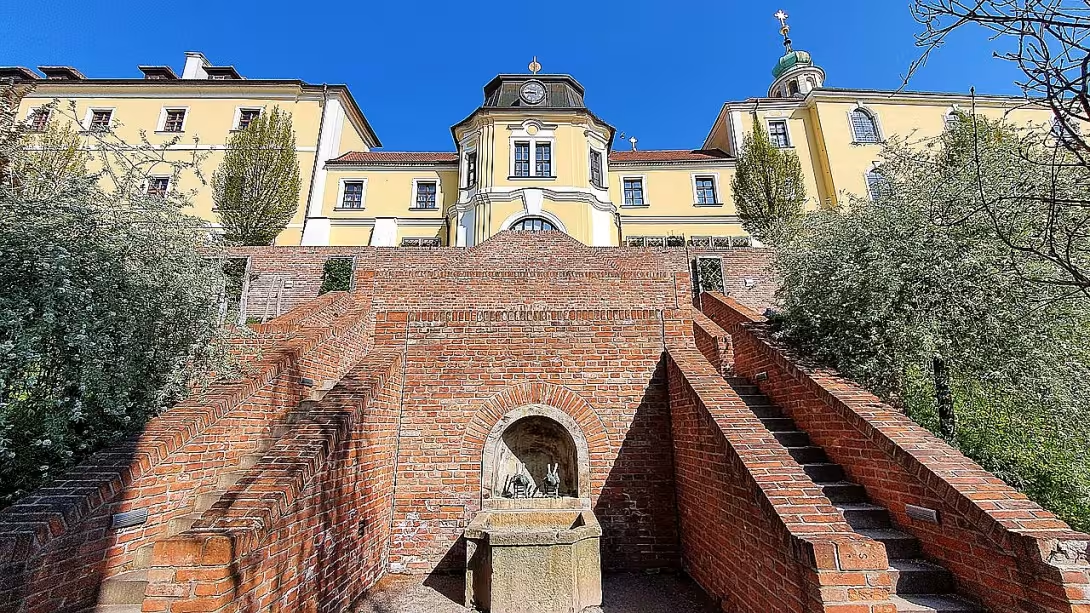
Terasy Karla Otčenáška, formerly known as South terraces, lies on the south side of the historic centre of Hradec Králové between the Gočár staircase and the Bono publico staircase. Their name today bears the hallmark of Catholic history - they are rooting for Bishop Karl Father, who was born a hundred years ago. The City Council approved this title in March 2020, and the solemn act commemorated 23 May 2020, the ninth year after his death.
The grounds of the park were created in the places of the former castle system which, over time, transformed into terraces belonging to individual houses. However, the space remained private for a long time and was not accessible to the public. The opening was completed only after a thorough reconstruction, which they carried out from 2009 to 2011. The architect Jiří Krejčík took the view of the terrace again, which was already involved in this place in the 1990s and gradually reached its design in 2003. The opening ceremony took place on 27 October 2011. The renewal cost CZK 54 million, of which the European Union contributed CZK 18.8 million as part of the Hradby project.
Terraces extend at three levels, the highest of which offers a view of the city and an unusual view of the Jesuit railway buildings of the New Adalbertinum. The landscape is supplemented by four fountains or fountains with plastics from academic sculptor Tomáš Rafl. The lowest fountain embellishes a couple of metal birds - drips or ravens - which when filled with water are presented and the water is blown down. Another fountain carries a piece of stone cat. Different plants are accompanied by a walk: the lower terrace boasts hydrangeas, higher parts with rose beds and vibrant roses, lavender blooms on the highest terrace.
Already at the beginning of the reconstruction archaeologists from the Museum of Eastern Bohemia in Hradec Králové explored the soil and uncovered the layered history of the place. They found the remains of the grotty and sewers, as well as traces of prehistoric fortifications from the younger Bronze Age. The Middle Ages left the foundations of the bottom tower of the fishing gate from the 15th to 16th century and the remains of the park wall of bricks and optics. From the 16th century, parts of the lower city wall were preserved. The Baroque period represents a niche from the first half of the 18th century, some part of the garden behind the House of Spulák, and at the turn of the 18th and 19th centuries a well was built in connection with the Baroque fortress. The remains of the original Baroque staircase and terrace with water tanks under the garden hall of Jesuit college are also visible.
The park is part of Procházkov's IV circuit dedicated to contemporary architecture. It is a place where the history of sandy layers and buildings touches the present - terraced landscape reminds of how the city was hiding behind the walls and how the course of time changed the purpose and form of one place.
Historical milestones
- younger Bronzation
- traces of prehistoric fortification in the terrace area
- 15. to 16th century
- existence of the foundations of the bottom tower of the fishing gate
- 16th Century
- maintenance of parts of the lower city wall
- First half of the 18th century
- the formation of baroque niche, part of the garden behind the House of Spullers
- zlom 18. and 19th century
- building a well in connection with baroque fortress
- 2011
- festive opening of reconstructed terraces after extensive restoration
Architectural development
The space was transformed from ancient fortification through medieval walls and Baroque gardens to contemporary architecture. The reconstruction according to Jiří Krejčík's design included the creation of terraces, the installation of couches and plant planting. The foundation of towers, nobodies and Baroque staircases are visible in the area.
Historical events
From 2009 to 2011 a large reconstruction of the park took place. In March 2020, a new name for the park was approved in honor of Bishop Karl Páčenášek. The ceremony was held in May 2020.
Points of interest
Terraces were created at the site of the former castle system. - The landscape is supplemented by four fountains with plastics from sculptor Thomas Rafl. - The lowest fountain has metal birds that blow water down when filled with water. - Archaeologists discovered traces of prehistoric fortifications from the younger Bronze Age. - The foundations of the fishing gate tower from the 15th to 16th century were found on the site.
Guide
This guide is narrated by a synthetic voice generated by artificial intelligence.
Show guide text
This text was created by artificial intelligence and has not been editorially reviewed. It may contain inaccuracies.
The Karel Otčenáš Terraces are a park on the southern side of the historic center of Hradce Králové. They extend between Gočár's staircase and the Bono publico staircase. They were previously called the Southern Terraces.
The park emerged in the place of a former fortification. This later transformed into terraced gardens that belonged to individual houses. However, this space was never accessible to the public. This only changed with the reconstruction between 2009 and 2011. The architect Jiří Krejčík designed the park's appearance in 2003, having already worked with the terraces in the nineteen nineties. The park was ceremonially opened on October 27, 2011. The reconstruction cost 54 million crowns. Approximately 18.8 million was covered by a European Union grant from the Fortifications project – reconstruction.
The current name commemorates the Hradec bishop Karel Otčenáš. The city council approved it in March 2020, the year that marked one hundred years since the bishop's birth. The ceremonial naming took place on May 23, 2020, on the date of the ninth anniversary of his death.
An archaeological survey took place at the beginning of the reconstruction, in which experts from the Museum of East Bohemia in Hradce Králové participated. It revealed, among other things, the remains of a grotto, sewage channels and prehistoric fortifications from the Late Bronze Age. The foundations of the lower tower of the Fishermen's Gate from the fifteenth to sixteenth century are visible, as are the foundations of a brick and sandstone palisade wall from the fifteenth century and the lower city wall from the sixteenth century. Archaeologists further found the foundations of a niche from the first half of the eighteenth century. It belonged to a Baroque garden behind the house U Špuláků. Another find is a well from the turn of the eighteenth and nineteenth century, which was created in connection with the construction of a Baroque fortress. There was also an originally Baroque staircase and terraces with water reservoirs beneath the garden hall of the former Jesuit college.
From the terraces, there is an unconventional view of the buildings of the Jesuit college, today's Nové Adalbertinum. The upper part of the park additionally offers views of the city.
There are fountains on all three terraces. A total of four fountains and water features complement the sculptures by academic sculptor Tomáš Rafla. The lowest situated fountain is decorated with two metal birds, jackdaws or ravens. When their bodies fill with water, they bend forward and water flows from their beaks into the fountain. On the second fountain is a stone cat.
Roses grow on the terraces in flower beds and climbing up the walls. On the lower terrace there are hydrangeas and on the highest flower beds there is lavender. The park is part of Walking Route number four, which is dedicated to contemporary architecture.
Tips for visitors
For the best experience we recommend a visit in late afternoon. At this time the sun creates pleasant, soft light on the terraces, which is ideal for relaxation and observation of urban architecture.
Transport to the place is possible both on foot and through public transport. The current timetables and connections can be easily accessed by internet search engines.
When visiting, it is recommended to bring comfortable shoes suitable for moving along terraces. For photography are the most suitable elevated points of the park, where you get interesting angles to the surrounding sights and the city.
Within short walks in the surroundings you can visit Jesuit College (New Adalbertinum) or explore Gočár's staircase and Bono public staircase. For families with children, the park is a pleasant stop in urban exploration where they can exhale in the fresh air.
Frequently asked questions
Can the monument be visited?
Parks and gardens are often open to the public, but some have opening hours or are part of a closed site. We have not verified the entry conditions.
What are the opening hours and admission?
We have not verified the opening hours or admission. Current information is published by the operator.
Where is the monument?
Location: Hradec Králové, Královéhradecký kraj. The map on this page shows the exact spot.
For kids
Imagine going back to the past and standing where you will now find Terasy Karla Otčenáška in Hradec Kralove. It's a place full of secrets and adventure! Where you play with friends today or read a book under a shady tree, once stood a castle fortification. It was like a city in the city - it protected the people from their enemies and it was full of life.
Businesses nearby
Do you run a restaurant, accommodation, shop, museum, rental, wellness or other visitor service near this monument? Show yourself directly to the people heading to it — this is how they will see you in the app and on the web:
Nearby
Jesuit tracks (New Adalbertinum), Gočár staircase and Bono publico staircase.
Accommodation nearby
Themed route
Thematic cruise route: Terasy Karla Otčenáška and surroundings
1. Terasy Karla Otčenáška (park) - Type: Park, memorial - Why is it worth visiting: Terraces are not only a beautiful place for relaxation and a view of Hradec Králové, but also a monument dedicated to Karel Páčenášek. The park offers quiet pavements and cosy corners for relaxation.
2. Jesuit Railways (New Adalbertinum) - Type: Historical area - Why is it worth visiting: This historical complex is an important part of Hradec Králové's cultural heritage. Jesuit tracks are famous for their architecture and rich history, reflected in every stone.
3. Gočár's staircase - Type: Architectural element - Why is it worth visiting: The staircase is one of the most famous works by architect Jože Plečnik. Its unique design and location on the terrace add a specific character to the site that will be noticed by every visitor.
4. Stairway Bono publico - Type: Architectural element - Why is it worth visiting: This staircase is another piece of Plečnik, which contributes to the architectural wealth of the area. Its functional and aesthetic design embodies the idea of public good.
This route offers a combination of relaxation in the park, history of Jesuit tracks and architectural beauty of the works of Plečnik. It is ideal for those who want to know the cultural and natural attractions of Hradec Králové.
Seasonal recommendations
In the spring Terasy Karla Otčenáška comes to life thanks to the first green leaves and blooming flowers, creating a fresh and optimistic atmosphere. Light is soft in this period and ideal for nature photography at its early stage of growth. We recommend wearing layered clothes because spring weather is usually variable and the morning winds can be unpleasant. The best place to visit is in the morning when the air is the cleanest.
The summer season offers a rich shadow apron thanks to full flowering vegetation, making the park a pleasant place to relax on hot days. The atmosphere is lively and full of energy, but in the main summer season there can be many more visitors. For the best experience, we recommend arriving early in the morning or late in the afternoon to avoid the biggest interference. Don't forget light clothes, headgear and plenty of fluids.
Autumn brings a fascinating colour palette of golden, orange and brown shades to the park, which together with the morning mist create a nostalgic and calm mood. The lighting is low and golden at this time, which is perfect for lovers of landscape images. It is advisable to prepare a warmer jacket and comfortable shoes suitable for walking on a moist surface. The park is usually less crowded in this period than in summer, allowing for more privacy.
In the winter period, Terraces have a calm and still impression that bare branches of trees create interesting geometric shapes against the sky. The atmosphere is quiet and the air crispy, which is ideal for short, refreshing walks. Given the short days, it is best to plan a visit around noon to make enough daylight. The need is for quality winter clothes, including hats and gloves, so that the cold does not affect you during a longer stay outside.
Visualizations and artistic views


The visualisations are generated by artificial intelligence and serve as inspiration.
Photos from the area
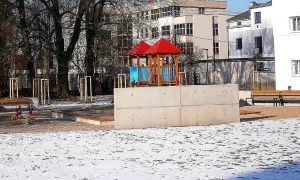
Real photos taken near the monument


Zdroj a licence jsou uvedeny u každého snímku.
Atmosphere of the place
This atmospheric visualisation of the place and period was generated by artificial intelligence. It is not real footage of the location.
Tips from visitors
No tips yet. Be the first!
Log in and add your tip.
Sources and literature
Photos: Lukáš Nekolný / CC BY-SA 4.0 — Wikimedia Commons. The author and licence also appear when you hover over the image.
Faktickým podkladem tohoto textu byl článek na Wikipedii, jehož autory jsou přispěvatelé Wikipedie. Článek je dostupný pod licencí CC BY-SA 4.0.
Location on the map
More monuments – Hradec Králové
Show all in the municipality
Příběhy a pověsti
Legendy, pověsti a příběhy spjaté s touto památkou
Fotografie návštěvníků
Zatím žádné fotografie. Buďte první, kdo přidá fotografii z návštěvy!
Log in a přidejte svou fotografii nebo hodnoťte.
Za ověřenou návštěvu v aplikaci získáte víc bodů — poznáme podle GPS, že jste na místě.
Reviews and comments