






Třeboňská rybniční soustava Water structure
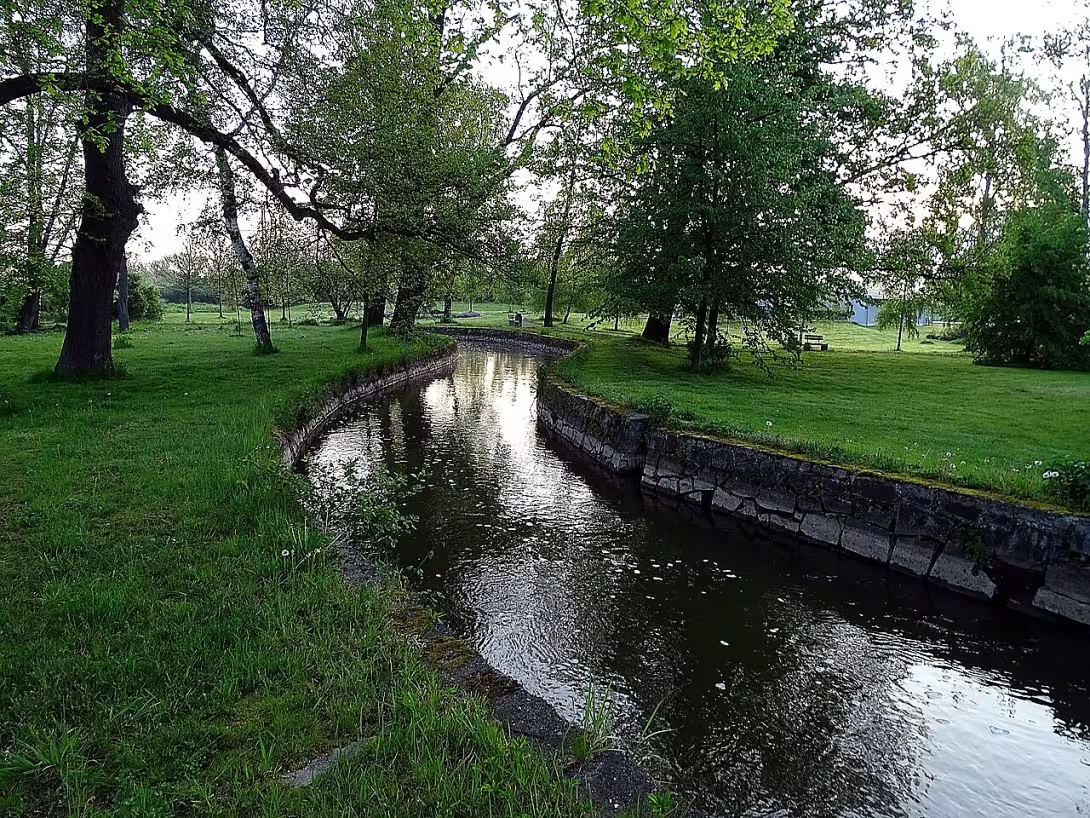
The Třeboňská rybniční soustava system, or Třeboň, is an impressive network of over 500 interconnected ponds in southern Bohemia. Established since the 13th century and developed mainly between the 15th and 16th centuries, it has an area of approximately 6,370 hectares (15,700 acres). The system, which is known for its historical importance as the main aquaculture sector, also plays a role in water management, biodiversity protection and recreation. At present UNESCO is on the UNESCO World Heritage List, stands out as an important cultural monument.
Fish ponds in Bohemia date back to the 12th century, with a pond of carp mentioned in the Kladruba Charter 1115. The significant development in Trebon began in the 13th century when the Slavs from Central Bohemia arrived and began their drainage efforts in the conversion of swamps into arable land. This process was obtained at the end of the 14th century on the basis of the Holy Roman Emperor Charles IV's directive to strengthen fish production for the kingdom. The construction of these ponds was both a practical effort and a competitive civic activity, with large ponds being highly valued.
Třeboňská rybniční soustava has an architecturally complex network of canals, trenches and streams connecting different ponds. Under Štěpánka Netolický in 1506 there was a significant expansion, including the creation of the Golden sewer canal, 48 km long waterways completed between 1518 and 1520. This engineering performance ensured a stable supply of water through the water catchment areas, even during the drought. Jakub Krčín later contributed to the construction of the Rožmberský pond, the largest in Central Europe, and to connecting channels like the New River.
Pond ownership has evolved over time. Originally managed by numbers such as Štěpánka Netolický and Jakub Krčín were later owned by the house Schwarzenberg until 1920. Fishing Třeboň a.s. today oversees their operation and maintains annual fish production of about 2,900 tonnes, mainly carp.
Fishing ponds throughout history faced various challenges and developments. The 30-year war significantly reduced the fish harvest, but the recovery was documented in 1751. At the end of the 19th century Josef Šusta built other ponds that brought the overall size. Despite these changes, the system continues to perform several functions outside aquaculture.
Třeboňská rybniční soustava now plays a key role in the protection of biodiversity. Its age and design have created a semi-natural environment that promotes a variety of flora and fauna, including over 150 species of birds and many mammals. But enhanced agricultural practices since World War II have threatened this ecological balance by destroying natural habitats and eutrophication.
As far as water management is concerned, fish ponds act as a buffer for floods in their large water catchment areas in Czech and Austrian regions. Despite the challenges posed by ageing infrastructure, such as the gap from the terrestrial dam and wood drainage pipelines, they continue to effectively mitigate the flood effects.
The importance of Třeboňská rybniční soustava is further recognised by its designation as the UNESCO Biosphere Reservation since 1977 and by inclusion on the Ramsar list of wetlands of international importance. Such recognition underlines its ecological, cultural and historical value.
Visitors Třeboňská rybniční soustava can explore a landscape rich in history and natural beauty. Fishing ponds offer knowledge of medieval engineering and sustainable water management practices that have lasted for centuries. Whether you are interested in history, ecology or simply enjoying scenic visions, this site provides a unique opportunity to connect with the past and appreciate its continued importance today.
Then and now
Drag the slider to compare how the landmark may have looked when it was built with the view today.
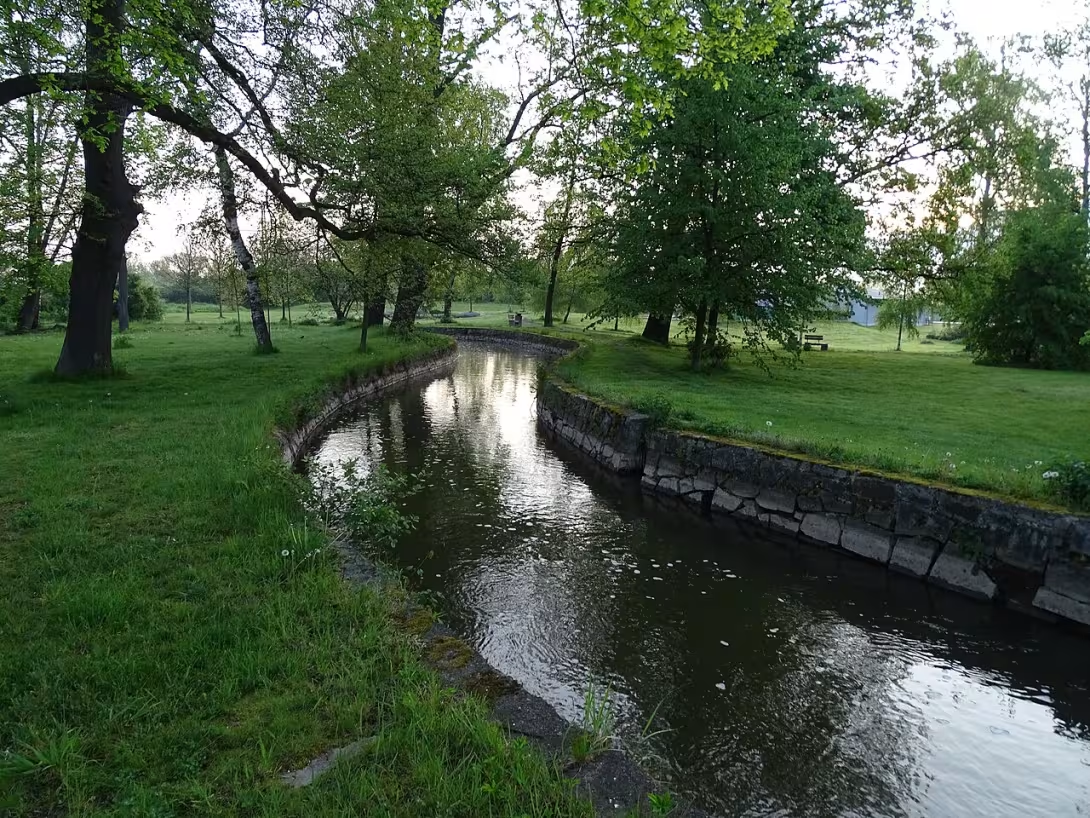

The historical appearance on the left is an AI-generated visualisation and serves as inspiration only.
Historical milestones
- 1115
- A mention of a pond in Kladruby monastery charter.
- 13th Century
- A significant development began with Slavs turning the swamp into arable land.
- Late 14th Century
- Enlargement under Holy Roman Emperor Charles IV to increase fish production.
- 1506
- Significant expansion including the Golden Sewer channel initiated by Stepan Netolický.
- 1518-1520
- Completion of the Golden sewer channel, 48-kilometer long waterways.
- 1751
- Recovery of the fish harvest recorded after 30 years of war.
Architectural development
Třeboňská rybniční soustava was originally planned and built by Stephen Netolický in the early 16th century, with significant contributions from Jakub Krčín in later years. The system contains a number of interconnected ponds and canals, mainly intended for fish farming and water management. Key architectural elements include the Golden sewer channel, which plays a key role in the regulation of water flow.
Historical events
1506-1518: Construction of the Golden sewer according to the plans of Štěpěnek Netolický.
1584-1590: Jakub Krčín completed the construction of Rožmberk, which is considered one of the largest ponds in the world.
Owners
At first she developed Štěpánek Netolický in the early 16th century, later perfected Jakub Krčín. Currently administered by Rybář Třeboň, which is part of the company.
Points of interest
- The development of Třeboňská rybniční soustava was significantly influenced by the Holy Roman Emperor Karl IV at the end of the 14th century, who focused on increasing fish production for his kingdom and showed how political ambitions can shape the ecological landscape.
- One of the architectural wonders within this system is the Golden sewer channel, a 48-kilometer long water road completed between 1518 and 1520. This engineering success was key to maintaining a stable water supply throughout the river basin, even during the drought, highlighting medieval progress in hydraulic engineering.
- Fish ponds have been in various properties throughout history, one of their most important owners being the house Schwarzenberg until 1920. Their long-term management reflects how aristocratic families often played a central role in managing and developing agricultural resources in Europe.
- During the 30-year war Třeboňská rybniční soustava experienced a significant drop in fish harvesting, which shows how well-established systems can be vulnerable to wider socio-political shocks in their time.
- Despite its primary use for aquaculture, today's Třeboňská rybniční soustava serves as an important ecological buffer. It acts as an instrument of flood management in an extensive water catchment area, which extends both in Czech and Austrian regions, which shows the multifunctional nature of historical water works in modern environmental contexts.
Guide
This guide is narrated by a synthetic voice generated by artificial intelligence.
Show guide text
This text was created by artificial intelligence and has not been editorially reviewed. It may contain inaccuracies.
The Třeboň fish pond system, often also called the Rožmberk system, is the most extensive fish pond system in the Czech Republic. It is made up of fish ponds to the west of the left bank of the Lužnice River, which are fed by the Zlatá stoka or into which water flows from it. The system stretches approximately twenty kilometers from Domanín in the south through Třeboň and Lomnice nad Lužnicí to Horusicích in the north. It is at most about ten kilometers wide, and its approximate center is the Velký Tisý fish pond.
The Zlatá stoka holds the entire system together. It is an artificial canal approximately forty-five kilometers long, which according to the plans of Štěpánek Netolický was created between fifteen hundred and six and fifteen hundred and eighteen. It separates from the Lužnice at approximately its one hundred and seventeenth kilometer and returns to it at the seventy-seventh kilometer. Another source of water is the Lužnice River itself, or more precisely its original riverbed flowing through Rožmberk, which is called the Stará řeka.
Two men were primarily responsible for the system's appearance. Štěpánek Netolický founded most of the fish ponds. A little later, Jakub Krčín made improvements to them, completing the work by building Rožmberk between fifteen hundred and eighty-four and fifteen hundred and ninety. Rožmberk covers an area of four hundred and eighty-nine hectares and is the largest fish pond in the system. Krčín also built the Svět fish pond, which originally received the name Nevděk. The Opatovický fish pond was created by joining two medieval fish ponds from thirteen hundred and sixty-seven. The Horusický fish pond, covering an area of four hundred and fifteen hectares, was built in fifteen hundred and twelve according to Netolický's design. The Bošilecký fish pond is probably the oldest of the main carp fish ponds in the Třeboň region.
Other large fish ponds include Dvořiště, Záblatský fish pond, Koclířov, Kaňov, and Ponědražský fish pond. A number of smaller ones are associated with them. Švarcenberk was already planned by Krčín, but it was realized only around seventeen hundred. Vítek was created in eighteen hundred and seventy-nine and eighteen hundred and eighty by separating it from Rožmberk. The appearance of the system in the second half of the seventeenth century is captured in a map of the Třeboň estate from sixteen hundred and eighty-four, which is displayed in Třeboň Castle.
The name Rožmberk fish pond system can be confused with the national cultural monument of the same name. That includes buildings on the eastern bank of the Lužnice River, primarily the Nová řeka. This canal takes water from the Lužnice, and is therefore indispensable for the system.
Today, the fish ponds and the Zlatá stoka are managed by the company Rybářství Třeboň. The entire system is part of the Třeboňsko Protected Landscape Area.
Tips for visitors
The best time to visit Třeboňská rybniční soustava is at the end of spring or early autumn when the weather is mild, so it is ideal for exploring extensive waterways and surrounding landscapes. During these seasons, you can enjoy the lively natural scenery without the peak of the summer crowd. In addition, the visit in September offers the opportunity to see the harvest period in action, adding a cultural dimension to your journey.
It is advisable to check current routes and plans using a transport application or website for the most accurate information.
When planning your visit, consider bringing comfortable walking shoes because there are several paths around the ponds suitable for hiking. The camera is necessary to capture a stunning landscape, especially during the golden hour of the morning or late afternoon when the light is soft and warm. Don't forget to bring binoculars if you're interested in bird watching because this area is rich in bird life.
Photographing enthusiasts will find several places around the pond system that offer breathtaking views, especially near the Old River, where the interplay of water and light creates picturesque scenes. Early morning or late afternoon are the ideal time for photography due to soft light conditions. In addition, the surrounding forests provide a unique background for your images.
For families with children, there is plenty to see within 30 minutes drive from Třeboňská rybniční soustava. The town of Treboň itself offers cultural attractions such as Třeboň Castle and its museum, which can be both educational and fun for children. Near Lomnice nad Lužnicí is home to a lovely castle with beautiful gardens that children will be able to see.
Frequently asked questions
Can the monument be visited?
This is a structure in a public space that can usually be seen from outside free of charge. We have not verified that this particular one is freely accessible.
Where is the monument?
Location: Lomnice nad Lužnicí, Jihočeský kraj. The map on this page shows the exact spot.
Why is the monument protected?
It is listed in the Central List of Cultural Monuments of the Czech Republic as a national cultural monument.
Businesses nearby
Do you run a restaurant, accommodation, shop, museum, rental, wellness or other visitor service near this monument? Show yourself directly to the people heading to it — this is how they will see you in the app and on the web:
Events nearby




Zdroj akcí: otevřená data měst a obcí ČR (Národní katalog otevřených dat) a kalendář akcí Národního památkového ústavu.
Nearby
The system is surrounded by picturesque landscapes including forests and agricultural land. Near cities such as Trebon and Lomnice nad Lužnicí offer cultural attractions, while natural elements like the Old River add to their picturesque beauty.
Accommodation nearby
Trips and activities nearby
Guided tours, tickets and activities nearby from GetYourGuide
Affiliate link: if you buy from the partner, we may receive a commission. The price for you does not change.
Search tours and activities →Themed route
Třeboňská Rybniková System Travel Route
1. Třeboňská Rybník System (Water System) - It is worth fulfilling: This historical quantity, built in the 16th century, is the oldest pond system in the world and the loophole sum of the small fishing industry. It is a fascinating area for those that need to use the history of the water dispute and determine its liquid profile.
2. Třeboň (city) - The small town offers a rich history and culture, with its ancient streets, a Baroque castle and a pit house. It is an ideal place to train local traditions and utilize them with a quiet tap.
3. Lomnice nad Lužnicí (city) - Proc stands behind the tower: This historical village is a known world road and cultural heritage, including the old castle and baroque cube. It offers the opportunity to explore local history and to set general conditions.
4. Old say (natural functions) - Proce is worth the effort: This nature water route is designed to provide a one-sided karst and has ideal support for relaxation, support for wild transport and the possibility of use for a picnic. It's a great source to connect with nature.
5. Forest area in Třeboň pond system (Forests) - It is worth the effort: these forests offer quiet profiles and cycling routes that are ideal for milestones of nature. It's the perfect place to disconnect and use the silent moments in the green.
This route offers a combined history, nature and culture of experiences that are characteristic of the last year of the Třeboň Fish System.
Seasonal recommendations
Spring: Třeboňská rybniční soustava comes back to life with bright colors and fresh fragrances during spring, when the region blooms with wild flowers that subsidize the landscape. This is the perfect time for nature lovers to witness the awakening of flora and fauna after winter sleep. Fine heat promotes outdoor activities such as bird watching or peaceful walks along the waterways. Visitors should dress in layers to suit the variable temperatures that can move from mild days to colder evenings. Early wounds are often less crowded, providing a peaceful experience in the middle of the Renaissance nature.
Summer: Summer in Třeboňská rybniční soustava is marked with long daily hours and warm weather, making it ideal for exploring the waterways of boats or enjoying peaceful picnics along the coast. Fresh green and reflective waters create a picturesque environment that attracts many visitors, especially on weekends. To avoid large crowds, plan your visit earlier on the day when the sun is not on top. Comfortable walking shoes, hats and sunglasses are recommended to protect against summer heat while remaining hydrated remains necessary.
Autumn: Autumn transforms Třeboňská rybniční soustava into a tapestry of warm colours with leaves changing colour throughout the region. Thanks to cold temperatures, this is an attractive time for outdoor activities such as cycling or hiking through picturesque landscapes. This season offers a calmer experience compared to summer, because less tourists are in this period. Clothing in layers is suitable due to fluctuating weather conditions and light jacket wearing can be beneficial in exploring waterways. Soft autumn light increases the beauty of the landscape, making it an ideal time for photography.
Winter: Winter surrounds Třeboňská rybniční soustava in a quiet calm, with its waters often frozen and landscape blanked in snow, creating a unique and peaceful atmosphere. The water roads are less crowded, offering a peaceful refuge from the rush of other seasons. While some outdoor activities can be limited due to weather conditions, winter is ideal for enjoying the quiet area through fine walks or observing wildlife adapted to the cold. Visitors should dress well in isolated layers and choose waterproof shoes if they embark on potentially icy trails. It is wise to check opening times because they may vary during this season.
Visualizations and artistic views


The visualisations are generated by artificial intelligence and serve as inspiration.
Tips from visitors
No tips yet. Be the first!
Log in and add your tip.
Sources and literature
Photos: ŠJů / CC BY 4.0 — Wikimedia Commons. The author and licence also appear when you hover over the image.
Faktickým podkladem tohoto textu byl článek na Wikipedii, jehož autory jsou přispěvatelé Wikipedie. Článek je dostupný pod licencí CC BY-SA 4.0.
Location on the map

Příběhy a pověsti
Legendy, pověsti a příběhy spjaté s touto památkou

Fotografie návštěvníků
Zatím žádné fotografie. Buďte první, kdo přidá fotografii z návštěvy!
Log in a přidejte svou fotografii nebo hodnoťte.
Za ověřenou návštěvu v aplikaci získáte víc bodů — poznáme podle GPS, že jste na místě.
Reviews and comments