






tvrz Hamr Granary
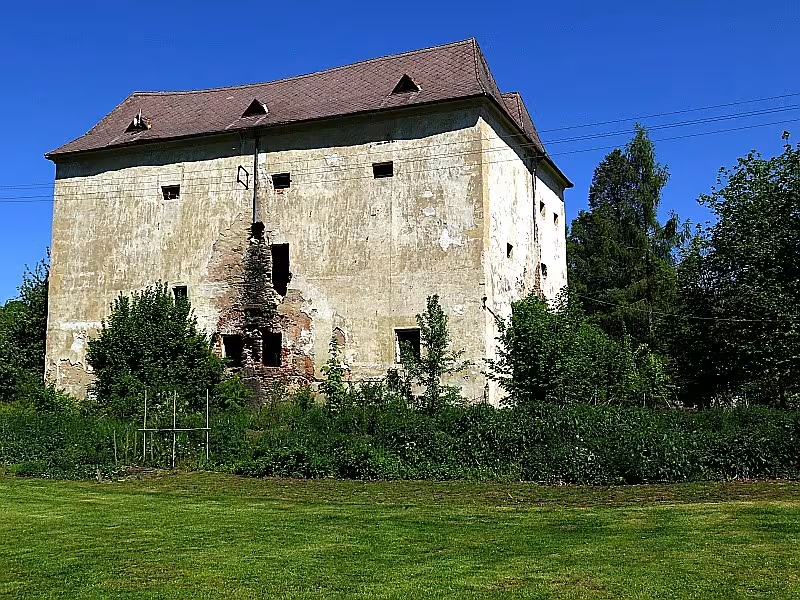
The fortress Hamr is a rebuilt granary in the village Hamr, located southeast of Veselí nad Lužnicí in the district of Tabor. The building was established at the end of the 15th century as a mansion and center of the local farm administration. In the first half of the 18th century it was subsequently adjusted to a granary.
The first written mention of the site dates back to 1395, when the iron hammer worked here in the property Petra Henzlina. The surrounding village was created at the end of the 15th century. The fortress was probably founded by Jindřich ze Sobětic, although according to Karl Splinter it was built only behind Henry Valovski of Ususky.
The building is a two-storey building with a rectangular plan and two parallel valbus roofs. It stands in a closed courtyard near the river Nežářka. The ground floor preserved vaults, gothic lining and beam ceilings. The manager's house, built for Leopold James Gerard, was converted into a restaurant before 2017.
Throughout history, the owner of the building has changed many times. After the line from Skétice and Valovský, he transferred the property in 1572 to Margaret Valovská from Hodìjov. It was handed over in 1596 to the daughters of Anna Vrchotika and Kateřina Valovská. Subsequently, the fort was purchased by Kryštof Karlov ze Svárova. In 1623 he was punished for participating in the uprising and the election of King Friedrich Falski was punished by the loss of one third of his property. His son Václav Albrecht Karel ze Svárova bought the estate from the Royal Chamber. In 1652 Kryštof sold it to the mother of Anna Ekrštorf and in 1661 it was acquired by Kateřina Barbora, married to Petra Loubského z Lub. In 1677 Hamr bought Václav Martin Gerard. His son Leopold Jakub Gerard had the old fort rebuilt. In 1714, the property was sold to the knight Václav Antonín Golz, who was in debt because of bad management. In 1729 the estate was bought by Princess Eleanor Amalia of Schwarzenberg with his husband Adam Francis of Schwarzenberg, who joined Hamr to the Třeboň estate. At this time, the fort was converted into a granary.
A major event was 1627, when the fort burned down, but was subsequently restored. The dramatic fate of Leopold met James Gerard. In 1714 he was sentenced to death by the decapitation of a sword, and thanks to the pardon of Emperor Charles VI, the sentence was changed to life imprisonment. Leopold died in 1724 in the White Tower in Prague Castle.
Today the fortress is protected as a cultural monument. The building is an important reminder of the history of the region and is worth a visit thanks to its architectural layers.
Then and now
Drag the slider to compare how the landmark may have looked when it was built with the view today.
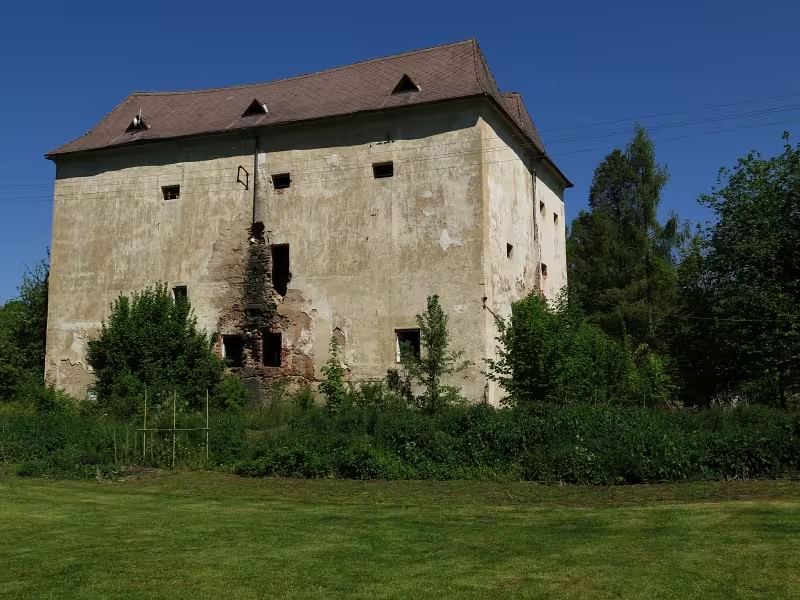
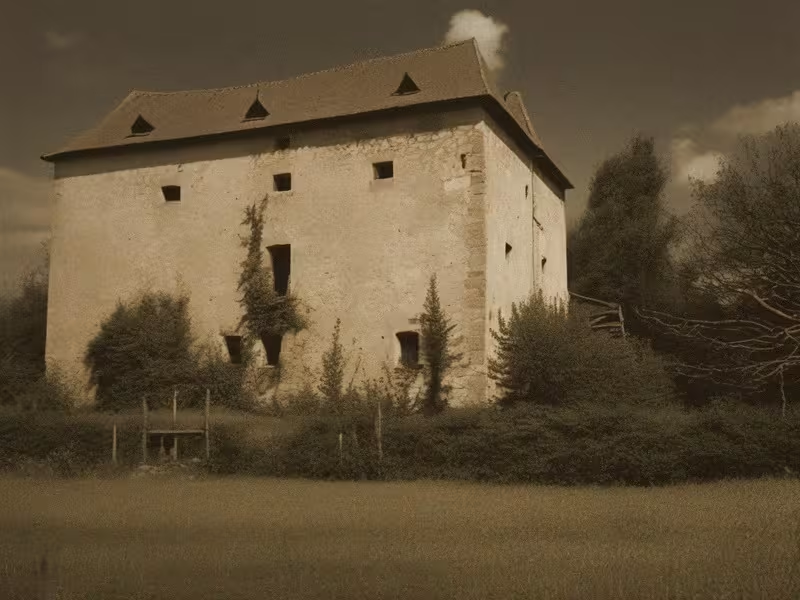
The historical appearance on the left is an AI-generated visualisation and serves as inspiration only.
Historical milestones
- 1395
- First written mention of Hamr.
- 1623
- Christopher of Svárov bought the property from the Royal Chamber.
- 1714
- Leopold Jakub Gerard was sentenced to death.
Architectural development
The Hamr fortress has undergone several construction phases. Originally founded as a fortress, it was converted into Schwarzenberg's granary in the first half of the eighteenth century. Architectural elements include a two-storey building with roofs and vaults, which are an important element of its history.
Historical events
- 1395
- First written mention of Hamr.
- 1623
- Christopher of Svárov bought the property from the Royal Chamber.
- 1714
- Leopold Jakub Gerard was sentenced to death.
Points of interest
- The building was established at the end of the 15th century as a mansion and a center of local farm administration. - The first written mention of the site dates back to 1395, when the iron hammer worked here in the property Petra Henzlina. - In 1627, the fortress burned down, but was subsequently restored. - The ground floor has preserved vaults, gothic linings and beam ceilings. - The manager's house was converted into a restaurant before 2017.
Guide
Show guide text
This text was created by artificial intelligence and has not been editorially reviewed. It may contain inaccuracies.
Welcome to the village Hamr. Right now, you're standing in front of a building that may seem modest at first glance, but several centuries of local history are encoded in its walls. You see before you an object we now know as a granary, but its origin is much more noble. Stop for a moment, take a breath and feel the atmosphere of this place. In front of you is a monument that has undergone a fascinating transformation from the aristocratic residence into a practical economic building.
When you look at this structure, try to move your mind much further back in time than this building was ever built. The first written mention of Hamr itself dates back to 1395. At that time, a man named Peter Henzlin had a metal hammer. It is from this artisanal facility, where the name of the whole village was forged in the thunder of water and fire. Imagine the contrast to today's peace. At that time there was work, the heat of the blast furnaces and the sound of the hammers falling into the anvil. It is this industrial core of the region that has created the basis for the future boom and the need to build a representative building here.
The end of the 15th century brought about a fundamental change. It is at this time that the fortress that you now face was established. It was not a massive fortress with walls, but it served as a mansion and center of the local farm administration. It was a building that was supposed to emit the power and status of its owners. At that time, there were people who ran the surrounding countryside, managed the fields and supervised local craftsmen. The fortress was the heart of the community, a place where the fate of the subjects was decided and local nobles met.
Now let's think about who actually lived in these areas. The history of Hamr is basically a list of families who took turns and left their trail. Among the names that bind this place, we will find, for example, Henry and Rehora of Sobectic, or Henry Valovski of Udeshi and his loved ones, Margaret and Albrecht of Valovska. Later, Anna Vrchotická z Loutkova appeared. Each of these people has brought different energy, different ambitions and other needs to Hamr.
In the seventeenth century, the property came into the hands of the House of Svárov. In 1623 he purchased the property from the Royal Chamber of Kryštof Karlov ze Svárova. They followed Václav Albrecht Karel ze Svárova and Anna Ekrštorf. But this era was not without tragedy. If you look at the walls of the building, remember that history is not only about bloom, but also about extinction. In 1627, the fort burned down. Imagine the confusion, the flames spreading across the wooden celilings and the panic of the people. But the fortress was not abandoned. It was subsequently renewed, indicating its strategic and economic value for the owners at the time.
Now pay attention to the architecture itself. Even though the building looks like a functional granary today, its foundation still has its original fortress. If you could see the ground floor, you would notice preserved vaults. It is these vaults that are silent witnesses of the past and remind us that beneath the surface of later modifications remain the Gothic elements that return us to the time of the knights and the first masters of this mansion. Take a look at the facade and feel the massiveness of the walls. This building has been built to last centuries, and even though its function has changed, its basic character has remained preserved.
The breaking moment came in the first half of the eighteenth century. The property was purchased by the powerful Schwarzenberg, namely Eleanor Amalia and Adam František ze Schwarzenbergu. For such a large and influential family, the small fortress in Hamr was not an appropriate representative seat, but had a different, practical potential. This is when the greatest transformation took place. The fort was converted into a granary. This means that the aristocratic house has become a building designed to store grain. It was a rational economic decision which, while relieving the building of its aristocratic glare, provided it survived until our days. At that time, the granary was a key element of the rural economy, a symbol of wealth in the form of crops and food security.
There is also a dark and devastating event that gives the building a touch of mystery and drama. In 1714, Leopold Jakub Gerard, one of the personalities associated with this place, was sentenced to death. Imagine the rumours that took place in the streets of Hamr at the time and the shadow that this judgment cast on the community. Who was Leopold Jakub Gerard and what did he do to get sentenced to the highest sentence? History leaves us room for reflection and questions that remain without a clear answer, but that make this place more than just an ordinary building.
Over the years, there were also other people like Kateřina Barbora Loubská and Petr Loubský from Lub, or Václav Martin Gerard and Václav Antonín Golz. Each of them saw this building in a slightly different form, each of them approached it with a different goal. From the iron hams to the mansion, to the fire and subsequent restoration, to the functional granary under Schwarzenberg.
Today tvrz Hamr is protected as a cultural monument. It is an important reminder of the history of the entire region, because in one single building it combines artisanal tradition, noble administration and agricultural boom. Now that you're standing in front of this building, don't just look at it like an old house. You see in it layers of time. You see the ambitions of the Valovsky and Svárov families in it, you see the pragmatism of Schwarzenberg in it, and you feel the echoes of dramatic destinies like Leopold James Gerard.
Notice how the building fits into the surrounding landscape. He's a silent witness to the world changing around her. From the time they forged iron here in 1395 to this moment when you listen to this story. This granary reminds us that nothing is permanent and that even what was once a symbol of power and luxury can become a practical tool for survival and management.
Now I encourage you to look at the building from different angles. Try to imagine what the ground floor with its arches would look like when the lords were still here, and what it looked like when the piles of grain were dumped in the warehouses. Feel the texture of the walls and think about all the people who have been going through them over the last 500 years.
Thank you for joining me on this short journey in time. I hope this view of tvrz Hamr helped you see in this granary much more than you can see at first sight. Now you have the space to explore and reflect. I wish you a pleasant rest of the journey and many other fascinating discoveries in our region. Goodbye.
Tips for visitors
The best time to visit the fortress Hamr is in the spring or autumn season when vegetation is full of blood and temperature is pleasant. This time of year also offers ideal lighting conditions for shooting architectural details of the fortress.
Parking can be found near the village Hamr, where you can leave the car and continue to the vicinity of the national monument on foot. The room is also available by public transport; check online search engines or local traffic information for current connections.
When visiting to take with you suitable clothes and shoes, because walking around the fortress and around the river Nežalka may include walking on uneven terrain. Next, it's a good idea to bring a camera or a cell phone if you like photography.
The best places for photography are the castle gardens and its surroundings, where you can capture views of the granary and the river Nežalka. Sunlight in the early morning or late afternoon provides ideal conditions for beautiful shots.
In the vicinity of the fortress Hamr it is possible to visit the river Nežalka, which offers opportunities for relaxation and picnics. For families with children it can be fun to explore the surrounding forests or to invent toy games in open space.
Businesses nearby
Do you run a restaurant, accommodation, shop, museum, rental, wellness or other visitor service near this monument? Show yourself directly to the people heading to it — this is how they will see you in the app and on the web:
Events nearby
Zdroj akcí: otevřená data měst a obcí ČR (Národní katalog otevřených dat) a kalendář akcí Národního památkového ústavu.
Nearby
River Nežirka
Cultural monument tvrz Hamr
Accommodation nearby
Trips and activities nearby
Guided tours, tickets and activities nearby from GetYourGuide
Affiliate link: if you buy from the partner, we may receive a commission. The price for you does not change.
Search tours and activities →Themed route
1. The river Nežirka (Water flow) - A walk along the shore offers a peaceful start to the nature trip. 2. Cultural landmark tvrz Hamr (Historical Construction) - Main item of the program where you can admire the architecture of the former fortress. 3. The granary (Economic building) - The specific part of the complex that used to store the grain. 4. Fortress (Area) - Space for a detailed tour of the outer casing and the overall atmosphere of the monument.
Seasonal recommendations
Spring: In the spring season tvrz Hamr is charming with its newly revived green paradise when flowering shrubs and trees provide an attractive background for visiting. The sun rays illuminate the stone walls of the fortress in fine colours, which gives the atmosphere a mild silence and quiet. It is recommended to visit in the morning or in the middle of the day to enjoy a mild temperature and avoid the noon sun. Wear comfortable shoes for walking on grass and bring a hat or scarf against the sun.
Summer: Summer in the Hamr Fortress offers an exciting experience with full skies and warm days, when nature turns into a lively palette of colors. More visitors may be expected in the main summer season, so it is advisable to come earlier in the day to avoid long fronts and ensure better views of the historical monument. The sun-resistant suit, hat and sufficient amount of drinking water are essential for a comfortable experience.
Autumn: In the autumn period, tvrz Hamr is transformed into a place full of fine shades, when tree leaves take colors from orange to red. The atmosphere is calm and quiet, which provides ideal conditions for relaxation between visitors. Days are shorter, so we recommend visiting the fort in time to enjoy enough light and natural beauty. Hot clothes such as a hat or a mantle may be necessary due to colder afternoon temperatures.
Winter: Winter visit to the Hamr Fortress offers a unique view of the historic monument under cover of snow or freezing clouds. Sun rays reflecting from ice and snow supply the atmosphere with magic, while cool air contributes to a calm environment. Opening hours can be limited to a short period of the day, so it is advisable to visit the fort in time and make sure you have a warm suit, hat and protective gloves. In addition, you can bring the light or the camera to preserve the memories of this winter beauty.
Visualizations and artistic views


The visualisations are generated by artificial intelligence and serve as inspiration.
Photos from the area
Real photos taken near the monument

Zdroj a licence jsou uvedeny u každého snímku.
Tips from visitors
No tips yet. Be the first!
Log in and add your tip.
Sources and literature
Fotografie: Sovicka169 / CC BY-SA 4.0 — Wikimedia Commons. The author and licence also appear when you hover over the image.
Faktickým podkladem tohoto textu byl článek na Wikipedii, jehož autory jsou přispěvatelé Wikipedie. Článek je dostupný pod licencí CC BY-SA 4.0.
Location on the map
Příběhy a pověsti
Legendy, pověsti a příběhy spjaté s touto památkou
Fotografie návštěvníků
Zatím žádné fotografie. Buďte první, kdo přidá fotografii z návštěvy!
Přihlaste se a přidejte svou fotografii nebo hodnoťte.
Za ověřenou návštěvu v aplikaci získáte víc bodů — poznáme podle GPS, že jste na místě.
Reviews and comments