






U bílého lva House
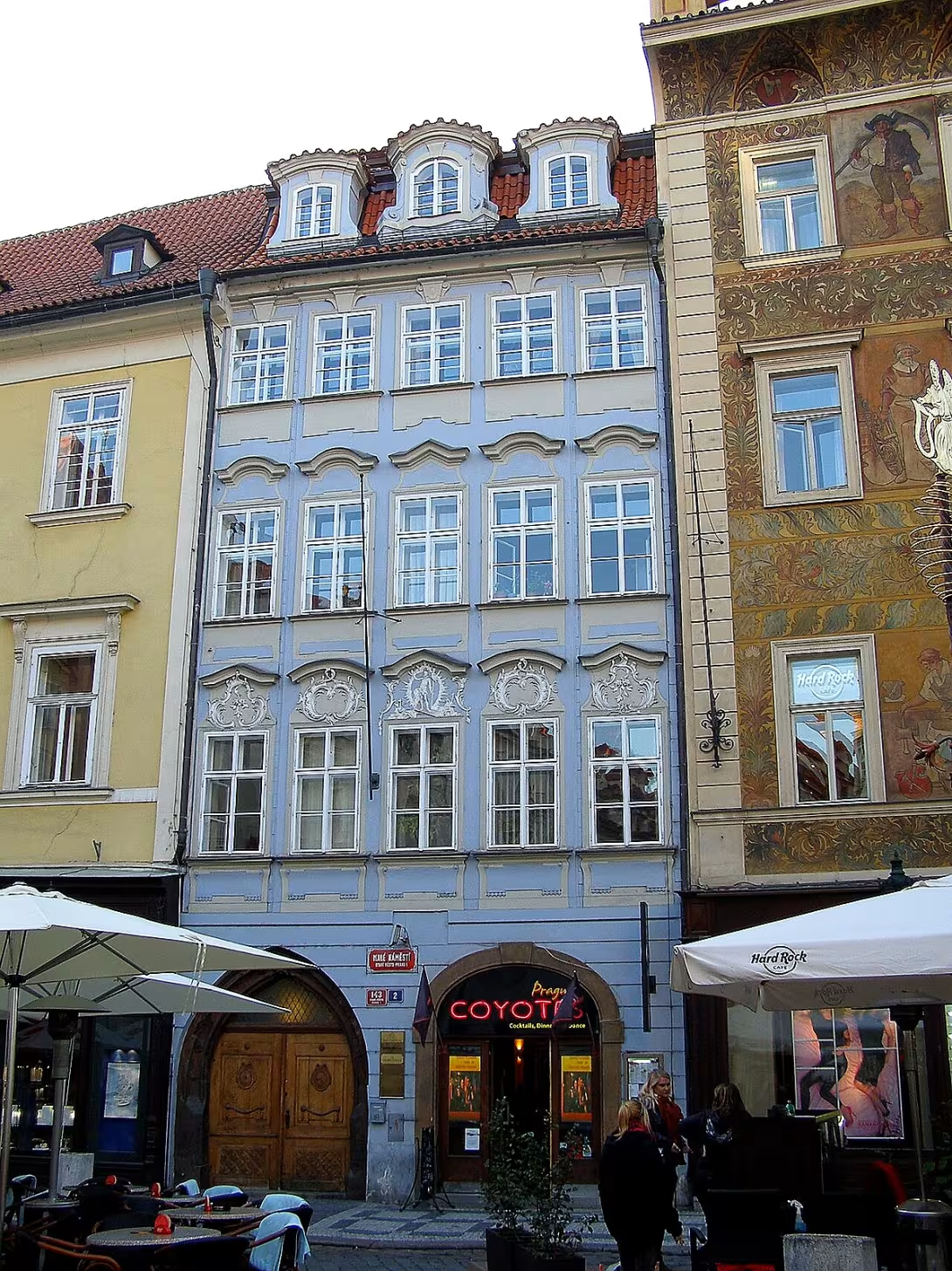
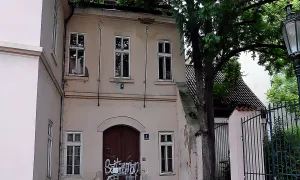
U Bílého lva is a late Baroque townhouse located at Malé náměstí in Staré Město, Prague. This architectural gem stands out for its blend of styles spanning several centuries, including early Gothic to Renaissance and Baroque elements. Its historical significance is highlighted by the fact that it housed the first printing press in Prague, where the oldest Czech printed Bible was produced between 1487 and 1488.
The origins of U Bílého lva trace back to the early Gothic period, with its earliest components found in the basement. The building's architectural evolution is evident across its three floors: Renaissance influences are seen on the second floor from around 1600, while the third floor and façade display distinct Baroque features dating post-1769. A significant renovation occurred in 1861 under architect Petr Holeček, further shaping its current form.
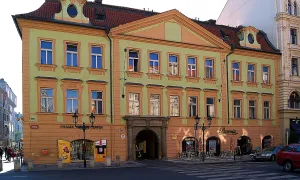
Architecturally, U Bílého lva is a testament to Prague's rich history of stylistic transitions. The ground floor features rusticated decoration, while the first-floor windows are adorned with stucco decorations and topped by suprafenestrae. A notable Gothic portal from around 1400 graces the left side of the entrance, complete with a heraldic emblem of the Czech state at its apex. Above, three Baroque dormers punctuate the mansard roof, adding to the building's distinctive silhouette.
The house gained historical prominence in 1487 when it became home to Prague's first printing press, established by citizens of Staré Město including Severýn Kramář and Jan Pytlík. This development led to the production of the oldest Czech printed Bible, completed in 1488, marking a significant milestone in Bohemian intellectual history.
Despite its rich heritage, U Bílého lva's interior suffered considerable damage during World War II when it was connected to a neighboring building. However, its exterior and structural elements continue to reflect the architectural diversity that characterizes Prague's historical landscape.
Today, U Bílého lva stands as a testament to Prague's vibrant cultural past. While much of its original interior has been altered, the building's façade remains a captivating example of Baroque architecture. Visitors are drawn not only to its aesthetic appeal but also to its role in the history of printing and intellectual life in Bohemia.
U Bílého lva is more than just a historical monument; it is a narrative woven into the fabric of Prague's cultural heritage. Its architectural diversity and historical significance make it a must-visit for anyone interested in exploring the layers of history that define this enchanting city.
Then and now
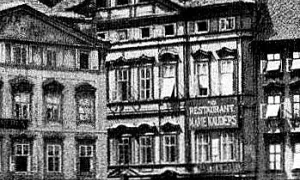
Drag the slider to compare how the landmark may have looked when it was built with the view today.
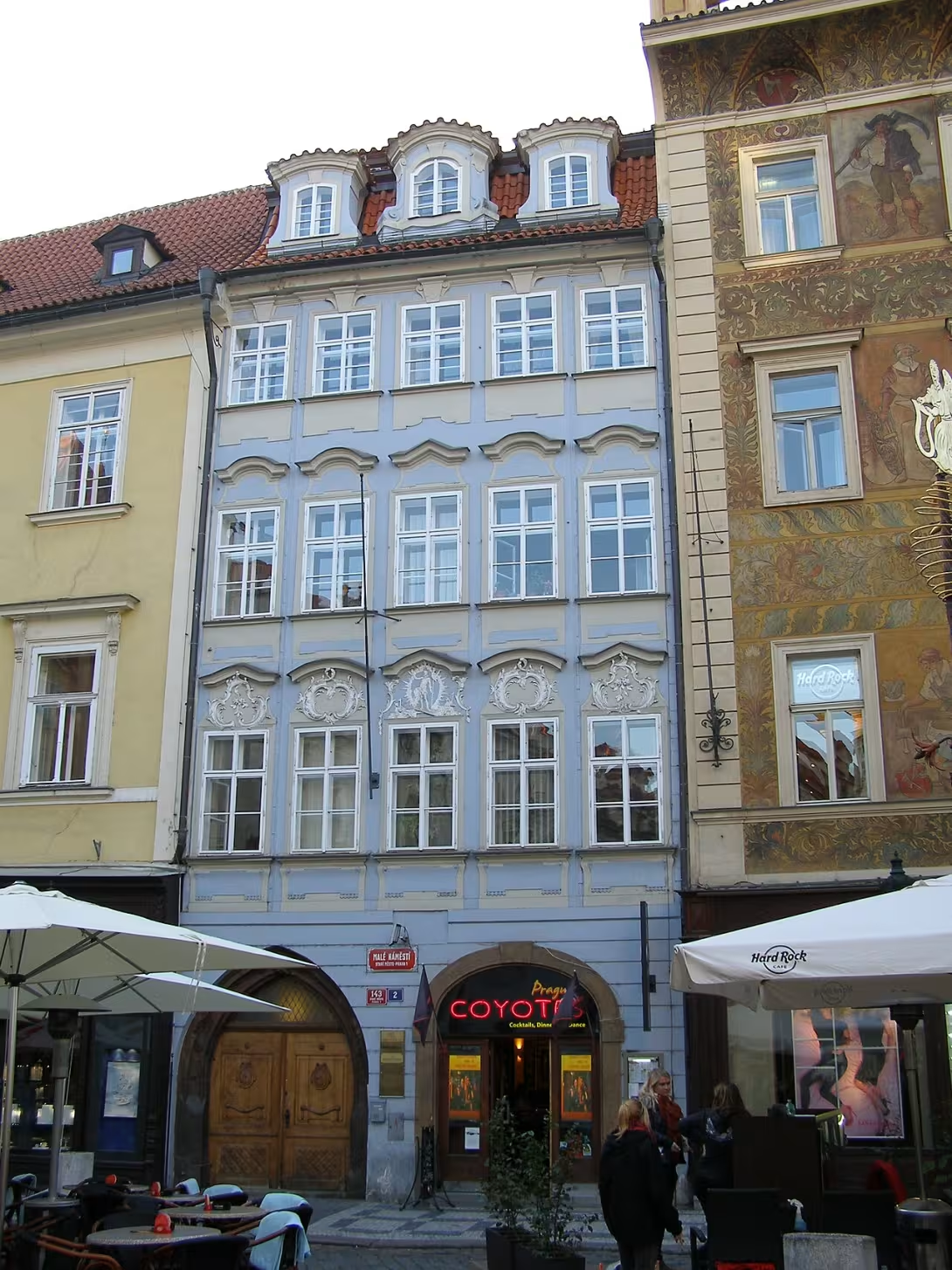
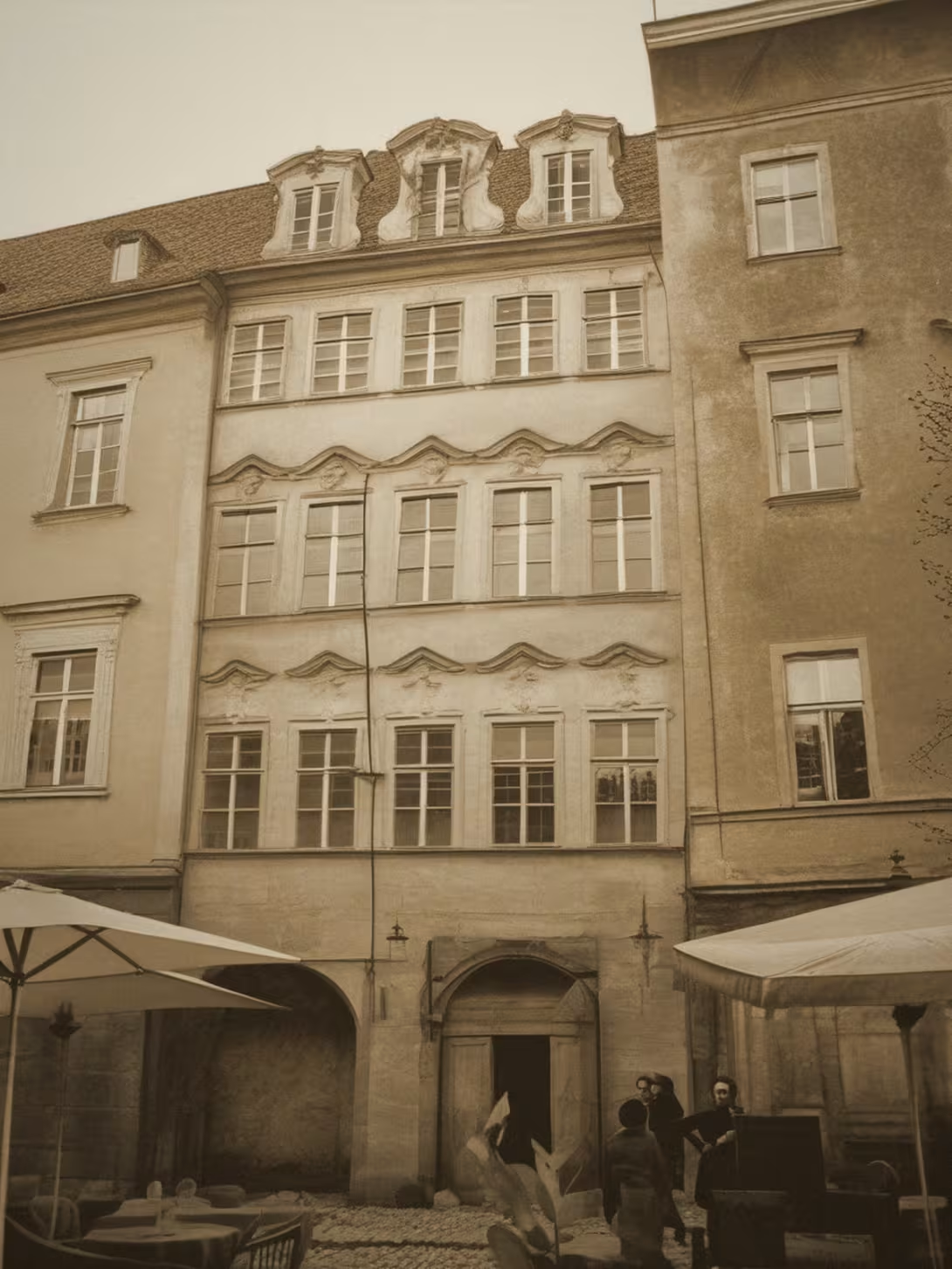
The historical appearance on the left is an AI-generated visualisation and serves as inspiration only.
Historical milestones
- kolem 1400
- Creation of a Gothic gate with the Czech state coat of arms
- kolem 1487-1488
- Production of the oldest printed Bible in Czech
- kolem 1600
- Renaissance elements on the second floor
- po 1769
- Baroque elements on the third floor and façade
- 1861
- Significant reconstruction under Petr Holeček
Architectural development
The house features a mix of architectural styles across its three floors: early Gothic elements are present in the basement, Renaissance influences can be seen on the second floor, and Baroque style dominates the third floor and façade. A significant renovation occurred in 1861 under architect Petr Holeček.
Historical events
In 1487, the first printing press in Prague was established at U Bílého lva by citizens of Staré Město, including Severýn Kramář and Jan Pytlík. This led to the production of the oldest Czech printed Bible, completed in 1488.
Points of interest
- The Gothic portal on the left side of U Bílého lva's entrance is adorned with a heraldic emblem representing the Czech state, symbolizing its historical connection to national identity.
- In 1861, architect Petr Holeček played a crucial role in shaping U Bílého lva’s current form through significant renovations that blended various architectural styles present throughout its history.
- The building's basement houses remnants from the early Gothic period, showcasing the oldest components of U Bílého lva and providing insight into medieval construction techniques used in Prague.
- Despite suffering interior damage during World War II due to a connection with a neighboring building, U Bílého lva’s exterior continues to display its architectural diversity, especially through its Baroque dormers and Renaissance-influenced windows.
- U Bílého lva is historically significant for housing the first printing press in Prague, established by Severýn Kramář and Jan Pytlík, leading to the creation of the oldest Czech printed Bible between 1487 and 1488.
Guide
This guide is narrated by a synthetic voice generated by artificial intelligence.
Show guide text
This text was created by artificial intelligence and has not been editorially reviewed. It may contain inaccuracies.
The House U Bílého lva is a burgher house on Malé náměstí on the Old Town of Prague. It has the descriptive number 143 and the orientation number 2. Its present appearance is Late Baroque and dates from after the year 1769. However, a much older building lies beneath it.
The oldest preserved parts of the house date from the early Gothic period and are located in the basement today. It has two levels. Both were created during the Gothic period, though the lower level came after the first one. The portal from around the year 1400 is also Gothic, as are some other parts of the house. The second floor is originally Renaissance, from around the year 1600. The third floor and the facade come from the latest Baroque period and are usually dated to after the year 1769. In 1861, the house underwent major reconstruction according to the plans of Petr Holeček.
The house has three stories with five axes. The ground floor is decorated with rustication. On the right side is a shop window, on the left is a Gothic portal with the emblem of the Czech state in its apex. In the front part of the former passage, a cross vault with ribs on the edges and leaves at the intersections has been preserved. Plaster decorates the areas above the windows on the first floor. The windows on the first and second floors are topped with window cornices. Three Baroque dormer windows project from the mansard roof.
The interior of the house was radically damaged during the Second World War, when it was connected to the neighboring Rott house.
The most significant chapter in the house's history took place at the end of the fifteenth century. In 1487, the oldest Prague printing house was established here. The Old Town burghers Severýn Kramář, Jan Pytlík and others published the first Czech printed Bible here, which is called the Prague Bible. Its final part was published only in 1488.
Frequently asked questions
Can the monument be visited?
This is a residential or farm building, not a museum with opening hours. Please view it from public space and respect the owners' privacy. We have no information about access to the interior.
Where is the monument?
Location: Staré Město, Hlavní město Praha. The map on this page shows the exact spot.
Why is the monument protected?
It is listed in the Central List of Cultural Monuments of the Czech Republic as a cultural monument (register no. 1000156868).
Businesses nearby
Do you run a restaurant, accommodation, shop, museum, rental, wellness or other visitor service near this monument? Show yourself directly to the people heading to it — this is how they will see you in the app and on the web:
Events nearby

Zdroj akcí: otevřená data měst a obcí ČR (Národní katalog otevřených dat) a kalendář akcí Národního památkového ústavu.
Accommodation nearby
Trips and activities nearby
Guided tours, tickets and activities nearby from GetYourGuide
Affiliate link: if you buy from the partner, we may receive a commission. The price for you does not change.
Search tours and activities →Themed route
Tematická výletní trasa: U bílého lva (dům) - Staré Město
1. U bílého lva (Dům)
Typ: Historický dům
Proč stojí za návštěvu: Tento architektonicky zajímavý dům je známý svou bohatou historií a jedinečným názvem, který přitahuje mnoho návštěvníků. Je to ideální místo pro ty, kteří se zajímají o historii a architekturu Starého Města.
2. Staroměstské náměstí
Typ: Náměstí
Proč stojí za návštěvu: Toto centrální náměstí je srdcem Starého Města, známé svou krásnou architekturou a historickými budovami. Je to ideální místo pro procházku a prohlédnutí se po jedinečných detailech staroměstské architektury.
3. Staroměstská radnice
Typ: Historická radnice
Proč stojí za návštěvu: Staroměstská radnice je ikonou města s jejím výrazným gotickým vzhledem a slavným orlem nad vchodem. Je to nezbytné místo pro ty, kteří chtějí získat hlubší vhled do historie Starého Města.
4. Staroměstská radniční věž
Typ: Věž
Proč stojí za návštěvu: Tato výšková věž nabízí jedinečnou perspektivu na Staré Město a jeho okolí. Je to ideální místo pro ty, kteří hledají pohledy z výše a chtějí si užít panoramatický výhled.
5. Kostel svatého Mikuláše
Typ: Kostel
Proč stojí za návštěvu: Tento kostel je nejen duchovním centrem, ale také architektonickou perli s bohatými interiéry a historickými vazbami. Je to ideální místo pro ty, kteří mají zájem o náboženskou architekturu a dějiny.
Pořadí:
Začněte svůj výlet u U bílého lva (Dům) a poté se pohybujte směrem k Staroměstskému náměstí, které je pouhých několik minut chůze daleko. Poté pokračujte dovnitř Staroměstské radnice a vyzvedněte si pohled z jejího okolí, než se podíváte na Staroměstskou radniční věž. Zavšímte svůj výlet u Kostela svatého Mikuláše, který je také blízko náměstí.
Tato trasa nabízí kompaktní pohled na historickou a architektonickou bohatost Starého Města, využívající jeho nejvýraznější památky.
Seasonal recommendations
Jaro: A visit to U bílého lva in the spring offers a unique view of Staré Město as nature begins to awaken. Sunlight illuminates the historic architecture in vibrant colors, giving the monument a gentle and welcoming character. Flowers and trees start to bloom, infusing the atmosphere with freshness and newness. It's advisable to bring light clothing for cooler mornings and afternoons, but also jackets for chilly morning breezes. Spring typically brings smaller crowds of tourists, meaning more comfortable strolling and shorter wait times.
Léto: In summer, U bílého lva is an exceptional destination with long sunny days that illuminate the monument until late evening. The atmosphere is full of life and energy, making visits during peak summer season very popular. The humid warm air can be intense, so clothing made from lightweight materials and sun protection are recommended. To minimize waiting times, it's best to visit the site earlier in the day or later in the evening. Despite the crowds, summer offers opportunities to stroll through the gardens and surrounding streets with enthusiastic tourists.
Podzim: In autumn, U bílého lva offers visitors a beautiful landscape change as leaves turn various shades of yellow, orange, and red. This golden season celebrates nature with mild temperatures and clean air, making strolling around the monument comfortable and picturesque. Clothing should be of medium weight to guard against chilly evenings and morning frosts. Autumn is typically less visited than summer months, allowing for a more relaxed stroll without excessive crowds.
Zima: During winter, U bílý lev offers an atmosphere full of calm and mystery, with the historic monument illuminated by cool lights. Snow-covered streets and snow cover add magic and romance to the visit. Clothing must be warm, emphasizing protection against cold and dampness, and it's advisable to bring an umbrella or hat for snowy weather.
Visualizations and artistic views


The visualisations are generated by artificial intelligence and serve as inspiration.
Photos from the area
Real photos taken near the monument

Zdroj a licence jsou uvedeny u každého snímku.
Tips from visitors
No tips yet. Be the first!
Log in and add your tip.
Sources and literature
Photos: Michal Kmínek / CC BY-SA 3.0 — Wikimedia Commons. The author and licence also appear when you hover over the image.
Faktickým podkladem tohoto textu byl článek na Wikipedii, jehož autory jsou přispěvatelé Wikipedie. Článek je dostupný pod licencí CC BY-SA 4.0.
Location on the map

Příběhy a pověsti
Legendy, pověsti a příběhy spjaté s touto památkou
Fotografie návštěvníků
Zatím žádné fotografie. Buďte první, kdo přidá fotografii z návštěvy!
Log in a přidejte svou fotografii nebo hodnoťte.
Za ověřenou návštěvu v aplikaci získáte víc bodů — poznáme podle GPS, že jste na místě.
Reviews and comments