






Veletržní palác Museum building
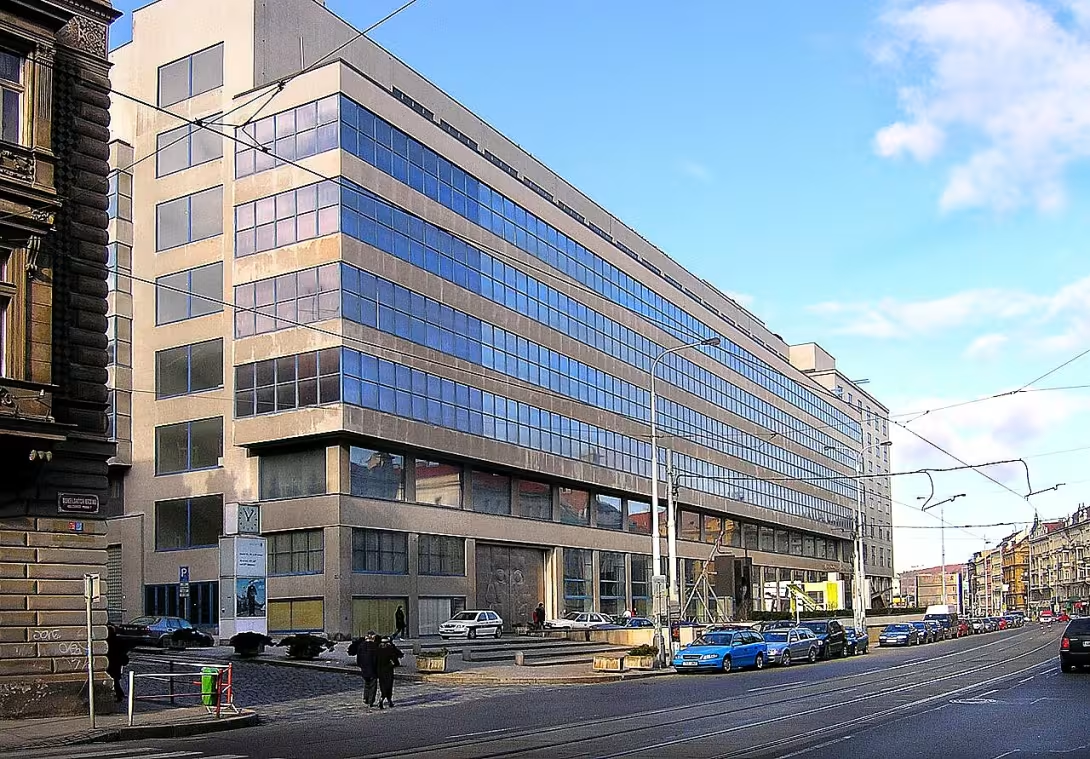
Veletržní palác in Prague Holešovice is one of the first and largest functionalist buildings in Prague. The building from 1925-1928 was originally used to hold fairs. Today there is a National Gallery in Prague, which hosts a permanent exhibition of art in the 20th and 21st centuries. The historical significance of the palace underlines not only the architecture, but also the dramatic events that took place here.
The palace was created from the need of modern and representative premises for trade events during the interwar period. Its implementation occurred after architects Josef Fuchs and Oldřich Tyl won the corresponding competition. The construction grew on the land of the former foundry and factory Antonín Reissenzahn. With an area of 13,500 m ² at the time it was the largest building of its type in the world.
Architecturally, Veletržní palác is an example of functionalism, reflecting its practical and simple design. A devastating fire from 1974 nearly destroyed the building. The reconstruction took place slowly and was completed in the 1990s. This event is one of the greatest moments in the history of the palace.
The history of the building is also linked to the tragedy of World War II. The Nazis used the proximity area as a gathering place for Jewish citizens before being deported to concentration camps. After the war there were companies engaged in foreign trade.
Since 1976 the palace has been owned by the National Gallery in Prague, which has reconstructed it and transformed it into a modern museum. Today there is a permanent exhibition of 20th and 21st century art. It includes Czech and international authors such as Mucha, Picasso, Monet and Van Gogh. In addition to art works, you can find exhibits from the area of architecture and furniture.
The palace is open to the public today. It offers various exhibitions, including temporary events on the 5th floor and Theatre Studio Heroes in the former underground cinema. Historical value and architectural awesomeness make it an essential stop for every interested in modern art and architecture history.
A visit to the Fair Palace offers a unique view of the development of Czech art and architecture of the 20th century. It is not only a cultural heritage but also an inspiring place for every visitor.
Then and now
Drag the slider to compare how the landmark may have looked when it was built with the view today.
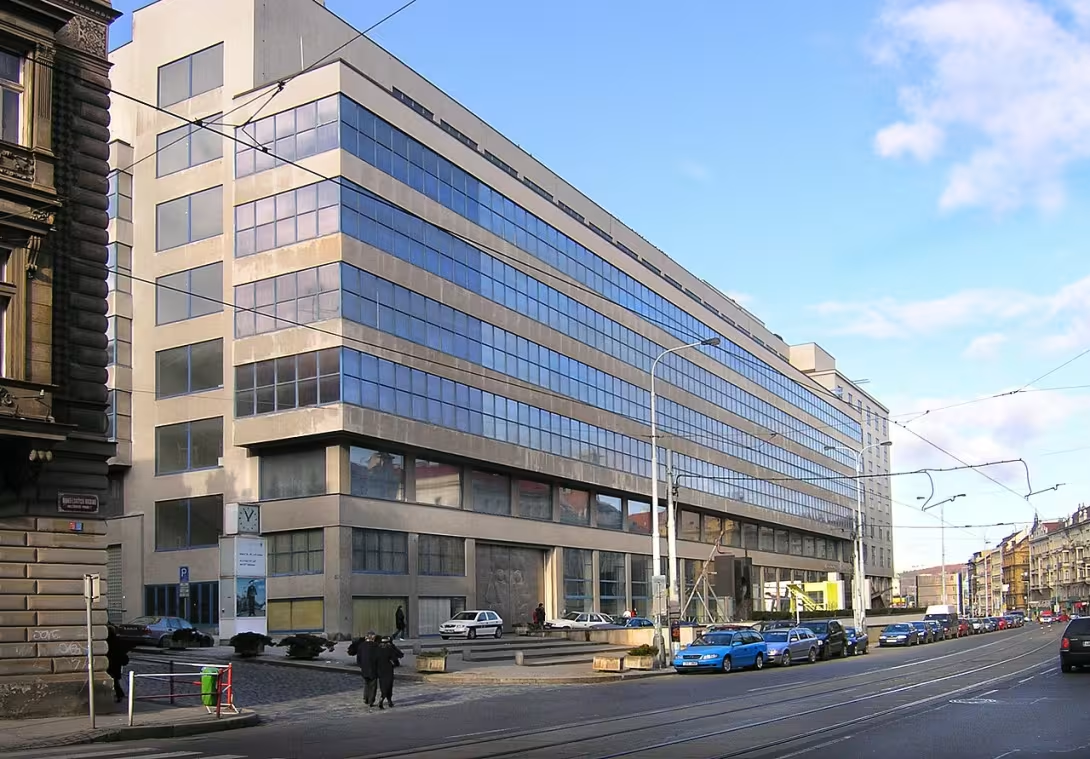
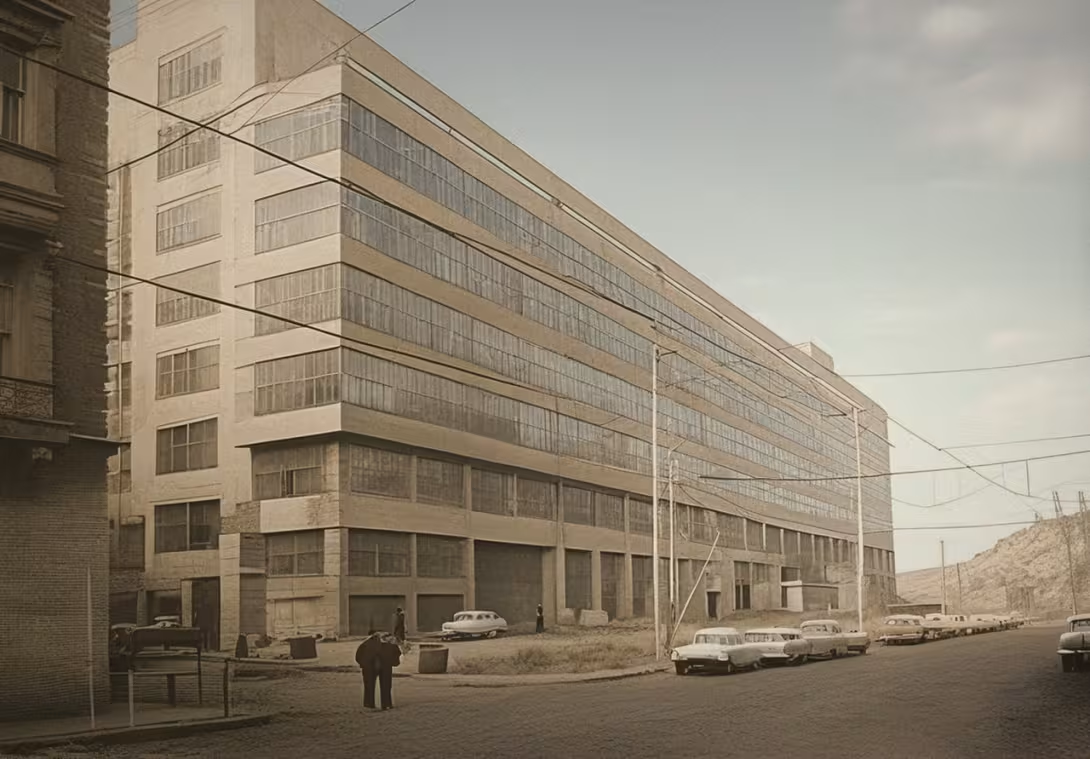
The historical appearance on the left is an AI-generated visualisation and serves as inspiration only.
Historical milestones
- 1925
- The beginning of the palace.
- 1928
- Construction completion.
- 1958
- Announcement of the building by a cultural monument.
- 1974
- Big building fire.
- 1976
- Acquisition of the National Gallery building in Prague.
Architectural development
The palace was built in 1925-1928 as the largest building of its type in the world with a surface of 13500 m ². Architecture is performed in the spirit of functionalism. After the devastating fire of 1974, a slow reconstruction was followed, which was finally completed in the 1990s.
Historical events
1941: Using the nearby Radiotrh area of the Nazis as a gathering place for Jewish citizens. 1974: Almost complete destruction of the building by a huge fire. 1990s: Complete repair and reconstruction of the building.
Owners
Building cooperative PVV (purchase from Melichar-Umraht a spol., a.s.), later abroad business, since 1976 National Gallery in Prague.
Points of interest
- It belongs to the first and largest functionalist buildings in Prague. - At the time of its creation, it was the largest building of its type in the world. The building was nearly destroyed by a devastating fire in 1974. - In the former underground cinema today is the Studio Hero Theatre. - The building grew on the land of the former foundry and factory Antonín Reissenzahn.
Guide
Show guide text
This text was created by artificial intelligence and has not been editorially reviewed. It may contain inaccuracies.
Welcome to Prague's Holešovice district. You've just stopped in front of one of the most important construction sites this city has to offer. You're standing right outside the Grand Palace. Before you take the next step, try to stop for a moment and just observe this building, which stands before your eyes. Feel its incredible size and the special power it emits. This building is not just an ordinary house, it is a monumental witness to history, which by its presence changes the atmosphere of the whole area. Perhaps at first glance you will be interested in its unusual appearance and how it differs from the older, decorated buildings you often meet in Prague. It's a space designed to impress you with its purity and dimensions.
Now let's go back in time together to understand why this building looks like this. To understand her soul, we need to look at the time when it was created. It was a time of great change and optimism. In the years between the year one thousand nine hundred twenty-five and one thousand nine hundred twenty-eight, a new era was born in Prague. The War Fair Palace was designed for a very specific purpose at the time - it was intended to serve as a venue for large sample fairs. At the time, people needed spaces that could accommodate huge numbers of people, goods and ideas. All of this ambitious intention was the capable creators, architects Josef Fuchs and Oldřich Tyl. Their vision was completely groundbreaking at the time. When construction was completed in the year one thousand and nine, twenty-eight, the world looked at this building with amazement. At that time, it was the largest building of its kind on the planet. Imagine the size of that, a total of 13,000 500 square meters of space that architects had to design and build to make sense of it all.
Now pay attention to the very form of the building you are currently observing. What you see is a pure expression of the direction we call functionalism. This style was revolutionary at the time. Instead of decorating the facades with complex sculptures, floral patterns or unnecessary decorations, the architects focused on what is essential. The function, usefulness and pure geometry were important. Now if you look at the building lines, notice how direct and logical they are. Everything here has a reason. This construction does not play on emotions through decoration, but through its massive and great organization of space. It's an architecture that says that the form must follow the function. It was this uncompromising truth about the construction that was so strong that in the year one thousand and nine, fifty-eight, the building was officially declared a cultural monument. That is recognition of its importance to our heritage.
But every such great place also has its dark sides and stories that remain in its walls. The history of this palace has not always been a way of success. We must remember the year one thousand and nine, seventy-four. That was the year the building almost became a memory. There was a huge and devastating fire that spread throughout the whole area and almost completely destroyed this important building. The flames were so strong that this symbol of modern Prague seemed to disappear forever. It was a period of uncertainty and sadness. But that's where the incredible power of this place turned out. The building has risen from the ashes again so that it can continue its service to the people.
And it is this ability to recover that has led us to what you see here today. After the restoration, the palace became a new home for the National Gallery in Prague. Since the year one thousand and nine, seventy-six have been based here, exposition that will take you on the journey through the history of the 20th and 20th first century art. The place that used to be used to sell goods and trade negotiations became a temple of culture and high art. It's a fascinating transformation.
If you're interested in anything unusual, pay attention to what's underneath the surface. This building also has its secret and less familiar parts. Do you know that in her depths, in the former underground theater, there are all kinds of stories happening today? That's where the Hero Studio is based today. It is an incredible contrast - while on the upper floors you look at the great works of painters and sculptors, in the underground you encounter a lively human voice, a theatre speech and instant energy of actors. It's like two different worlds that live in one body.
But now it's time for you to move on. The War Palace invites you to enter its heart and experience an atmosphere that cannot be described by words alone. I suggest you let the space and peace that you will find in these vast halls. Look at the exposition, try to see the light as it hits the walls, and stop at every work. Let yourself be carried away by the history you can feel every step of the way. Thank you for spending this moment with us and for being interested in this special place. We wish you a beautiful and inspiring tour in the heart of Holešovice. Enjoy the art.
Tips for visitors
The best time to visit is the morning hours of the everyday days, when you avoid crowds and enjoy extensive exposure of art in bright areas.
The location is very well accessible by public transport and by car. We recommend that specific connections and parking possibilities in the surrounding area be checked in the current connection search engine or on map materials.
We recommend comfortable shoes for long walking between floors and smaller backpack. The building has a pleasant environment, therefore there is no need for special clothes.
The building offers unique functionalist architecture. The best light for interior images and glazed areas is during sunny days when light penetrates large windows into the main space.
In the vicinity there is a complex in Holešovic- Drums and place of the former Radiotrh, where the Parkhotel complex is today. For families with children, the building is suitable thanks to its tonnage and wheelchair access.
Businesses nearby
Do you run a restaurant, accommodation, shop, museum, rental, wellness or other visitor service near this monument? Show yourself directly to the people heading to it — this is how they will see you in the app and on the web:
Events nearby

Zdroj akcí: otevřená data měst a obcí ČR (Národní katalog otevřených dat) a kalendář akcí Národního památkového ústavu.
Nearby
Areál v Holešovicích-Bubnech, v blízkosti bývalého Radiotrhu, kde dnes stojí komplex Parkhotelu.
Accommodation nearby
Trips and activities nearby
Guided tours, tickets and activities nearby from GetYourGuide
Affiliate link: if you buy from the partner, we may receive a commission. The price for you does not change.
Search tours and activities →Themed route
1. Veletržní palác (gallery): Main objective with unique artistic exhibitions. 2. Area in Holešovici - Drums (urban area): Walk around, which connects different parts of the neighborhood. 3. Former Radiotrh (historical site): A place with a history of technology trafficking. 4. Complex of Parkhotel (modern building): Contemporary architectural complex situated near the former market.
Seasonal recommendations
Spring brings fresh air to the surroundings and awakening nature, which gives a visit freshness. The light inside the building is soft in this period and very pleasant for viewing images. I recommend wearing layered clothes because the weather can change quickly. The best time to visit is in the morning when the rooms are still quiet.
In the summer months the building is very bright and sunny thanks to the large glazed areas. The mood of the city is very lively and busy. Due to high temperatures and larger numbers of people, I suggest you arrive first thing in the morning after opening to avoid the biggest crowds and heat. Dress lightly and comfortably.
Autumn offers beautiful golden colors of the outside world and a quieter mood. The sun shines lower, creating interesting shadows and a deeper feeling in the halls. It is advisable to carry a warmer garment because it may be wet and cold outside. At this time there are fewer people in the gallery, which allows better focus on art.
Winter is the perfect time to escape from freezing into warm and spacious halls. The light is weaker and rather gray in this period, which creates a cozy feeling inside the building. Since the days are short, pay attention to opening hours. Dress very warm to make it to the memory, and enjoy the peace inside.
Visualizations and artistic views


The visualisations are generated by artificial intelligence and serve as inspiration.
Photos from the area
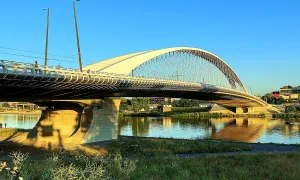
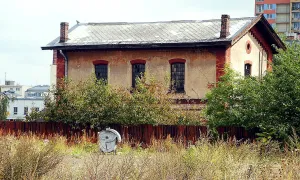
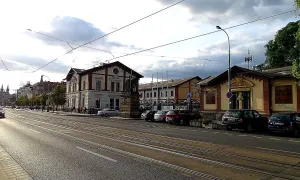
Real photos taken near the monument

Zdroj a licence jsou uvedeny u každého snímku.
Tips from visitors
No tips yet. Be the first!
Log in and add your tip.
Sources and literature
Photos: Czech Wikipedia user Packa / CC BY-SA 2.5 — Wikimedia Commons. The author and licence also appear when you hover over the image.
Faktickým podkladem tohoto textu byl článek na Wikipedii, jehož autory jsou přispěvatelé Wikipedie. Článek je dostupný pod licencí CC BY-SA 4.0.
Location on the map


Příběhy a pověsti
Legendy, pověsti a příběhy spjaté s touto památkou
Fotografie návštěvníků
Zatím žádné fotografie. Buďte první, kdo přidá fotografii z návštěvy!
Log in a přidejte svou fotografii nebo hodnoťte.
Za ověřenou návštěvu v aplikaci získáte víc bodů — poznáme podle GPS, že jste na místě.
Reviews and comments