






Vodní mlýn Kroužek Water mill
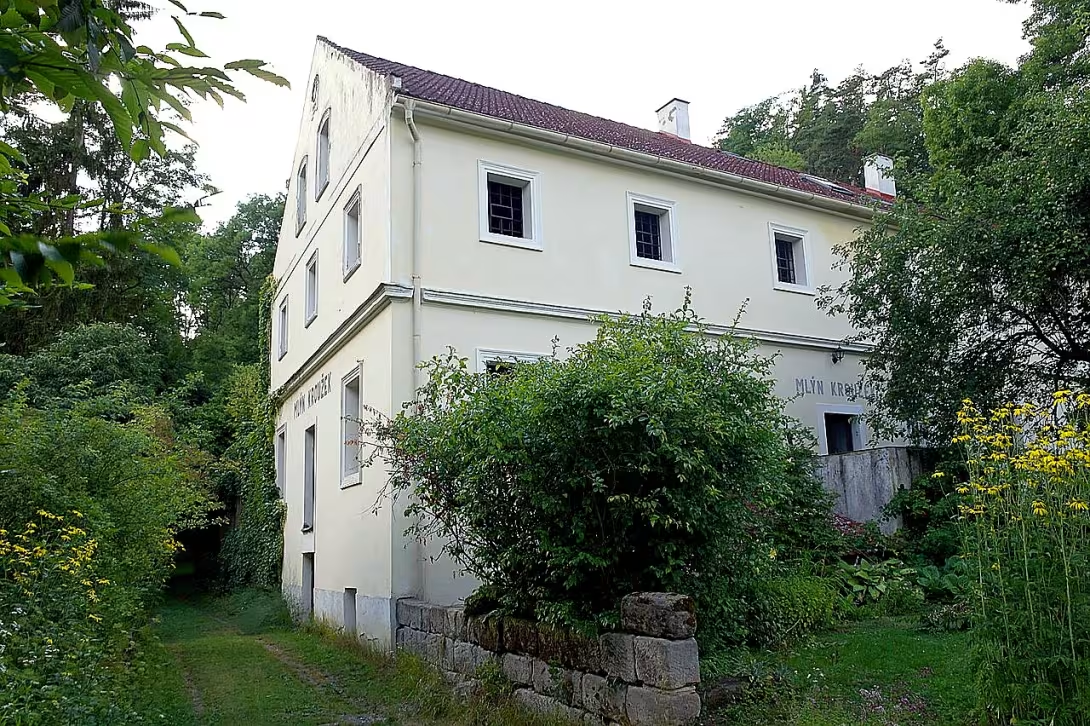
The mill Krážek is located in the valley of the river Pšovka near the village Nebužely in the district of Mělík. His rich history dates back to the 16th century. Due to its historical importance and architectural character, this building is protected as a cultural monument of the Czech Republic. It represents not only the technological but also the cultural part of the Kokořín mine.
The scene of the place begins in the 16th century, when the building belonged to the Benedict monastery of St. George in Prague Castle. In 1595, the local miller is listed in the list of parishioners who owe a candle wax, indicating his economic activity and involvement in community life. The documentation from 1609, 1613 and 1615 confirms that the mill economy also included the apiculture from which it had to pay the annual wax levy. This obligation underlines the social and economic importance of the mill in this area.
From an architectural point of view, it is a representative example of a water mill with a preserved mill and economic construction - a granary. The mill is a self-standing storey building with a rectangular plan with a main front facing towards the road; the wood structure was preserved in particular. The farm building has ground-floor brick walls with elements of segment skylights, which is typical of the period. The technological equipment was supplied by the Prague company Gabriel Žizka. The grinding stone was later converted into a garden table, which is evidenced by the adaptive use of the object.
Property ownership changed over time. After the period when it belonged to the Benedict monastery, it went into the hands of other owners, which was common in the mills at the time. In 1812 Jan Heřman was born here, an important preacher and personality of Czech-American history, whose life story enriches the cultural heritage of the site. His granddaughter Elsie married Czech writer and diplomat Jan Havlas, which links local history to wider cultural currents.
Today the Kroužek Mill is an important cultural monument that attracts visitors with its history and picturesque location in the Kokořín Mine. Protection of this building is crucial for understanding the technological and cultural development of the region. The visit offers insight into the history of the mill industry, then architecture and the destinies of the personalities that worked here. The mill serves not only as a technical monument, but also as a witness to the rich past. It reminds us of how important it is to protect cultural heritage for future generations.
Historical milestones
- 1595
- The miller is included in the list of parishioners due for wax.
- 1812
- The birth of the preacher and businessman John Høman.
Architectural development
The storey building was preserved by a rectangular ground plan mill and a brick economic granary with a saddle roof. The mill building has a preserved wooden structure, while the granary shows elements of segment above the lights. Technology equipment came from the company Gabriel Žizka from Prague.
Historical events
1595: Mention of a miller in the list of parishioners due for wax. 1609-1615: Registration of miller bees and the obligation to carry wax. 1812: The birth of the preacher and entrepreneur John Heřman.
Owners
In the 16th century the monastery belonged to the order of Saint George's Benefitins in Prague Castle.
Points of interest
- Mlýn Kroužek is located in the valley of the river Pšovka near the village Nebužely and is protected as a cultural monument of the Czech Republic. - Its history dates back to the 16th century, when it belonged to the Benedict monastery of St. George in Prague Castle. - The miller here was listed in the list of parishioners who owe a candle wax, which shows his economic activity and involvement in community life. - The ownership of the building changed after the period when it belonged to the Benedict monastery; In 1812 Jan Heřman, an important Czech-American figure, was born here. - The mill is a representative example of a water mill with a preserved mill and economic construction - granary.
Guide
Show guide text
This text was created by artificial intelligence and has not been editorially reviewed. It may contain inaccuracies.
Welcome to the Kokořín Mine, where time runs slower and history touches every step. You are standing on the shore of a quiet river of Pšovka, in its narrow and green valley, surrounding you like a soft blanket. In front of you is the building of the water mill Kroužek, a cultural monument of the Czech Republic, which had already taken root in the 16th century. It's not just a pile of bricks and stone, it's a live testimony of how people in the past used the power of water to turn grain into bread. This object includes not only the mill itself, but also the adjacent granary and the fenced walls, which together form a harmonious whole rooted in the landscape.
If you look around you, notice how the mill buildings have been organically adapted to the terrain. The history of this place dates back to the past, specifically until 1595, when the local miller was first mentioned in the list of parishioners. This reference is important not only for dating, but also for understanding the social context of the time. In fact, the mill originally belonged to St. George's Benedict monastery in Prague Castle, indicating that it was a strategically and economically important place. The monastery used the mill for its own use, but also for business purposes, which was common for large church institutions at the time.
Now pay attention to the architecture itself. Even though the specific authors of the buildings are not known, their work is ungrained by practical approach to the construction in the valley. The mill and granary have long uses. The technologies used here have affected the design of the buildings by seeing today a structure adapted to heavy engineering equipment. Notice the boundary walls surrounding the area. These walls did not only fulfil the protective function, but also defined the private area of the mill in an otherwise free landscape. Take a look at the facade of the buildings and recognize the atmosphere of the place where human work connects to the natural power of the river.
The most interesting persons associated with this place include Jan Heřman, who was born here in 1812. His story is fascinating because he wasn't just a common resident, but he became a preacher and a businessman. This combination of roles shows the dynamic nature of life in this area in the nineteenth century. Jan Heřman represents a generation of people looking for a balance between spiritual life and practical business. His daughter, Elsie Heřmanová, is also mentioned in connection with this place, suggesting that the family of Hermans had deep roots in the history of the mill and its surroundings.
Another important figure is Jan Havlas, whose name also relates to this place. Although the details of his life are not distributed in our overview, his presence in the list of historical figures confirms that the Mill Krážek was not only a technical object but also a centre of community life. The people who lived and worked here left traces of themselves that reflected in the reputation of the place.
The interesting thing that might be interesting is a reference to the debt for wax. In 1595, the miller was listed as parishioners who owed the candle wax. This seemingly small detail reflects the system of duties that the inhabitants had against the parish. Vosk was a valuable material at the time, and his debt shows economic ties between the mill and the local church. It was common for miller workers, as important farmers in the village, to carry certain obligations that exceeded their primary professional activity.
Let's move on to the conclusion of our short tour. Mlyn Krážek is an important part of the cultural heritage of Kořín. Its existence recalls how people in the past were able to live in harmony with nature and how they used available energy sources to support their lives. Today, when you look at it, you can imagine how the water was humping, how the wheels were spinning and how the grain was becoming flour.
Confess the peace and quiet of this place. Cookorian Valley is an area with rich history and beautiful nature, and the Mill Circuit is just one of many places worth exploring. If you have time, I suggest you explore other parts of the Pšovka Valley where other historical monuments and natural beauty are located. Every step here will bring you closer to understanding the history of this region.
Thank you for your attention and for taking the time to learn the story of this mill. We hope that this short audio guide helped you better appreciate the value and history of the place where you are standing. We wish you a pleasant continuation of your trip through the Kokořín mine and many other discoveries. Let us say goodbye to this place with respect for its past and with the hope that you will carry with you at least a piece of its atmosphere.
Tips for visitors
The best time to visit is from spring to autumn, when the surrounding nature is in the best condition and the landscape is the most colorful. To photograph the architecture of the mill and granary we recommend to use soft light during the morning hours or shortly before sunset, which will highlight the historical details of the buildings in the valley.
You can reach the mill by car or use public transport; The current connection and parking possibilities in the vicinity of the village Nebužely please check the search engine. In the way, wear comfortable shoes suitable for nature walks and possibly repellent, which can be useful when staying by the water.
For families with children is the ideal route within the Kokořín mine, which offers a safe and interesting natural walk in a pleasant environment. Children will appreciate the closeness of water and the natural attractions found in this location.
The trip can be supplemented by a peaceful walk along the river Pšovka, which flows through the valley and creates a picturesque atmosphere suitable for relaxation. This route is ideal for those who want to observe nature in its natural state in peace.
If you plan to stay longer in this location, we recommend monitoring the weather forecast, as the valley may be wetter in some parts than in open areas.
Businesses nearby
Do you run a restaurant, accommodation, shop, museum, rental, wellness or other visitor service near this monument? Show yourself directly to the people heading to it — this is how they will see you in the app and on the web:
Nearby
The Cookorian mine and the River Poshovka.
Accommodation nearby
Themed route
1. Vodní mlýn Kroužek - historical water mill It is worth visiting as a well-preserved example of a traditional agricultural facility where you can admire the original stone structures, the mill wheel and the exhibition about the operation of the mill.
2. Cookorian Mine - Natural Valley After leaving the mill, you will take the marked path (about 2 km) to the valley, where a unique combination of forest areas and rock formations is spread, ideal for a short walk and photography.
3. River Psøovka - water flow From the valley, follow the river (about 1 km) and soak up the quiet noise of water; shores are suitable for relaxation, observation of local flora and fauna and for enjoying the atmosphere of the river.
4. Return to the Water Mill Circular - circular route After walking along You can go back down the path (about 2 km) to the mill, where you can finish the trip by refreshment in the area and tour the surrounding courtyard.
Seasonal recommendations
Spring brings nature to the surroundings of the Nebula, when the surrounding meadows and trees around the water mill Krážek flourish and the water in the pond or stream gains strength after winter. Light is soft and natural at this time, ideal for photographic images that capture the contrast between the old brick object and the fresh greenery. The atmosphere is calm and refreshing, because tourists are just starting to wake up from winter sleep. In practice, the spring visit is advantageous by avoiding peak excitement, however, it is necessary to expect variable weather. The clothes are suitable for layering, i.e. a light jacket over the shirt, in order to adapt quickly to temperature fluctuations. It is best to leave this weekend in the morning, when the air is the cleanest and roads are less crowded cars.
Summer is the main season when the monument is most visited, both by locals and foreigners seeking shade and cold at the water. The sun shines long and strong, creating strong shadows and vivid colors, but also requires caution because of the heat. The atmosphere is more lively, often groups of people, cyclists or families with children gather around the mill. For a comfortable visit, it is crucial to come as early as possible in the morning, ideally before nine o'clock or late in the afternoon after fifteen to avoid the biggest crowds and direct sun. Clothes should be light, breathable and of natural materials, hats and sunglasses are also necessary. Due to the increased number of visitors it is good to check in advance the actual opening hours, which may be extended in the summer months.
Autumn offers quite different aesthetics, when leaves on trees around the mill change colour into golden, orange and red shades. The light is lower and warmer, which gives the historical building a nostalgic and slightly melancholy touch. Nature around the Nebula is calmer at this time, the air is colder and fresher, allowing longer walks without feeling tired from heat. The atmosphere is more intimate and less disturbed, which will be appreciated by those who prefer silent contemplation. Practical advice includes clothing in layers because the morning freezers take turns with warmer afternoon sun. I recommend a visit on Tuesday or Wednesday when traffic is minimal. Observe the length of the day that is shortening and plan to return home before dark if you do not have sufficient lighting of the road.
Winter brings peace and often snow cover to the water mill Kroužek, which highlights architectural details and stone wall. The light is short and pale, creating a dramatic and quiet environment, ideal for feelings of hiding and heat inside, if the monument is internally accessible. Nature has gone silent, the trees are bare and contradict the white landscape, which is visually very impressive. The atmosphere is cold and sharp, requiring respect for low temperatures. Hot winter clothes, gloves, hats and waterproof shoes with a good pattern are essential for the clothing to avoid slipping on the ice. Opening hours are often shortened or limited to weekends during the winter season, so it is critical to check the current information in advance. The visit on Tuesday morning will ensure maximum privacy and quiet, while on weekends the surroundings can be full of runners and skiers.
Visualizations and artistic views

The visualisations are generated by artificial intelligence and serve as inspiration.
Photos from the area
Real photos taken near the monument


Zdroj a licence jsou uvedeny u každého snímku.
Tips from visitors
No tips yet. Be the first!
Log in and add your tip.
Sources and literature
Fotografie: Horakvlado / CC BY-SA 4.0 — Wikimedia Commons. The author and licence also appear when you hover over the image.
Faktickým podkladem tohoto textu byl článek na Wikipedii, jehož autory jsou přispěvatelé Wikipedie. Článek je dostupný pod licencí CC BY-SA 4.0.
Location on the map
Fotografie návštěvníků
Zatím žádné fotografie. Buďte první, kdo přidá fotografii z návštěvy!
Přihlaste se a přidejte svou fotografii nebo hodnoťte.
Za ověřenou návštěvu v aplikaci získáte víc bodů — poznáme podle GPS, že jste na místě.
Reviews and comments