



Vodní mlýn (Úštěk) Water mill
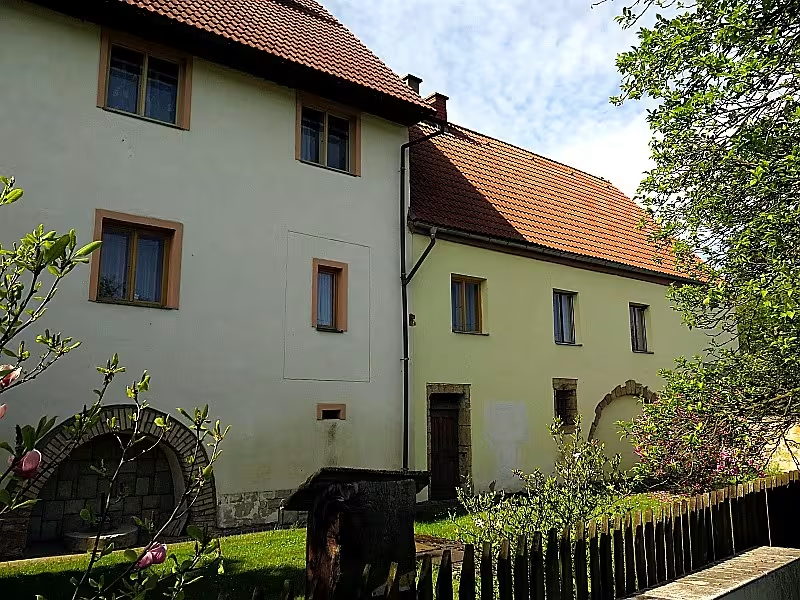
Lower Mill in Levín Street in Úštěku- Český The suburb is a historic water mill from the late Middle Ages, which is today protected as a cultural monument. The building is located in the district of Litoměřice on the Red River. It represents an important technical monument to the region, the construction of which includes the original medieval core and extensive 19th century modifications.
The formation of the mill falls into the late Middle Ages, when the economy developed in the Czech countries and established water works. This infrastructure was key to the processing of agricultural crops and the livelihood of the population within the feudal system at the time. There are few reports of founders or oldest owners, but the existence of the construction demonstrates the technical maturity of the water flows.
Architecturally, the building is divided into a mill and residential area. The facade still shows the original stone elements, namely window and door lining. A remarkable detail, which was preserved under the plaster, is the relic of stone crackers of the Pravet, the medieval toilet. The water came to the mill with a drive from Habrina, which led to the back of the ostrich. There was a small tank above the mill to regulate the inflow.
Historical records from 1930 show that the mill was running one round on top water at the time. The technical parameters of the equipment included a drop of 4.65 metres and a power output of 2.5 HP. After cancelling the mills on the Red River, the drive was gradually flooded and today only partially visible in the field.
The Lower Mill building is protected as evidence of historical management and technical construction. For visitors of Úštěk it is an opportunity to look at the history of regional infrastructure. The visit offers the opportunity to learn about preserved medieval building elements in the context of the development of the Czech countryside.
Historical milestones
- around 1450
- The formation of the mill in the late Middle Ages
- about 1850
- Extensive building modifications of the building
- 1930
- Operation of the mill with one wheel on top water
Architectural development
The original medieval core was built in the 19th century. The building was preserved by stone crackers and stone lining of windows and doors. The water was brought to the mill by the drive, which led to the back of the zucchini island.
Historical events
In the 19th century the mill underwent extensive building modifications. In 1930 the mill was operated with one wheel on top water with a power output of 2.5 HP.
Points of interest
- The building is a historical water mill from the late Middle Ages, which is today protected as a cultural monument. - The rest of the stone supporting elements of the medieval toilet were preserved under the plaster. - The water came to the mill with a drive from Habrina, which led to the back of the ostrich. - In 1930 the mill operated one round on top water with a drop of four whole sixty-five meters. - A small tank was placed above the mill, which was used to control the amount of flowing water.
Guide
Show guide text
This text was created by artificial intelligence and has not been editorially reviewed. It may contain inaccuracies.
Welcome to Shrink. You are standing in front of one of the most important and oldest technical objects in the whole region. In front of your eyes stands the historic Lower Mill, which is firmly anchored in the landscape right near the Red Brook. Feel the atmosphere of peace and stability radiating from this building. Maybe right now you're hearing the murmur of water, which is absolutely vital to this place. This water has been a source of life for centuries, work and strength for all who lived and worked here. Look around you and try to imagine what this place looked like hundreds of years ago when everything started here.
This object is not just an ordinary building, but a living witness to the history that took place here. Its roots go deep into the past, specifically into the late Middle Ages. Around 15 hundred and fifty, life began to be born here, as we now know it in this form. More than half a millennium ago, people began to use the insatiable power of water here for important work. Imagine those times when everything was revolving around the rhythm of nature and the need to process crops that people have grown around. This mill was not just a building, it was an engine of the entire area, a place where the forces of nature and human finesse met. Although time was changing, the mill remained here and adapted to new times. In the middle of the nineteenth century, around the year Eighteen hundred and fifty, the construction went through the extensive building modifications that gave it today, a distinct form. Even though technology was changing, the basic purpose of this place remained the same.
Now pay attention to the architecture of the building itself, which stands right in front of you. If you look at her appearance, you'll see she's made up of two main parts that are closely related. The first is the mill, that is, the space intended for the actual work and operation of machines, and the second is the residential area where the people who served and kept the mill running lived. Feel the harmony between work and home space. If you approach the front of the building, you may notice the stone elements in the lining. These stone parts are silent witnesses of ancient times and point to the quality of the work of the then builders, who had to design the construction to withstand the pressure of water and time.
Let's now look at how this mill was driven. In the past, this object was driven by a water wheel that used so-called top water. That's a very important technical detail. The use of the top water means that the water was flowing from the top to the mill wheel, which was a very effective way to obtain the necessary power for the work. And this water didn't just come from the stream you see beneath you. Water came to the mill with a drive, which had a very interesting journey. This drive led from a place called Habrána and its route was a true engineering performance of the times, because it led down the back of the záštěch island. Imagine the path of water crawling up high rocks and steep slopes, eventually reaching here with precision, to this mill, and moving its wheels.
Although we do not know the names of the particular architects who designed this mill, nor the names of the people who worked here, their presence is felt in every stone and in every detail of this building. Every generation that lived here left its mark. Even though the names of the people who operated here in nineteenth hundred thirty operated a mill with one wheel, they were lost in the abyss of time, their work and efforts remained in this building. It's fascinating how things that people created hundreds of years ago still stand before us and talk to us through their form.
And now I'm going to introduce you to something that you may not see at first sight, but that you might actually find interesting. Under the layer of plaster you see on the walls of this historical monument, there is a little secret. It preserved the rest of the stone supporting elements that served as a medieval toilet. It's a fascinating detail that allows us to look at the very human side of life in the past. It shows us how the living needs at the time were addressed directly within this complex building and how each part of the building was thought out in these basic things. It's proof that even the smallest details form a whole that we now consider a cultural monument.
This mill is indeed a place where history meets the present. It is a place that requires patience in observation and willingness to perceive details. From the late Middle Ages to the modern era, this object has undergone many changes, but its essence has been preserved. It's a technical monument that reminds us of how much we were dependent on water and how much power we were able to extract from it.
I hope you enjoyed this short journey over time at this mill and that you could imagine the life that took place here. The bottom mill is just one of the many stories this landscape tells. Continue to walk, feel the splendour of water, see the surrounding nature and let yourself drift through the atmosphere of this place. Thank you for your visit and we believe that this view of history has brought you new experiences. See you in the next neighborhood.
Tips for visitors
Best time to visit the water mill in Úštěku - Czech The suburb is in late spring or summer season when the weather is sunny and the temperatures are mild.
When visiting the water mill, it is advisable to take with you comfortable shoes and suitable clothes to walk around or even umbrella against adversity of weather.
Photographs are possible almost everywhere, but the best places for photography are around the water mill and bridge over the Red stream, where sunlight is ideal for photography.
In the vicinity of the water mill is also worth visiting Habrána, where it is possible to walk and see other historical buildings.
Frequently asked questions
Can the monument be visited?
This is a technical monument. Some are open as exhibitions, others are out of use or on private land. We have not verified whether this one is accessible.
What are the opening hours and admission?
We have not verified the opening hours or admission. Current information is published by the operator.
Where is the monument?
Location: Úštěk-České Předměstí, Ústecký kraj. The map on this page shows the exact spot.
Why is the monument protected?
It is listed in the Central List of Cultural Monuments of the Czech Republic as a cultural monument (register no. 1000155729).
Businesses nearby
Do you run a restaurant, accommodation, shop, museum, rental, wellness or other visitor service near this monument? Show yourself directly to the people heading to it — this is how they will see you in the app and on the web:
Events nearby



Zdroj akcí: otevřená data měst a obcí ČR (Národní katalog otevřených dat) a kalendář akcí Národního památkového ústavu.
Nearby
Město Úštěk s historickým jádrem, Červený potok, Habřina.
Accommodation nearby
Trips and activities nearby
Guided tours, tickets and activities nearby from GetYourGuide
Affiliate link: if you buy from the partner, we may receive a commission. The price for you does not change.
Search tours and activities →Themed route
1. City of Úštěk with historical heart - Historical center. A tour of the old streets and architecture downtown. 2. Red stream - Water flow. Walk along the water in a pleasant environment. 3. Vodní mlýn (Úštěk) - Water Mill. The main destination of the trip where you can see the historic mill machines. 4. Habrona - Locality. A quiet place to end the journey.
Seasonal recommendations
Spring: In spring, the water mill in Úštek is transformed under the influence of a new life that wakes up after a winter sleep. The sun illuminates the young leaves of trees and shrubs in the surrounding meadows, adding to the atmosphere a touch of renewal and hope. The view of flowing water gains new life thanks to the warm rays of the sun reflected on its surface. The visitor should be prepared for mild temperatures and possible rainy season; durable shoe and hat are suitable for walking. The best time to enjoy the mill is at noon when the crowd rarely gets too much.
Summer: In the summer season the water mill in Úštek offers unforgettable impressions thanks to long sunny days and warm air. The sun illuminates the architectural elements of the monument, while the water mill becomes an attractive place to relax from a sunny heat strike. The atmosphere is full of joys and activities, which attracts families and tourists looking for a quiet place to relax. When visiting, it is recommended to take with you protective sun cream and water because the summer amount of people can cause long queues at the entrance. The best time to walk is in the morning or in the evening, when the crowd decreases.
Autumn: In autumn, the water mill in Úštek receives a unique charm thanks to the golden and red shades of the leaf landscape, which extends around the monument. Sun rays illuminate the mill room in warm colors, creating a calm and reflective atmosphere. This time of year is ideal for photography and relaxation on outdoor platforms. The visitor should be prepared for cooler temperatures; resistant shoes and hat are recommended, especially if it decides to walk through forest paths. The best time to visit is at noon when the sun is strongest and the temperature is pleasant.
Winter: In winter, the water mill in Úštek receives magical charm thanks to a snow blanket that covers fields and trees around the monument. The sun illuminates the snowy landscape in mild temperatures, adding a sense of peace and quiet to the atmosphere. Winter visit is suitable for those looking for quiet surroundings without a large crowd of tourists. When visiting, it should be prepared for cold and the possibility of rolling; warm clothes, hat and protective shoes are necessary. The best time to visit is at noon, when the crowd usually does not get too much and the sunlight illuminates the snow landscape.
Visualizations and artistic views


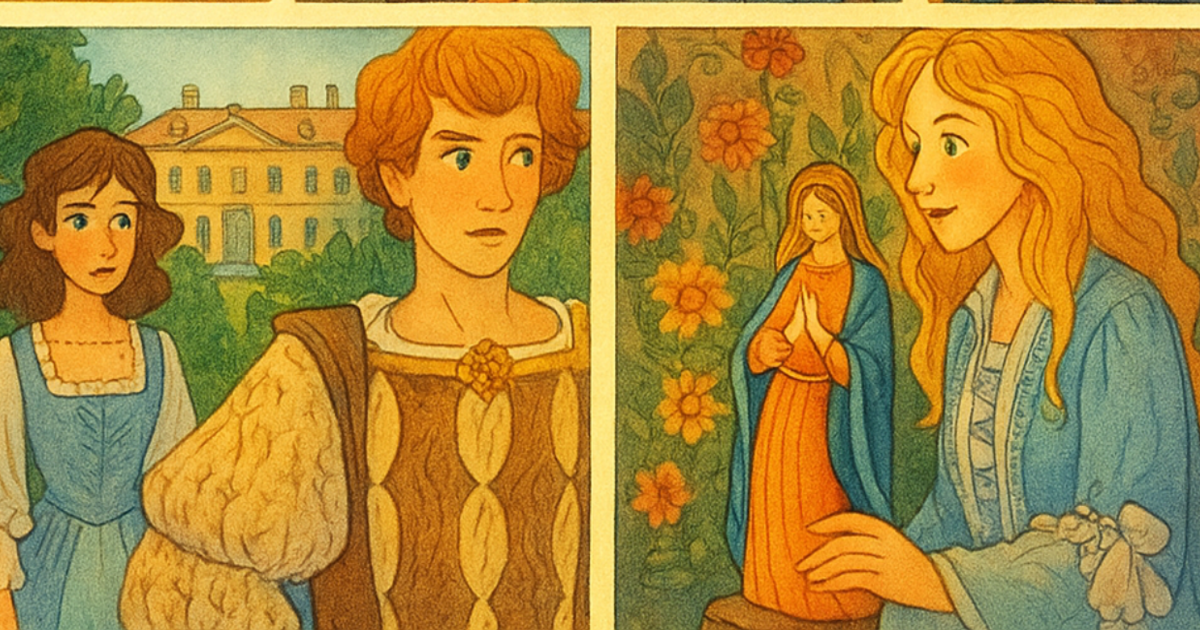
The visualisations are generated by artificial intelligence and serve as inspiration.
Photos from the area
Real photos taken near the monument


Zdroj a licence jsou uvedeny u každého snímku.
Tips from visitors
No tips yet. Be the first!
Log in and add your tip.
Sources and literature
Photos: Sovicka169 / CC BY-SA 4.0 — Wikimedia Commons. The author and licence also appear when you hover over the image.
Faktickým podkladem tohoto textu byl článek na Wikipedii, jehož autory jsou přispěvatelé Wikipedie. Článek je dostupný pod licencí CC BY-SA 4.0.
Location on the map
More monuments – Úštěk-České Předměstí
Show all in the municipality
Příběhy a pověsti
Legendy, pověsti a příběhy spjaté s touto památkou

Fotografie návštěvníků
Zatím žádné fotografie. Buďte první, kdo přidá fotografii z návštěvy!
Log in a přidejte svou fotografii nebo hodnoťte.
Za ověřenou návštěvu v aplikaci získáte víc bodů — poznáme podle GPS, že jste na místě.
Reviews and comments