






Vodojem v Mokrém Technical monument
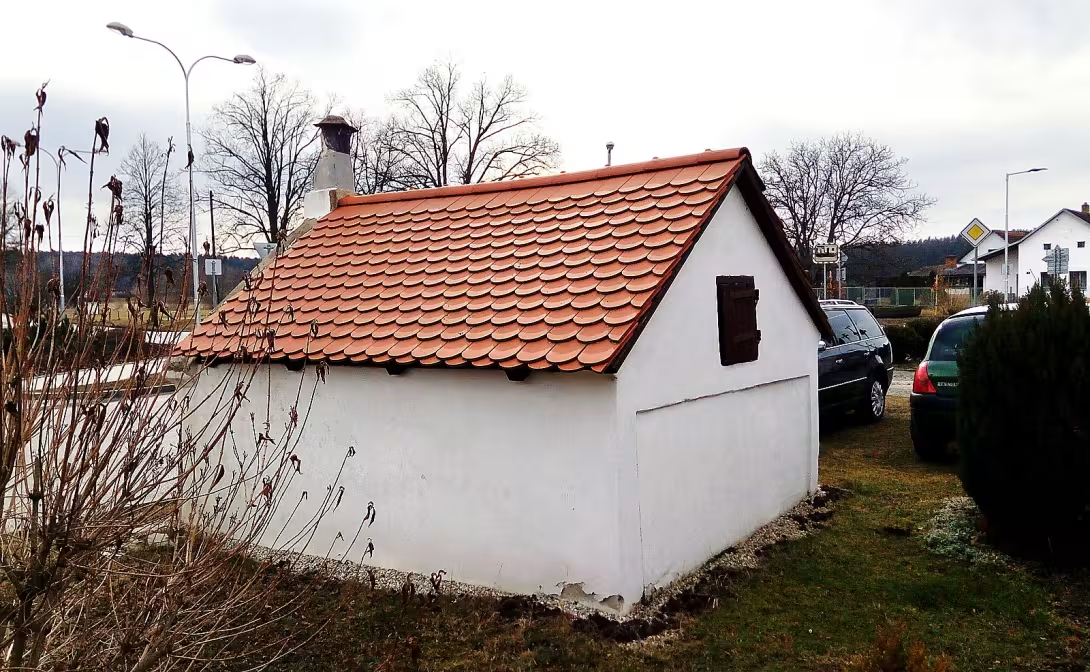
Vodojem v Mokrém, part of the village of Litvínovice in the district of České Budějovice, is a small technical monument from the 19th century. In the past, it served as a key element for supplying the village with drinking water. The building is listed in the Central List of Cultural Monuments of the Czech Republic and represents a remarkable urban element in local development.
The history of the construction is not clearly documented. While the older historical documentation from the second half of the 20th century shows the year 1819, the date of 1875 is shown in the building shield. The construction of waterjams during this period was linked to the gradual modernisation of rural infrastructure and the attempt to improve hygiene conditions in emerging communities.
The construction is a low-walled object on a rectangular plan with a saddle roof covered with groove cover. The interior consists of one space with no equipment, encapsulated by a vaulted vault. The object has no windows; only ventilation holes are used to ensure air circulation in the tank. The shields of the building are oriented north-south. The south shield, heading for the street, is lined with a simple ledge. On top of it is placed folk sculpture - bust of a man with a hat and tie, which is called Lecián in the region. On the north side there is a simple shield with wooden doors, which allowed the water level to be checked in the tank.
The water was originally brought into the water tower through a wooden pipeline from a well situated on the property north of the village. From there, it was subsequently distributed to the surrounding settlements. The operation was completed in the 20th century when the new water pipeline from České Budějovice was cut off from the source from which the water was drawn.
The building is located in the middle of the village building in front of the estate no. 9, in a place where the road branches towards Lipa, Třebín and České Budějovice. Today, the water is no longer serving its original purpose, yet it remains a valuable proof of the 19th century's technical maturity. Visiting this monument offers the opportunity to look into the history of the management of water resources and to remember the importance of small buildings for the then life in the village.
Historical milestones
- 1819
- Probably the stages of exposure to water according to the start of documentation
- 1875
- Date given on the stit of the building as year completed or reconstruction
- 1900- 1999
- Concentration of operation of the water tower after construction of a new water pipeline
- 1950-1999
- Entry of the object into the list of cultural memories
Architectural development
The building is a low walled building with a rectangular plan and a saddle roof with a groove cover. The interior consists of one space encapsulated by a vaulted vault without internal equipment. Shields are oriented north-south, with the southern shield decorated with folk sculptures.
Historical events
1819: probable year of development according to older documentation. 1875: year indicated in the building shield. 20th century: closure of the water tower due to construction of a new water pipeline.
Points of interest
- Water is a small technical monument from the nineteenth century, which previously served to supply the village with drinking water. - The building's shield shows a date of eighteen hundred seventy-five, although the earlier documentation shows the year eighteen hundred nineteen. - At the top of the southern shield there is a folk sculpture of a bust of a man with a hat and a tie called a Lecian. - The water was brought into the building by a wooden pipeline from a well located north of the village. - The construction was completed in the twentieth century because the water spring was cut when building a new water pipeline.
Guide
Show guide text
This text was created by artificial intelligence and has not been editorially reviewed. It may contain inaccuracies.
Welcome to Mocream. Please stop for a moment and take a deep breath of country air. You are standing right in front of a construction that may seem very modest at first glance, perhaps even surprise you with its size. But it is a place with a fascinating story that tells us how the basic needs of man have been addressed in the past. In front of you, there is a water tower, a little technical monument, which, in its greatest glory, was a key point for the entire village. Imagine, at the time the building was being built, the water was not available just by turning the faucet in the kitchen. Getting drinking water required effort, time and often long journeys. This very object was the answer to these needs and became the heart of local water supply.
Let us now look together at how this construction was created and in what context it stood. We are in the nineteenth century, at a time when people began to look for more efficient ways to bring water from the springs directly to the dwellings. According to the older documents that have survived to this place, the construction of this water tower probably started in the year eighteen hundred and nineteen. It was a time of great change and gradual improvement of hygiene in the countryside. The main aim was to ensure that the inhabitants of the village had permanent and safe access to drinking water without having to spend hours each day carrying heavy containers. The water was brought into this building very cleverly, by the so-called self-pitfall. That means the builders used the natural slope of the terrain. The water flowed on its own from a well located north of the village, and traveled here through the wooden pipes. Try to imagine for a moment those long rows of drilled tribes that have been carefully joined and buried in the ground, so that impurity does not penetrate them and the water remains cold and clean.
Now pay attention to the very form of the building you see before you. It's a brick building with a simple but functional rectangular plan. Her appearance is sober, which is typical of technical constructions of the time where the function always prevailed over the decorations. Take a look at the roof, it's a classic saddle roof that was designed to effectively take away the rain and snow to keep the masonry dry and safe. Even if you're out there now, imagine what's inside. The interior of the building is finished with a valence vault. This construction was not chosen randomly, because the vault provided the necessary strength and stability so that the building could lift the weight of water and the pressures associated with it. The whole object acts as a small, solid cabin, which was designed to protect the most valuable raw material of life from freezing and pollution.
When you say water, you may only imagine dry masonry, but behind every stone and every layer of mortar is human work. Although the names of particular architects or builders remained in oblivion and are not listed in the records, we know that this was the work of local craftsmen who understood materials and terrain. This building was not just a technical piece, it was a symbol of progress for the entire community. Imagine the joy of the villagers when they first saw the water flow into this building and from there it is distributed further. It was a skillful step forward that changed the everyday life of hundreds of people.
Now I want to invite you to a little game of observation. Please look up at the building shield. Notice the data depicted there. You'll see the year eighteen hundred seventy-five. And this is where the little historical mystery begins, which may be interesting to you. As I have already mentioned to you, the earlier papers refer to the year eighteen hundred nineteen as the beginning of the construction. So why is the date more than fifty years later stated on the facade? The historians and landlords often lean on it. Perhaps in the year eighteen hundred and seventy-five it was a major reconstruction where the building was modernized or repaired to serve longer. Or maybe the construction was completed much later than originally planned. This discrepancy in data reminds us that history is not always clearly written and that buildings can have more layers and lives.
When you move around the building, please go around it and focus your attention on the south shield. On top of it you will find something very special and beautiful, which is folk sculpture. It is a small detail, but it gives the construction a human dimension. In the past, it was customary to place on top of buildings, even the technical ones, some symbol of protection or expression of faith. This sculpture was likely to bring happiness and protect the water that was flowing in the building from pollution or drying out. It's a silent testimony about how people in the nineteenth century were connected to nature and how much they valued water.
But in time, the world changed. With the development of modern technology and the construction of new, much more powerful water pipelines, this small water station has ceased its function. By the end of the twentieth century, the operation was definitively terminated. The spring that once powered the entire village was cancelled or replaced by another solution. The building remained a silent witness to the past era. In order not to disappear, however, this memory was included in the list of cultural monuments in the second half of the twentieth century. This ensured its protection for future generations, so that we could stand here today and think about how it lived centuries ago.
This building doesn't give us drinking water anymore, but it does give us something else, which is an opportunity to stop and realize how important a man's relationship with water and technology is. It is a reminder of the time when every metre of pipe and every stone in the vault was the result of hard work and an effort to make a better life.
Now I leave you to look at the memory at your own pace. Walk around her, touch the wall, look again at the mysterious date on the shield and consider what you would say if you were the walls of this water tower. Feel the atmosphere of this place and try to imagine the sound of flowing water that once filled this space. When you are ready, continue your journey and discover other hidden corners of our landscape. Thank you for your attention and I wish you a pleasant rest of a day of new discoveries. Goodbye.
Tips for visitors
The best time to visit is during a sunny day in spring or autumn months, when the surrounding landscape is clear and the building stands out in natural light. Avoid the season after heavy rains, when access to the building may be wet.
You can easily get to the memory by car, and parking is possible in the nearby area on public areas. If you use public transport, we recommend checking the current connections to Litvínovice in the official connection search engine.
To visit, pack solid shoes suitable for the field and camera. The building is a technical monument, therefore it is ideal to scan it from a slight distance to excel its walled construction and saddle roof, preferably in soft afternoon light.
In the immediate vicinity you can visit the village Litvínovice or go to the nearby town of České Budějovice, which offers rich possibilities for further exploring history and culture within the district.
For families with children, this is an undemanding stop, which can serve as an interesting educational destination while walking through the countryside. We recommend to combine a visit with a trip to nature in the vicinity of Litvínovice, where there is enough room for children to move.
Businesses nearby
Do you run a restaurant, accommodation, shop, museum, rental, wellness or other visitor service near this monument? Show yourself directly to the people heading to it — this is how they will see you in the app and on the web:
Events nearby

Zdroj akcí: otevřená data měst a obcí ČR (Národní katalog otevřených dat) a kalendář akcí Národního památkového ústavu.
Nearby
Obec Litvínovice, město České Budějovice v okrese České Budějovice.
Accommodation nearby
Trips and activities nearby
Guided tours, tickets and activities nearby from GetYourGuide
Affiliate link: if you buy from the partner, we may receive a commission. The price for you does not change.
Search tours and activities →Themed route
1st city of České Budějovice, city. It's the perfect beginning of the whole trip in this county. 2. Municipality of Litvínovice, municipality. This stop will prepare you for the main destination. 3. Vodojem v Mokrém, water work. The main destination of the trip, which represents an important technical construction.
Seasonal recommendations
In spring Vodojem v Mokrém comes alive with the arrival of the first flowers and rich green grass. The surface of the water often takes over the colors of the piercing sky, which creates a fresh atmosphere. We recommend moisture-resistant shoes because roads around water works can be muddy after melting snow. The best time to visit is early morning, when soft fog often levitates above the surface.
The summer season brings a sharp sun and a rich blue color of the surface, which in combination with a dense shade of trees gives a refreshing impression. Due to the high season, there are expected more people, so it is advisable to arrive in the morning to avoid the biggest clusters. Remember light clothing, hat and plenty of fluids to keep hydration during walks.
Autumn turns the surrounding area of Water into Mocream into a colourful painting with a dominant golden and red leaf. Light is softer in this period and creates a nostalgic mood that is ideal for peaceful contemplation. The practical recommendation is to dress in layers in order to respond to variable temperatures. The visit in the afternoon offers the most beautiful views thanks to the low sun.
In winter there is a deep silence at the water works and the landscape is often covered with a white collision. Freezing air and any layer of ice on the edges provide the place with raw but fascinating beauty. It is necessary to choose warm and waterproof clothing including thermo-liners and fixed footwear with anti-slip sole. Due to a shorter day we recommend planning the trip in the morning and checking the availability of the trip in advance.
Visualizations and artistic views

The visualisations are generated by artificial intelligence and serve as inspiration.
Photos from the area
Real photos taken near the monument


Zdroj a licence jsou uvedeny u každého snímku.
Tips from visitors
No tips yet. Be the first!
Log in and add your tip.
Sources and literature
Photos: Czeva / CC BY-SA 3.0 — Wikimedia Commons. The author and licence also appear when you hover over the image.
Faktickým podkladem tohoto textu byl článek na Wikipedii, jehož autory jsou přispěvatelé Wikipedie. Článek je dostupný pod licencí CC BY-SA 4.0.
Location on the map

Příběhy a pověsti
Legendy, pověsti a příběhy spjaté s touto památkou
Fotografie návštěvníků
Zatím žádné fotografie. Buďte první, kdo přidá fotografii z návštěvy!
Log in a přidejte svou fotografii nebo hodnoťte.
Za ověřenou návštěvu v aplikaci získáte víc bodů — poznáme podle GPS, že jste na místě.
Reviews and comments