



Weinerův dům House
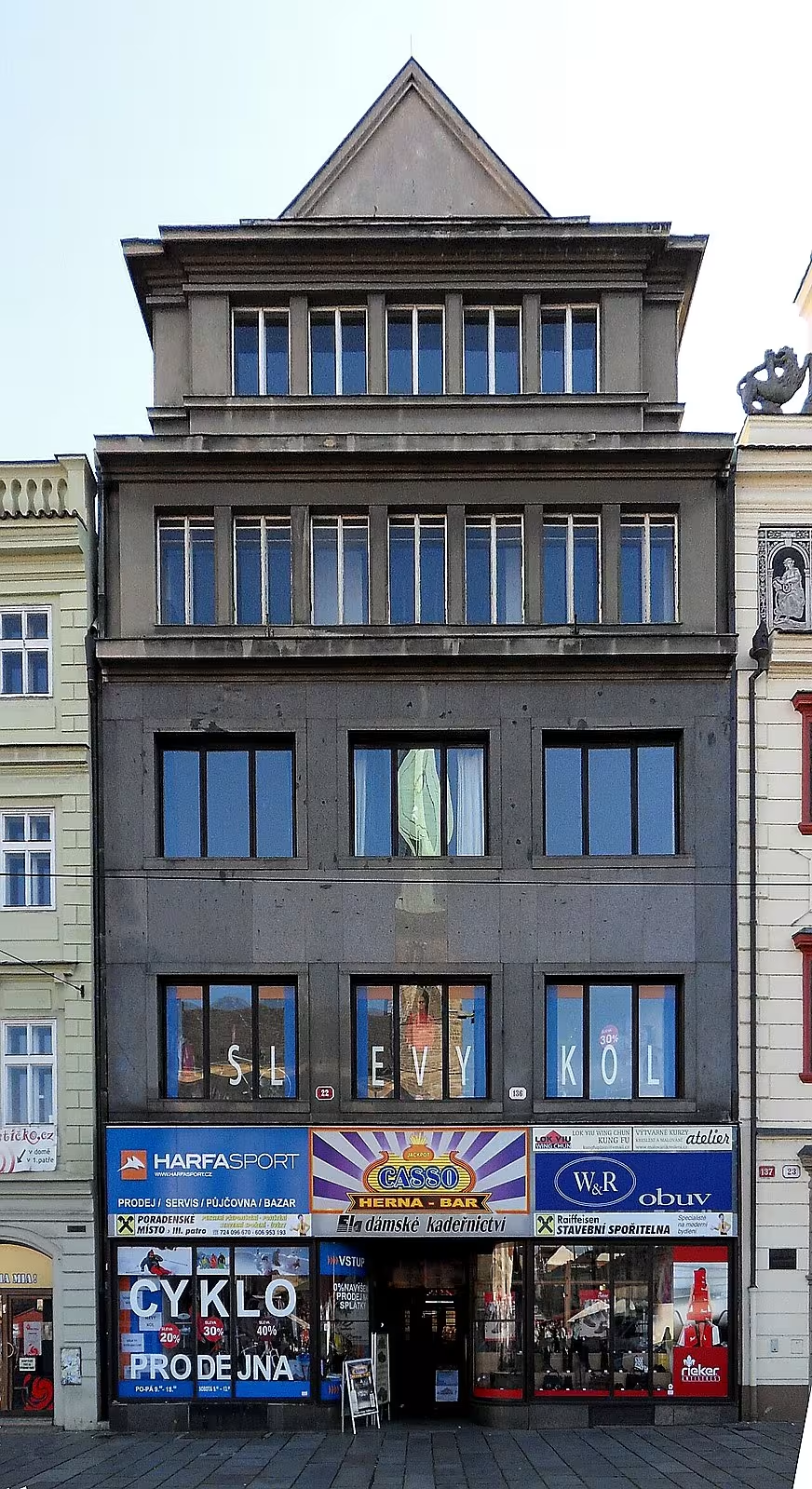
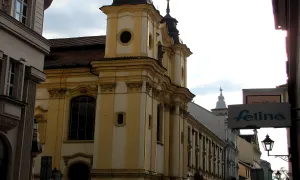
Weinerův dům is a four-storey townhouse on the Republic Square in Pilsen, built between 1928 and 1931. This building is a protected cultural monument important for its interwar architecture and interiors designed by Adolf Loose studio.
The plot with the descriptive number 136 was built in the Middle Ages. In 1595 it was rebuilt by Lidmila Kashpárková from Lovče to a two-story Renaissance building. In 1923, Weinerovi husbands purchased the building, who were involved in the leather trade. At the end of the 20th century, they had the original building demolished and built a new building in its place.
The current form of the house was created in 1928-1931. The original project of architect Vilém Beer envisaged a six-storey building with a passage and a court track, which the Pilsen monuments rejected due to interference in the form of the Republic Square. The final project was developed by the architect Bohumil Chvojka, who reduced the height of the building and adjusted the ledge to match the neighbouring historical houses. Beer's disposition solution was preserved.
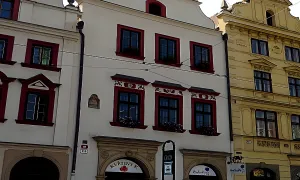
The facade is covered with polished granite. The entrance is inserted deep into the facade and framed by the original Renaissance portal from 1595, which carries cartouche with the character and initials of Lidmila Kashpárková. There is a religious inscription in the portal. The fourth floor and the superstructure are narrowed down so that the facade corresponds to the surrounding historical building.
A restaurant, warehouses and technical facilities were designed in the basement. Parter hosted two shops, one of which belonged to the Weiner family, and other business premises were located on the first floor. On the second floor, Samuel Teichner's dental office was housed, the interior of which was probably designed by Norbert Krieger from Adolf Loose's studio. The space consisted of two offices separated by a mahogany waiting room. In the 1970s, the State Food Control was based here, currently serving as an apartment and preserved part of the taping and one built-in cabinet.
On the third floor was Pavel Weiner's apartment and his wife, designed by Norbert Krieger or probably Heinrich Bullet. The interior had a connected living room with a dining room, built-in bedroom cabinets and colorful colours. The apartment was reconstructed in the 21st century and is not accessible to the public. The fourth floor was for living.
The historical owners of the house were Jan Geronis, Václav Kozina of Libušín, Václav Freysmuth of Železné, Lidmila Kashpárková, Jan Dolní, Matthew František Stehlík of Čenkov, Anna Buxbaum, Václav Jan Stehlík, Bartholomew Guldener, Lidmila Albrecht and Josef Albrecht. The Weiner family was Jewish, so during World War II the house was confiscated. In 1945 the property was returned to the surviving descendants and in the early 1960s the building was nationalized. Since 1958, the house has been protected as a cultural monument.
Weinerův dům represents a rare link between Renaissance fragment and modern architecture of the first republic with unique influences of Adolf Loose. It is an important part of the Pilsen Centre, which documents the urban development of the Republic Square. Visitors are advised to focus on the detail of the Renaissance portal in the facade.
Then and now
Drag the slider to compare how the landmark may have looked when it was built with the view today.
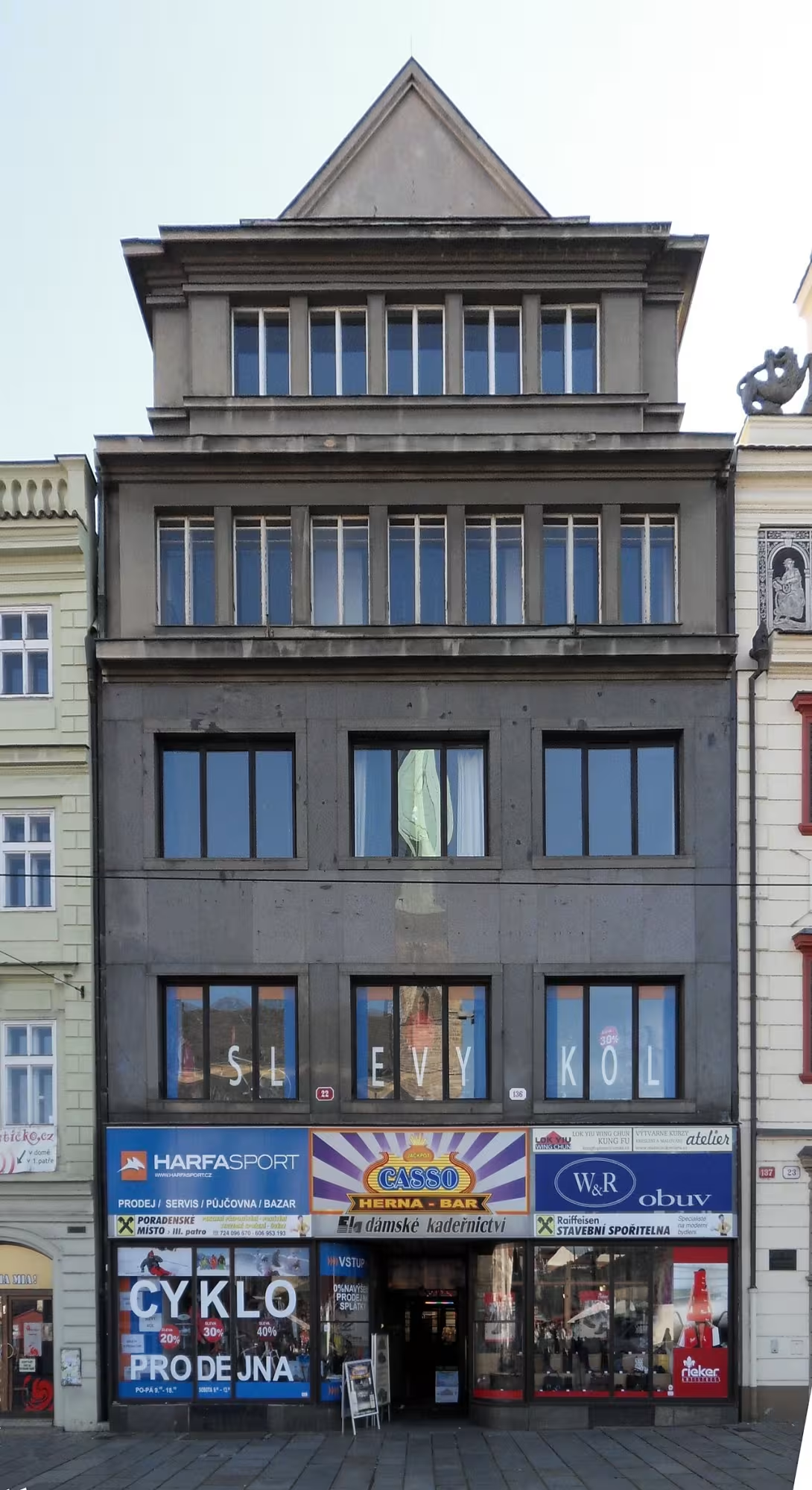

The historical appearance on the left is an AI-generated visualisation and serves as inspiration only.
Historical milestones
- 1595
- reconstruction to renaissance house with portal
- 1928 Processing
- construction of a new four-storey house according to the project Bohumil Chvojka
- 1958
- declaration of cultural heritage
Architectural development
The original medieval building was converted into a Renaissance house in 1595 with a characteristic portal. In 1928, the old building was demolished and a four-storey new building was created in its place, the project was originally prepared by Vilém Beer, but the final form was modified by Bohumil Chvojka. The facade is lined with polished granite and the fourth floor is narrowed to match the surrounding historical development. The interiors on two floors were designed by Adolf Loose.
Historical events
1595 - reconstruction into a two-story Renaissance building; 1923 - the purchase of the house of Weiner's husband; 1928 Closing 31 - construction of a new building according to the project Bohumil Chvojka; 1958 - declaration of cultural monument
Owners
1558-73 Jan Geronis; 1573-79 Václav Kozina of Libušín; 1579-91 Václav Freysmuth of Iron; 1591? Lidmila Kashpárkova of Hunter; 1613-? John Lower; 1644-86 Matthew František Stehlík from Chenkov; 1686-1712 Anna Buxbaum (born Stehlíková); 1712-? Václav Jan Stehlík of Chenkov;? Bartholomew Guldener;? -1800 Lidmila Albrecht (born Guldener); 1803 Josef Albrecht; 1923 Weinerovi; 1945 returned to the descendants of Weiner; 1960
Points of interest
- Weinerův dům is a four-story urban building built between 1928 and 1931. - This building is a protected cultural monument important for its interwar architecture and interiors designed by Adolf Loose studio. - The plot with the descriptive number 136 was built in the Middle Ages, in 1595 it converted Lidmila Kashpárková into a two-story Renaissance building. - The facade is lined with polished granite and the entrance is framed by the original Renaissance portal from 1595 with cartouche with the character Lidmila Kashpárková. - Among the historical owners of the house were Jan Geronis, Václav Kozina of Libušín and others, the Weiner family was of Jewish origin and during World War II the house was confiscated.
Guide
Show guide text
This text was created by artificial intelligence and has not been editorially reviewed. It may contain inaccuracies.
Welcome to the heart of Pilsen, before one of the most famous places in this historic area. You're standing outside Weiner's house, a four-story building built in Republic Square. This object will invite you to the world of interwar architecture with functionalist elements. In front of you you have an elegant townhouse which replaced the older Renaissance building and brings to our days a memory of the rich historical era.
Let's dive into the creation of this fascinating house. In 1595, this plot, with a descriptive number of 136, was built by a Renaissance house with a distinctive portal. More than three centuries later, from 1928 to 1931, a new four-storey house appeared on this site according to the design of architect Bohumil Chvojka. This modern approach replaced the older style while preserving the historical memory of the site. In 1958 Weinerův dům was declared a cultural monument, which shows its importance for the city of Pilsen.
Look up on the facade and take note of the architectural details. Note both the modern elements and the signs of the past that the building maintains. This house is an example of interwar architecture where innovation and tradition met. Interiors designed by the Adolf Loose Studio provide the house with another layer of historical value.
Interesting is the connection with the Weiner Jewish family, who long have been part of the Pilsen community. In addition, there were important architects such as Vilém Beer and Adolf Loose whose work contributed to the uniqueness of this place.
Now look at one of the most fascinating mysteries associated with this house. What was the reason why such a radical change in architecture took place during this period? What inspiration inspired the creator and how did these translate into the life of the local people?
Let us now examine other parts of Pilsen. Weinerův dům is just one of the many historical gems this area offers. I hope this guide inspired you to explore and appreciate the rich history of Pilsen. Goodbye and wish you a pleasant stay!
Tips for visitors
The best time to visit Weiner's house is in the spring or autumn season when the weather is pleasant and sunny light illuminates the architectural details of the building. This time of year also offers fewer visitors compared to winter.
You can verify the current connection using an online search engine.
What to take with you: We recommend not to meet the rain because the entrance to the building is open. Bringing the camera will be useful to you as the architecture of the house offers many interesting details to capture.
Photography: The best places for photos are from Republic Square, where Weinerův dům excels with its colorful facades. The sunny morning or late afternoon offers ideal conditions to capture the details of the building.
What to visit in the vicinity: Near is the Cathedral of St. Bartholomew and Town Hall, which are great examples of historical architecture. For lovers of cultural attractions it is advisable to visit the Pilsen Historical Museum or explore the local brewery.
Frequently asked questions
Can the monument be visited?
This is a residential or farm building, not a museum with opening hours. Please view it from public space and respect the owners' privacy. We have no information about access to the interior.
Where is the monument?
Location: Vnitřní Město, Plzeňský kraj. The map on this page shows the exact spot.
Why is the monument protected?
It is listed in the Central List of Cultural Monuments of the Czech Republic as a cultural monument (register no. 1000127700).
Businesses nearby
Do you run a restaurant, accommodation, shop, museum, rental, wellness or other visitor service near this monument? Show yourself directly to the people heading to it — this is how they will see you in the app and on the web:
Events nearby

Zdroj akcí: otevřená data měst a obcí ČR (Národní katalog otevřených dat) a kalendář akcí Národního památkového ústavu.
Nearby
Dům stojí na náměstí Republiky v historickém centru Plzně, v blízkosti katedrály sv. Bartoloměje a radnice. V okruhu 5 km se nachází Plzeňské historické muzeum, pivovar a řada barokních a secesních budov.
Accommodation nearby
Trips and activities nearby
Guided tours, tickets and activities nearby from GetYourGuide
Affiliate link: if you buy from the partner, we may receive a commission. The price for you does not change.
Search tours and activities →Themed route
Thematic cruise route: Historical Centre of Pilsen
1. Weiner House - Type: historical building - Why is it worth a visit: Weiner House is one of the most significant Art Nouveau buildings in Pilsen, which attracts attention from its architecture. Located on the Republic Square and offers beautiful views to the historic city centre.
2. St Bartholomew's Cathedral - Type: sacral monument - Why is it worth a visit: This Gothic cathedral is one of the most famous and most important architectural works in Pilsen. Its high tower offers panoramic views of the city, making it an ideal destination for lovers of history and architecture.
3. City Hall - Type: administration building - Why is it worth visiting: City Hall in Pilsen is an example of Baroque architecture with rich history. Its beautiful interior and artistic elements, such as statues and frescoes, embody the rich history of the city.
4. Pilsen Historical Museum - Type: museum - Why it is worth a visit: The museum offers a detailed view of the history of Pilsen and the region. His expositions include archaeological findings, works of art and objects that document the development of the city from prehistoric to present.
5. Brewery - Type: historical brewery - Why is it worth a visit: The Pilsen brewery is not only the centre of traditional beer, but also a place where you can see the production process and enjoy the Pilsen beer itself. It is an ideal place for those who want to know the cultural heritage of the Czech brewery.
This route will guide you through the historical centre of Pilsen and offer an overview of its architectural, cultural and historical attractions.
Seasonal recommendations
Spring brings fresh greenery and fine morning light to the surroundings of the house, highlighting the details of the facade. The atmosphere is full of expectations and a new beginning. I recommend wearing a light layer of clothing because the weather can be variable. The best time to visit is in the morning when the streets are still quiet.
In the summer months it dominates bright sun and hot air, creating contrast shadows in narrow alleys. Expect a large number of visitors in the high season. It is advisable to come right at the opening to avoid the biggest crowds. Don't forget light summer clothes and plenty of water to go.
Autumn covers the inner city with golden colours of leaves and light becomes soft and golden. There is a quieter and melancholy mood. It's practical to carry a waterproof coat or umbrella for frequent collisions. An ideal visit in the afternoon is when the temperature is more pleasant.
Winter brings cold air and short days when the building is cozy thanks to evening lighting. In Advent Time, the neighborhood is full of expectations. It is necessary to choose very warm clothes and fixed shoes.
Visualizations and artistic views


The visualisations are generated by artificial intelligence and serve as inspiration.
Photos from the area
Real photos taken near the monument


Zdroj a licence jsou uvedeny u každého snímku.
Tips from visitors
No tips yet. Be the first!
Log in and add your tip.
Sources and literature
Photos: Jik jik / CC BY-SA 3.0 — Wikimedia Commons. The author and licence also appear when you hover over the image.
Faktickým podkladem tohoto textu byl článek na Wikipedii, jehož autory jsou přispěvatelé Wikipedie. Článek je dostupný pod licencí CC BY-SA 4.0.
Location on the map
Příběhy a pověsti
Legendy, pověsti a příběhy spjaté s touto památkou
Fotografie návštěvníků
Zatím žádné fotografie. Buďte první, kdo přidá fotografii z návštěvy!
Log in a přidejte svou fotografii nebo hodnoťte.
Za ověřenou návštěvu v aplikaci získáte víc bodů — poznáme podle GPS, že jste na místě.
Reviews and comments