






Zahrada Černínského paláce Garden
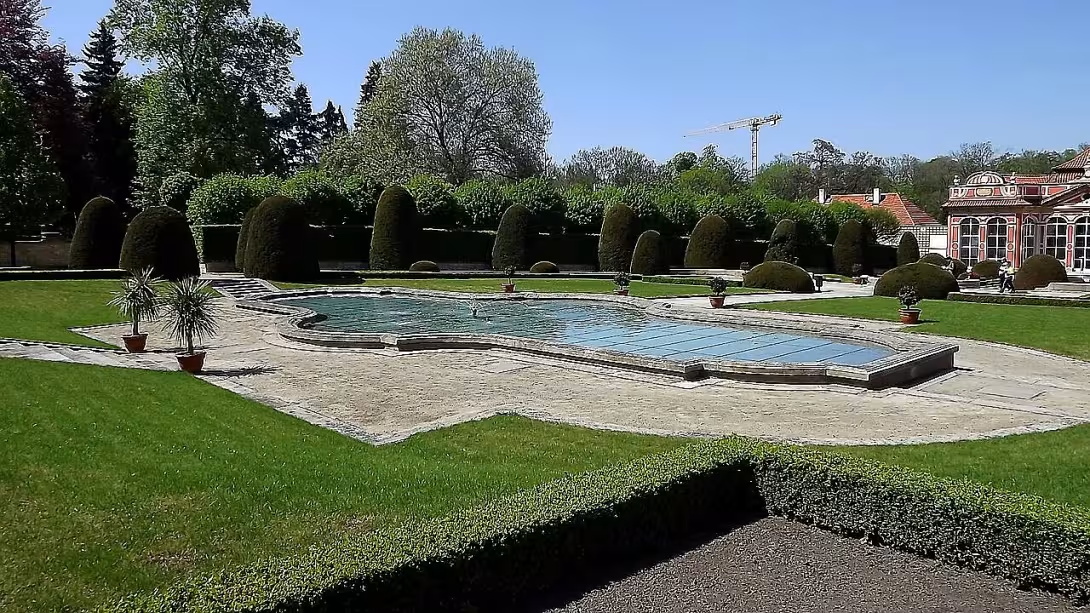
The Černínská zahrada is a Baroque garden in Prague's Hradčany district. Known for its historical significance and architectural beauty, it was established alongside the Černín Palace in the late 17th century. Over time, it has served various roles—from a noble residence to military barracks—and now functions as part of the Czech Republic’s Ministry of Foreign Affairs. The garden is notable not only for its rich history but also for being accessible to the public during summer since 2011.
The origins of Černínská zahrada date back to 1669 when Humprecht Jan Černín z Chudenic initiated the construction of the Černín Palace. The garden's development began in 1693 under Francesco Caratti, with further contributions from Domenico Egidio Rossi and later František Maxmilian Kaňka. Despite suffering significant damage during Prussian sieges in 1741–1742 and 1757, the garden was restored multiple times, reflecting its enduring importance.
Architecturally, Černínská zahrada is a testament to Baroque design, featuring two notable fountains and cascades that highlight the era's stylistic elements. The larger fountain in the garden was designed by Domenico Egidio Rossi in 1692, with water successfully tested in August of that year. Another smaller cascade fountain, characterized by its masonry basins and minimal ornamentation, adds to the garden’s aesthetic appeal. Additionally, a modest basin tucked away in a shaded area features a maskaron as a spout.
Ownership of Černínská zahrada has changed hands several times throughout history. Initially belonging to Humprecht Jan Černín z Chudenic and later his descendants, the garden eventually became part of the Společnost vlasteneckých přátel umění in 1796. By 1851, it was acquired by c. k. ženijní ředitelství v Praze, which transformed the site into barracks and stables. In 1928, the garden came under the administration of the Czechoslovak Ministry of Foreign Affairs, leading to a comprehensive restoration in 1929 based on Otokar Fierling's plans.
Key events in the garden’s history include its damage during Prussian sieges and subsequent restorations. A significant renovation occurred in 1929, restoring the original Baroque elements under Fierling's guidance. In recent years, a deratization project was conducted in June 2012 to preserve the site further.
Today, Černínská zahrada is not only a cultural monument but also an accessible public space during summer months. Its historical layers and architectural features make it a worthwhile visit for those interested in Baroque gardens and Czech history. The garden's proximity to Prague Castle adds to its allure, offering visitors a glimpse into the past while enjoying its serene environment.
Černínská zahrada stands as a testament to the rich cultural heritage of Prague, inviting visitors to explore its historical depth and architectural beauty. Whether drawn by its Baroque elegance or intrigued by its storied past, this garden offers a unique experience that is both educational and visually captivating.
Then and now
Drag the slider to compare how the landmark may have looked when it was built with the view today.
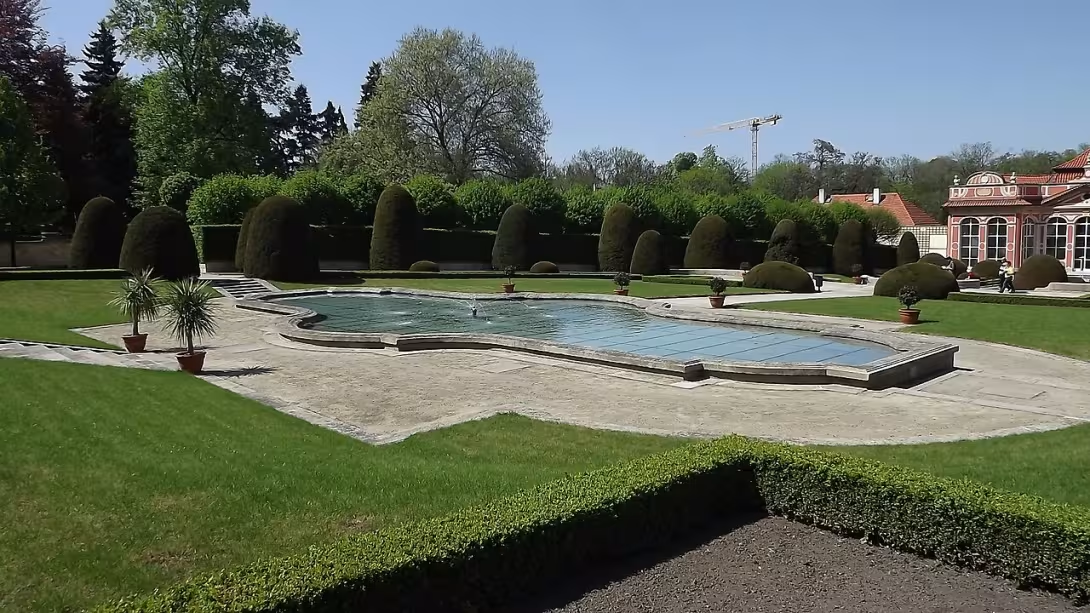

The historical appearance on the left is an AI-generated visualisation and serves as inspiration only.
Historical milestones
- 1669
- Construction of Černínský palác began.
- 1693
- The garden's construction started under Francesco Caratti's plans.
- 1741
- The garden was damaged during the Prussian siege.
- 1929
- Comprehensive restoration of the garden completed.
Architectural development
Černínská zahrada was initially designed by Francesco Caratti in the late 17th century. It underwent significant damage during Prussian sieges but was restored with contributions from architects like Domenico Egidio Rossi and later Otokar Fierling, who played a key role in its 20th-century restoration. The garden features Baroque elements such as fountains and cascades, reflecting the architectural style of its era.
Historical events
Construction of the garden began in 1669 under Humprecht Jan Černín.
The garden was significantly damaged during Prussian sieges in 1741–1742 and 1757.
In 1929, a comprehensive restoration of the garden was completed based on Otokar Fierling's plans.
Owners
Humprecht Jan Černín z Chudenic (1669-1693)
Heřman Jakub Černín z Chudenic (post-1693)
František Josef Černín z Chudenic (completed in 1723)
Společnost vlasteneckých přátel umění (1796–1819)
c. k. ženijní ředitelství v Praze (1851)
Ministerstvo zahraničních věcí ČR (1928-present)
Points of interest
- Despite its Baroque elegance, Černínská zahrada has served as military barracks and stables in the past, reflecting its adaptability to changing historical needs. - The garden's larger fountain was tested with water as early as August 1692, showcasing the rapid progress of construction under Domenico Egidio Rossi’s supervision.
- A unique feature within the garden is a small basin with a maskaron spout, tucked away in a shaded area, adding an element of whimsy to its otherwise formal Baroque design.
- The restoration in 1929 not only revived the original Baroque elements but also marked a transition as the garden came under the Czechoslovak Ministry of Foreign Affairs' administration.
- In June 2012, Černínská zahrada underwent a deratization project to preserve its historical integrity and ensure it remains an inviting public space.
Guide
This guide is narrated by a synthetic voice generated by artificial intelligence.
Show guide text
This text was created by artificial intelligence and has not been editorially reviewed. It may contain inaccuracies.
The garden of Černín Palace is located on Hradčany near Loretánské náměstí and covers an area of one point seventy-two hectares. Together with the palace, it is protected as a cultural monument and serves the Ministry of Foreign Affairs.
Count Humprecht Jan Černín of Chudenic began building the palace in sixteen sixty-nine. The garden was created from sixteen ninety-three according to the plans of architect Francesco Caratti. His heirs continued the work, Count Heřman Jakub Černín, and in seventeen twenty-three the founder's grandson, Count František Josef Černín, completed it. Architects Domenico Egidio Rossi and later František Maxmilián Kaňka also contributed. The summer house here is attributed to Kaňka, but it apparently has nothing to do with him. It was built by master mason Jakub Schedel. Who designed it is not known. It was most likely Schedel himself or Anselmo Lurago, the author of the tower of the Church of Saint Nicholas in Malá Strana.
During the Prussian siege in seventeen forty-one to seventeen forty-two and in seventeen fifty-seven, the garden was severely damaged. It was restored by sculptor Jan Antonín Quitainer, painter Josef Bartoloměj Kramer, and gardener Jan Paul. In seventeen ninety-one, banquets, concerts, and balls were still held here for the coronation of Leopold the Second. But at the end of the eighteenth century, the Černín family moved to Vienna. From seventeen ninety-six to eighteen nineteen, the picture gallery of the Society of Patriotic Friends of Art, the predecessor of the National Gallery, was located here. Then a hospital, a playing card factory, and a hop storage took turns. From eighteen fifty-one, the complex belonged to the military and served as barracks with stables. At the beginning of the twentieth century, architect Otokar Fierlinger restored the original baroque appearance of the garden including the fountains. In nineteen twenty-eight, the state acquired the palace with the garden, and Fierlinger conducted another complete renovation in nineteen twenty-nine. The most recent general reconstruction took place from nineteen ninety-four to nineteen ninety-seven.
Rossi designed two fountains already in sixteen ninety-two. On June tenth, sixteen ninety-three, a water supply was brought into the garden, and on August third, the water jet in the lower basin was successfully tested. The pools rest on a brick foundation with a stone border by Santino Aichel, and sealed with a layer of clay. Today there is an upper, larger basin for the water jet. In the axis of the garden facade is also a smaller fountain with two marble basins of irregular shapes. Water from the upper one overflows through a fine comb into the lower one. Apart from two small shells, it has no ornaments. In the shaded part of the garden lies a small sandstone pool hidden in a retaining wall with a mask serving as a drain.
On October sixteenth, nineteen ninety, a boundary stone from the Czech-Bavarian border from seventeen sixty-six was placed here. The Minister of Foreign Affairs received it as a gift as a symbol of the opening of borders.
Tips for visitors
The best time to visit Černínská zahrada is during the late spring or early autumn months, when the weather is mild and the garden's Baroque features are beautifully complemented by blooming flowers and lush greenery. Visiting in these seasons allows you to fully appreciate the architectural beauty without the discomfort of summer heat or winter cold. Additionally, weekdays tend to be less crowded than weekends, providing a more tranquil experience.
Always check current transport routes online before your visit.
When visiting Černínská zahrada, it's recommended to bring comfortable walking shoes as there are several pathways to explore within the garden. A light jacket might be useful in case of sudden weather changes, especially during spring or autumn. Don't forget a water bottle and perhaps some snacks if you plan on spending a few hours exploring.
For photography enthusiasts, Černínská zahrada offers numerous picturesque spots, particularly around the central fountain and along the garden's main axis where the Baroque symmetry is most evident. Early morning or late afternoon light provides the best conditions for capturing the garden’s beauty, casting soft shadows that highlight its intricate details.
Nearby attractions within a 30-minute walk include St. Vitus Cathedral, which offers stunning views of Prague and an impressive Gothic architecture, and the Strahov Monastery with its famous library and panoramic terrace. Both sites provide additional historical context and enrich your visit to Černínská zahrada.
For families with children, Černínská zahrada is a delightful destination due to its open spaces and scenic views. While there are no specific playgrounds within the garden, the wide pathways and benches provide ample space for picnics or leisurely walks. Exploring nearby attractions like St. Vitus Cathedral can also be engaging for children interested in history and architecture.
Frequently asked questions
Can the monument be visited?
Parks and gardens are often open to the public, but some have opening hours or are part of a closed site. We have not verified the entry conditions.
What are the opening hours and admission?
We have not verified the opening hours or admission. Current information is published by the operator.
Where is the monument?
Location: Loretánské nám. 101/5, Hradčany, Praha, Hlavní město Praha. The map on this page shows the exact spot.
Why is the monument protected?
It is listed in the Central List of Cultural Monuments of the Czech Republic as a national cultural monument (register no. 512). It is protected as part of a larger listed ensemble.
Businesses nearby
Do you run a restaurant, accommodation, shop, museum, rental, wellness or other visitor service near this monument? Show yourself directly to the people heading to it — this is how they will see you in the app and on the web:
Events nearby

Zdroj akcí: otevřená data měst a obcí ČR (Národní katalog otevřených dat) a kalendář akcí Národního památkového ústavu.
Nearby
Černínská zahrada is situated near Prague Castle and overlooks the historic Hradčany district. Within a 5 km radius are other significant sites such as St. Vitus Cathedral and the Strahov Monastery.
Accommodation nearby
Trips and activities nearby
Guided tours, tickets and activities nearby from GetYourGuide
Affiliate link: if you buy from the partner, we may receive a commission. The price for you does not change.
Search tours and activities →Themed route
Tematická výletní trasa: Historické a kulturní dědictví Hradčan
1. Černínská zahrada
Typ: Zahrada
Proč stojí za návštěvu: Černínská zahrada je klíčovým prvkem historického a kulturního dědictví Prahy. Nachází se v okolí Hradčanského paláce, což ji činí ideálním místem pro pochopení architektonických a zahradnických tradic oblasti. Její panoramatický pohled na Hradčany nabízí jedinečnou perspektivu na historii a kulturu tohoto významného českého městského okrsku.
2. Katedrála svatého Víta
Typ: Kostel
Proč stojí za návštěvu: Katedrála svatého Víta je nejvýznamnějším gotickým chrámem v Evropě a symbolem české identity. Je součástí Pražského hradu, což ji činí klíčovou atrakcí pro každého návštěvníka Hradčan. Katedrála je známá svými bohatými historickými událostmi a architektonickými detaily, které přitahují miliony turistů každoročně.
3. Strahovský klášter
Typ: Klášterní komplex
Proč stojí za návštěvu: Strahovský klášter je nejstarší a největší benediktinský klášter v Česku. Jeho knihovna, jedna z nejstarších na světě, obsahuje vzácné rukopisy a starodávné tisky. Klášterní komplex nabízí pohledy na historii českého klášternictví a jeho vliv na kulturní rozvoj země, což jej činí nezbytným pro každého návštěvníka regionu.
4. Hradčanské náměstí
Typ: Náměstí
Proč stojí za návštěvu: Hradčanské náměstí je srdcem historického centra Prahy a sloužilo jako důležité místo pro mnohé události v českých dějinách. Je známé svým impozantním pohledem na Prahu, který zahrnuje i Vltavu a Staroměstskou radnici. Náměstí je ideálním místem pro odpočinek a reflektování historického významu oblasti.
5. Hradčanská zahrada
Typ: Zahrada
Proč stojí za návštěvu: Hradčanská zahrada je částí Pražského hradu a nabízí jedinečný pohled na historickou architekturu a přírodní krásy okolní oblasti. Je to místo klidu, kde návštěvníci mohou užít si zelené prostory v blízkosti nejvýznamnějších historických památek Prahy. Zahrada je ideálním místem pro relaxaci a pochopení kulturního kontextu Hradčan.
Tato trasa nabízí pohled na klíčové historické a kulturní místa v okolí Černínské zahrady, což umožňuje návštěvníkům hluboce pochopit bohatou minulost a dědictví Hradčan.
Seasonal recommendations
Spring: The Černín Palace Garden awakens to vibrant life during spring, with blooming flowers and fresh greenery creating a picturesque setting ideal for leisurely strolls. As daylight extends, the garden is bathed in soft sunlight that enhances the natural beauty of its flora. Visitors can enjoy the gentle warmth and mild weather, making it an excellent time to explore at a relaxed pace. To make the most of your visit, consider arriving early in the morning to avoid larger crowds and take advantage of the serene atmosphere before the day gets busier.
Summer: Summer in the Černín Palace Garden is characterized by lush landscapes and abundant sunshine, making it perfect for outdoor activities. The garden's vibrant colors are at their peak, with long daylight hours allowing ample time to explore every nook and cranny. This season attracts more visitors, so arriving early can help you enjoy a quieter experience before the crowds build up later in the day. Wearing comfortable clothing and sun protection is advisable due to the warmer temperatures.
Autumn: Autumn brings a stunning transformation to the Černín Palace Garden as leaves turn into shades of gold, orange, and red, creating an enchanting autumnal tapestry. The cooler weather makes for pleasant walking conditions, allowing visitors to fully appreciate the changing scenery. Layered clothing is recommended to stay comfortable as temperatures can vary throughout the day.
Winter: In winter, the Černín Palace Garden offers a unique and serene experience with its snow-covered paths and bare trees that provide striking silhouettes against the grey skies. The atmosphere is tranquil, often accompanied by soft lighting from nearby buildings or street lamps, adding to the garden's charm during shorter days. Visitors should dress warmly in layers and be prepared for potentially icy conditions. It's also a good idea to check opening times as they may be reduced during this season, allowing you to plan your visit accordingly.
Visualizations and artistic views


The visualisations are generated by artificial intelligence and serve as inspiration.
Photos from the area
Real photos taken near the monument


Zdroj a licence jsou uvedeny u každého snímku.
Tips from visitors
No tips yet. Be the first!
Log in and add your tip.
Sources and literature
Photos: Remasabe / CC BY-SA 3.0 — Wikimedia Commons. The author and licence also appear when you hover over the image.
Location on the map

Fotografie návštěvníků
Zatím žádné fotografie. Buďte první, kdo přidá fotografii z návštěvy!
Log in a přidejte svou fotografii nebo hodnoťte.
Za ověřenou návštěvu v aplikaci získáte víc bodů — poznáme podle GPS, že jste na místě.
Reviews and comments