






Zahrada Růžový sad Rozarium
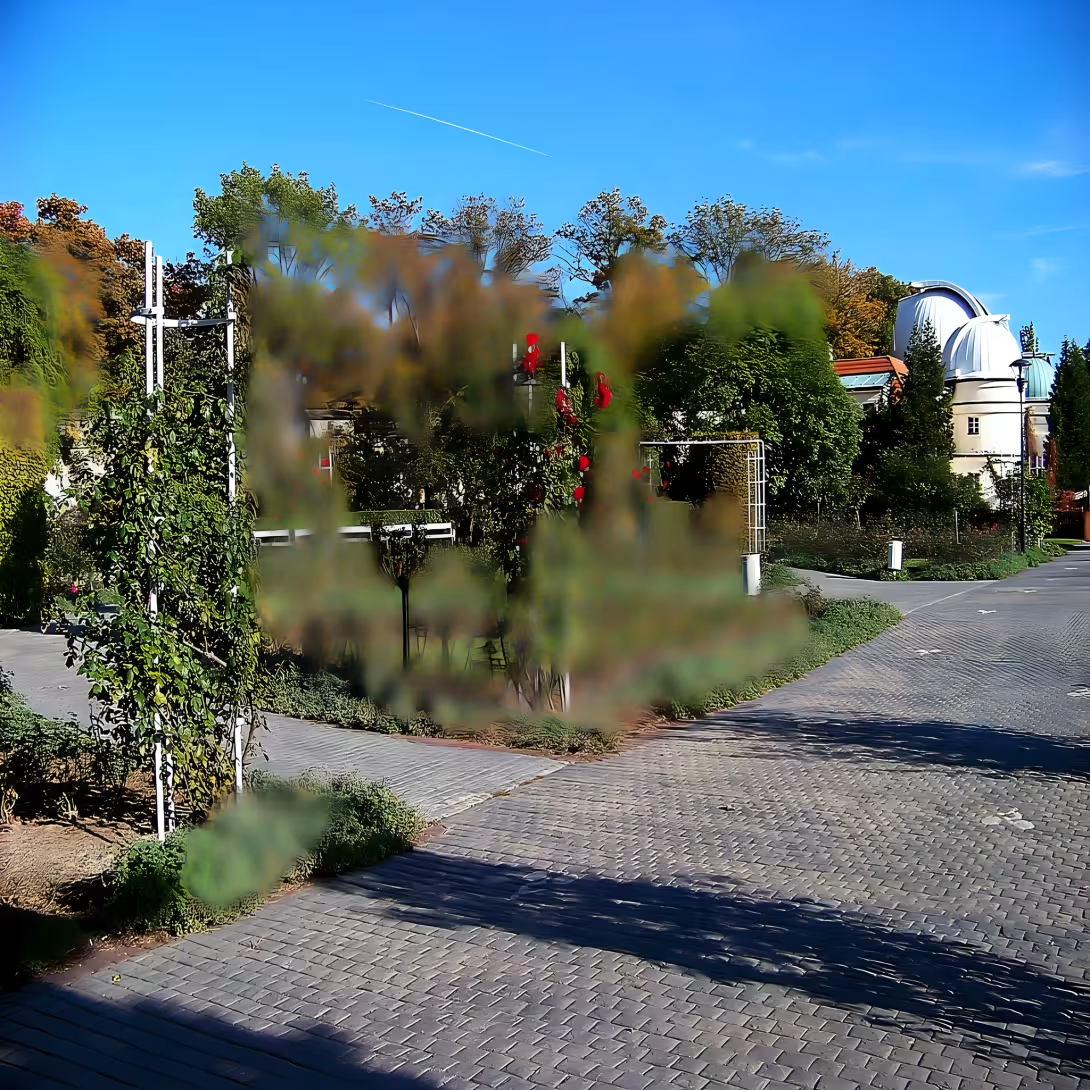
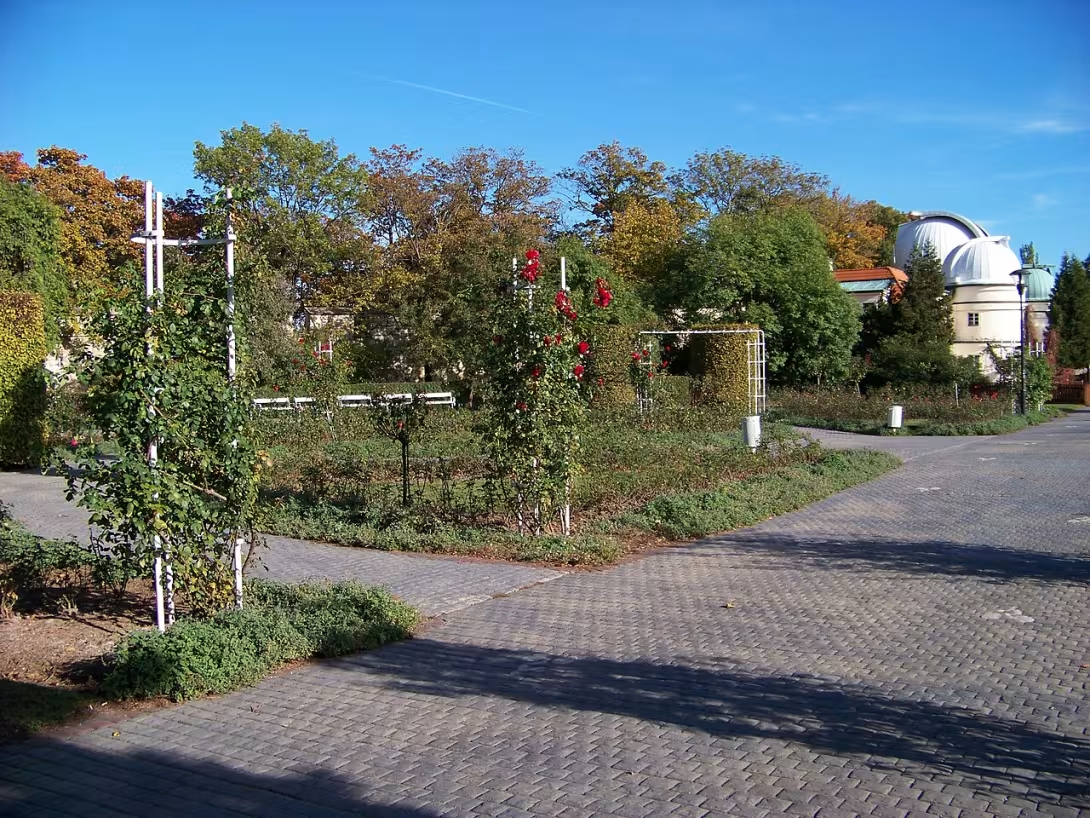
Pink orchard is an important functionalist park on the peak plains of Petrín, Prague, at an altitude of 320 to 328 metres. This space, protected as a cultural monument of the Czech Republic, was created in the 1930s on the site of a former military fortification. Today it serves as a park with a rozarium, a observatory and a series of sculptures.
The history of the site is closely linked to the development of the castle fortification. The original forest trees have replaced vineyards and fruit orchards in the past. From the Baroque until 1932, however, the location between the Hunger Wall and the Baroque walls served the army. There were bastions, money shops and other military objects. The conversion took place after 1932 and all modifications were completed in 1938. Between 1992 and 1994, the complex underwent extensive reconstruction, rebuilding lawns, installing new irrigation systems and replacing the road surfaces.
The architectural solution of the Rozarium, which forms the main part of the park of approximately two hectares, was designed by Josef Kumpán. The garden is divided into three parts in composition: the Rozerium itself, designed on the ground plan of the Rosetta and the fans, the space between the cableway station and the path to the bright and the area with a playground and a picnic area. There is also a permanent garden in the area. It is situated on one of the bastions and thanks to its closure and rectangular gravel roads it offers a peaceful space for meditation.
There are several important sculptures in the park. The statue of the Kiss by Josef Marátka with a plinth from Jan Kotěra was transferred to Petřín after 1945. The bronze act of a young woman called Desire is the work of William Amort, 1907. Since 1994 the garden has been decorated with bronze sculptures of Milan Rastislav Štefánik by sculptor Bohumil Kafka, whose model has been preserved in the depository of the National Gallery. The modern sun clock from 1976 is located outside the Štefánik observatory, whose author is sculptor Pavel Vilímek.
Among the attractions are the painted labyrinth, which is a copy of the design from the cathedral in Chartres, and the torzo of the memorable Turkish hazelnut with a labyrinth. The unique feature is the set rose Rosa General Štefánik, who was bred by the gardener Jan Böhm in 1936 and whose specimens are planted in the garden. In total, around 8,000 roses of different species are growing here, which is complemented by a perpetual shant.
Today, the Pink Set is a sought-after resting place that connects historical fortifications, scientific institutions and garden architecture. The visit offers the opportunity to become acquainted with the conversion of military space into cultivated urban greenery and to explore valuable works of art in the authentic environment of Petřín gardens.
Then and now
Drag the slider to compare how the landmark may have looked when it was built with the view today.
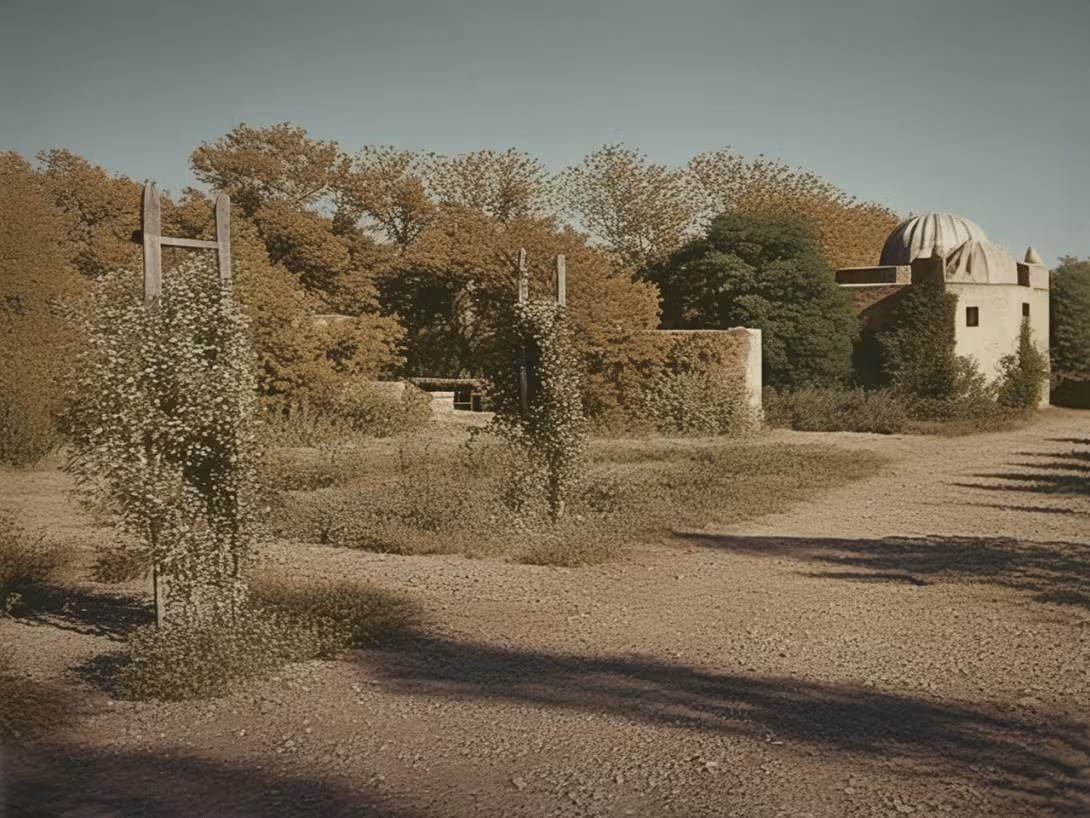
The historical appearance on the left is an AI-generated visualisation and serves as inspiration only.
Historical milestones
- 1932
- Commencing modifications of the military area to the garden.
- 1938
- Finishing garden modifications.
- 1994
- The ceremonial unveiling of the bronze sculpture of Milan Rastislav Štefánik.
Architectural development
The garden was created on the site of Baroque fortifications and military objects. The Rosárium was designed on the floor plan of the rosetta and fan. During the reconstruction in the 1990s, the surfaces of the roads were replaced, new irrigation systems and structures were installed for floating roses.
Historical events
1932: Termination of military use of space and commencement of conversion into garden. 1992-1994: Extensive reconstruction of the park and restoration of elements. 1994: Ceremonial unveiling of the statue of Milan Rastislav Štefánik.
Points of interest
- The rose orchard was created in the 1930s at the site of the former military fortifications, where bastion and money were previously built. - Part of the complex is the Perm Garden of Květnice, which is situated on one of the bastions and offers space for meditation. - There are around 8,000 roses of different kinds growing in the garden, among which is a unique set rose Rosa General Štefanik developed in 1936. - There is a labyrinth painted in the park, which is a copy of the design from the Chartres Cathedral. - One of the attractions is the torso of the historic Turkish hazelnut, which is covered with loubinek.
Guide
Show guide text
This text was created by artificial intelligence and has not been editorially reviewed. It may contain inaccuracies.
Welcome to the Pink Set. You have just entered one of the most beautiful and peaceful corners of Prague Hradčan. You are standing in a place that is perceived as an oasis of peace, but before you sigh fully with relief, let me help you understand what is happening here. Look around you and feel the atmosphere of this place. You are high above the city level, on the castle side of Petrina, at an altitude of over 300 meters. This air, this perspective and this view are the first things that welcome you here. Feel the space that spreads out in front of you, and remember that every flower and every design of the journey that you are now observing has a deep story.
It may seem to you that this place has always been intended to rest and walk between flowers, but history here has been much harsher and militarily oriented. Before you, where you now see green areas and colored beds, there was once a military fortification. It was a space dedicated to defense, full of heavy structures like bastion and money. It was not a place to relax, but to protect and store explosives. But this harsh past began to change when the world and Prague were transformed. In 1932, it was decided that this military space would turn into a garden. It was an ambitious work that required not only patience, but also a completely new view of the use of this strategic position. The work to transform this place took several years and the final form that you now see was completed in 1938. It's fascinating to think how in just a few years a place that used to wake up tension and serve defense has become a place to bring people joy and aesthetic experience.
Now pay attention to how the entire area is thought out. This whole garden is not just a random cluster of plants, but it is divided into three clear composite parts. Feel how space changes, how it passes from one part to another. The most important and most important part of what you're seeing right now is the Rozarium. His design belonged to architect Joseph Kumpan. He was the one who was able to integrate the natural elements into this historic space in order to create a harmonious cultural heritage. When you look at the surrounding terraces and roads, notice how the architecture of the garden works with the terrain. Everything is designed so that you are constantly surprised by the path management and that each part of the garden offers a different feeling.
In this space, the shadows of history and the names of great personalities are constantly moving. If you keep walking, you'll find monumental evidence of this history. In 1994, the bronze work dedicated to Milan Rastislav Štefanik was festively revealed. His presence here resembles the significant figures that are associated with this period and this environment. Even if you move in the silence of the garden today, its foundations include names such as Jan Kotěra, Vilém Amort, Josef Mařatka, Bohumil Kafka or Pavel Vilímek. These people formed both the cultural and architectural framework of the time when the Pink orchard was born. Their legacy is part of this atmosphere that you're currently seeing.
If you look at the plants themselves now, you may be surprised by their incredible diversity. Did you know that around 8,000 roses are growing in this area? It's a stunning number. Each of these roses represents a different kind, a different colour and a different smell. It's a living sea of flowers that change with every year and every season. But there is also one special part that can impress you with its specific function. It's a flowerflower garden. She is located on one of the former bastions, which is right where military structures used to stand. This garden is designed as a place for meditation. It's a place where the history of the fortifications meets complete internal calm. It is a fascinating contrast - a place that was supposed to be impenetrable and solid, became a place where you can sit in silence and seek inner peace.
So let's move on now. I suggest you explore all three parts of the garden and let the scent of thousands of roses drift away. Note the details of how the terrain changes and how nature intertwines with the architectural intention of Josef Kumpán. Don't forget to stop at the memorial of Milan Rastislav Štefánik and devote a moment to his memory. Pink orchard has something to offer you, whether you are looking for historical context, architectural beauty, or simply a quiet space for your own thoughts. I wish you a pleasant walk through this beautiful heritage.
Tips for visitors
Best visiting time
Zahrada Růžový sad is open from April to October daily from 9:00 to 19:00. The best time to visit is the afternoon when the sun is shining in the garden and you can see its beauty in the best possible form.
Parking and transport
Place is available by car and public transport. The buses stop at a nearby stop where the garden is available on foot. Admission is paid on site, the current price list can be found on the official site of the sights.
What to take with you
When visiting the Garden of Pink orchards it is advisable to take with you refreshments and drinks because there are no restaurants or kiosks in the garden. It is also advisable to take with you sunglasses and umbrella, because the sun can shine quite strongly.
Photography
The best places for photography are around the fountains and in places where the sun is shining in the garden. The best light is morning and afternoon, when the sun shines parallel to the earth
What to visit in the surroundings
In the surroundings of the Garden of Pink orchards there is a Hunger Wall, Petřín View and Štefánik Observatory. The cableway to Petrin is also nearby and offers beautiful views of Prague.
Tips for families with children
For families with children, the cableway is suitable for Petrin, which offers a beautiful view of Prague and is also fun for children. It is also advisable to visit the Stephanik Observatory, which offers interesting astronomical lectures and observations of stars.
Businesses nearby
Do you run a restaurant, accommodation, shop, museum, rental, wellness or other visitor service near this monument? Show yourself directly to the people heading to it — this is how they will see you in the app and on the web:
Events nearby

Zdroj akcí: otevřená data měst a obcí ČR (Národní katalog otevřených dat) a kalendář akcí Národního památkového ústavu.
Nearby
Hunger wall, Petřín observation tower, stefánik's observatory, cableway to Petřín, flower garden.
Accommodation nearby
Trips and activities nearby
Guided tours, tickets and activities nearby from GetYourGuide
Affiliate link: if you buy from the partner, we may receive a commission. The price for you does not change.
Search tours and activities →Themed route
1. Hunger Wall (Type: Monument) - Historical object that offers an interesting view of the surrounding architecture. 2. Petřín view (Type: View) - It offers stunning views of the surrounding countryside. 3. Štefánik's observation (Type: Observatory) - Great place for lovers of astronomy and sky observation. 4. Pink Sad (Type: Park) - The main destination of the trip, which serves to relax in beautiful green. 5. Garden Florice (Type: Garden) - A picturesque space suitable for a quiet finish route.
Seasonal recommendations
Spring: In the spring season, Zahrada Růžový sad is transformed into a shining flower field where roses and other shrubs show their full beauty. The sun illuminates the park finer than in summer, creating a welcoming atmosphere for relaxation. Visiting the garden is suitable at noon when flowers appear in their full beauty and lighting helps to capture their colors. Due to the festival of flowering plants, the park can be burdened by visitors, so it is recommended to come earlier to the day and take advantage of the mild midday sunlight. Good clothes are light but protective clothing against possible rain.
Summer: Summer brings the Garden of Pink orchard in full bloom with lively and full nature. The sun rays illuminate the garden more clearly, making the sun day tours unforgettable. In the main summer season the park can become very demanding on crowds, so it is advisable to visit the garden early in the morning or late in the evening when temperatures are calming down and the rate of traffic is falling. Clothes should be light but also sun-protected - it is recommended to wear a wide-leaved hat and goggles.
Autumn: In autumn, Zahrada Růžový sad offers a different view when leaves of bushes and trees colour the park in vivid colours. The sun illuminates the garden less intensely than in summer, creating a mild and peaceful environment for walks. This season the park is usually less demanding on crowds, so it visits without worrying about overloading. By dressing you should choose mild and protective against cold, because temperatures can suddenly fall, especially in the shade of bushes.
Winter: The Garden of the Pink Set brings a calm and quiet atmosphere. The sun rays illuminate the garden slimmer, creating a melancholy environment suitable for relaxing the view of ice patterns or snow cover. The garden is less demanding for crowds during this period, which allows a quiet tour. By dressing you should choose warm clothes and protection against cold, including hat and gloves, especially if you visit the park at the end of the day or in the shade.
Visualizations and artistic views


The visualisations are generated by artificial intelligence and serve as inspiration.
Photos from the area
Real photos taken near the monument

Zdroj a licence jsou uvedeny u každého snímku.
Tips from visitors
No tips yet. Be the first!
Log in and add your tip.
Sources and literature
Photos: ŠJů (cs:ŠJů) / CC BY-SA 3.0, rozlišení zvýšeno umělou inteligencí — Wikimedia Commons. The author and licence also appear when you hover over the image.
Faktickým podkladem tohoto textu byl článek na Wikipedii, jehož autory jsou přispěvatelé Wikipedie. Článek je dostupný pod licencí CC BY-SA 4.0.
Location on the map

Příběhy a pověsti
Legendy, pověsti a příběhy spjaté s touto památkou

Fotografie návštěvníků
Zatím žádné fotografie. Buďte první, kdo přidá fotografii z návštěvy!
Log in a přidejte svou fotografii nebo hodnoťte.
Za ověřenou návštěvu v aplikaci získáte víc bodů — poznáme podle GPS, že jste na místě.
Reviews and comments