






Zámek Nové Dvory Chateau
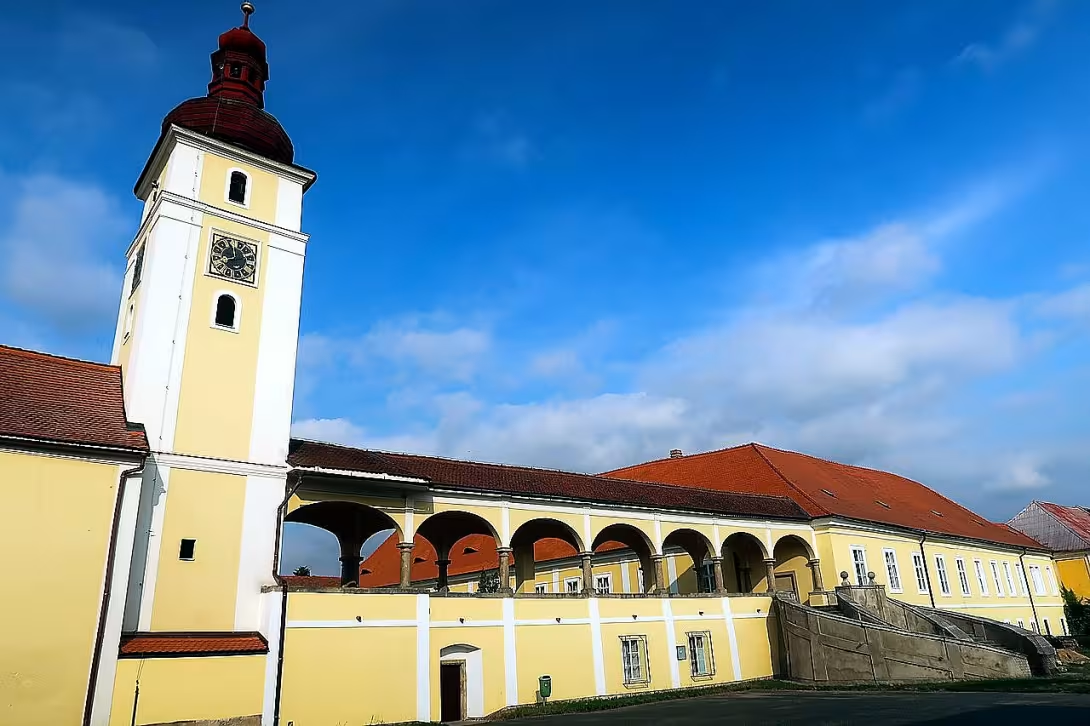
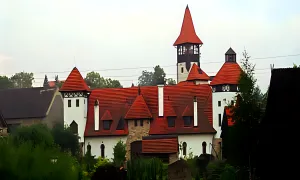
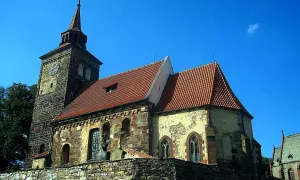
Zámek Nové Dvory is a Baroque monument building in the village Nové Dvory in the district of Kutná Hora in the Central Bohemian Region. It is remarkable by its unique architectural connection with the Church of St. Martin through the arcade corridor and historical importance as a social centre, visited during the 18th century by three monarchs from the House of Habsburg.
In 1278, the estates at the site of today's chateau were bought by a peasant monastery, which was built here by an economic court called Nové. The existence of this court is documented from 1370, but during the Hussite wars it was burned and the property transferred to the Royal Chamber. Once the monastery was restored, the court returned to its possession. In 1552 it was bought by Hynek Martiniický from Chřenovice and in 1558 it was acquired by Karel ze Žerotína. His son Kašpar Melichar ze Žerotína had the Renaissance chateau built.
The present Baroque form of the building was created in 1677-1686 in extensive reconstruction of Count Bernard František Věžník. The new building consists of two courtyard and part of the older Renaissance building was connected to the west wing. Among the most valuable elements are the Baroque staircase in front of the east wing and the arcade corridor connecting the chateau with the church of St. Martin, which was built in 1696. In 1701 Bernard František Věžník won the status of the town where the Kutnomountain Gate and the Marian Column were built.
The history of the chateau was influenced by military events, in particular the burning of Swedish soldiers General Banero in 1639. After the reconstruction under the Towers, the chateau became an important residence, which was visited by Archduke Josef in 1702, later Emperor Joseph I. During the 18th century there were also three other monarchs from the House of Habsburg. Later, for the property of the Chotek family, the castle Kachina was built on the estate, which caused Nové Dvory to lose the importance of the nobility. Since the 19th century, the management of the large estate and the housing of the employees has been located here.
In 1945 the chateau was nationalized and since then the premises have been housed by a primary school. The building has been listed as a cultural monument since 1958. The architectural connection of the chateau and church represents a unique element worth visiting.
Then and now
Drag the slider to compare how the landmark may have looked when it was built with the view today.
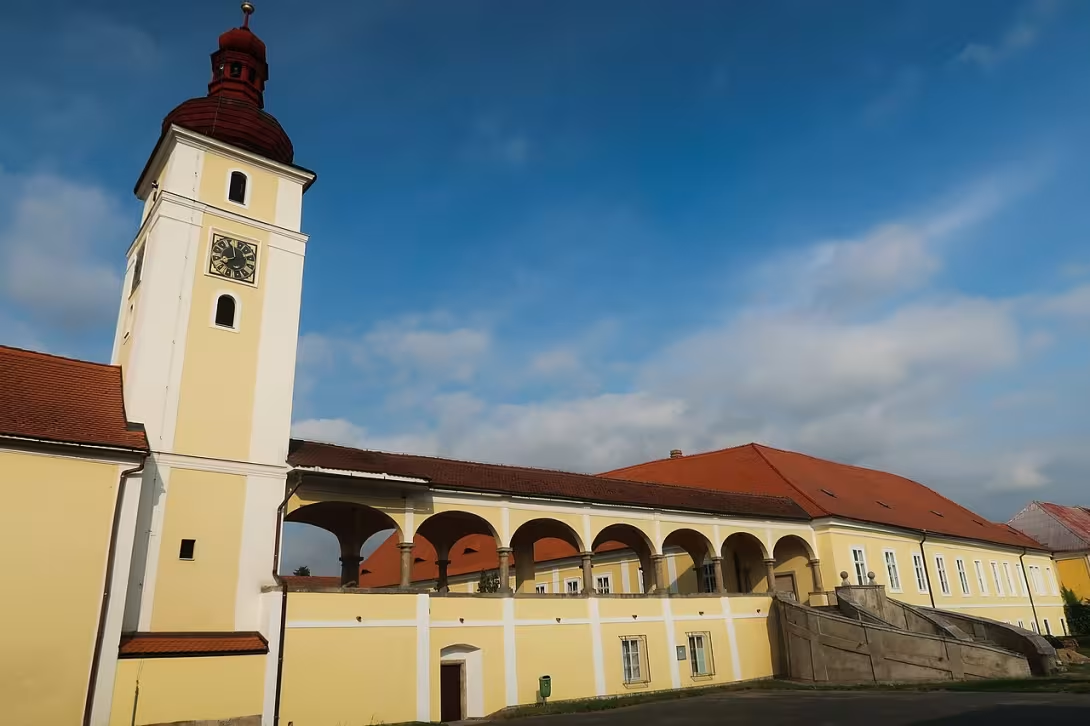
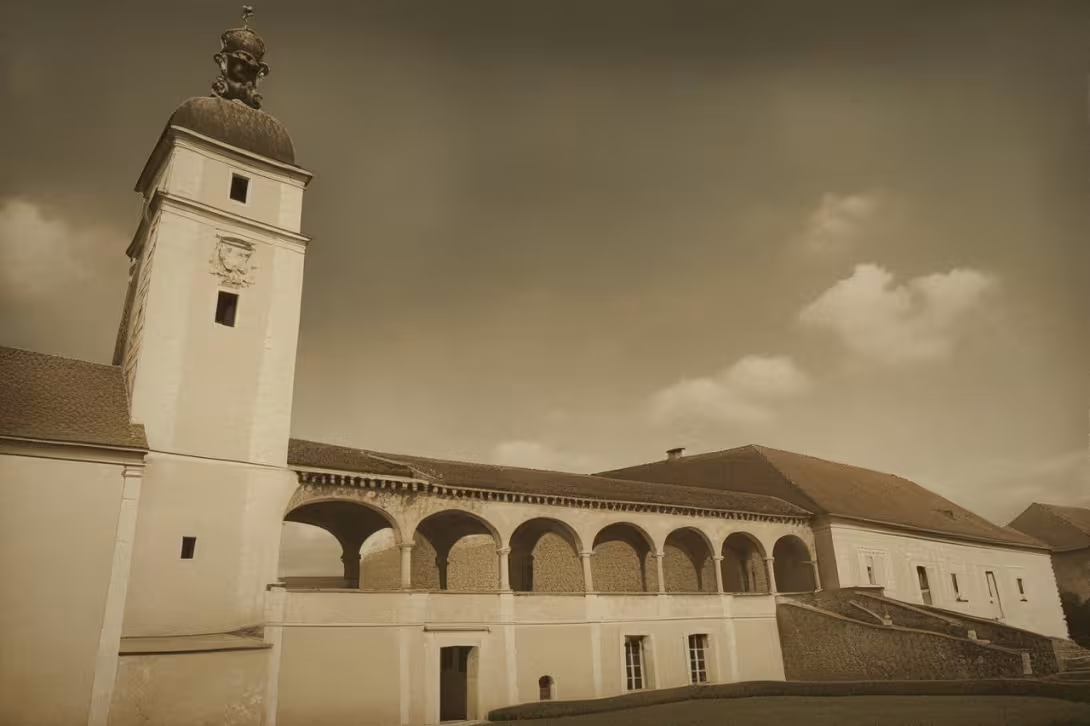
The historical appearance on the left is an AI-generated visualisation and serves as inspiration only.
Historical milestones
- 1278
- The purchase of land by a peasant monastery.
- 1370
- First written mention of the farm yard.
- 1558
- Karel ze Žerotína gets Nové Dvory.
- 1588
- Building a Renaissance chateau.
- 1639
- A chateau fired by Swedish soldiers.
- 1677
- The beginning of the Baroque reconstruction of the chateau.
- 1696
- Building St. Martin's Church.
- 1702
- Visit of Archduke Joseph I.
- 1945
- The chateau's nationalization.
- 1958
- Listing the chateau to the list of cultural monuments.
Architectural development
Originally there was a Renaissance chateau from 1588. After destruction during the 30-year war, a major Baroque reconstruction took place in 1677-1686. The new building was built with two courtyards and was supplemented by an arcade corridor to the church.
Historical events
1639: Burning the chateau with Swedish soldiers; 1677-1686: Baroque reconstruction of the chateau; 1702: Visit of archduke Joseph I.; 1945: The nationalization of the chateau.
Owners
Sedlecký monastery (1278), Hynek Martinický z Chřenovice (1552), Karel ze Žerotína (1558), Kašpar Melichar ze Žerotína, Švihovský z Rýzmberk, Ferdinand Maximilian z Kounice, Jan Kaspar z Montani, Bernard František Věžník (1679), František Antonín Pacht z Rájov, family Chotek.
Points of interest
The chateau is uniquely connected to St. Martin's Church through the arcade corridor. During the 18th century, three monarchs from the House of Habsburg visited the chateau. In 1639, the chateau was burned down by the Swedish soldiers of General Banero. - The present Baroque form was acquired by the building in 1677-1686 during the extensive reconstruction of Count Bernard František Věžník. Since 1945, a primary school has been in the chateau area.
Guide
This guide is narrated by a synthetic voice generated by artificial intelligence.
Show guide text
This text was created by artificial intelligence and has not been editorially reviewed. It may contain inaccuracies.
Welcome to lock Nové Dvory. You are standing in a place where history is intertwined with the calm of the Central Bohemia region and where every stone tells the story of the rise, fall and incredible renewal. In front of your eyes is a baroque residence that will charm every visitor with its majestic appearance today. Please feel the atmosphere of peace and nobility that permeates the entire area. You may see a harmonious whole at first glance, but underneath this surface is a deep layer of events that have shaped this place for centuries. Before you go any further, stop for a moment and perceive this space as if you were trying to soak up the soul of this place that survived wars, fires and changes in power dynasties.
Now let's move further into the past together to understand how this object came into being. The roots of this place go much further than they might seem. In the year one thousand and two hundred seventy eight, the land in this area was part of the property of the seventh monastery. The first clear clue in history that leads us to today's chateau is in the year one thousand three hundred seventy, when the written record first mentions the local economic court. At that time, however, it was only a modest place that was gaining meaning over time. The breaking point occurred in the year one thousand five hundred fifty-eight, when the lock was won by Karel ze Žerotína. It was the House of Žerotín that brought a new level to this place, and in the year one thousand and five hundred and eighty it built a Renaissance mansion that became a symbol of their power and stability.
However, history is unpredictable and the fate of the chateau was very cruel in the seventeenth century. In the year one thousand six hundred thirty-nine he faced the world of war and the chateau was burned by Swedish soldiers under the command of General Banero. This event left a deep scar in architecture and in the soul of the place. The chateau had to be rebuilt, and it was from the ashes and the debris that was born today's beautiful Baroque form. The process of this extensive reconstruction began in the year one thousand six hundred seventy seven and lasted several years, while the chateau gained its present character thanks to the efforts of Count Bernard František the Tower.
Now pay attention to the architecture itself, which you are now observing. Even when you're looking at a baroque object, its structure still bears the glare of its previous Renaissance form. When looking at the facade and the overall composition of the building, note the balance and monumentality that baroque brought. However, the most important and unique element you can see here is the way in which the chateau is organically connected to the nearby church of St. Martin. This unusual bond takes place through the arcade corridor. Notice how this arcade creates a link between the secular power of the chateau and the sacral space of the church. It is an architectural unique which is unprecedented in this area and which creates a sense of continuity and harmony between the everyday life of nobles and the spiritual world.
This space has witnessed the meeting of prominent personalities for centuries. When you look at these walls, imagine that there were people here who hosted the fate of the whole country. In addition to significant members of the Žerotín family, such as Karel or Kašpar Melichar ze Žerotína, the chateau became a real social centre in the eighteenth century. It was a place full of elegance, political talks and social events. It was thanks to their prestige and importance that three monarchs from the mighty House of Habsburg visited here during the eighteenth century. You can imagine what kind of procession and what significant personalities such as arcivévoda Josef I. had to host their noble situ and what impression the chateau had to be of the then European nobility.
If you're looking for something that might really surprise you or leave you in awe, focus on the strange symbiosis that the chateau shares with the church. There's something mysterious about it that these two different worlds, the world of politics and the world of faith, connect in such a direct and physical way through the arcades. This corridor was not only a path, but a symbolic artery that combined human power efforts with the search for divine peace. It's a fascinating detail that makes the New Courts a place that doesn't act as an isolated object, but as part of a larger, interconnected whole.
Now, however, not only historical monuments are waiting for you, but also the opportunity to explore the details you have just heard. I suggest you continue your tour and watch with attention as the baroque shapes pour into the surrounding space. Feel how the atmosphere changes, how the light breaks on the facades, and how the past echoes in the architecture go away. Every step can lead you to a new knowledge of this place.
Thank you for choosing to spend time right here in the chateau Nové Dvory. We hope that this brief introduction has helped you better understand the meaning and beauty of this baroque splendour. We wish you a pleasant and inspiring tour. Enjoy every moment spent in this historic environment. Goodbye.
Tips for visitors
The best time to visit Chateau Nové Dvory is in the spring or autumn season when there are mild temperatures and beautiful leafy trees. This time of year also offers ideal lighting conditions for photography, especially in the noon hours when the sun is at the highest level and illuminates the Baroque architecture of the chateau.
Parking is possible to find near the village Nové Dvory. The chateau can also be visited by public transport, and specific connections can be verified in the current route search engine. We recommend to learn about transport before visiting.
When planning a visit, remember the comfortable shoes, because exploring the chateau and its surroundings may include walking along the lawns and older paths. Also remember to take sunglasses, sun cream and a waterproof drink.
For families with children, the Nové Dvory Chateau is an interesting place where children can not only enjoy beautiful outdoor areas, but also learn about history and architecture. In the vicinity of the chateau is the possibility to visit the village Nové Dvory where it can be interesting to explore local cultural monuments and natural beauty.
Frequently asked questions
Is Zámek Nové Dvory open to the public?
Yes, the chateau is open to the public. We recommend to verify the current opening times on the official website or contact the monument management.
How do I get to the place by car / public transport?
The chateau is accessible both by car and public transport. We recommend checking the current connection and parking before visiting.
How much is the entrance fee and is it paid on the spot?
Admission fees are usually paid on the spot. The current prices can be found on the official chateau website or by contacting the administration.
Is the tour suitable for children and seniors?
Yes, the tour is also accessible for families with children and seniors. The chateau offers various rooms suitable for all visitors.
How long does the tour take?
The tour time depends on how much time you want to spend on every detail. It is generally recommended to allocate 1 to 2 hours.
What are the opening times and booking is required?
The opening hours of the lock can be found on the official website. In general, booking is not necessary, but in case of special events or events it is advisable to inform.
What's interesting in the immediate vicinity?
In the vicinity of the chateau you can visit beautiful gardens and explore natural landscapes. Walking walks are ideal for those who want to enjoy a quiet rest in nature.
For kids
Imagine an ancient world where locks were like beautiful and powerful creatures, built for the great journey of life. In the heart of the Central Bohemian region, between bushes and trees, there is a place full of secrets and stories - Zámek Nové Dvory. This was originally where the Renaissance chateau was built in 1639, but the luck could not be kept long. When the Swedish soldiers came and set fire to the chateau, it was as if the scary dragon understood it.
Businesses nearby
Nearby
Municipality of Nové Dvory, district of Kutná Hora.
Accommodation nearby
Trips and activities nearby
Guided tours, tickets and activities nearby from GetYourGuide
Affiliate link: if you buy from the partner, we may receive a commission. The price for you does not change.
Search tours and activities →Themed route
1. Zámek Nové Dvory (monument) - Take a look at the historical inner spaces and the building of this building. 2. Chateau tank Nové Dvory (area) - Take a walk around the central area surrounding the main building. 3. Park at chateau Nové Dvory (area) - Enjoy a peaceful walk around the chateau. 4. Municipality of Nové Dvory (local settlement) - Discover the atmosphere of this location within the district of Kutná Hora.
Seasonal recommendations
Spring: In the spring season, the Zámek Nové Dvory opens in the glorious glow of the newly waxed flowers and trees that have a pale rosy at their peak. The atmosphere is full of recovery and promises warm days with cold evenings. At this time the chateau can be slightly visited, which allows a peaceful tour of its historic premises. We recommend that visitors wear helmets and curtains to protect against sunlight as well as warm handkerchiefs for cooler evenings.
Summer: Summer is the time of the main summer season when the chateau Nové Dvory is the most visited place. The sunny days bring ideal conditions for walking through gardens and exploring the inner spaces where the lighting is transformed into a festive atmosphere. There may be a large crowd of visitors, so it is advisable to come early in the morning or late in the afternoon to avoid the peak period. Early arrival ensures better inspection and less waiting for entry. Don't forget to take a sunscreen and plenty of drinking.
Autumn: In autumn, Zámek Nové Dvory will turn into a melancholy retreat where tree leaves shine in pink and yellow colors. The atmosphere is calm and reminds of the time for reflection and relaxation. Natural lighting in this period offers unique views of the chateau, which seems to be the most beautiful in sunlight. Visiting may be mild, so it's the perfect time for a quieter tour. We recommend wearing warm clothes and shoes suitable for potential rain or humidity.
Winter: Winter season brings the Nové Dvory Chateau a romantic atmosphere where the whole space is covered with snow. This time is characterized by beautiful dawns and dawns that illuminate the chateau with a beautiful light. Opening hours may be shorter due to cold temperatures, so it is important to plan according to availability. Visiting during this period means coming up with warm clothes and the possibility of protection against moisture. Due to the snow, it is advisable to wear socks and tight shoes for a safe walk around the chateau parks.
Visualizations and artistic views


The visualisations are generated by artificial intelligence and serve as inspiration.
Photos from the area
Real photos taken near the monument


Zdroj a licence jsou uvedeny u každého snímku.
Tips from visitors
No tips yet. Be the first!
Log in and add your tip.
Sources and literature
Fotografie: Vlach Pavel / CC BY-SA 4.0 — Wikimedia Commons. The author and licence also appear when you hover over the image.
Faktickým podkladem tohoto textu byl článek na Wikipedii, jehož autory jsou přispěvatelé Wikipedie. Článek je dostupný pod licencí CC BY-SA 4.0.
Location on the map

Příběhy a pověsti
Legendy, pověsti a příběhy spjaté s touto památkou
Fotografie návštěvníků
Zatím žádné fotografie. Buďte první, kdo přidá fotografii z návštěvy!
Přihlaste se a přidejte svou fotografii nebo hodnoťte.
Za ověřenou návštěvu v aplikaci získáte víc bodů — poznáme podle GPS, že jste na místě.
Reviews and comments