



zámek Osvračín Chateau
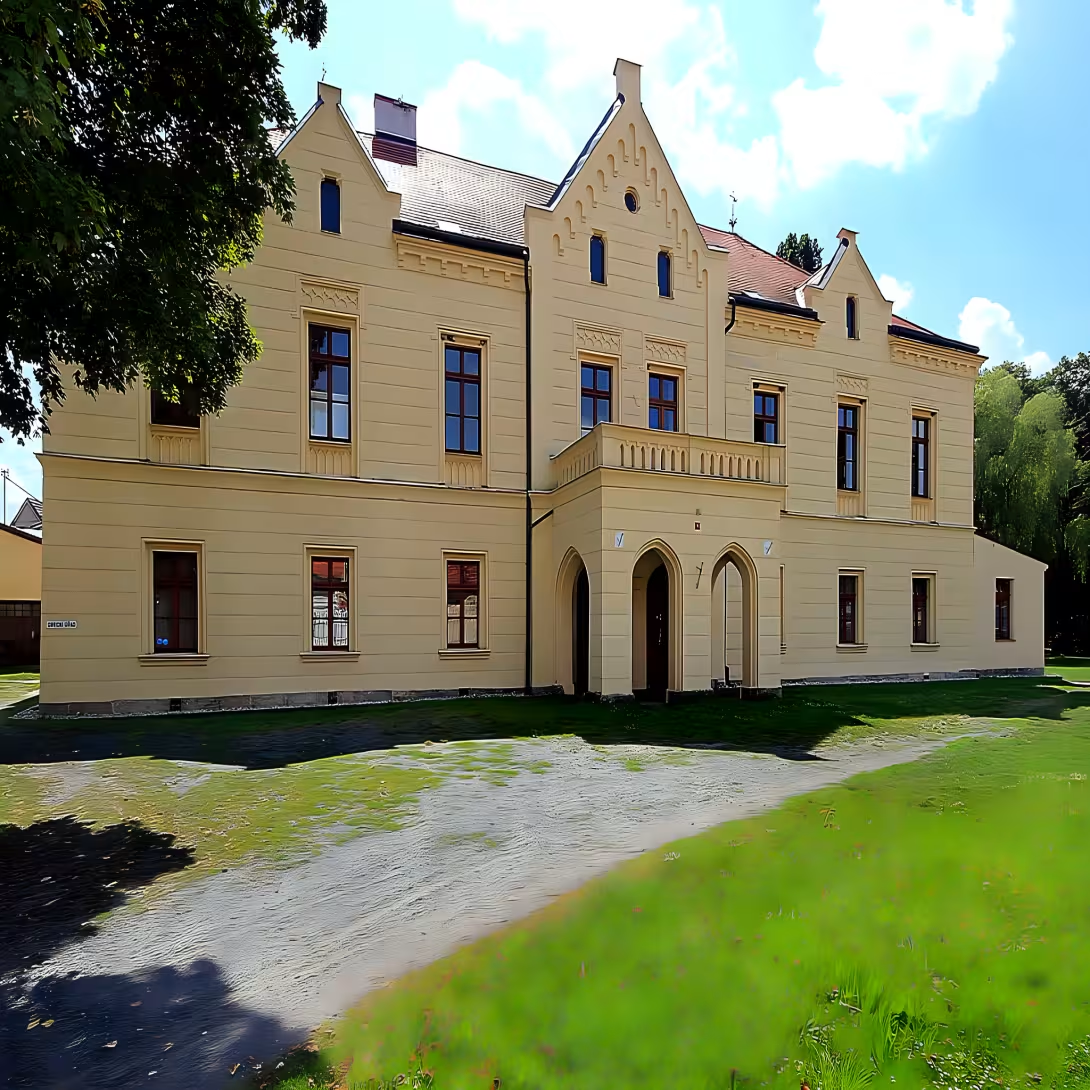
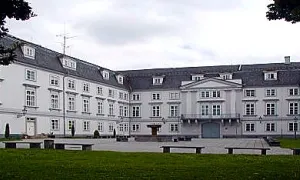
Osvračín is a castle dating from the 18th century in the middle of the village Osvračín in the district of Domažlice. It is currently owned by the municipality and used for cultural purposes and as the seat of the Municipal Office. Since 1993 it has been protected as a cultural monument of the Czech Republic.
The beginnings of Osvračína range back to the late Middle Ages, when the old castle stood here already in ruins at the end of the fifteenth century and belonged to the snail estate. In 1504 it was inherited by Bohunka z Lomnice, the widow of Pøeto from Rýzmberk, from where her son Jindřich took it and sold it to Jan Vidrježigágár from Vidrjejnik. During the 16th century, the castle was replaced by the owner from a number of important families. The nomads sometimes built a new fortress here at the site of an old building.
Since the beginning of the 17th century Osvračín took over the families of the Chernins and later Hildprants. First it was owned by Jiří z Kočova (1585-1619), then Anna Černínová and her brothers. Among the members of the family broke out the property disputes which Jiří Černín solved in 1625 and held the manor until his death in 1669. After him, his uncle George Václav took over the farm. The eldest son of Jiří Černín Wilhelm Václav won the legal dispute in 1688 and soon sold the estate to Count Heřman Jakub Černín.
František Josef Černín had the fort rebuilt into a Baroque castle according to the design of architect František Maximilian Kaňka. Jan Josef Hildprant z Ottenhausenu, which Osvračín bought in 1734, joined the farm for a short period of time to the canary estate, but since 1761 it has again been set aside as a separate property. In the 19th century the glass entrepreneur Ondřej Ziegler rebuilt the castle in a neo-gothic style.
The castle was also known for its rich library, which was gradually made up of Ziegler, Pack and the nobles of Debern. The collection contained more than 1500 books and 110 volumes of music, mostly from the 19th and 20th centuries. Over 400 books came from the Netherlands and they contained literature in German, English, French, Italian and rarely Czech. The collection consisted of fiction, translations of period authors, language textbooks and dictionaries. Piano sections prevailed among the hudenines.
Today, Osvračín is a valuable place for the local community, where cultural events are organised and where the municipal office is based. The building consists of a two-wing one-storey building, which represents an interesting example of surprisingly complex building and property history.
Then and now
Drag the slider to compare how the landmark may have looked when it was built with the view today.
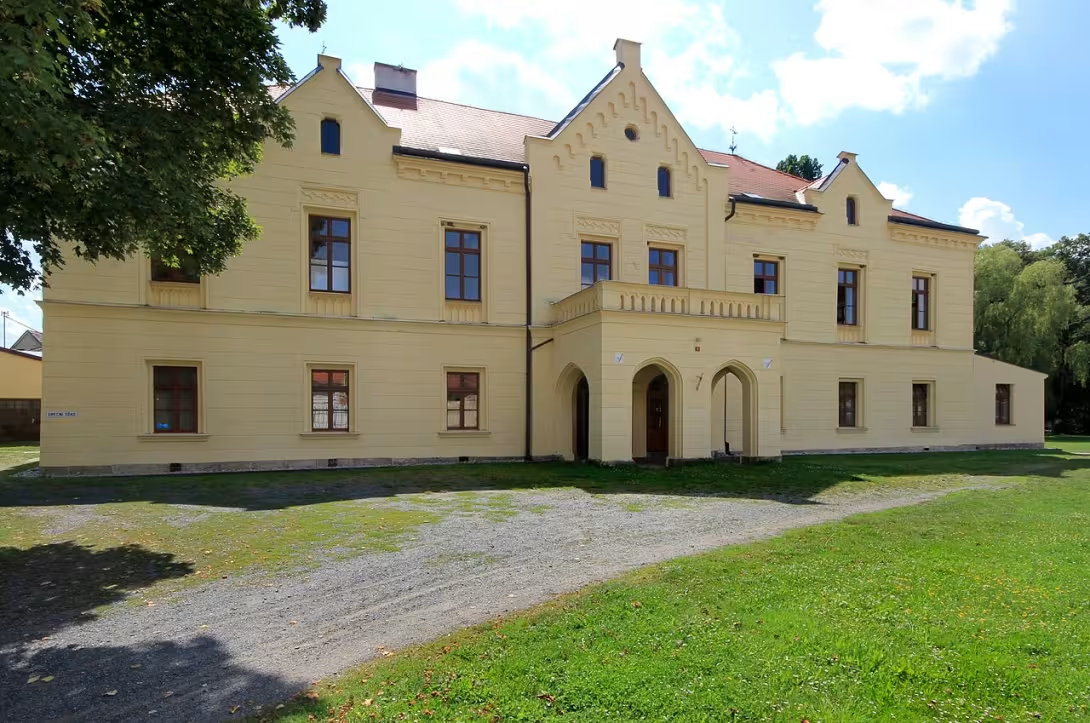

The historical appearance on the left is an AI-generated visualisation and serves as inspiration only.
Historical milestones
- 1993
- The castle was protected as a cultural monument of the Czech Republic.
Architectural development
Originally, it was in the place of the fortress the Kočovský family built. In the Baroque period the castle was rebuilt according to the design of architect František Maximilián Kaňka. In the 19th century the castle was rebuilt in a neo-gothic style by the glass entrepreneur Ondrej Ziegler.
Historical events
- 1504
- She inherited the Bohunka z Lomnice and sold it to Jan Vidrjemigar.
- 1625
- Humprecht Černín took over the farm.
- 1688
- Vilém Václav Černín won the dispute over George Chernin's will.
Owners
Municipality of Osvračín
Points of interest
- Osvračín is a castle dating back to the 18th century and has been protected since 1993 as a cultural monument of the Czech Republic.
- The beginnings of Osvračína range back to the late Middle Ages, when the old castle stood here already in ruins at the end of the fifteenth century and belonged to the snail estate.
- František Josef Černín had the fort rebuilt into a Baroque castle according to the design of architect František Maximilian Kanka.
- The castle was also known for its rich library, which was gradually made up of Ziegler, Pack and the nobles of Debern. The collection contained more than 1500 books and 110 volumes of music.
- Today, the Osvračín is a valuable place for the local community, where cultural events are organised and where the municipal office is based.
Guide
This guide is narrated by a synthetic voice generated by artificial intelligence.
Show guide text
This text was created by artificial intelligence and has not been editorially reviewed. It may contain inaccuracies.
The manor house in Osvračín stands in the middle of the village of the same name in the Domažlice district. It is a two-winged single-storey building from the eighteenth century. It belongs to the municipality, which has its town hall there and uses it for cultural purposes. Since nineteen ninety-three, the manor house has been protected as a cultural monument.
The local noble residence has a long history. The old Osvračín castle was empty at the end of the fifteenth century and belonged to the Švihov estates. In fifteen oh four, Osvračín was inherited by Bohunka of Lomnice, widow of Půta of Rýzmberok. After her, her son Jindřich took it over, and he sold it to Jan Vidršpergár of Vidršperek.
In fifteen forty-four, the estate belonged to Markéta Kočovská of Křimice. Later, Ofka is mentioned and in fifteen seventy-nine Anna Kočovská. Around that time, the Kočovský family built a new fortified manor house in the village. From fifteen eighty-five to sixteen nineteen, it was held by Jiří of Kočov. After him, it was inherited by Anna Černínová, born of Kočov, together with her four sons. Osvračín fell to Humprech Černín, but he soon died. His brother Drslav did not have enough money to pay off the others, so in sixteen twenty-five Jiří Černín took over the estate.
After his death in sixteen sixty-nine, his uncle Jiří Václav took over the property. However, he bequeathed it to his children contrary to the wishes of the deceased. Vilém Václav, the eldest son of Jiří Černín, challenged the will and won the case in sixteen eighty-eight. Six years later, he sold the estate to Count Heřman Jakub Černín.
František Josef Černín had the fortified manor house rebuilt as a baroque manor house according to a design by architect František Maxmilián Kaňka. In seventeen thirty-four, the knight Jan Josef Hildprant of Ottenhausen purchased the estate. From seventeen sixty-one, Osvračín was again an independent estate and belonged to Hildprant's descendants until eighteen hundred. It is possible that the baroque manor house was actually built by the Hildprants. Over the next four decades, six owners succeeded each other. Eventually, the manor house was acquired by the glassware entrepreneur Ondřej Ziegler and he renovated it in the neo-gothic style.
The manor house had a library, which was built up by the Zieglers, the Packs, and the nobility from Deberg. It had over fifteen hundred books and one hundred ten volumes of sheet music, mainly from the nineteenth and twentieth centuries. More than four hundred books were published in the Netherlands. German predominated, but English, French and Italian also appeared, Czech only rarely. The majority consisted of fiction, mainly translations of the world's leading authors of the time, as well as language textbooks and dictionaries. Among the sheet music, piano scores were the most frequent.
Tips for visitors
The best time to visit the Osvračín Castle is in the summer months when it is pleasantly warm and the opportunity to enjoy outdoor space. Baroque architecture is the most beautiful in sunny times, when shading gives the buildings depth.
For the latest information about routes and connections, we recommend using online search engines.
When visiting the castle, bring your shoes suitable for walking on the lawn, as indoor spaces may be inappropriate for wearing elegant shoes. Also remember the umbrella and protective eye glasses if you plan to take pictures.
For photographers, the castle offers several views, especially from its terrace or surrounding pavement. The best light is usually in the afternoon when the sun illuminates Baroque architecture in exciting colour contrasts.
The historical village Osvračín and its picturesque surroundings can be visited in the vicinity of the castle. For families with children it is advisable to explore the natural environment nearby where children can play in the open spaces.
Frequently asked questions
Can the monument be visited?
Some buildings of this kind are open for guided tours, others serve another purpose or are privately owned. We have not verified whether and when this monument is open – please ask the operator.
What are the opening hours and admission?
We have not verified the opening hours or admission. Current information is published by the operator.
Where is the monument?
Location: č.p. 1, Osvračín, Plzeňský kraj. The map on this page shows the exact spot.
Why is the monument protected?
It is listed in the Central List of Cultural Monuments of the Czech Republic as a cultural monument (register no. 12422/4-4820).
For kids
Imagine going back to when zámek Osvračín was still young and full of life. At that time, the village Osvračín was a small settlement, where lived the people who lived from the land and the conquerors. The castle stood in the middle of the village as if it were the heart of the whole city.
Who lived here? They were nobles who had a mansion in the castle. They were people who dealt with agriculture and trade. They were also people who came to the village looking for happiness and a new life.
Businesses nearby
Do you run a restaurant, accommodation, shop, museum, rental, wellness or other visitor service near this monument? Show yourself directly to the people heading to it — this is how they will see you in the app and on the web:
Events nearby

Zdroj akcí: otevřená data měst a obcí ČR (Národní katalog otevřených dat) a kalendář akcí Národního památkového ústavu.
Nearby
Ambient landscape, other sights
Accommodation nearby
Themed route
Castle Osvračín (main destination) - Baroque castle, worth visiting for its unique architecture and rich history.
Žižkova cross - memorial, worth a visit for its historical value and as a reminder of the battle at Žižkov cross.
The Žižkova cross is approximately 2 km from the castle Osvračín.
Žižka's cross is a reminder of the battle of Žižkov's cross, which took place in 1420.
Žižkova cross is an important historical monument and is worth visiting for its cultural and historical values.
Seasonal recommendations
Spring
In spring the zámek Osvračín is surrounded by flowering trees and flowers, creating a pleasant atmosphere. The spring lighting, which creates pleasant artistic inputs, is also specific. If you want to visit the castle in the spring season, we recommend that you go to the place early in the morning to avoid crowds and enjoy a quiet atmosphere.
Summer
In the main summer season zámek Osvračín is very visited, so we recommend to come earlier to avoid crowds. Summer is also an ideal time for walking in the park and around the castle where you can see flowering flowers and trees. In summer it is also good to bring your ice cream or other cooling drinks because temperatures can be dressed up.
Autumn
In autumn the zámek Osvračín is surrounded by beautiful colors of autumn nature. The atmosphere is calm and quiet, which is ideal for those looking for peace and quiet. If you want to visit the castle in the autumn, we recommend you bring warm clothes because temperatures can be cold.
Winter
In winter zámek Osvračín is less visited, which means you can have peace and quiet during the tour. We recommend bringing warm clothes because temperatures can be freezing.
Visualizations and artistic views


The visualisations are generated by artificial intelligence and serve as inspiration.
Photos from the area
Real photos taken near the monument


Zdroj a licence jsou uvedeny u každého snímku.
Atmosphere of the place
This atmospheric visualisation of the place and period was generated by artificial intelligence. It is not real footage of the location.
Tips from visitors
No tips yet. Be the first!
Log in and add your tip.
Sources and literature
Photos: This file is available under Creative Commons BY-SA license. Basically: You can use this picture for any purpose, provid / CC BY-SA 3.0, rozlišení zvýšeno umělou inteligencí — Wikimedia Commons. The author and licence also appear when you hover over the image.
Faktickým podkladem tohoto textu byl článek na Wikipedii, jehož autory jsou přispěvatelé Wikipedie. Článek je dostupný pod licencí CC BY-SA 4.0.
Location on the map
More monuments – Osvračín
Show all in the municipality




Příběhy a pověsti
Legendy, pověsti a příběhy spjaté s touto památkou
Fotografie návštěvníků
Zatím žádné fotografie. Buďte první, kdo přidá fotografii z návštěvy!
Log in a přidejte svou fotografii nebo hodnoťte.
Za ověřenou návštěvu v aplikaci získáte víc bodů — poznáme podle GPS, že jste na místě.
Reviews and comments